When you run a small business, you have to think about many things, like selling your product, talking to customers, and managing your team. But one of the most important things is money. And when it comes to managing your business finances, a small business tax accountant plays a big part in keeping everything organized and compliant.
If you don’t take care of your taxes, you could pay more than you need to. That’s why small businesses should learn about tax accounting. It helps your business grow the right way. You don’t have to feel scared or stressed. Here we will see how small business tax accounting works and how it can help your business grow.
What You Will Learn From This Blog
- What a small business tax accountant does.
- Why small business tax accounting is important.
- How business tax preparation supports business growth.
- The benefits of hiring a professional tax accountant.
- Common tax accounting challenges for small businesses.
- How to choose the right small business tax accountant.
- Ways professional tax support helps maintain compliance.
- Why Meru Accounting is the right partner for your tax and accounting needs.
What Is a Small Business Tax Accountant?
A small business tax accountant is a person who knows how to handle taxes for small businesses. They are trained in numbers, tax laws, and money rules.
Here’s what a small business tax accountant does:
- Have a track of your income and expenses for your business.
- They figure out how much tax you owe.
- Help you find ways to save you money on your tax bill.
- Also helps you file your taxes on time.
- They answer questions if the tax office asks anything.
Think of them as your tax helper. You don’t have to worry about forms or rules. They take care of that for you.
Importance of Small Business Tax Accounting
Small business tax accounting helps your business grow in many ways. Here’s how:
Keeps You Out of Trouble
If you don’t pay your taxes the right way, the tax office can charge you extra money or fine you. With proper small business tax accounting, you know you are following the law.
Helps You Save Money
These are special rules that let you pay less tax. For example, if you use your car for work, that cost may reduce your taxes.
Makes Tax Time Easier
Tax season can be hard. But if your records are neat and correct, tax time becomes simple. A small business tax accountant will make sure everything is ready and filed on time.
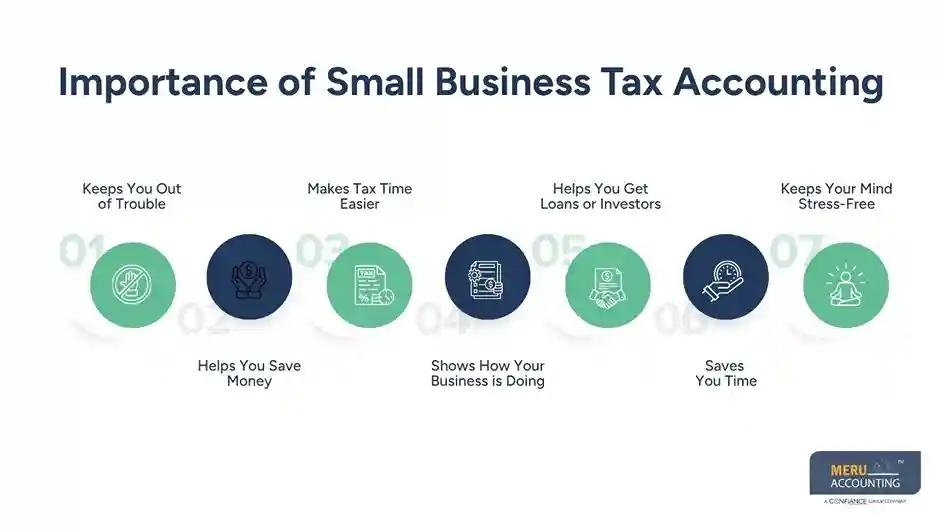
Shows How Your Business is Doing
Are you making money or losing it? With the right records, you can make smart choices.
Helps You Get Loans or Investors
If you want a bank loan or help from investors, they will ask to see your records. With proper tax files and reports, you have proof that you are running a good business.
Saves You Time
Doing taxes takes a lot of time and work. A small business tax accountant does that for you. Meanwhile, the free time you have can be used to grow your business instead.
Keeps Your Mind Stress-Free
Worrying about tax mistakes is not fun. With good small business tax accounting, you feel safe. You know everything is done the right way.
How Business Tax Preparation Supports Business Growth
Many business owners view taxes as a yearly obligation. In reality, business tax preparation is an ongoing process that contributes to better financial management and long-term success. Organized records, accurate reporting, and proactive planning help businesses reduce risks and make informed decisions.
A small business tax accountant ensures that financial information is updated throughout the year. This approach makes tax filing easier while providing valuable insights into the company’s financial health.
Organizing Financial Records
Accurate financial records form the foundation of successful business tax preparation. Every invoice, receipt, payroll record, and business expense should be properly documented and categorized.
A small business tax accountant reviews these records regularly to ensure they are complete and accurate. Well-organized records simplify tax filing and make it easier to prepare financial reports when needed.
Proper recordkeeping also helps businesses:
- Track income and expenses accurately
- Monitor cash flow
- Support tax deductions with proper documentation
- Prepare for audits or financial reviews
Preparing Accurate Tax Returns
Tax returns must reflect the correct financial information. Errors can result in penalties, delayed processing, or additional scrutiny from tax authorities.
A small business tax accountant carefully reviews financial statements, reconciles accounts, and verifies all supporting documents before filing returns. This attention to detail improves the accuracy of business tax preparation and reduces the likelihood of costly mistakes.
Identifying Eligible Tax Deductions and Credits
Many small businesses miss legitimate deductions simply because they are unaware of them. Professional tax accountants understand current tax regulations and identify deductions that apply to the business.
Common deductions may include:
- Office rent
- Employee salaries
- Business travel
- Equipment purchases
- Professional services
- Software subscriptions
- Marketing expenses
Claiming eligible deductions through proper business tax preparation helps reduce taxable income while remaining compliant with tax laws.
Avoiding Late Filing Penalties
Missing tax deadlines can lead to interest charges and financial penalties. A small business tax accountant monitors important filing dates and prepares documents well before deadlines.
This proactive approach keeps businesses compliant and avoids unnecessary costs.
Tips to Pick the Right Small Business Tax Accountant
Look for Experience in Small Business Tax Accounting
Not all tax workers know how small shops and new businesses work. Pick a person who works with small business owners often.
Make Sure They Understand Your Industry
Every business is different. A bakery is not the same as a car repair shop. A good small business tax accountant should know how your kind of work handles money and taxes.
Ask If They Know Local Tax Rules
Tax laws vary by state and locality. Make sure your accountant understands the local, state, and federal tax regulations that apply to your business.
Check Their License and Qualifications
Your accountant should have the proper training and certifications. Ask whether they are a Certified Public Accountant (CPA) or hold other relevant professional qualifications.
Find Out What Services They Offer
Some professionals only prepare annual tax returns, while others provide year-round support, bookkeeping, tax planning, payroll, and financial advice. Choose one whose services match your business needs.
Ask About Their Tools and Software
Modern accounting software makes financial management easier. Look for someone who uses cloud-based accounting tools that allow secure document sharing and real-time access to financial reports.
Make Sure They Explain Things Clearly
A good accountant should explain tax matters in simple, easy-to-understand language. You should feel comfortable asking questions and understand how financial decisions affect your business.
Check Reviews or Ask for References
Read online reviews or ask for references from existing clients. Positive feedback from other business owners is a good indicator of reliable and professional service.
Ask About Their Fees
Discuss pricing before making a decision. Some accountants charge hourly rates, while others offer fixed-fee packages. Choose a pricing structure that fits your budget and provides good value.
Choose Someone You Feel Good About
This person will help with your money and taxes. You should feel comfortable talking to them. A kind, helpful, and honest small business tax accountant is the best choice.
Benefits of Hiring a Small Business Tax Accountant
Saves Time
- Tax filing can be time-consuming.
- A professional handles the process for you.
Reduces Stress
- No need to worry about complex tax forms.
- The accountant manages compliance.
Ensures Accuracy
- Reduces errors in tax returns.
- Avoids audits due to mistakes.
Better Tax Planning
- Plan taxes to match your growth goals.
- Suggests ways to lower future tax bills.
Focus on Business Growth
- You focus on customers and sales.
- The accountant focuses on tax matters.
Key Tasks in Small Business Tax Accounting
Recording Transactions
- Track every sale and purchase.
- Maintain digital or paper records.
Categorizing Expenses
- Group costs into categories.
- Helps in claiming deductions easily.
Preparing Financial Reports
- Profit and loss statements.
- Balance sheets for review.
Filing Tax Returns
- Prepare and file before deadlines.
- Avoid late fees and interest.
Maintaining Compliance
- Follow local, state, and federal tax laws.
- Stay updated with changes.
optional anymore
on running the business
Challenges in Small Business Tax Accounting
Small Business Tax Accounting is very helpful, but it also comes with some hard parts. If you do not understand tax rules, you can make mistakes. Here are some common challenges small businesses face:
Not Knowing the Rules
Tax rules can be tricky. A small business owner may not know what to do. This can lead to problems when paying taxes. That’s why a small business tax accountant is helpful.
Too Much Paperwork
There are many forms and receipts to keep. It’s easy to lose track. Without good Small Business Tax Accounting, you may forget something important.
Missing Deadlines
If you miss the tax filing date, you may have to pay a fine. A small business tax accountant helps make sure you file everything on time.
Paying More Than Needed
If you don’t know what expenses you can write off, you may pay too much tax. Small Business Tax Accounting helps you save money the right way.
Keeping Good Records
You need to track all the money coming in and going out. Some small businesses don’t do this well. A small business tax accountant can help you stay organized.
Changing Rules
Tax rules change often. If you don’t stay up to date, you could get in trouble. That’s why having someone who knows Small Business Tax Accounting is a smart idea.
Why Choose Meru Accounting as Your Small Business Tax Accountant
As a small business owner, you want to grow your business, not worry about taxes. That’s why small business tax accounting is so helpful. It keeps your records clean, helps you save money, and lets you focus on what matters most to your work and your goals.
Working with a trained small business tax accountant is one of the best things you can do. They help you follow the rules, file on time, and plan. With their help, you can grow your business smartly and safely.
If you’re looking for the right support, Meru Accounting can help. We offer expert tax accounting services for small businesses. Our team understands what small business owners need. With Meru Accounting, you can save time, stay organized, and grow strong.
Our Expert Perspective
According to our tax professionals, one of the most common mistakes small businesses make is treating tax planning as a once-a-year activity instead of an ongoing financial process. Maintaining accurate records, reviewing financial transactions regularly, and planning for taxes throughout the year can significantly reduce compliance risks, improve cash flow management, and uncover valuable tax-saving opportunities.
Our experts have found that businesses working with a knowledgeable small business tax accountant are better prepared for changing tax regulations, make more informed financial decisions, and are able to focus on sustainable growth rather than last-minute tax concerns. Proper business tax preparation is not only about meeting filing deadlines—it is an important part of building a financially stable and well-managed business.
Key Takeaways
- A small business tax accountant helps businesses remain compliant with tax laws.
- Proper small business tax accounting reduces filing errors and penalties.
- Business tax preparation is a year-round process, not just an annual task.
- Accurate financial records support better decision-making and business growth.
- Professional accountants identify eligible tax deductions and credits.
- Timely tax filing helps businesses avoid unnecessary penalties.
- Organized accounting improves cash flow management and financial reporting.
- Outsourcing tax accounting saves time and allows business owners to focus on operations.
- Choosing an experienced accountant improves long-term financial stability.
- Meru Accounting provides reliable tax accounting services designed for growing small businesses.
FAQs
Bookkeeping is about tracking money in and out every day. Small business tax accounting is about using that information to file taxes and follow tax rules.
It’s best to meet at least once every three months, and again during tax season. Regular check-ins help you stay on track.
Yes, they can help you see your money flow, plan for taxes, and even give advice on how to grow your business smartly.
Yes, software is helpful, but a small business tax accountant understands tax laws better. They can find ways to save you more money and catch things that software may miss.
No, even the smallest business needs tax help. It’s better to start with good habits early so you don’t face big problems later.