Small business tax guidelines give owners a clear path for reporting income, claiming valid costs, paying tax, and filing returns on time. Tax duties vary by business type, income, staff count, state, and the kind of work the firm does. A good tax process starts with clean books, clear records, and a plan for tax payments.
The IRS states that the tax form and payment rules depend on the business structure. Federal business taxes may include income tax, estimated tax, self-employment tax, employment tax, and excise tax.
This blog explains key small business tax guidelines for U.S. businesses. State and local tax rules can differ, so owners should also check the rules that apply in their state.
What You Will Learn From This Blog
- How federal tax rules apply to small firms
- Which taxes a small business may need to pay
- How entity type can change tax filing duties
- How estimated tax payments are worked out
- Which records should be kept for tax work
- How common business deductions may work
- Why tax dates and forms need close review
- When professional tax advice may be useful
What Are The Tax Guidelines For Small Businesses?
Know Your Tax Duties
The small business tax guidelines depend on the firm’s structure and tax status. A sole proprietorship, partnership, S corporation, and C corporation can have different forms, payment rules, and tax duties.
Report All Business Income
A tax guide for small business owners should emphasize accurate reporting of income from all business activities. Sales, fees, and other taxable receipts should match the books and bank records used for the return.
Track Business Costs
Business costs should be recorded with clear proof. In general, a deductible cost must meet the tax rules that apply to that expense and business activity.
Separate Business And Personal Costs
Following small business tax guidelines is easier when a separate business bank account keeps business and personal costs apart. Mixing personal and business costs can make it harder to prove which costs relate to the firm.
Watch State And Local Rules
Federal tax rules are only one part of the process. State and local rules may add income, sales, payroll, franchise, or other tax duties.
What Types of Taxes Do Small Businesses Pay?
Income Tax
Income tax is a key part of the small business tax guidelines. The tax may be paid by the owner or by the business, based on the entity and tax election.
Self-Employment Tax
Self-employed owners may owe Social Security and Medicare tax on net earnings. The IRS generally requires self-employment tax when net earnings from self-employment reach $400 or more.
Employment Taxes
Businesses with staff may need to withhold federal income tax and Social Security and Medicare taxes. Employers may also owe Federal Unemployment Tax Act tax.
Estimated Tax
Estimated tax is used when enough tax is not paid through withholding. Many self-employed owners use estimated payments during the year rather than waiting until the annual return.
Excise And Other Taxes
Business owners should review small business tax guidelines to determine whether excise taxes apply to their specific activities. The tax rules depend on the activity, so owners should check the forms tied to their business.
How Do Tax Rules Differ By Business Structure?
Sole Proprietorship
A tax guide for small business owners should explain how reporting requirements change for each business structure. Schedule C is used to report the business income and costs under applicable small business tax guidelines.
Partnership
A partnership generally files an information return. Each partner then reports their share of income and other tax items under the applicable rules.
S Corporation
An S corporation generally files Form 1120-S. Owners may receive income through the business and can have other tax duties based on their role and pay.
C Corporation
A C-corporation is treated as a separate tax entity for federal income tax. Following small business tax guidelines, the corporation generally files Form 1120 and pays tax under applicable corporate rules.
Limited Liability Company
An LLC is a legal structure created under state law. Federal tax treatment can vary based on the number of owners and elections made by the LLC.
What Are The Tax Requirements For Small Businesses?
Get an EIN
An Employer Identification Number, or EIN, is a federal tax ID used on many business tax reports. A firm may need an EIN when hiring staff or operating under certain entity structures.
Keep Proper Books
The small business tax guidelines require owners to keep records that show income and expenses. Good books also make it easier to follow ksmall business tax guidelines, prepare returns, and review tax amounts
File Required Forms
The forms depend on the business structure and tax duties. A business may need income tax returns, payroll forms, information returns, or other filings.
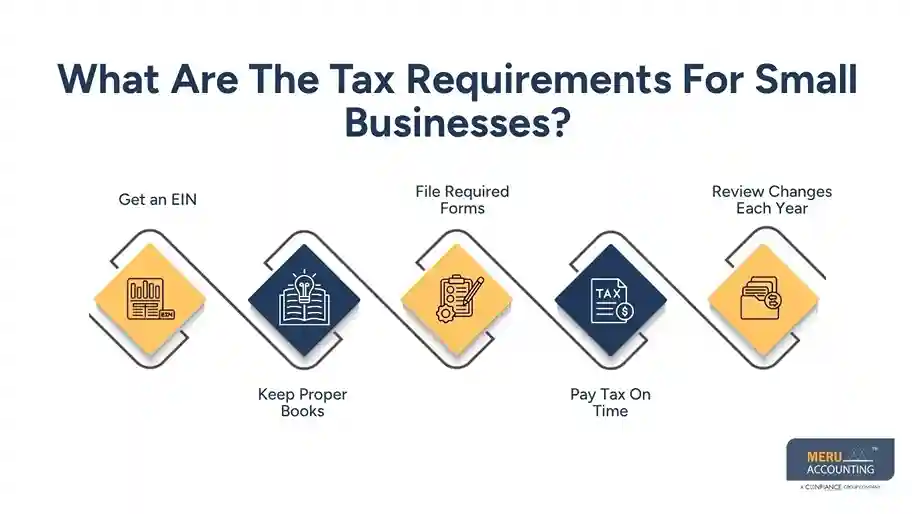
Pay Tax On Time
Tax filing and tax payment are separate tasks. Under small business tax guidelines, filing a return does not always mean the tax is paid automatically, so owners should track both dates.
Review Changes Each Year
Tax rules, limits, forms, and filing dates can change. A yearly review can reduce the risk of using old tax data or missing a new filing duty.
How Do Small Businesses Calculate And Pay Estimated Taxes?
Estimate Annual Income
A tax guide for small business should start with expected income and costs. Owners can use prior-year figures as a base, then adjust the estimate for current sales and expenses.
Estimate Taxable Income
Under small business tax guidelines, taxable income is not always the same as total sales. Business costs, deductions, credits, and other tax items can affect the final amount.
Check Payment Rules
For many individuals, including sole proprietors, partners, and S corporation shareholders, estimated payments may be needed when they expect to owe at least $1,000 after withholding and credits.
Pay By The Due Dates
For calendar-year taxpayers, estimated tax dates are generally April 15, June 15, September 15, and January 15 of the next year. The IRS notes that dates can shift when a due date falls on a weekend or legal holiday.
Recheck Estimates
Regularly reviewing estimates is an important part of following small business tax guidelines when income or expenses change. Owners can revise later estimates when sales, costs, deductions, or other tax facts change.
optional anymore
on running the business
What Are The Small Business Tax Filing Deadlines?
Sole Proprietor Deadline
Understanding the small business tax guidelines helps sole proprietors report business income correctly through Form 1040 and Schedule C. For calendar-year taxpayers, the general individual return due date is April 15.
Partnership Deadline
Most partnerships file Form 1065 by the 15th day of the third month after the tax year ends. A tax guide for small business owners should encourage checking the exact filing date for the applicable tax year.
S Corporation Deadline
Most S corporations also file by the 15th day of the third month after the tax year ends. Form 1120-S is generally used for the federal return.
C Corporation Deadline
A C corporation generally files by the 15th day of the fourth month after its tax year ends. Special rules can apply to corporations with a June 30 year-end.
What Tax Records Should Small Businesses Keep?
Sales And Income Records
Following small business tax guidelines means keeping invoices, receipts, deposit records, payment reports, and other proof of income. Records should show where business income came from and match the books.
Expense Records
Keep receipts, bills, invoices, and payment proof for business costs. The IRS says records should be kept as long as needed to prove income or deductions.
Payroll Records
Businesses with employees need payroll records that show wages, withholding, and tax payments. The IRS generally says employment tax records should be kept for at least four years.
Asset Records
Property records may need to be kept longer because they can affect depreciation and the gain or loss when property is sold.
Filed Tax Returns
Keep copies of filed returns and related schedules. Prior returns can provide useful data when preparing later returns or checking past tax positions.
Which Tax Deductions Can Small Businesses Claim?
Ordinary Business Costs
A tax guide for small businesses should cover normal business costs such as supplies, rent, software, insurance, and certain professional fees. The exact deduction depends on the business facts and the small business tax guidelines in effect for the tax year.
Employee Pay
Wages paid to employees may be deductible when the payments meet the applicable tax rules. Payroll taxes and employee benefits can have separate rules.
Business Vehicle Costs
Business use of a vehicle may qualify for a deduction under the method allowed for the taxpayer. Owners should keep mileage logs and other records needed to support the claim.
Depreciation
A tax guide for small business owners should also explain how depreciation and other cost recovery rules may apply. The amount and timing depend on the property and the tax rules in effect for the year.
Home Office Costs
Some owners who use part of a home for qualified business use may claim a home office deduction. Eligibility and calculation rules must be met before claiming it.
Why Choose Meru Accounting For Small Business Tax Support?
Tax Return Preparation
Meru Accounting can assist with tax return preparation while following applicable small business tax guidelines and the tax forms that apply to the business. Our team can review available records before the return work begins.
Tax Planning
Tax planning can give owners a clearer view of expected tax costs. Our team can review income, expenses, estimated payments, and other relevant tax details.
Bookkeeping Review
Clean books form a key part of good tax work. Meru Accounting can review bookkeeping records and identify gaps that may affect income, expenses, or account balances.
Estimated Tax Support
Owners may need to plan payments during the year rather than wait until filing time, depending on applicable small business tax guidelines. Our team can assist with estimated tax calculations based on the agreed scope of work.
Record Review
Good records make tax filing easier to check. Meru Accounting can review supporting documents and organize the information needed for tax preparation.
Our Expert Perspective
A practical tax guide for small business owners should encourage year-round bookkeeping, recordkeeping, and tax planning. Monthly bookkeeping, regular account checks, and timely tax planning give owners a better base for year-end filing. Tax results should always be checked against current IRS rules and the specific facts of the business.
Key Takeaways
- Small business tax guidelines vary by entity, income, staff, and activity
- Keep business and personal costs separate
- Track income and expenses throughout the year
- Make estimated tax payments when required
- Check federal, state, and local tax duties
- Keep records that prove income and deductions
- Review tax forms and dates each year
- Do not assume an extension removes the payment duty
- Seek qualified tax advice when the business has complex tax needs
- Use current IRS guidance before making major tax decisions
FAQs
How small business taxes work depends on the business structure, income, costs, and tax duties. The owner or business reports taxable income and pays the required taxes.
A tax guide for small businesses should explain income tax, estimated tax, payroll tax, deductions, records, forms, and filing dates. IRS publications are a key source for federal tax rules.
The filing date depends on the business structure and tax year. A tax guide for small businesses can explain the forms and deadlines that apply, while small business tax guidelines provide the basic rules for proper filing.
The IRS generally says to keep records as long as needed to prove income or deductions. Many income tax records are kept for three years, while some cases require longer periods.
A tax guide for small businesses should begin with clean books, complete income records, expense proof, payroll data, prior returns, and estimated tax records. Review all data before submitting the return.
optional anymore
on running the business