The small business tax rate is based on more than the date a return is filed. Business type, taxable income, deductions, credits, and the owner’s tax position can all affect the amount of tax due. Filing late does not normally create a new federal income tax rate by itself. However, late filing can add penalties and interest, which can make the final tax bill much higher.
The effect can also vary by business type. A sole proprietor may report business income on a personal return, while a partnership, S corporation, or C corporation follows different filing rules. The IRS states that the business structure determines the return that must be filed and how federal tax duties are handled.
Knowing the difference between the tax rate and the cost of filing late can help owners make better tax choices.
What You Will Learn From This Blog
- How the small business tax rate is determined.
- Whether filing late changes your tax rate.
- How late tax returns can lead to penalties.
- Why unpaid tax can also create interest charges.
- Which factors can affect the tax due.
- How to reduce the risk of late tax returns.
- How better records can make tax filing easier.
- When professional tax support may be useful.
Understanding The Small Business Tax Rate
Business Structure Matters
The small business tax rate depends in part on how the business is taxed. Common structures include sole proprietorships, partnerships, corporations, S corporations, and LLCs.
An LLC may receive different federal tax treatment based on its number of owners and elections made with the IRS.
Taxable Income Matters
Tax is generally based on taxable income, not just total sales. A business first reports income and then accounts for allowed business costs and other tax items.
For example, a business with $200,000 in sales does not always pay tax on the full $200,000. Its taxable income may be lower after valid deductions and other adjustments.
Deductions Can Change Tax Due
Ordinary and necessary business costs may reduce taxable income when the rules allow the deduction. Good records are needed to show that claimed costs relate to the business.
Missing records can lead to missed deductions or questions about a return.
Credits Can Affect The Final Bill
Tax credits can reduce tax owed when a business qualifies for them. Credits are different from deductions because they generally reduce the tax itself rather than first reducing taxable income.
Eligibility and limits vary by credit, so owners should check the rules for each tax year.
Federal And State Taxes Differ
The federal small business tax rate is only one part of a business tax picture. State and local taxes may also apply, depending on where the business operates.
A business owner should review both federal and state filing duties before deciding the total tax cost.
What Happens When A Business Files Taxes Late?
Filing And Paying Are Different
The small business tax rate determines the tax owed, while late filing and payment rules can create additional costs. A business can file a return after the due date, pay late, or do both. The IRS may charge separate penalties for failing to file and failing to pay.
A Penalty May Apply
For many individual and business returns, the IRS failure-to-file penalty is generally 5% of unpaid tax for each month or part of a month that the return is late, up to 25%.
The exact rules can differ by return type, so owners should not assume one penalty applies to every business.
Partnership Returns Have Special Rules
Partnerships generally file an information return rather than paying federal income tax at the partnership level in the same way as a C corporation.
Late partnership returns can face a penalty based on the number of partners and the number of months the return remains late.
S Corporations Have Special Rules
An S corporation generally passes income, deductions, and credits through to its shareholders. A late Form 1120-S can still result in a filing penalty.
The IRS states that the penalty for a late S corporation return can be charged for each month or part of a month, subject to the applicable limit.
Interest Can Add More Cost
Paying tax late can also lead to interest. Interest can apply even when an extension was granted, because an extension to file does not generally give extra time to pay tax that is due.
For that reason, late tax returns can become more costly, even when the underlying small business tax rate has not changed.
Do Late Tax Returns Affect The Tax Rate?
Filing Late Does Not Usually Set A New Rate
Late tax returns do not normally change the underlying federal income tax rate just because they were filed after the due date.
The tax calculation still depends on the applicable rules, business structure, taxable income, and other tax items.
Penalties Can Raise The Total Cost
Although filing late may not change the small business tax rate, it can raise the amount that must be paid. A penalty is an added cost on top of the tax that was already due.
Therefore, the final bill can be much higher than the original tax amount.
Higher Income Can Still Change Tax
A business may face a higher tax bill when income rises, even if the return is filed on time. Filing late does not cause that increase.
The business’s taxable income and tax structure remain key parts of the calculation.
Late Filing And Late Payment Can Overlap
A business that files late and does not pay the full tax can face both filing and payment penalties. IRS guidance notes that the combined rules can produce a much higher cost than filing on time.
An Extension Is Not A Tax-Free Delay
An extension may give more time to file, but it generally does not change the small business tax rate or give more time to pay. A business that expects to owe tax should review its payment needs before the original due date.
How Late Filing Penalties Can Increase Your Tax Bill
Start With The Unpaid Tax
The filing penalty is generally based on unpaid tax after taking account of certain payments and credits. Regardless of the small business tax rate, a larger unpaid amount can result in a larger potential penalty.
For example, a $10,000 unpaid tax amount can create a far larger penalty than a $1,000 unpaid amount.
Penalties Can Grow By Month
For many returns, the failure-to-file penalty grows by month or part of a month. That means waiting only a few extra days can matter in some cases.
The IRS currently states that many individual and business returns can face a 5% monthly failure-to-file penalty, subject to limits.
Payment Penalties May Continue
Once the filing penalty reaches its limit, a payment penalty may still continue while tax remains unpaid.
The IRS states that failure-to-pay penalties can continue after the failure-to-file penalty has reached its maximum.
Interest Adds Another Cost
Interest is separate from the tax itself. The small business tax rate determines the applicable tax liability, while interest can add to the amount owed when payment is delayed. It may apply to unpaid tax and certain penalties until the amount is paid.
A business should therefore act quickly after missing a due date rather than waiting for an IRS notice.
Relief May Be Available
Penalty relief may be available in some cases. The IRS says reasonable cause can apply when a taxpayer exercised ordinary care and was still unable to file or pay on time.
Factors That Determine Your Small Business Tax Rate
Business Entity
The business entity is a major factor in determining your small business tax rate. A sole proprietorship, partnership, S corporation, and C corporation do not all follow the same federal tax rules.
An LLC can also receive different tax treatment based on its ownership and elections.
Taxable Profit
Profit is another key factor. Sales alone do not show the full tax picture because allowable expenses and other tax items may reduce taxable income.
Accurate books can give owners a clearer view of expected taxable profit.
Owner Income
For pass-through businesses, business income may flow to the owners. The owner’s broader tax position can therefore affect the amount of tax owed.
S corporation shareholders, for example, generally report their share of business income on their personal returns.
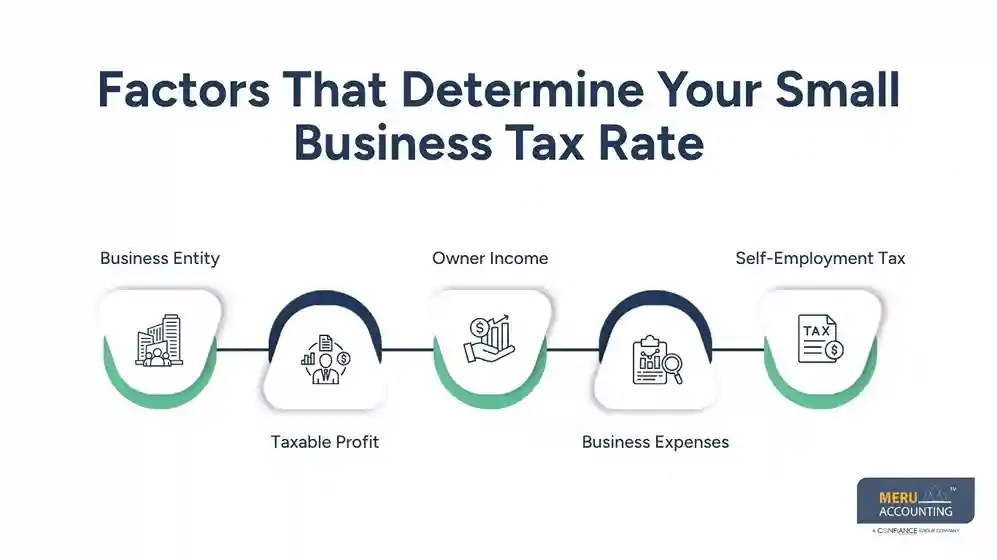
Business Expenses
Valid business expenses can affect taxable income. Owners should keep invoices, receipts, bank records, and other proof that supports reported expenses.
A tax professional can review records and identify areas that need more support.
Self-Employment Tax
Some owners may also owe self-employment tax, which can affect their overall small business tax rate. The IRS states that sole proprietors and certain other self-employed people generally must pay self-employment tax when they meet the applicable earnings threshold.
optional anymore
on running the business
How To Avoid Problems With Late Tax Returns
Track Tax Dates
Keep a tax calendar with federal, state, payroll, estimated tax, and information return dates. Do not rely only on memory.
Calendar alerts can give owners time to gather records and review their small business tax rate before a filing date.
Keep Books Current
Monthly bookkeeping can make tax work less stressful. Current books give the owner a clearer view of sales, costs, cash, and unpaid bills.
Clean records also give the tax preparer better information.
Set Aside Tax Money
Businesses should plan for tax payments during the year based on expected income and the applicable small business tax rate. The IRS uses a pay-as-you-go tax system, and some businesses or owners may need estimated payments.
File Even When You Cannot Pay
If a business cannot pay the full amount, filing the required return on time can still matter. Failure to file and failure to pay are separate issues.
An owner should review payment choices rather than simply ignoring the filing deadline.
Review Notices Quickly
An IRS notice should not be ignored. Read the notice, check the tax period, review the amount, and act before the response date.
Professional advice may be useful when the notice is unclear or the amount is large.
Tips For Managing Your Small Business Tax Rate
Know Your Tax Setup
Start by confirming how the business is taxed for federal purposes. The legal name of an LLC does not by itself tell you how the IRS taxes it.
Correct classification gives the tax preparer a better starting point.
Watch Your Profit
Review income and expenses throughout the year. A sudden rise in profit can affect your future small business tax rate and tax bill.
Regular reviews can also show when estimated tax payments may need attention.
Separate Business Spending
Use separate business accounts where possible. Mixing personal and business spending can make records harder to review.
Clear records also make it easier to support deductions during tax preparation.
Review Deductions
Check whether major business costs have been recorded and whether the records support them. Avoid claiming a cost only because it seems related to the business.
Tax deductions must meet the rules and may affect your small business tax rate when properly claimed.
Plan Before The Deadline
Do not wait until the final days to gather records. Early review gives more time to find missing invoices, bank entries, forms, and other tax data.
Planning ahead is one of the simplest ways to avoid late tax returns.
How Meru Accounting Can Help With Small Business Tax Filing
Organized Tax Records
Meru Accounting can help keep income, expense, and tax records in order. Clear records make it easier to review the small business tax rate and prepare the right tax forms.
Tax Filing Support
Our team can assist with tax return preparation and filing for eligible small businesses. Timely work can lower the risk of missed dates and late tax returns.
Tax Planning
Tax planning can start well before the filing date. Meru Accounting can review income, expenses, deductions, and estimated tax needs during the year.
Bookkeeping Support
Accurate books give owners better tax data. Our bookkeeping support can keep business transactions recorded and organized before tax filing begins.
Filing Deadline Review
Different business structures can have different filing dates and small business tax rate considerations. Meru Accounting can help track key deadlines so owners have more time to prepare and avoid late tax returns.
Ongoing Accounting Support
Tax work often depends on records built throughout the year. Regular accounting support can give owners a clearer view of tax duties and cash needs.
Our Expert Perspective
From our experience, late filing can add penalties, interest, and extra work, but it does not usually change the small business tax rate itself. Businesses with late tax returns should act soon, check unpaid tax, and keep records such as receipts, invoices, and bank statements ready. We recommend year-round bookkeeping and tax reviews so owners can track tax needs, avoid missed dates, and plan payments with more confidence. Professional review can also give clearer guidance when tax rules vary by business type.
Key Takeaways
- Filing late does not usually create a new federal tax rate, but penalties and interest can raise the total amount owed.
- Your small business tax rate depends on factors such as business structure, taxable income, deductions, and credits.
- Late tax returns can lead to filing penalties, while late payments may also result in additional penalties and interest.
- Tax extensions generally provide more time to file a return, but they do not usually provide more time to pay the tax due.
- Keeping accurate records and tracking tax dates can help reduce filing delays and prevent avoidable costs.
- If a return is already late, act quickly and consider professional tax advice when the tax rules or penalty issues are complex.
FAQs
No. Filing late does not normally change the federal tax rate. However, penalties and interest can increase the total amount you owe.
A filing penalty may depend on the return and the facts. Some penalties are based on unpaid tax, but certain business returns have separate late-filing penalty rules.
Interest generally applies to unpaid tax. Penalties may also accrue interest in some cases. The exact amount depends on the tax and return involved.
An extension can provide more time to file, but it generally does not extend the time to pay tax. Businesses should estimate and pay the expected tax by the original due date when required.
Yes. A business can still file after the deadline. Filing as soon as possible may limit further penalties and interest when tax is owed.
optional anymore
on running the business