A project can look profitable at first, but the numbers can change fast. Extra labor, rising material costs, missed billings, and late payments can eat into your profit margin before you notice. Good subcontractor accounting helps you track these costs as they come up, so you can spot problems and take action before they hurt the job.
You don’t need a complex system to stay on top of your numbers. You need a clear view of your job costs, invoices, cash flow, and profit while the work is still underway. With better tracking and a consistent process, you can keep project costs in check and make smarter decisions on your next job.
What You Will Learn From This Blog
In this blog, you will learn:
- What subcontractor accounting includes
- Why job costs can get out of hand
- How to keep better cost and cash records
- How job costing can help track profit
- How to set up a simple accounting process
- What to look for in accounting software for subcontractors
- When it may make sense to get help with your books
What Is Subcontractor Accounting?
Subcontractor accounting is the process of tracking the money tied to your work. It can cover job income, labor, materials, tools, bills, payments, payroll, taxes, and other costs.
For many subcontractors, the key is not just knowing how much money came in. You also need to know which job earned that money and what it cost to do the work.
For example, a job may bring in $50,000. That sounds like a good deal. But if labor, materials, equipment, and other direct costs total $43,000, the job has only $7,000 left before other costs. If some bills were missed or placed in the wrong job, the true result may be even lower.
A sound subcontractor accounting process links income and costs to the right job. It also helps keep bills, invoices, bank records, and reports in sync.
optional anymore
on running the business
Why Subcontractors Struggle to Control Project Costs
Project costs can move fast. A job may start with a set bid, but the real cost can change as work goes on.
Here are some common causes:
Poor job cost tracking:
If costs are not tied to each job, it is hard to see which jobs make money and which ones do not.
Late or missed bills:
A bill that is not entered on time can make current job costs look too low.
Change orders:
Extra work, new materials, or added labor can raise costs. If the added work is not billed, profit can drop.
Late customer payments:
A profitable job can still create a cash gap when invoices are not paid on time.
Wrong cost codes:
A cost placed under the wrong job or cost type can lead to bad reports and poor job choices.
Weak cash tracking:
You need to know not only what you earned, but also what you owe and what cash is due soon.
This is where better subcontractor accounting can make a real difference. Clear records give you a better view before a small issue turns into a large loss.
How to Improve Subcontractor Accounting
Improving subcontractor accounting starts with a few basic habits.
Keep Costs Tied to Each Job
Set up a clear way to track costs by job. Labor, materials, equipment, subcontracted work, and other direct costs should be tied to the right project.
This lets you compare the cost of the work with the amount you agreed to bill.
Track Labor and Material Costs
Labor and materials can make up a large part of project cost. Track them as work is done rather than waiting until the job is close to being done.
If material costs rise, you want to know early. The same is true when labor hours run above the plan.
Enter Bills on Time
Late data can lead to bad choices. If a vendor bill comes in, record it soon and link it to the right job.
This helps keep your job cost reports closer to the real cost of the work.
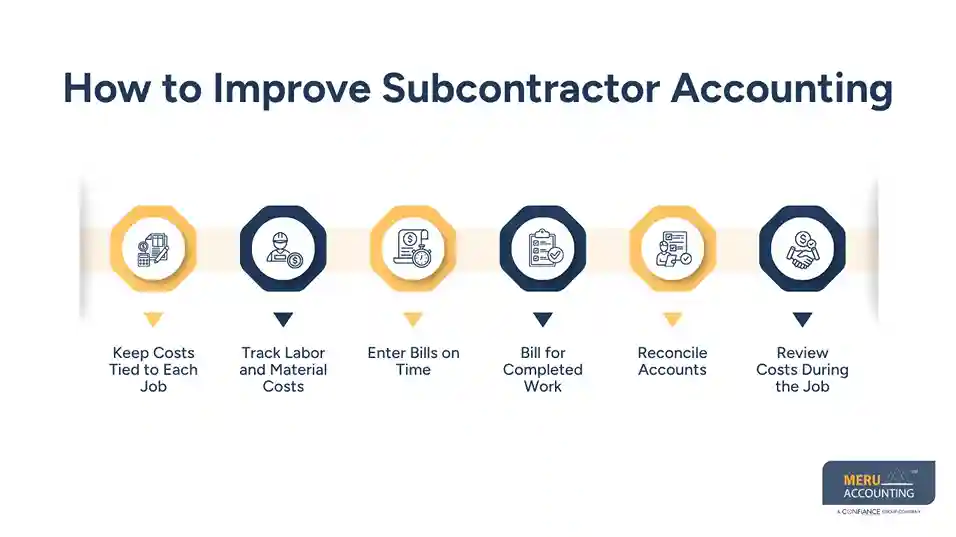
Bill for Completed Work
Do not let finished work sit unbilled. Set a clear billing plan based on your contract and project terms.
Review open work and unpaid invoices on a set schedule. This can help improve cash flow and reduce the risk of late payment.
Reconcile Accounts
Bank and card records should be checked on a regular basis. Reconciliation can help find missing entries, duplicate entries, and errors.
It also gives you more trust in the numbers you use to make job and cash decisions.
Review Costs During the Job
Do not wait until a project ends to review the numbers. Look at cost and income while the job is still active.
This is one of the most useful parts of subcontractor accounting. Early review gives you time to act when costs start to move off plan.
Use Job Costing to Track Project Profit
Job costing is a key part of subcontractor accounting. It helps you see the income and costs tied to each job.
Start by setting a budget for the main cost types. This may include:
- Direct labor
- Materials
- Equipment
- Permits and fees
- Travel
- Other job costs
Then compare the plan with actual costs as the job moves forward.
For example, if you planned $20,000 for labor but have already used $18,000 with weeks left on the job, that is a sign to look closer. You may need to check hours, scope, crew use, or billing.
Job costing can also help you spot jobs with weak margins. If one type of job often runs over budget, you may need to change your bid, work plan, or cost controls.
Good subcontractor accounting turns these numbers into useful job insight. You are not just keeping books. You are using the numbers to help protect your margin.
Set Up a Simple Subcontractor Accounting Process
A clear process makes it easier to keep your books up to date.
A simple flow can look like this:
Record → Code → Reconcile → Review → Act
First, record income, bills, payments, and expenses. Next, code each item to the right job and cost type. Then reconcile your bank and card accounts.
After that, review job reports, unpaid bills, open invoices, and cash flow. If you see a cost issue, act on it while there is still time to fix it.
Use the Right Tools
The right accounting software for subcontractors can help reduce manual work. Look for tools that support job tracking, invoicing, expense records, bank feeds, reports, and account reconciliation.
You may also want tools that work with the system you already use. QuickBooks, Xero, and Zoho Books can support many common bookkeeping tasks, but the best setup depends on your work, job size, and reporting needs.
The goal is not to use more software. It is to have a clean system that helps you keep data up to date and easy to review.
Subcontractor Accounting Services by Meru Accounting
Keeping job costs, bills, invoices, and account records up to date can be a lot to handle while you’re running projects. Meru Accounting provides subcontractor accounting services to help keep your books accurate and your project finances easier to track.
What Our Team Can Handle
We can take care of the routine accounting work that keeps your records in good shape:
- Bookkeeping: Record income, expenses, and daily transactions.
- Job cost tracking: Keep project costs assigned to the right job.
- Accounts payable and receivable: Manage bills, invoices, and unpaid balances.
- Bank and credit card reconciliation: Check your books against account activity.
- Payroll accounting support: Keep payroll records clean and current.
- Monthly reports: Prepare clear reports on income, costs, and cash flow.
- Cleanup and catch-up: Bring old or messy books up to date.
- Tax-ready records: Keep your records organized for tax work.
We work with QuickBooks, Xero, and Zoho Books, so you can keep the tools you already use. Our team can work around your current process instead of making you start from scratch.
With the routine work covered, you get more time to focus on your jobs and a clearer view of the numbers behind your business.
Our Expert Insight
One thing subcontractors often miss is committed costs. A job may look profitable based on the bills entered so far, but you may still have open purchase orders, pending labor costs, or materials already ordered. If those costs are left out, your job margin may look better than it really is.
Change orders need the same care. When the scope changes, update the job cost and the amount you will bill. For jobs with retainage, keep that amount separate from regular receivables. This gives you a clearer view of what has been billed, what is still due, and what you can expect to collect.
Key Takeaways
- Subcontractor accounting should track both job income and job costs.
- Link labor, materials, bills, and other direct costs to the right project.
- Review costs while jobs are still active.
- Use job costing to compare planned and actual costs.
- Bill on time and track unpaid invoices.
- Reconcile bank and card accounts on a set schedule.
- Choose accounting software for subcontractors that fits your work and current process.
- Use clean financial data to spot cost issues before they cut into profit.
- Get accounting help when bookkeeping takes too much time or job records become hard to manage.
FAQs
Most subcontractors track labor, materials, equipment, and other costs by job. This makes it easier to compare actual costs with the original estimate.
WIP, or work in progress, shows the status of unfinished jobs. It can help you see whether costs and billings are in line with the work completed.
Keep retainage separate from regular receivables. This makes it easier to see what has been held back and when you can expect payment.
It should help track jobs, costs, invoices, expenses, payments, and reports. It should also make bank reconciliation and day-to-day bookkeeping easier.
Job cost shows what you spend on a specific project. Business profit also accounts for overhead, such as insurance, office costs, and software.
optional anymore
on running the business