
Construction companies operate in a complex financial environment. Projects involve multiple vendors, labor teams, equipment, and materials, all with fluctuating costs. Managing finances accurately is essential for maintaining profitability and avoiding compliance issues. Tax and bookkeeping services provide a structured approach to track costs, forecast budgets, and plan for taxes efficiently.
With expert accounting support, construction companies can gain better control over project finances, make informed decisions, and reduce the risk of errors that can impact both taxes and overall profitability.
What You Will Learn From This Blog
- How professional bookkeeping services organize financial records for construction projects.
- Strategies for accurate job costing and budget management.
- The role of tax planning in reducing liabilities and improving cash flow.
- How to manage equipment, labor, and material costs efficiently.
- What to look for when choosing a bookkeeping and tax services provider.
Understanding the Role of Tax and Bookkeeping Services in Construction
Accurate financial management is essential for construction companies to maintain control over project costs and overall business performance. Keeping detailed records of expenses, revenues, invoices, labor charges, and vendor payments ensures every transaction is properly documented and easy to review.
Professional tax and bookkeeping services also make it easier for companies to evaluate project profitability, prepare realistic budgets, and create more accurate bids for future construction work.
Construction businesses often manage multiple projects at the same time, making financial tracking more complex.
Proper bookkeeping allows companies to determine the actual cost of each project by monitoring labor, equipment, subcontractor, and material expenses separately. This structured process gives business owners a clearer understanding of where money is being spent and where adjustments may be required to avoid unnecessary losses or budget overruns.
Timely financial reporting, organized tax planning, and expert tax services also reduce compliance risks and support better decision-making.
Accurate reports provide insights into project performance, cash flow position, and ongoing expenses, allowing managers to respond quickly when costs begin to rise.
In addition, maintaining proper records helps construction companies stay compliant with tax regulations and industry requirements while reducing the risk of penalties, reporting errors, or audit-related issues.
Key Financial Challenges Faced By Construction Businesses
Construction companies face several financial hurdles that can affect profitability and project success. Professional tax and bookkeeping services help address these challenges, but understanding them is essential for proper planning.
Multiple Revenue Streams
Construction firms often earn from diverse sources like project contracts, subcontracts, and material sales, making financial tracking complex.
This makes it difficult to maintain a clear view of overall project profitability without structured recording systems.
Labor Cost Variability
Fluctuating labor hours, overtime, and subcontractor charges can impact budgets if not monitored accurately.
Even small changes in workforce usage can significantly shift total project expenses.
Material and Equipment Expenses
Procurement delays or cost increases in materials and machinery can disrupt project financial plans.
These price variations often create gaps between estimated and actual project costs.
Tax Compliance Complexity
Construction companies face unique tax challenges, such as depreciation of assets, labor taxes, and local construction taxes.
Incorrect reporting can lead to penalties and increased audit risk, making professional tax services important for construction businesses.
Project Delays and Cost Overruns
Unplanned delays often lead to increased labor and material costs, which need precise tracking to maintain profitability.
Such overruns can also affect client relationships and future contract opportunities.
Mismanaged Budgets
Without structured bookkeeping, small errors can escalate, affecting the overall financial health of the business.
Over time, this can reduce cash flow stability and limit growth potential, emphasizing the importance of professional tax and bookkeeping services.
How Tax and Bookkeeping Services Support Job Costing and Tax Planning in Construction Companies
Detailed Project Tracking
Each project’s expenses are monitored separately, allowing accurate comparisons between estimated and actual costs. Project managers identify cost gaps early and take corrective steps before profit margins are affected.
Allocation of Overheads
Overhead costs such as administrative expenses, equipment maintenance, and facility charges are assigned to the right projects. Every project reflects its true cost structure, ensuring no expenses remain hidden or unassigned.
Tax Planning Insights
Effective tax and bookkeeping services help financial experts identify eligible deductions, ensuring companies pay only what is required while staying compliant with regulations.
Structured planning, accurate records, and reliable tax services help reduce penalty risks and improve long-term financial stability.
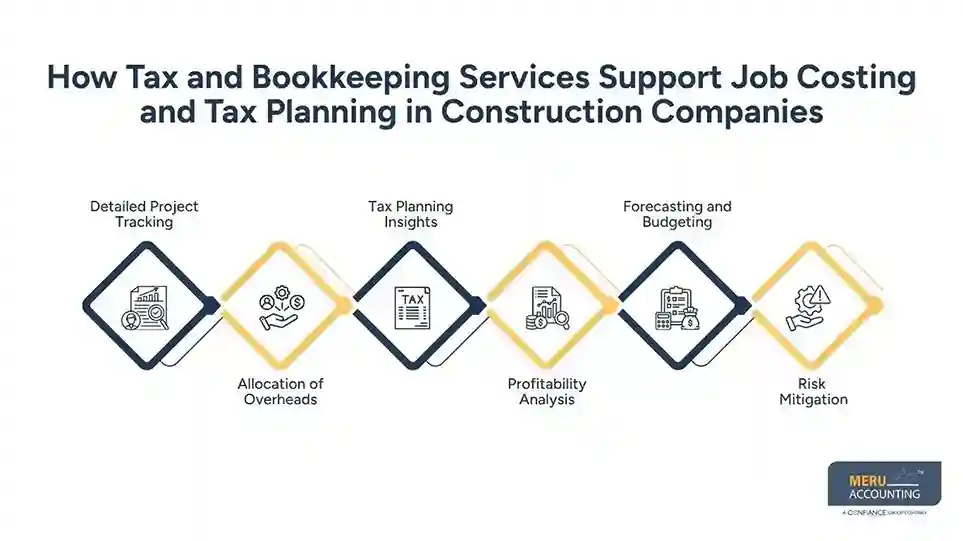
Profitability Analysis
Regular reports highlight which projects are profitable and which are draining resources, guiding future business decisions.
Construction firms focus more on high-performing projects and take corrective steps for weaker ones.
Forecasting and Budgeting
Accurate cost records enable more realistic budgeting and help prepare for unexpected expenses. Reliable financial data helps contractors allocate funds more accurately between active projects, equipment purchases, and future bids.
Risk Mitigation
Bookkeeping and tax planning reduce errors that can lead to audits, fines, or legal disputes, providing peace of mind to business owners. Stronger financial control also improves transparency with clients and stakeholders.
How Construction Companies Use Tax and Bookkeeping Services for Budget Control
Monitoring Project Budgets
Bookkeepers track every expense, from materials to labor, keeping projects within financial limits. Budget discipline becomes easier when every transaction is recorded against the correct project head.
Early Detection of Overruns
Regular reporting highlights budget discrepancies early, allowing prompt corrective action. Small variances in cost are flagged before they turn into larger financial pressure points.
Expense Categorization
Effective tax and bookkeeping services bring structure to cost classification such as labor, equipment, and subcontracting, giving project managers a clear financial overview. Clear grouping of expenses allows better understanding of where funds are being consumed most.
Cash Flow Scheduling
Planning payments for suppliers and payroll with the support of organized tax services helps prevent cash shortages during project execution. A stable payment timeline reduces delays in material supply and workforce continuity.
Reporting to Stakeholders
Transparent financial reports build trust with investors, clients, and partners. Consistent reporting also improves accountability across all project stages.
How Tax and Bookkeeping Services Help Manage Equipment and Material Costs
Tracking Equipment Usage
Bookkeeping systems monitor machinery usage, maintenance costs, and depreciation to allocate expenses accurately. Proper tracking ensures equipment costs are recorded against the correct project activity.
Material Cost Management
Monitoring material purchases and usage ensures projects stay within budget while reducing unnecessary waste, with the help of tax and bookkeeping services. Careful tracking of material flow also reduces the risk of over-ordering and idle stock.
Vendor and Supplier Coordination
Accounting professionals and tax services providers maintain records of vendor payments, preventing disputes and late fees. Clear payment records also strengthen long-term supplier relationships.
Inventory Management
Accurate records prevent stock shortages or excess, reducing unnecessary expenses. Balanced inventory levels support smoother project execution without interruptions.
Forecasting Future Needs
Historical cost data allows companies to anticipate material and equipment requirements for future projects, supported by tax and bookkeeping services. Better forecasting leads to more accurate planning and reduced procurement delays.
What Construction Companies Should Look For in Tax and Bookkeeping Services
Industry Experience
A provider familiar with construction accounting standards can handle complex job costing and tax regulations efficiently, especially when working with tax and bookkeeping services tailored for project-based industries.
Such experience also reduces errors in cost tracking and improves financial accuracy across multiple sites.
Comprehensive Reporting
The service should deliver detailed reports for project costs, cash flow, and tax obligations. Clear reporting helps management understand financial performance without confusion or delay.
Software Proficiency
Experience with construction accounting software or cloud-based platforms ensures accurate, efficient record-keeping. Proper system use also improves data consistency across all active projects.
Timely Support
Prompt assistance during audits, tax filings, or financial reviews through reliable tax services reduces risk and stress. Quick response times also help avoid compliance delays and penalties.
Transparent Pricing
Clear service fees help construction companies plan their accounting budgets without surprises. Predictable pricing supports better long-term financial planning.
Customized Services
Flexible tax and bookkeeping services that adapt to project size, type, and complexity ensure accurate financial management. Tailored solutions also help construction firms handle both small and large projects with equal efficiency.
Why Choose Meru Accounting?
Meru Accounting provides specialized support designed for construction companies that need accurate financial control across multiple projects.
With our certified professionals and global experience, we focus on improving job costing accuracy, managing complex project expenses, and maintaining clear financial records that support better decision-making.
Our tax and bookkeeping services are built to reduce reporting errors and bring structure to day-to-day accounting operations. We have strong experience in construction finance and tax planning. Our work covers project-based accounting, expense tracking, and structured reporting that aligns with industry needs.
We design solutions to handle multi-project environments where labor, materials, equipment, and subcontractor costs must be recorded with precision to avoid budget gaps.
We also ensure compliance with local and international financial regulations, helping businesses reduce risks linked to audits or filing errors.
Our services are structured to remain cost-effective while improving financial visibility, allowing companies to manage budgets with more confidence. Along with this, we provide ongoing financial guidance to support better tax decisions and long-term cost control across all active and upcoming projects.
Our Expert Perspective
From our experience working with construction firms globally, we have seen how structured financial management can transform project outcomes. Companies that invest in proper tax and bookkeeping services reduce risks while gaining a competitive advantage through more accurate bidding, improved budgeting, and optimized tax strategies.
Our approach emphasizes precise tracking of project costs, timely reporting, and proactive financial planning to ensure construction businesses achieve stronger profitability and long-term stability.
Key Takeaways
- Professional bookkeeping tracks project expenses, labor, and materials accurately.
- Tax planning within tax and bookkeeping services minimizes liabilities while ensuring compliance with regulations.
- Job costing provides insights into project profitability and financial efficiency.
- Budget control is enhanced with detailed reporting and early detection of overruns.
- Equipment and material costs are managed effectively, reducing waste and excess.
- Choosing experienced professionals ensures reliable, actionable financial insights.
FAQs
Bookkeeping services track every expense for labor, equipment, and materials. This makes it easier to spot overspending and adjust budgets before issues escalate.
Job costing assigns costs to each project separately. It helps companies understand actual expenses and set accurate bids for future projects.
Tax services identify deductions, credits, and compliance requirements. They ensure companies pay only what is required and avoid penalties.
Yes. Tracking client payments, payroll, and vendor bills ensures steady cash flow, preventing project delays caused by financial shortfalls.
Look for industry experience, comprehensive reporting, timely support, and software proficiency. Providers that customize services to your project needs are ideal.