A business expense does not become a tax deduction just because you paid for it. Your books need to show what you spent, why you spent it, and how it relates to your business. That is where tax breaks for small business owners connect with everyday bookkeeping. The way you record expenses during the year can make it much easier to identify eligible deductions when it is time to prepare your tax return.
Think about the costs that can build up over a year: software, advertising, insurance, contractor payments, travel, supplies, and equipment. If those expenses are properly recorded and supported by receipts or other records, your tax preparer has a clearer picture of what may qualify. Keeping your books current can also help uncover missed expenses and support small business tax savings without turning tax time into a search through old transactions.
The key is to treat bookkeeping as part of your year-round tax process, not as a task to finish right before filing. Clean, well-organized books give you and your tax professional better information to work with.
What You Will Learn From This Blog
- What tax breaks for small business owners can mean in day-to-day tax work
- How bookkeeping helps track costs that may be deductible
- Which common business costs need close record care
- How clean books can support small business tax savings
- How to get your records ready for tax filing
What Are Tax Breaks for Small Business Owners?
Tax breaks for small business owners can include tax deductions and tax credits that may lower the tax tied to a business. A deduction lowers income that is subject to tax, while a credit may reduce tax due. The rules vary by tax type, business form, and the cost or activity involved.
For many small firms, the first step is to track normal business costs well. The IRS says a business expense must be both ordinary and necessary to be deductible. Personal costs are not business costs, and a cost that has both business and personal use may need to be split.
This is where bookkeeping matters. Your books do not decide if a cost is tax deductible. They do help show what you paid, when you paid it, who was paid, and what the cost was for. That record can give your tax preparer a clear base for review and help you find tax breaks for small business owners that may otherwise be missed.
How Bookkeeping Connects to Small Business Tax Deductions
Bookkeeping and tax preparation work best when they use the same set of facts. Each sale, bill, card charge, payroll run, and asset purchase should be recorded in a clear way. This can make small business tax savings easier to review because the tax pro starts with organized data instead of a pile of old transactions.
Here is how the link works:
- Record the transaction. Enter income and costs as they happen, not months later.
- Put it in the right account. A clear chart of accounts helps group similar costs.
- Save the proof. Keep invoices, receipts, statements, and other records tied to the entry.
- Reconcile the account. Match bank and card records to your books and fix gaps.
- Review tax items. Flag items that may need tax treatment, such as mixed-use costs or asset buys.
- Give the tax pro clean data. Final books can make tax prep faster and reduce the need to hunt for basic facts.
The IRS notes that supporting records can include receipts, paid bills, invoices, deposit slips, and canceled checks. It also says the books should show income, deductions, and credits.
Common Tax Breaks for Small Business Owners to Track in Your Books
The right tax items depend on your facts, entity, and tax year. Still, some cost types show up in many small firms. Tracking them in your books can help support small business tax savings and make it easier to review tax breaks for small business owners before filing.
Office and Supply Costs
Track office rent, supplies, postage, and other day-to-day costs in clear accounts. Keep the bill or receipt so the amount and business use are easy to show.
Advertising and Software
Ad spend, web tools, cloud apps, and other work tools can add up fast. Record the vendor, date, amount, and what the tool was used for. This can help you spot missed costs at tax time.
Professional Fees and Insurance
Legal, tax, accounting, and other professional fees may be business costs. The same goes for many types of business insurance. Keep each bill with the book entry.
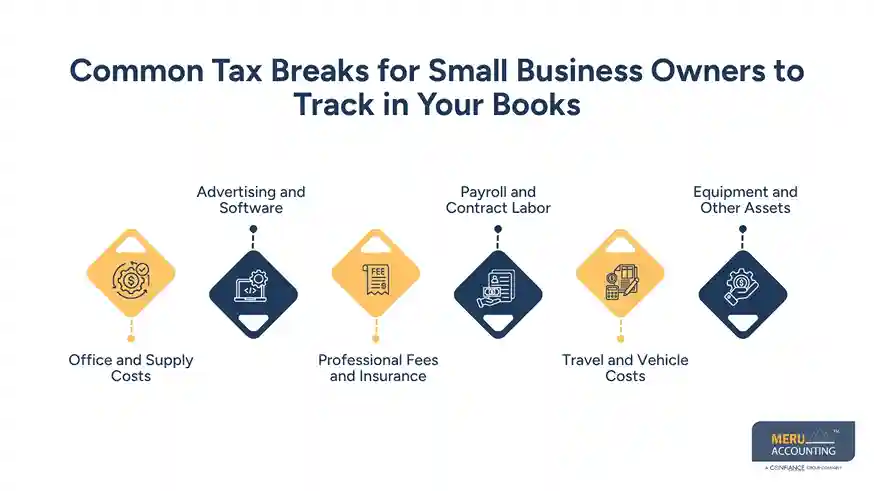
Payroll and Contract Labor
Wages, payroll taxes, and some worker costs need good records. Contractor payments may also need special tax forms, so your books should show who was paid, how much, and when.
Travel and Vehicle Costs
Travel, car, and other transport costs have special record rules. A card charge alone may not tell the full story. Keep mileage logs and other details when the tax rules call for them. The IRS notes that travel and transportation expenses can have added recordkeeping rules.
Equipment and Other Assets
A laptop, machine, or other asset may not be treated like a normal supply expense. Your books should track the purchase date, cost, use, and any later sale. Asset records can support depreciation and other tax work.
How to Organize Bookkeeping Records for Tax Deductions
Good records do more than help with tax breaks for small business owners. They also make it easier to see cash flow, profit, and open bills.
Start with separate business accounts when you can. Mixing personal and business costs makes review harder. If a cost has both uses, record the business share in a way that can be backed by your records. The IRS says personal expenses are generally not deductible and mixed-use costs must be divided between business and personal use.
Next, use clear expense accounts. Do not put every card charge into one broad “misc.” account. A clear book lets you see where money went and helps your tax pro ask better questions.
Keep source files in a simple system. You can use folders by year and type, or a digital tool that links a file to each entry. The IRS says electronic records must meet the same basic recordkeeping rules as paper records.
Reconcile bank and card accounts each month. This can catch missing costs, duplicate entries, and personal charges before they pile up.
Also, do not wait for year-end to review unusual items. Large asset purchases, mixed-use costs, owner payments, loans, and other items may need extra tax review. This habit can support small business tax savings by giving your tax preparer better records to work with.
optional anymore
on running the business
Tax Deductions That Need Extra Bookkeeping Attention
Some tax items need more than a basic expense entry. They need added facts that show how the cost was used. These areas deserve extra care when you are looking for tax breaks for small business owners.
Home Office Costs
If you claim a home office deduction, your records need to support the business use of the home and the method used. Keep the facts used to work out the claim. The IRS has specific rules for business use of a home.
Vehicle Use
For a business vehicle, keep the details needed to support the business use. Mileage logs can be key. Do not rely on memory at year-end.
Meals and Travel
Keep the date, place, amount, and business reason when required. Some meals and travel costs have special limits and rules, so your tax pro may need more than the card statement.
Equipment and Depreciation
Keep purchase records, dates, cost, use, and sale details. The IRS says asset records help work out depreciation and gain or loss when property is sold.
Contractor Payments
Keep vendor details, invoices, payment records, and any tax forms tied to the payment. A clean vendor file can make year-end review much easier.
Meru Accounting’s Tax Preparation Services
At Meru Accounting, we help small businesses keep their books in shape and prepare tax-ready records. Our tax preparation support can work from your existing books and help bring missing or unclear items to light before filing.
Our tax preparation services include:
- Business and individual tax preparation support
- Review of income and expense records
- Tax-ready bookkeeping and account reconciliation
- Catch-up and cleanup work before tax filing
- Support for documents and records needed by your tax preparer
- Ongoing bookkeeping that keeps tax data current
We help you keep the numbers clean, keep the records in order, and make tax time less of a scramble. We can also work with the software and process your business already uses.
With a clean bookkeeping process, tax breaks for small business owners are easier for your tax professional to review. The same process can also support small business tax savings by helping reduce the risk of missed business costs and incomplete records.
Our Expert Insight
One issue we see in small-business bookkeeping is that an expense can be recorded correctly but still lack the details needed for tax review. For example, a credit card charge may have the right category, but the records may not show what was purchased, who it was for, or how it relates to the business.
A better approach is to review higher-risk or higher-value transactions during the year, not just at tax time. Pay closer attention to large purchases, meals, travel, contractor payments, vehicle costs, and expenses that could have both business and personal use. Keep the receipt and enough detail to explain the business purpose while the information is still easy to verify.
This gives your tax professional a stronger record base when reviewing tax breaks for small business owners. It also helps separate legitimate business expenses from items that may need additional documentation or tax treatment, which can support better small business tax savings decisions.
Key Takeaways
- Tax breaks for small business owners often depend on having clear records behind each claim.
- Good bookkeeping helps track income, costs, assets, and supporting files.
- Separate business and personal spending where possible.
- Reconcile bank and card accounts each month.
- Give extra care to vehicles, home office costs, meals, travel, assets, and contractor payments.
- Small business tax savings should come from valid tax rules and well-supported records, not from guessing or overclaiming.
- Work with a tax professional when a cost has special rules or your tax situation is complex.
FAQs
Common deductions may include eligible costs for payroll, advertising, insurance, professional services, supplies, travel, and business use of vehicles. Eligibility depends on the expense and the business.
Yes. Keep receipts, invoices, statements, and other records that support your business expenses and show their purpose.
Potentially, if the expense is a legitimate business cost and is properly documented and recorded in the books.
The IRS generally recommends keeping records that support income, deductions, and credits for as long as needed under the applicable record-retention rules.
Provide current books, income and expense records, bank and credit card statements, payroll records, asset information, and other tax documents relevant to your business.
optional anymore
on running the business