Tax laws for small businesses can seem hard when federal, state, and local rules all apply. A business may need to report income, pay tax, collect sales tax, handle payroll tax, and make payments during the year. The exact rules depend on the business type, location, income, workers, and the goods or services sold.
For that reason, small business owners need a clear tax plan, good records, and a set process for each filing period. The IRS states that the form of business can affect which taxes apply and how those taxes are paid.
What You Will Learn From This Blog
- How do taxes work for small businesses at the federal level
- Key small business tax obligations
- How state and local taxes can vary
- How business structure affects tax filing
- Common deductions and tax credits
- Ways to avoid tax errors and late filings
- Simple steps for better tax compliance
- How professional tax help can fit your needs
Understanding Tax Laws for Small Businesses
Know Your Tax Type
Tax laws for small businesses do not work in the same way for every firm. A sole owner, partnership, S corporation, and C corporation can have different filing duties.
The IRS lists income, estimated, self-employment, employment, and excise taxes among the main federal business taxes.
Track All Business Income
Business income can come from sales, fees, services, rent, or other sources. The IRS says income from the sale of goods or services is generally business income.
Keep sales records that match bank records and invoices. Good records make tax work clearer at year-end.
Separate Business Costs
Business costs should be tracked apart from personal spending. Use a business bank account and keep bills, receipts, invoices, and payment records.
A clean record can make it easier to find valid deductions and explain figures if questions arise.
Watch Tax Due Dates
Tax work is not only an annual task. Some owners may need estimated payments during the year, while employers have tax deposit and reporting duties.
The IRS notes that estimated tax is a pay-as-you-go system for many taxpayers.
Review Rules Each Year
Tax laws for small businesses can change from one tax year to the next. Rates, credits, limits, forms, and filing rules may change.
Check current IRS and state guidance before filing. Do not rely only on an old return or past tax plan.
Small Business Tax Obligations You Need to Know
Income Tax
The business structure also determines many of the small business tax obligations that apply during filing. Partnerships usually file an information return, while other entities follow different federal filing rules.
Self-Employment Tax
Tax laws for small businesses also cover self-employment tax requirements for qualifying business owners. The tax mainly covers Social Security and Medicare and generally applies to net earnings of $ 400 or more.
Employment Tax
Businesses with employees may need to withhold income tax and handle Social Security and Medicare taxes. Employers must also manage federal unemployment tax and meet required deposit and filing dates.
Estimated Tax
Knowing tax laws for small businesses can help owners determine when estimated payments may apply. Individuals, including many sole owners, partners, and S corporation shareholders, generally may need estimated payments when they expect to owe $1,000 or more.
Corporations generally use a $500 expected tax threshold for estimated tax payments.
Information Returns
A business may need to report certain payments made to workers or other parties. For example, payments to independent contractors may trigger information reporting.
The IRS notes that some businesses may need Form 1099-MISC for qualifying service payments.
Federal Tax Laws for Small Businesses
Federal Income Tax
Federal income tax is a major part of tax laws for small business. Understanding small business tax obligations starts with knowing how federal income tax applies to the business structure and taxable income.
A business owner should track income and costs throughout the year instead of trying to rebuild records at filing time.
Payroll Tax
Payroll tax becomes important when a business hires employees. Employers generally withhold federal income tax and handle Social Security and Medicare taxes.
FUTA may also apply. Payroll records should match wages, tips, tax deposits, and filed forms.
Estimated Payments
Estimated payments can reduce the risk of a large tax bill at year-end. They can also reduce the risk of an underpayment penalty.
The IRS provides four payment periods for estimated tax, with special rules for certain taxpayers.
Excise Tax
Excise tax may apply to certain goods, services, equipment, or types of business activity. Not every small firm owes this tax.
Federal tax laws for small business may include excise tax rules for certain goods, services, and business activities.
Federal Tax Forms
The correct form depends on the type of business and tax duty. Sole owners, partnerships, corporations, and S corporations can have different filing forms.
Using the wrong form can create filing issues, so owners should confirm the current IRS requirements before submission.
State and Local Tax Laws for Small Business
State Income Tax
States set their own tax rules. Some states impose individual or corporate income taxes, while others use different tax systems.
A business can have state duties even when its federal filing looks simple, making tax laws for small business important at both federal and state levels.
Sales Tax
Sales tax may apply when a business sells taxable goods or services. The rate and taxable items vary by state and local area, so tax laws for small businesses should be reviewed based on where sales occur.
A seller may also have registration and collection duties based on where customers are located.
Local Business Taxes
Cities and counties may impose local taxes, fees, licenses, or other business charges. These rules can differ within the same state.
A business that opens a new site should review the local rules before starting sales.
Tax Registration
Some states require businesses to register before collecting sales tax or hiring staff. Understanding small business tax obligations can help owners identify which state tax accounts and registrations may apply.
Keep copies of registration records, permits, account numbers, and filing notices.
Multi-State Activity
Selling or working in more than one state can create added tax duties. The key issue may include where the business operates, has staff, owns property, or makes sales.
Multi-state tax laws for small businesses can be complex. Professional advice may be wise when a business expands across state lines.
optional anymore
on running the business
How Business Structure Affects Your Taxes
Sole Proprietorship
A sole proprietorship is not separate from its owner for federal tax purposes. The owner generally reports business income and expenses on a personal federal return, often using Schedule C.
Partnership
A partnership has two or more owners and generally files an information return. Each partner reports their share of income, deductions, and other tax items on their tax return, forming part of their small business tax obligations.
C Corporation
Under tax laws for small businesses, a C corporation is generally treated as a separate tax entity for federal income tax purposes. Owners may also pay personal tax when corporate earnings are distributed as dividends.
S Corporation
An S corporation generally passes income, losses, deductions, and credits to its shareholders. Shareholders report their allocated share on their personal tax returns under applicable IRS rules.
LLC
Under tax laws for small businesses, an LLC can have different federal tax treatment depending on its ownership and tax election.
A single-member LLC may be treated as part of the owner’s return, while a multi-member LLC is generally treated as a partnership unless an election is made. The IRS notes that an LLC can also elect corporate tax treatment.
Small Business Tax Deductions and Credits
Ordinary Business Costs
Businesses may deduct qualifying costs tied to their trade or business, such as rent, supplies, software, and advertising. Each expense should have a clear business purpose and proper supporting records.
Vehicle Costs
Business vehicle use may qualify for a deduction under the applicable IRS rules and method. Owners should keep mileage logs and separate business use from personal use.
Home Office Costs
Some owners may claim a home office deduction when the space meets IRS requirements and applicable tax laws for small businesses. Records should show the space used and how related costs were calculated.
Employee Costs
Certain employee costs, such as wages and qualifying benefits, may be deductible business expenses. Payroll records should clearly support the amounts reported on the tax return.
Tax Credits
Tax credits can reduce tax when a business meets specific eligibility rules. Credits may cover areas such as hiring, research, energy, or certain employee benefits.
Common Tax Mistakes Small Businesses Should Avoid
Mixing Personal And Business Costs
Understanding tax laws for small businesses can help owners separate personal spending from valid business costs and maintain clearer records. Separate bank accounts and clear transaction labels create a cleaner record trail.
Missing Estimated Payments
Some owners may forget tax payments due during the year, making it harder to manage their small business tax obligations and potentially leaving a large balance later. Late or low estimated payments may also result in penalties under IRS rules.
Poor Payroll Records
Payroll errors can affect wages, tax withholding, deposits, and employer tax reports. Review payroll data before each filing and payment cycle to catch errors early.
Claiming Weak Deductions
Not every purchase qualifies as a business deduction, especially when personal use is involved. Keep receipts and other proof, and confirm that each cost meets current tax rules.
Filing Late
Late tax returns or payments may lead to penalties and interest under applicable rules. Use a tax calendar to track federal, state, and local filing and payment dates.
How to Stay Compliant With Tax Laws for Small Businesses
Keep Good Records
Record income, expenses, receipts, invoices, bank statements, payroll data, and tax forms throughout the year. These records help support your small business tax obligations and provide documentation when filing returns.
Use A Tax Calendar
Create a calendar for federal, state, and local filing and payment deadlines. Add reminders for payroll deposits, sales tax returns, estimated payments, and annual filings.
Review Accounts Monthly
Review accounts each month to find missing income, duplicate costs, unpaid bills, or incorrect entries. Regular checks make errors easier to fix before tax filing begins.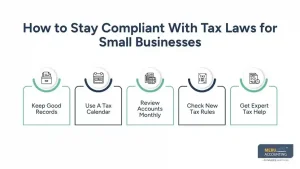
Check New Tax Rules
Tax laws for small businesses can change over time, so review current IRS guidance and state tax updates before filing. Use official tax sources to check new forms, rates, deadlines, and filing requirements.
Get Expert Tax Help
A tax professional can review filing duties, deductions, records, and payment needs as your business grows. Expert review is useful when you have staff, several locations, or complex tax matters.
How Meru Accounting Supports Small Business Tax Management
Organized Tax Records
Meru Accounting can keep your income, expenses, invoices, and tax records in order. Clear records give small business owners a better base for tax filing and planning.
Federal Tax Support
Understanding tax laws for small businesses can help owners identify federal requirements based on their business type and income. Meru Accounting can assist with tax records, filing needs, and year-round tax planning for eligible businesses.
State Tax Review
State and local rules may add more filing duties. Our team can review the tax needs linked to your business location, sales, staff, and business activity.
Deduction Review
Business owners may miss valid deductions when records are not kept well. Meru Accounting can review business expenses and records to identify costs that may qualify under current tax rules.
Tax Filing Support
Tax filing needs more than entering numbers into a form. Our team can review financial data, check key records, and prepare the information needed for accurate filing.
Year-Round Tax Planning
Tax planning should not start only when a return is due. Meru Accounting can help businesses review income, expenses, tax payments, and records throughout the year.
Our Expert Perspective
Our expert view is that small business tax planning should focus on decision-making, not just filing. Business owners should assess how changes in income, hiring, business structure, or expansion may affect their tax position before making major business decisions. A forward-looking review can reveal tax risks early and give owners time to choose the right course of action.
Key Takeaways
- Understand your small business tax obligations based on your business structure
- Keep business and personal costs completely separate at all times
- Track all income and expenses throughout the entire year
- Make estimated tax payments whenever applicable rules require them
- Review tax laws for small businesses at the federal and state levels
- Keep payroll records complete, accurate, and properly organized
- Check each deduction carefully before claiming it on returns
- Use current IRS and state tax guidance when filing
- Review all tax records carefully before submitting returns
- Get professional advice when tax matters become more complex
FAQs
A small business may need to pay income, self-employment, employment, sales, or excise taxes, depending on its structure, activities, workers, and location.
Small businesses pay taxes based on their income, business structure, and tax duties. Some taxes are paid by the business, while others are reported on the owner’s personal tax return.
Small business tax obligations depend on applicable tax laws for small businesses, income, structure, and filing deadlines.
An LLC’s federal tax treatment depends on its owners and tax elections.
Yes, qualifying business expenses may be deductible when properly documented and allowed by tax rules.
optional anymore
on running the business