Tax planning is not just about finding deductions at tax time. For dentists, it means making the right financial and tax choices throughout the year so more of your practice income can stay with you. Dental practices have unique costs, from clinical supplies and lab fees to equipment, staff benefits, insurance, and continuing education. The way these costs are tracked, timed, and treated for tax purposes can affect your overall tax position. Tax planning for dentists starts well before you file your return. It may include reviewing estimated tax payments, planning equipment purchases, checking retirement options, and looking at changes in practice income or business structure.
The goal is not to spend more just to lower taxes. It is to use the tax rules that apply to your practice while making sound choices for your cash flow and long-term growth. This blog covers 10 practical tax strategies for dentists, along with common deductions, mistakes to avoid, and ways a dental CPA can help you plan ahead.
What You Will Learn From This Blog
In this blog, you will learn:
- How tax planning can help dental practice owners manage their tax bill.
- Which common practice costs may qualify as business deductions.
- How equipment purchases and depreciation can affect taxes.
- Why your business structure can matter for tax planning.
- How retirement plans and employee benefits may support tax goals.
- How to avoid common tax planning mistakes.
- When working with a dental CPA can add value to your tax plan.
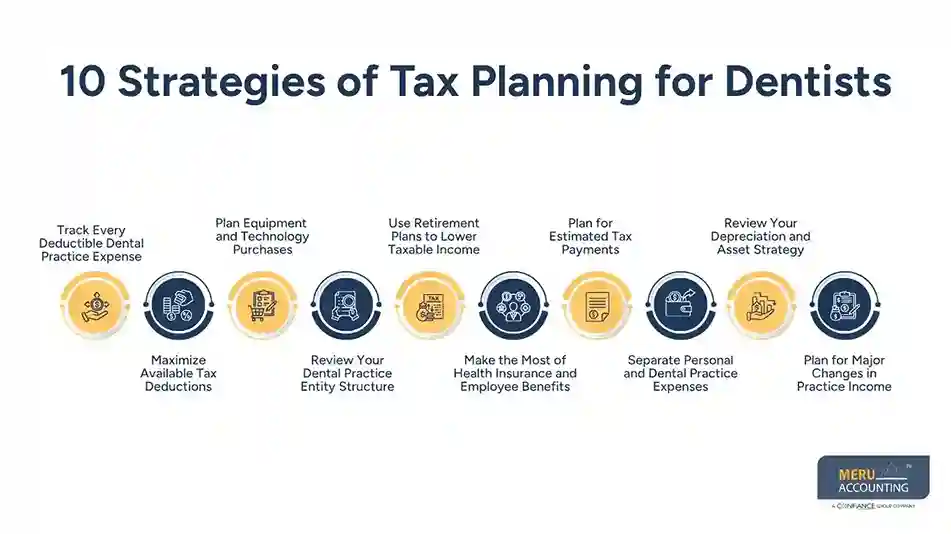
10 Strategies of Tax Planning for Dentists
Here are the top 10 strategies of tax planning for dentists:
1. Track Every Deductible Dental Practice Expense
One of the first steps in tax planning is keeping clear records of your business costs. Dental practices can have many expenses, from clinical supplies to rent and staff costs.
Common costs may include dental supplies, lab fees, office rent, utilities, insurance, software, advertising, and professional fees. But an expense must meet IRS rules to be deductible.
Good bookkeeping helps you see where your money goes throughout the year. It also makes it easier to spot missing records before you file your return.
Do not wait until tax season to sort through receipts and bank statements. Keep your books current so you and your tax professional can review costs while there is still time to act.
2. Maximize Available Tax Deductions
A deduction can lower the amount of income subject to tax. For a dental practice, this may include costs that are ordinary and necessary for running the business.
Still, not every payment made by the practice is a deduction. Personal costs, mixed-use expenses, and costs that must be capitalized may have different tax treatment.
Review your expense categories on a regular basis. This can help you find costs that were coded in the wrong account or were not recorded at all.
A well-kept chart of accounts is useful here. It gives your CPA a cleaner view of practice spending and can make year-end tax review more efficient.
3. Plan Equipment and Technology Purchases
Dental practices often need costly equipment. X-ray systems, dental chairs, scanners, computers, and other technology can require a large cash outlay.
Before buying equipment for tax reasons, look at the full business need first. A tax deduction should not be the only reason to make a purchase.
Depending on the asset and the tax rules in effect for the year, you may have options for depreciation or other treatment of qualifying property. The timing of a purchase can also affect the tax result.
Ask your tax adviser to review a major purchase before you make it. This lets you compare the tax effect with your cash needs and practice goals.
4. Review Your Dental Practice Entity Structure
Your business structure can affect how income is taxed and how you handle payroll and owner payments.
Dentists may operate through structures such as sole proprietorships, partnerships, S corporations, or C corporations. Each has its own tax rules and filing needs.
Your best choice depends on your facts. It may also change as your practice grows.
Do not choose or change an entity only because someone says it will “save taxes.” Review the full impact, including payroll, compliance, administrative costs, and how you plan to take money from the practice.
A tax professional can model the numbers before you make a change.
5. Use Retirement Plans to Lower Taxable Income
Retirement planning can serve both your long-term goals and your current tax strategy.
Depending on the plan and your situation, contributions to a qualified retirement plan may provide tax benefits. Options can include plans such as a 401(k), SEP IRA, or other qualified arrangements.
For practice owners with employees, the choice of plan can also affect employee benefits and the cost of running the practice.
Retirement plan rules have limits and other requirements. Contribution limits can change from year to year, so check the current rules before making a decision.
6. Make the Most of Health Insurance and Employee Benefits
Employee benefits can be a meaningful part of a dental practice budget. Health coverage, retirement plans, paid time off, and other benefits may help you attract and retain staff while also receiving tax treatment allowed under federal rules.
The exact tax result depends on the type of benefit, who receives it, and how the plan is set up.
Keep records for benefit costs and review them with your tax adviser. This can help make sure your books and tax return reflect the right amounts.
For practice owners, personal health insurance may also have special tax rules based on the business structure and other factors. Do not assume the same rule applies to every dentist.
7. Plan for Estimated Tax Payments
Many dentists make estimated tax payments during the year. If you earn strong practice income, waiting until tax filing time to think about your tax balance can create a cash flow problem.
A good plan estimates your income and tax needs before payment dates arrive. Your estimate can then be updated when practice income changes.
This matters in a growing practice. A strong year may mean your tax payments need to change, while a slower year may call for a fresh review.
Keep tax cash separate from money needed for payroll and daily practice costs. This simple step can help reduce the risk of a surprise tax bill.
8. Separate Personal and Dental Practice Expenses
Mixing personal and business costs can create problems for both bookkeeping and tax reporting.
Use business bank accounts and cards for practice expenses. Pay personal costs from personal accounts whenever possible.
If an expense has both business and personal use, keep records that show the business portion. Your tax adviser can then determine how the cost should be treated.
Clean separation also gives you a better view of practice profit. That can help you make better choices about spending, hiring, and future investments.
9. Review Your Depreciation and Asset Strategy
Buying an asset does not always mean you deduct the full cost right away. Tax rules may require the cost to be spread over time, while some qualifying property may receive different treatment under current law.
This is where asset planning can become important for dental practices. A large equipment purchase can affect both your current tax bill and future deductions.
Keep a list of major assets with purchase dates, costs, and other key details. Review that list before year-end.
Your CPA can help determine the correct tax treatment based on the asset and the tax rules that apply to your practice.
10. Plan for Major Changes in Practice Income
A dental practice may not have the same income every year. You may buy another practice, add an associate, open a new location, sell equipment, change your ownership share, or prepare to sell the practice.
These events can affect taxes in ways that are hard to fix after the transaction is complete.
Include major business changes in your tax plan as early as possible. Your tax professional can review the likely income, costs, and tax effects before you commit to a major deal.
This is one reason tax planning works best throughout the year rather than only during tax filing season.
Common Tax Deductions for Dentists
Dental practices may have many costs that can qualify as business deductions when they meet IRS requirements. In tax planning for dentists, some common tax deduction examples include:
- Dental supplies and materials
- Dental laboratory fees
- Office rent
- Utilities and phone services
- Employee wages
- Certain employee benefits
- Business insurance
- Professional and legal fees
- Advertising and marketing
- Accounting and bookkeeping fees
- Business software
- Continuing education tied to the practice
- Repairs and maintenance
The key point is that tax deductions for dentists depend on the facts of each expense. A cost should not be claimed just because it is related to the practice.
Keep invoices, receipts, statements, and other records that support your expenses. Good records help show why an expense was paid and how it relates to the business.
optional anymore
on running the business
How a Dental CPA Can Improve Tax Planning for Dentists
A dental CPA can do more than prepare your annual tax return. The right adviser can help with tax planning for dentists by connecting books, tax plans, cash flow, and business goals.
A dental CPA may help you:
- Review your practice income and expenses.
- Identify areas that need better recordkeeping.
- Estimate tax payments during the year.
- Review equipment purchases before you buy.
- Assess the tax impact of major business changes.
- Review your entity structure with your broader goals in mind.
- Coordinate bookkeeping and tax work.
- Help you plan for year-end tax decisions.
Industry knowledge can also matter. Dental practices have costs and business events that may not look the same as those of a general service business.
The goal is not to find a way to avoid taxes. The goal is to use deductions, credits, business structures, and other tax options that you legally qualify for while keeping your records accurate.
Tax Planning Mistakes Dental Practice Owners Should Avoid
Even a profitable dental practice can lose tax savings through poor planning. Some common mistakes in tax planning for dentists include:
Waiting until tax season: By the time you review your numbers, many planning choices may be off the table.
Buying equipment only for a deduction: Spending $50,000 to save part of that amount in tax does not make sense if the equipment is not needed.
Missing estimated tax payments: Poor tax cash planning can lead to a large balance due and possible penalties.
Mixing personal and business costs: This can make records harder to review and may create issues when determining deductible expenses.
Ignoring changes in income: A major rise or drop in practice income should trigger a tax review.
Keeping weak records: Missing receipts or unclear expense records can make it harder to support deductions.
Dental CPA Services by Meru Accounting
At Meru Accounting, we help dental practice owners keep their financial records organized and use better financial data. This can significantly improve tax planning for dentists.
Our dental accounting support includes:
- Monthly bookkeeping and account reconciliation
- Financial statement preparation
- Expense and income tracking
- Payroll support
- Tax preparation support
- Tax planning coordination
- Year-end financial review
- Ongoing accounting support for dental practices
Our goal is to give you a clear view of your practice finances so you can make tax and business decisions with better information.
Whether you run one dental office or are growing into multiple locations, keeping your books current can make tax planning easier. It also gives you a better view of cash flow and practice performance.
Our Expert Insight
Before making a large purchase or changing how the practice is structured, look at how that decision will affect your taxes, cash flow, and bottom line. For example, buying equipment may lower taxable income, but it still requires cash and may not be the right move if the practice does not need it.
We recommend reviewing major financial decisions with your CPA before year-end, rather than trying to find tax savings after the fact. A dental CPA can help you weigh the tax benefit against the actual cost to your practice.
Key Takeaways
- Start tax planning for dentists before the end of the year.
- Keep dental practice and personal expenses separate.
- Track business costs and keep records that support deductions.
- Review major equipment purchases before making them.
- Consider how your business structure affects taxes.
- Plan for estimated tax payments as practice income changes.
- Review retirement and employee benefit options.
- Do not make purchases only to get a tax deduction.
- Bring major practice changes to your tax adviser early.
- Consider working with a dental CPA who understands the needs of dental practices.
FAQs
Dentists may reduce their tax bill by using eligible deductions, retirement plans, and other tax strategies that fit their practice.
Common deductions may include dental supplies, lab fees, rent, wages, insurance, and professional fees, when they meet IRS rules.
Yes, qualifying dental equipment may receive tax treatment through depreciation or other applicable rules. The deduction depends on the equipment and how it is used.
Tax planning for dentists before year-end so there is still time to make tax-related decisions that may affect the current tax year.
Law firms should track metrics like accounts receivable turnover, days sales outstanding (DSO), accounts payable turnover, expense ratios, and trust account balances to stay financially healthy.
optional anymore
on running the business