Tax preparation for real estate investors can be more complex when a property is used as a vacation rental. Rental income, guest fees, repairs, loan costs, personal stays, and local tax rules all need proper care. A clear tax plan can also make year-end filing much easier.
For 2026, owners should keep a close record of rental days, personal days, income, fees, and property costs. Vacation rental taxes may also change based on how the property is used during the year. Good records can help an investor report the right income and claim costs that meet tax rules.
What You Will Learn From This Blog
- How tax preparation for real estate investors works for vacation rental property.
- How short-term rental income may be taxed in 2026.
- Which real estate investor taxes may apply to rental income.
- How vacation rental taxes can be affected by personal use.
- Which common rental costs may qualify as tax deductions.
- How good records can make tax filing easier and more accurate.
Tax Preparation For Real Estate Investors: What To Know In 2026
Keep A Record Of Rental Income
Tax preparation for real estate investors starts with a clear view of all money earned from the property. Record rent, cleaning fees, guest fees, and other payments linked to each stay.
Track Rental And Personal Days
An owner should record each day the property is rented and each day it is used for personal reasons. The number of rental and personal days can affect how costs are split.
Check The Rental Setup
A property rented for short stays may not always receive the same tax treatment as a standard long-term rental. The length of guest stays and services offered can matter.
Review The Property Use
Tax preparation for real estate investors should look at how the property was used during the full year. A home that is both rented and used by the owner may have limits on some deductions.
Keep Property Records
Purchase papers, loan details, repair bills, closing records, and improvement costs should be saved. These records may be needed to work out depreciation and the tax basis of the property.
How Vacation Rental Taxes Work For Real Estate Investors
Report Rental Receipts
Most rental income must be included in the owner’s tax records. Keep the gross booking amount, refunds, fees, and net bank deposits clear so income is not missed or counted twice.
Understand Platform Payments
Properly separating platform fees from rental income can simplify tax preparation for real estate investors and provide a clearer picture of property performance.
Separate Personal Use
Vacation rental taxes can be affected when an owner, family member, or friend uses the property. Personal use may mean that some costs cannot be treated as rental expenses.
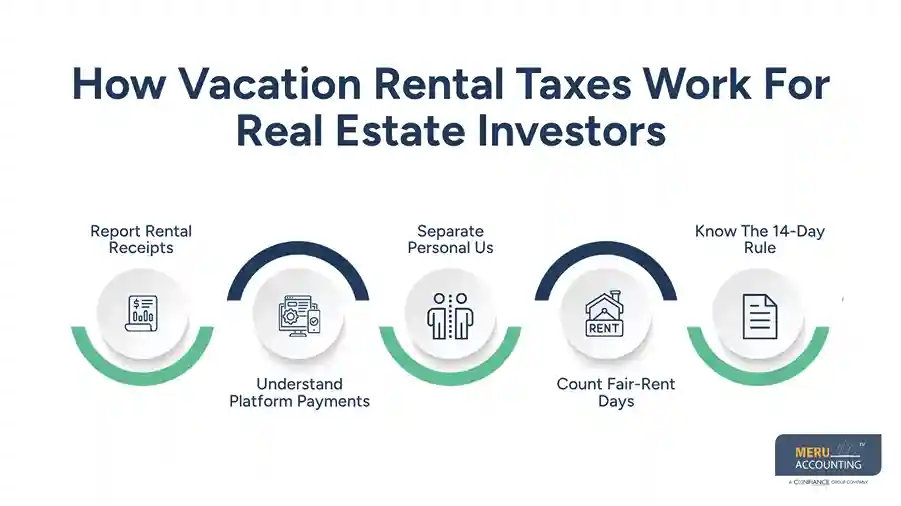
Count Fair-Rent Days
Days rented at a fair price are important when reviewing a vacation home. Keep the booking record and note any days when the property was used by the owner.
Know The 14-Day Rule
If a home is used personally for more than 14 days or more than 10% of the days it is rented at a fair price, special vacation-home rules may apply. Tax preparation for real estate investors should review this test before deductions are worked out.
optional anymore
on running the business
Key Real Estate Investor Taxes On Vacation Rental Income
Federal Income Tax
Rental profit may be subject to federal income tax. Tax preparation for real estate investors can help organize rental income and eligible expenses so the taxable amount is reported correctly. Real estate investor taxes should be based on properly reported income after the expenses allowed under the applicable rules.
State Income Tax
The state where the property is located may have its own income tax rules. An owner who lives in one state and owns property in another may need to review both states.
Local Rental Tax
Some cities and states charge lodging, occupancy, or similar taxes on short stays. These amounts should be tracked apart from the owner’s rental income when required.
Self-Employment Tax
Not every rental owner pays self-employment tax on rental income. Tax preparation for real estate investors can help review the nature of the rental activity and guest services before determining whether additional tax may apply. The result can depend on the nature of the activity and the services given to guests.
Net Investment Tax
Some investors may face an extra tax on investment income if their income and other facts meet the required limits. A tax review should check whether this applies.
Vacation Rental Tax Deductions Investors Should Know
Mortgage Interest
Interest paid on a loan used for the rental property may qualify as a rental expense when the tax rules are met. Accurate records of mortgage interest can make tax preparation for real estate investors more organized and easier to review.
Property Taxes
Property tax can be part of the cost of owning a rental home. The amount and tax treatment should be recorded for the right property and tax year.
Repairs And Maintenance
Costs to keep the property in good working order may qualify as rental expenses. Examples can include minor plumbing work, basic repairs, painting, and routine upkeep.
Cleaning And Supplies
Guest cleaning, laundry, toiletries, paper goods, and other rental supplies may be deductible when tied to the rental activity. Keep bills and receipts for these costs.
Depreciation
A rental property and certain assets used with it may qualify for depreciation. Tax preparation for real estate investors should review the property’s basis, use, and placed-in-service date before depreciation is claimed.
How To Prepare For Vacation Rental Taxes In 2026
Use Separate Records
Keep rental income and costs apart from personal spending where possible. Separate records make it easier to see the true income and cost of each property.
Reconcile Monthly
Check bank deposits against booking records each month. Monthly review can catch missing income, refunds, platform fees, and duplicate entries before the year ends.
Save Every Receipt
Organized receipts can make tax preparation for real estate investors easier by providing supporting records for eligible rental expenses. A receipt alone does not make a cost deductible, but good proof is key when a cost is allowed.
Track Travel
If travel relates to rental work, keep a record of the date, reason for the trip, distance, and cost. Personal travel should not be mixed with rental travel.
Review Before Filing
Tax preparation for real estate investors should include a full review before the return is filed. Check rental income, expenses, depreciation, personal use, ownership, and any state filing needs.
Tax Preparation Strategies To Reduce Real Estate Investor Taxes
Claim Only Valid Costs
Tax savings should come from costs that meet the tax rules. Adding a personal cost to the rental books can create a problem instead of a tax benefit.
Review Repairs Vs Improvements
A repair and a major improvement may not receive the same tax treatment. A new roof or major remodel may need to be treated as a capital cost rather than a current expense.
Review Depreciation
Depreciation can be a major part of rental tax planning. Tax preparation for real estate investors should check prior depreciation, new assets, and changes made to the property.
Plan For Personal Use
An owner should know how personal stays may affect deductions before booking private trips. Good planning can reduce the risk of using the wrong expense split.
Plan Before Year-End
Do not wait until filing season to review the numbers. A year-end review can show expected income, major costs, missing records, and areas that need tax advice.
How Meru Accounting Can Assist With Vacation Rental Tax Preparation
Rental Bookkeeping
Meru Accounting can organize rental income and costs by property. Clear books give owners a better view of cash flow and provide a strong foundation for tax preparation for real estate investors at year-end.
Expense Classification
Our team can sort costs into useful groups such as repairs, supplies, insurance, fees, utilities, and professional costs. Proper records can make tax review clearer.
Property-Level Reports
Owners with more than one rental can benefit from reports for each property. Separate reports can show income, costs, and results without mixing one property with another.
Tax-Ready Records
Meru Accounting can keep financial records in a form that is easier to review before tax filing. Accurate records can also support tax preparation for real estate investors by making it easier to answer questions about a rental activity.
Our Expert Perspective
From our experience working with real estate investors, tax preparation for real estate investors works best when vacation rental records receive more than a once-a-year review. Rental income can come from many bookings, while costs may include repairs, cleaning, platform fees, supplies, and property upgrades.
When these items are recorded as they happen, tax review becomes far clearer. We also find that personal use is one area owners often overlook, even though it can affect how rental costs are treated. A regular review of the property records gives investors a clearer picture of their tax position and leaves less room for costly mistakes at filing time.
Key Takeaways
- Tax preparation for real estate investors should start with clear rental records.
- Keep rental income, platform fees, refunds, and owner funds easy to identify.
- Real estate investor taxes may include federal, state, and local tax duties.
- Personal use can affect the tax treatment of a vacation rental.
- Vacation rental taxes should be reviewed based on rental use and personal use.
- Repairs and improvements may receive different tax treatment.
- Depreciation should be checked before the tax return is filed.
- Good records can reduce errors and make tax work easier.
- Complex rental cases should be reviewed by a qualified tax professional.
FAQs
Vacation rental taxes are based on rental income, eligible expenses, property use, depreciation, and other tax rules that apply to the investor. Proper tax preparation for real estate investors can help organize these figures and determine the taxable rental income correctly.
Real estate investors may deduct eligible costs such as mortgage interest, property taxes, insurance, repairs, cleaning, supplies, utilities, and depreciation.
Personal use can limit the rental expenses an investor may deduct when the property is also used as a vacation home.
Yes, income from Airbnb and other short-term rentals generally must be reported, but the tax treatment depends on the property and how the rental activity is managed.
Investors should keep booking records, income details, receipts, invoices, bank statements, rental and personal-use dates, loan records, and property improvement costs.
optional anymore
on running the business