Understanding tax rates in Australia is essential for individuals and businesses who want to manage income, reduce errors, and stay compliant with Australian tax laws. The system is based on progressive taxation, where income is taxed in layers instead of a single flat rate. For the 2026–27 financial year, updated thresholds and brackets apply as per the Australian Taxation Office (ATO).
In Australia, tax rates in Australia affect salaries, business profits, investments, and even retirement planning. Small changes in income can change tax liability significantly due to bracket-based taxation. This is why many taxpayers rely on structured planning and professional support, such as taxation experts.
What You Will Learn From This Blog
- Structure of the income tax system in Australia
- Latest 2026–27 tax brackets and rules
- Key taxes like GST, CGT, FBT, and Medicare levy
- Difference between residents and non-residents
- Corporate tax system and small business benefits
- Practical tax planning methods used in Australia
- Role of professional accounting support in compliance
Overview of Tax Rates in Australia
Tax rates in Australia follow a progressive structure, where higher income is taxed at higher marginal rates, and only the income within each slab is taxed at that specific rate. The system is managed by the Australian Taxation Office, which handles collection, compliance, and audits. Tax treatment also depends on residency status, where residents are taxed on global income while non-residents are taxed only on income earned in Australia.
The financial year runs from 1 July to 30 June, and all income reporting and tax calculations are aligned with this period for consistency.
Proper compliance is important to avoid penalties, interest, or audit issues, and maintaining accurate financial records throughout the year helps ensure smooth and timely filing of taxes, often supported by professional taxation services.
Individual Income Tax Rates In Australia
For the 2026–27 Australian financial year (1 July 2026 – 30 June 2027), the tax rates for Australian resident individuals are:
Taxable Income (AUD) | Tax Rate |
$0 – $18,200 | Nil |
$18,201 – $45,000 | 15% of the amount over $18,200 |
$45,001 – $135,000 | $4,020 + 30% of the amount over $45,000 |
$135,001 – $190,000 | $31,020 + 37% of the amount over $135,000 |
Over $190,000 | $51,370 + 45% of the amount over $190,000 |
Key Change in 2026–27
The tax rate on income between $18,201 and $45,000 decreases from 16% to 15% starting 1 July 2026, giving most taxpayers a modest tax cut.
Resident Tax System
Residents benefit from a tax-free threshold of $18,200, reducing the tax burden on low-income individuals. This means individuals earning below this limit do not pay any income tax in a financial year.
Progressive Bracket System
As income increases, tax rates in Australia rise gradually rather than suddenly. Each portion of income is taxed separately, which keeps the system fair and structured across income levels.
Tax-Free Threshold Advantage
This threshold plays a key role in improving take-home income for low and middle earners. It also reduces the need for tax payments for part-time workers and entry-level employees.
Filing Requirements
Annual tax returns are required even if tax is withheld by employers. This process ensures correct adjustment of tax paid and allows claims for eligible deductions and offsets, which is often simplified with professional taxation services.
Non-Resident Tax Rates in Australia
No Tax-Free Threshold
Non-residents do not receive the $18,200 exemption under the tax rates in Australia. This means tax liability starts from the first dollar of Australian-sourced income.
Flat Starting Rate
Income is generally taxed starting at 30% from the first dollar earned in Australia. This structure creates a higher entry tax level compared to resident taxpayers.
Source-Based Taxation
Only income earned within Australia is taxed for non-residents. Foreign income is generally not included unless specific treaty rules apply.
Compliance Support
International taxpayers often use professional advisors and taxation services to manage cross-border tax obligations. This helps reduce reporting errors and ensures compliance with Australian regulations.
Medicare Levy And Additional Charges
Taxable Income | Income Tax |
$50,000 | $5,520 |
$75,000 | $13,020 |
$100,000 | $20,520 |
$150,000 | $36,570 |
$200,000 | $55,870 |
These figures exclude the Medicare Levy (generally 2%) and any offsets or deductions.
Standard Levy Rate
Most residents pay a 2% Medicare levy on taxable income. This amount is automatically included in annual tax assessments.
Low Income Relief
Under tax rates in Australia, individuals below certain income thresholds may receive full or partial exemption. Eligibility is assessed based on income and family circumstances.
Medicare Levy Surcharge
Higher-income earners without private health insurance may pay an additional surcharge. This encourages individuals to maintain private health cover.
Income-Based Calculation
The levy is directly linked to taxable income rather than fixed amounts. As income increases, the levy amount also increases proportionally.
Corporate Tax Rates In Australia
Standard Company Rate
Most companies pay a flat corporate tax rate of 30%. This rate applies to large businesses operating in Australia.
Small Business Concession
Eligible small businesses may pay a reduced rate of 25%. This provides relief to smaller enterprises with lower turnover.
Eligibility Rules
Under tax rates in Australia, turnover and business structure determine eligibility for concessions. Companies must meet ATO-defined thresholds to qualify.
Compliance Requirements
Companies must lodge annual tax returns and pay installments through the PAYG system, often supported by structured taxation services. Late submissions may lead to penalties or interest charges.
Superannuation and Tax Implications
- Super contributions can lower taxable income. Money grows over time for retirement.
- Employer contributions are taxed at lower rates. This makes super savings easier to build.
- Personal contributions may get tax deductions. Limits apply to how much can be claimed.
- Adjusting contributions helps save for retirement. Smart contributions give tax and growth benefits.
- Knowing the 2026-27 Tax Rates helps plan taxes. Early planning makes the most of tax breaks.
Goods and Services Tax (GST) Overview
GST Rate Structure
GST is set at 10% on most goods and services in Australia. This is applied at each stage of the supply chain.
Registration Threshold
Businesses must register for GST if annual turnover exceeds $75,000, which is a key compliance requirement under the tax rates in Australia regulations. Voluntary registration is also allowed below this threshold.
Input Tax Credits
Businesses can claim credits for GST paid on business purchases. This reduces the final GST payable to the government.
Reporting Cycle
GST is reported monthly or quarterly depending on business size, with many businesses relying on taxation services for timely compliance. Reporting frequency is determined by business turnover and structure.
Capital Gains Tax (CGT) In Australia
How CGT Works
CGT applies when assets like property or shares are sold at a profit and is an important component of tax rates in Australia for individuals and investors. The tax is calculated based on capital gain after allowable costs.
Asset Categories
Different rules apply to investment property, shares, and personal assets. Each category has specific reporting and exemption conditions.
Exemptions
The main residence exemption can significantly reduce tax liability. Certain personal assets may also be excluded from CGT.
Discount Rule
Assets held for over 12 months may receive a 50% discount for individuals. This encourages long-term investment holding.
Strategic Planning
Timing asset sales can significantly affect overall tax liability, a strategy often optimized with guidance from taxation services. Proper planning can reduce taxable capital gains legally.
Fringe Benefits Tax (FBT) And Business Taxes
What Is FBT
FBT applies to non-cash employee benefits provided by employers and is an important part of tax rates in Australia that businesses must comply with. It is separate from income tax and is paid by employers.
Employer Responsibility
Employers are required to calculate and pay FBT annually. This includes reporting all taxable fringe benefits provided.
Common Benefits
Company cars, entertainment, and low-interest loans are common taxable benefits. These benefits are valued using ATO-approved methods.
Valuation Methods
ATO provides specific formulas for calculating taxable value. Accurate valuation is essential for correct FBT reporting.
Compliance Risk
Incorrect reporting can result in penalties and audits under the compliance rules linked to tax rates in Australia.Regular reviews reduce the risk of compliance issues.
Small Business Tax Concessions
Instant Asset Write-Off
Eligible businesses can deduct asset costs immediately under certain limits with the help of professional taxation services.
This improves cash flow by reducing the upfront tax burden. Immediate deduction reduces pressure on working capital and supports quicker investment decisions.
Simplified Depreciation
Depreciation rules allow faster deduction of business assets, helping businesses manage expenses more effectively under different tax rates in Australia. This helps businesses recover investment costs sooner. Accelerated depreciation also reduces taxable income in the early years of asset use.
Cash Flow Benefit
These concessions improve liquidity for small enterprises. They allow reinvestment into business growth activities. Better cash flow positioning helps manage daily operations and seasonal fluctuations more effectively.
Impact of Tax Changes on Investments
Know Taxes on Investment Income
Investment income may face a new tax under current rules. Knowing rates helps you plan when to invest smartly.
Taxes Differ for Dividends, Interest, and Gains
Under tax rates in Australia, dividends, interest, and capital gains are treated differently, which can change your overall tax outcome. Knowing this helps you avoid tax surprises with money.
Plan Your Portfolio with Tax Rules
Use tax rules to plan a strong fund portfolio. Spread money wisely to earn better returns from investments.
Use Tax-Smart Investments to Save
Smart investments can cut taxes and boost your returns. Making tax-wise choices keeps more money in your pocket.
Check After-Tax Returns Before Investing
Look at after-tax returns to make clear choices. Compare all options to pick the best investment plan.
Time Investments to Reduce Taxes
When to buy or sell can cut your total tax. Good timing can lower taxes and increase your net gain.
Keep Up with Tax Law Changes
Track updates to tax laws to stay safe and clear. Being informed keeps your investment plan strong and sound.
Payroll Tax Considerations
- Payroll tax applies if the company’s wages pass a threshold defined under tax rates in Australia regulations.
- Rates differ by state and territory. Each state has rules, so know local laws.
- Salary planning can lower payroll taxes. Changing salary parts can save on tax.
- Proper taxation services and planning help prevent fines and errors. Paying on time avoids penalties.
State Taxes and Levies
- Along with tax rates in Australia, states may also charge stamp duty, land tax, or other levies on property and business transactions. These add cost to property and business deals.
- Include state taxes in planning. This keeps forecasts accurate.
- Combine federal and state taxes for budgeting. It prevents cash flow problems.
- Awareness lowers the risk of surprise bills. Knowing deadlines helps manage money well.
- State tax planning keeps operations smooth. It also avoids disputes with authorities.
Tax Implications for Freelancers and Gig Workers
Income Sources
- Freelancers earn from many projects
- Money may come from fees, tips, or online work
- All income should be reported to avoid trouble
Record Keeping
- Keep receipts and bills for all work costs
- Track all work expenses to lower taxable income
- Good records make filing taxes easier
Claimable Expenses
- Work tools and gear may be claimed
- Travel for work may lower taxes
- Home office costs may count if used often
Planning Tips
- Plan ahead to avoid end-of-year surprises
- Knowing tax rules keeps the money flow smooth
- Early prep can reduce stress and fines
Tax Planning Strategies for Individuals and Businesses in Australia
Income Timing Strategy
Deferring or accelerating income can help manage taxable income levels. Proper timing decisions can shift income into a lower tax bracket and reduce overall tax pressure.
Expense Planning
Bringing forward deductible expenses can reduce current-year tax. Careful tracking of expenses throughout the year ensures no eligible deduction is missed during filing.
Superannuation Contributions
Concessional contributions offer tax advantages for retirement savings. These contributions are generally taxed at a lower rate compared to regular income, improving long-term savings efficiency.
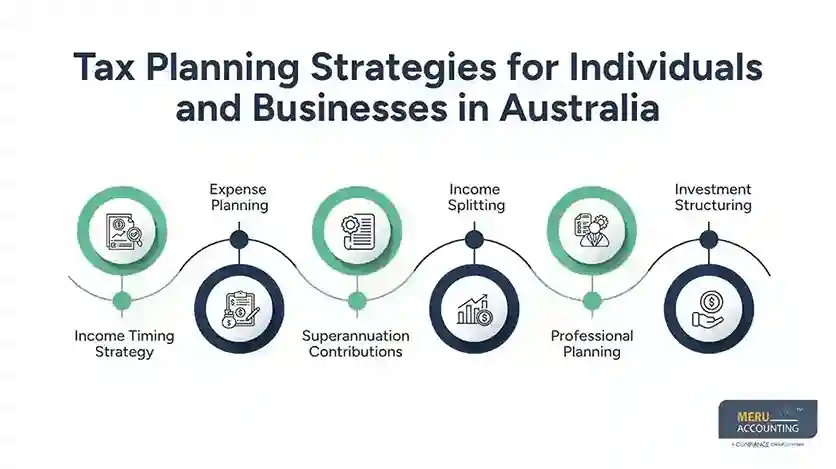
Income Splitting
Families may distribute income legally to reduce the overall tax burden. This approach must follow ATO rules to avoid breaches of anti-avoidance regulations.
Professional Planning
Structured planning ensures compliance with tax rates in Australia while optimising outcomes, often through expert taxation services. It also reduces the risk of errors during lodgement and improves financial clarity across multiple income sources.
Investment Structuring
Proper structuring of investments can influence how income and gains are taxed. The choice of entity, such as an individual, trust, or company, can significantly affect tax outcomes.
Why Choose Meru Accounting For Tax Compliance, Filing, And Advisory Services
End-To-End Tax Assistance
Meru Accounting provides complete support for individuals and businesses dealing with tax compliance in Australia. Our team ensures accurate reporting aligned with current rules under tax rates in Australia.
Accurate Income Tax Filing
Income is reviewed and classified properly to match Australian tax requirements and avoid errors. Compliance improves while filing mistakes are reduced through proper review and checks.
Business Tax Compliance Support
Businesses receive structured help for GST, payroll, and corporate tax obligations. All processes follow ATO standards and required reporting guidelines.
Tax Planning And Advisory Services
Strategic planning is offered to manage tax liability and improve financial decisions. Guidance covers lawful tax efficiency along with better financial structuring.
Our Expert Perspective
In practice, tax rates in Australia should not be viewed only as statutory numbers. They directly influence investment decisions, salary structuring, and business planning. Over time, even small changes in income can shift tax exposure significantly due to bracket-based taxation.
We have observed that individuals who plan early and maintain proper financial records experience fewer compliance issues and better control over tax outcomes. Professional taxation services also play a key role in ensuring deductions are not missed and reporting stays accurate throughout the year.
Key Takeaways
- Australia uses a progressive tax system
- Medicare levy of 2% applies to most taxpayers
- Residents and non-residents are taxed differently
- CGT, GST, and FBT form key parts of the system
- Small business concessions provide tax relief opportunities
- Planning ahead, often with the help of taxation services, reduces the overall tax burden legally
FAQs
Tax liability varies based on income level, residency status, and type of taxable income.
Residents do not pay income tax on earnings up to $18,200 in a financial year.
Income tax, Medicare levy, CGT, GST, and FBT form the main components of the system.
Salary income is taxed based on progressive brackets, where different portions of income are taxed at different rates depending on total yearly earnings.
Individuals in Australia can claim deductions for eligible work-related expenses like uniforms, tools, home office costs, travel, and education expenses if they meet Australian Taxation Office rules.
optional anymore
on running the business