The first tax return a startup files can reveal more than just how much money the business made. It can bring up questions about startup costs, owner contributions, contractor payments, tax deductions, and even the way the company was set up. For many founders, these details are easy to overlook while building a business. That’s why tax services for startups need to cover more than filing returns once a year.
A sound tax plan helps founders understand what they owe, which records to keep, and what tax rules apply as the business grows. In this guide, we’ll look at common startup tax challenges, practical ways to handle them, and how the right tax support can make tax work easier to manage.
What You Will Learn From This Blog
- The main tax duties that new startups need to manage.
- Common tax issues and ways to avoid them.
- How tax planning can help reduce errors and extra costs.
- When to hire an outside tax team.
- How to prepare your records for tax season.
- What to look for in a provider of outsourced tax services for startups.
Understanding Tax Responsibilities for Startups
Every startup has tax duties based on its legal setup, income, staff, sales, and place of business. Even if a business has not made a profit yet, it may still need to file tax returns or meet other tax rules.
Here are some key tax areas that founders should know about.
1. Federal Income Tax
Most businesses need to report their income and costs to the IRS. How they pay tax depends on their legal setup.
For example:
- Sole proprietorships: Business income is often reported on the owner’s personal tax return.
- Partnerships: The firm files an info return, while each partner reports their share of income or loss.
- LLCs: Tax treatment can vary based on how the LLC is set up and whether it elects to be taxed as a corporation.
- C corporations: The company files its own tax return and pays tax on its taxable income.
- S corporations: The company files an info return, and income or loss generally passes to its owners.
Choosing the right setup can affect tax costs, filing needs, and how owners take money out of the business.
2. Payroll Taxes
Startups with staff must handle payroll tax duties. These can include Social Security, Medicare, federal income tax withholding, and federal unemployment tax.
Employers must also file payroll tax forms and pay the right tax on time. Errors in pay records, tax rates, or worker details can lead to notices and penalties.
3. Sales Tax
If a startup sells goods or some taxable services, it may need to collect and pay sales tax. The rules vary by state and, in some cases, by city or county.
A startup that sells online may also have sales tax duties in states where it has an economic link, known as economic nexus. This can apply even if the business has no office or staff in that state.
4. Estimated Tax Payments
Many business owners need to pay tax during the year rather than wait until they file their annual return. This often applies to sole owners, partners, and S corporation owners who expect to owe tax.
Quarterly payments help cover tax on income that is not subject to enough withholding. A good cash flow plan can help founders set aside funds for these bills.
optional anymore
on running the business
Common Tax Challenges Startups Face and How to Manage Them
Startups often have small teams and tight budgets. As a result, tax work can fall behind while founders focus on sales, product work, and daily tasks. Here are some common issues and ways to manage them.
1. Choosing the Wrong Business Tax Structure
A business structure affects how income is taxed, what forms must be filed, and how owners report their share of profit. A choice that works at launch may not be the best fit as the startup grows.
How to manage it:
Review your business setup with a tax expert before you form the company. Look at expected income, owner pay, plans to raise funds, and future growth. Review the choice when your needs change. Do not pick a structure based only on the lowest tax rate.
2. Missing Quarterly Tax Payments
New founders may not know they need to make tax payments during the year. If they wait until tax season, they may face an underpayment penalty.
How to manage it:
Estimate your yearly tax bill based on income, costs, and past returns. Set aside a share of each payment you receive. Review your numbers each quarter and adjust your tax payments as needed.
A tax advisor can help you plan payments based on your current income rather than rely on guesswork.
3. Misclassifying Workers
Startups may hire staff, freelancers, and contractors as they grow. But the line between an employee and an independent contractor is not based only on the label in a contract.
Misclassification can lead to unpaid payroll taxes, interest, and other costs.
How to manage it:
Review each work role based on IRS rules. Look at who controls the work, how the person is paid, and the nature of the working link. Keep signed contracts, pay records, and tax forms on file. Ask a tax expert to review unclear cases.
4. Missing Tax Deductions and Credits
Many startups miss valid tax breaks because they do not track costs well. These may include costs for software, office supplies, legal help, business travel, and other day-to-day needs.
Some startups may also qualify for the federal research and development (R&D) tax credit if their work meets the rules.
How to manage it:
Keep a clear record of all business costs. Save receipts, invoices, and proof of payment. Sort costs by type and review them each month. Do not claim personal costs as business expenses.
If your startup works on new products, software, or processes, ask a tax expert to check whether your work may qualify for an R&D credit.
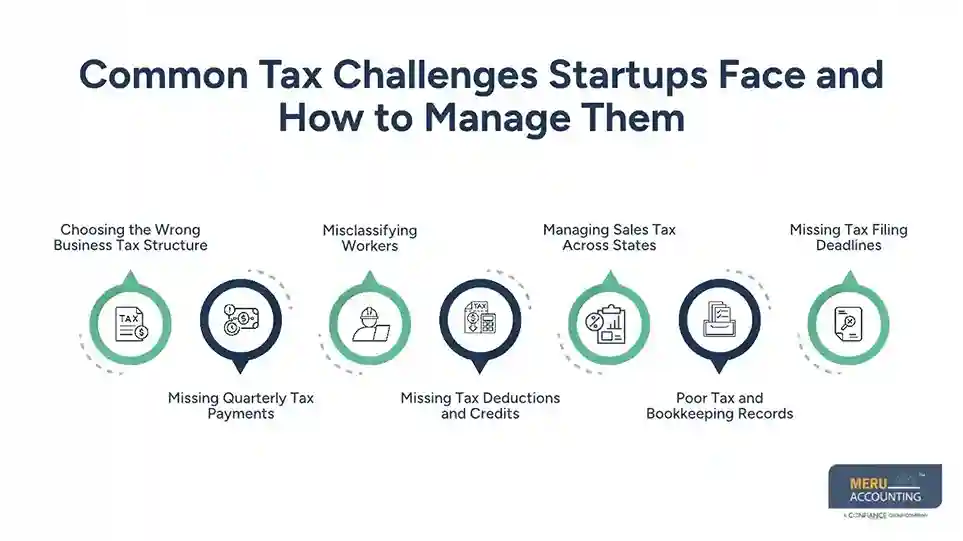
5. Managing Sales Tax Across States
Online sales can make tax rules harder to manage. A startup may need to collect sales tax in more than one state once it meets that state’s sales or transaction limits.
Each state has its own rules for rates, taxable goods, filing dates, and registration.
How to manage it:
Track sales by state and check where your business has sales tax nexus. Register before you start collecting tax where required. Set up your sales system to apply the right rates and keep records of tax collected.
Review nexus rules as sales grow. This is key for startups that sell through their own websites or online marketplaces.
6. Poor Tax and Bookkeeping Records
Missing bills, mixed personal and business costs, and late bank checks can make tax filing hard. They can also lead to incorrect income and cost figures.
How to manage it:
Use a separate bank account and card for business use. Keep books up to date and match bank and card records each month. Store digital copies of receipts, bills, and tax forms in a safe place.
Accurate books give your tax preparer the data needed to file a sound return.
7. Missing Tax Filing Deadlines
Startups may need to file more than one type of tax return. These may include income tax, payroll tax, sales tax, and state reports. Each may have a different due date.
How to manage it:
Make a tax calendar with all key filing and payment dates. Assign a team member to track each task. Set alerts ahead of each due date and review open items every month.
Working with a tax team can also help keep filings on track as the number of tax duties grows.
How Tax Services for Startups Help Prevent Costly Tax Mistakes
Tax errors can affect cash flow, business plans, and trust with tax agencies. Professional tax support can help startups spot issues early and keep their records ready for filing.
Here is how tax services for startups can help:
- Tax return preparation: Help gather data, check tax forms, and file returns on time.
- Tax planning: Review income, costs, and tax duties to help plan for future bills.
- Payroll tax support: Help check payroll tax data, payments, and filings.
- Sales tax review: Help track state tax duties and filing needs.
- Tax deduction review: Check business costs and possible tax credits based on current rules.
- Record checks: Review books and tax records to find gaps before filing.
A tax expert can also help explain tax notices, review past returns, and guide founders on steps to fix errors. This can save time and help avoid repeat issues.
When Should a Startup Outsource Its Tax Services?
Not every startup needs a full-time tax team. But there comes a point when tax work takes up too much time or becomes hard to manage in-house.
Here are signs that it may be time to outsource:
- Your startup has grown and now has more tax duties.
- You sell goods or services in more than one state.
- You have hired staff or work with many contractors.
- You are unsure which costs qualify for tax deductions.
- You have missed filing dates or received tax notices.
- Your books need cleanup before tax filing.
- You spend too much time on tax tasks instead of core business work.
Outsourcing can give you access to trained tax staff without the cost of hiring a full-time team. It can also help you get expert input when you need it.
Before you choose a provider, check their work scope, review process, data safety, and experience with startups. Make sure they know the tax rules that apply to your business type and location.
How to Prepare Your Startup for Tax Season
Good tax prep starts well before the filing date. A few simple steps can help your team avoid last-minute stress.
- Update your books: Record all sales, bills, payroll costs, and other business activity.
- Match bank records: Check bank and card statements against your books each month.
- Gather tax forms: Keep W-2s, 1099s, payroll reports, and other key tax records in one place.
- Review business costs: Check that each cost has a clear purpose and proof of payment.
- Check past tax returns: Review old filings and resolve any open issues.
- Confirm tax deadlines: Check federal, state, and local filing dates that apply to your business.
- Talk to your tax preparer: Share your books and key business updates well before the due date.
Do not wait until the end of the year to fix gaps in your books. Monthly checks make tax prep easier and give you a clearer view of your business finances.
Get Reliable Outsourced Tax Services for Startups From Meru Accounting
A startup’s tax needs can change quickly. One year, you may be tracking founder expenses and early-stage costs. The next, you may be managing employee payroll, contractor payments, sales across multiple states, and more complex tax filings. Meru Accounting provides outsourced tax services for startups that address these needs with practical accounting and tax support.
Our team helps startups organize their financial records, review tax-related transactions, and prepare for filing. Depending on your business needs, our services include:
- Business Tax Preparation: Organizing financial data, reviewing tax records, and supporting business tax return preparation.
- Tax Planning and Compliance Support: Helping track tax obligations, estimated payments, filing dates, and potential deductions.
- Payroll Accounting: Maintaining payroll records, tracking tax withholdings, and reconciling payroll-related accounts.
- Sales Tax Accounting Support: Organizing sales records and tax data to support sales tax reporting and compliance.
- Bookkeeping and Tax Record Management: Recording income, expenses, and other transactions, along with bank and account reconciliations.
- Cleanup and Catch-Up Bookkeeping: Correcting gaps in past records and bringing overdue books up to date before tax filing.
We understand the accounting needs of growing businesses. Our trained professionals follow defined review and quality-control processes to help maintain accurate records.
Whether you’re preparing your first business tax return or managing tax work across a growing team, Meru Accounting provides dedicated tax accounting support that counts
Our Expert Insight
A startup may receive $50,000 from a customer, but that doesn’t mean the full amount is taxable income right away. If the payment is an advance for work that has not yet been completed, the timing of income recognition may depend on the company’s accounting method and the tax rules that apply.
The same applies to loans and investor funding. Loan proceeds generally aren’t taxable income because they must be repaid. Equity funding is also treated differently from revenue earned through sales. Mixing these transactions with regular business income can lead to inaccurate books and tax returns.
Our advice is to classify each transaction based on its purpose, not just the amount deposited in the bank. Keep loan agreements, investment records, and customer contracts to support each entry. Taxable income depends on the nature and tax treatment of a transaction, not simply how much cash a startup receives.
Key Takeaways
- Startups have tax duties even when they are new or not yet profitable.
- Business structure affects tax forms, owner tax, and filing needs.
- Quarterly tax payments can help prevent underpayment issues.
- Clear payroll, sales tax, and expense records help reduce errors.
- Monthly bookkeeping makes tax filing easier.
- Outsourcing tax work can give startups expert support without a full-time hire.
- Tax planning should be part of regular business work, not just a year-end task.
FAQs
Yes. Many startups must file a tax return in their first year, even if they have no revenue or haven’t made a profit. Filing requirements depend on the business structure. For example, partnerships and corporations have different filing rules than sole proprietors.
A Delaware startup may owe federal income tax, state taxes, and Delaware franchise tax. The requirements depend on its business structure and activities. Even a corporation with no revenue may need to file an annual report and pay franchise tax.
Yes. Certain pre-opening costs may qualify as startup expenses under IRS rules. Eligible businesses can generally deduct up to $5,000 and amortize the remaining eligible costs over 180 months, subject to phaseout limits. Proper records are important to support these deductions.
A startup may face late-filing penalties, interest on unpaid taxes, and IRS notices. The amount depends on the type of return and how late it is. It’s best to file as soon as possible and pay any tax due rather than wait for an IRS notice.
Yes. Outsourced tax services for startups can help organize tax records, review past returns, and address outstanding tax issues before investor due diligence. This makes it easier to provide the financial and tax documents investors may request. However, a separate financial and legal review may still be needed.
optional anymore
on running the business