A product can sell well all week and still be missing from the shelf when a customer wants to buy it. At the same time, another product may sit in storage for months, tying up cash that the business could use elsewhere. These two problems raise an important question: what is vendor managed inventory, and can it prevent such costly gaps?
Vendor Managed Inventory (VMI) gives suppliers a direct role in tracking stock and planning replenishment. Instead of waiting for the buyer to place every order, the supplier uses shared sales and stock data to decide when more goods are needed. Yet fewer stockouts do not always mean better results. Businesses must measure delivery, stock levels, and costs to see whether the system is worth running. Those that outsource vendor managed inventory need clear targets and regular reviews to keep the plan on track.
What You Will Learn From This Blog
- What is vendor managed inventory and how it differs from regular stock ordering.
- How buyers and suppliers share data and manage replenishment.
- The main gains and risks of using VMI.
- Which KPIs show whether stock and supplier service meet business needs.
- How to calculate results and compare them with past performance.
- How Meru Accounting can provide clear financial records for cost reviews.
What is Vendor Managed Inventory (VMI)?
To answer what is vendor managed inventory, consider a shop that sells 200 packs of a product each week. If the shop waits until the shelf is nearly empty to place an order, a delay from the supplier may lead to lost sales. Under VMI, the supplier checks shared stock and sales data and plans a new delivery before the supply runs too low.
The buyer still sets the business terms, such as stock limits, service needs, and spending rules. The supplier manages routine replenishment within those limits. VMI does not always transfer ownership of the goods; that depends on the contract.
Businesses that outsource vendor managed inventory should agree on who can place orders, who pays for the goods, and who bears the risk of unsold or damaged stock.
How Does the Vendor Managed Inventory Process Work?
Sharing Sales and Inventory Data
Understanding what is vendor managed inventory starts with knowing how suppliers use sales and stock data to plan replenishment. The buyer shares sales figures, stock counts, open orders, and demand trends at agreed times. Late or incomplete records can lead to orders that arrive too soon or too late.
Setting Stock Levels and Replenishment Rules
Both sides agree on the lowest safe stock level, the desired stock level, and the point at which new goods should be sent. These limits depend on sales, delivery time, storage space, and product shelf life. A short shelf life may call for smaller, more frequent deliveries.
Monitoring Stock and Restocking Products
The supplier checks stock records against agreed limits and plans new deliveries as demand changes. For example, a rise in sales before a holiday may call for an earlier order. The buyer must still check received goods and report any shortfall or damage.
Reviewing Inventory Performance With Suppliers
Regular reviews show whether the supplier sends the right goods at the right time. Both sides can discuss late orders, extra stock, and changes in demand. A weekly review may suit fast-selling goods, while a monthly review may be enough for items with steady sales.
What are the Benefits of Vendor Managed Inventory?
Fewer Stockouts
A supplier with timely sales data can spot a drop in stock before it leads to an empty shelf. Fewer shortages can mean fewer lost sales, though the result still depends on forecast quality and delivery times.
Lower Stock Holding Costs
Stock that sits too long ties up cash and takes up space. Better replenishment plans can reduce excess goods and the costs of storage, insurance, and handling without leaving the business short of key items.
Better Supplier Planning
Access to demand trends gives suppliers more time to plan production and transport. This can reduce last-minute orders and make deliveries easier to plan, especially when buyers share data on time.
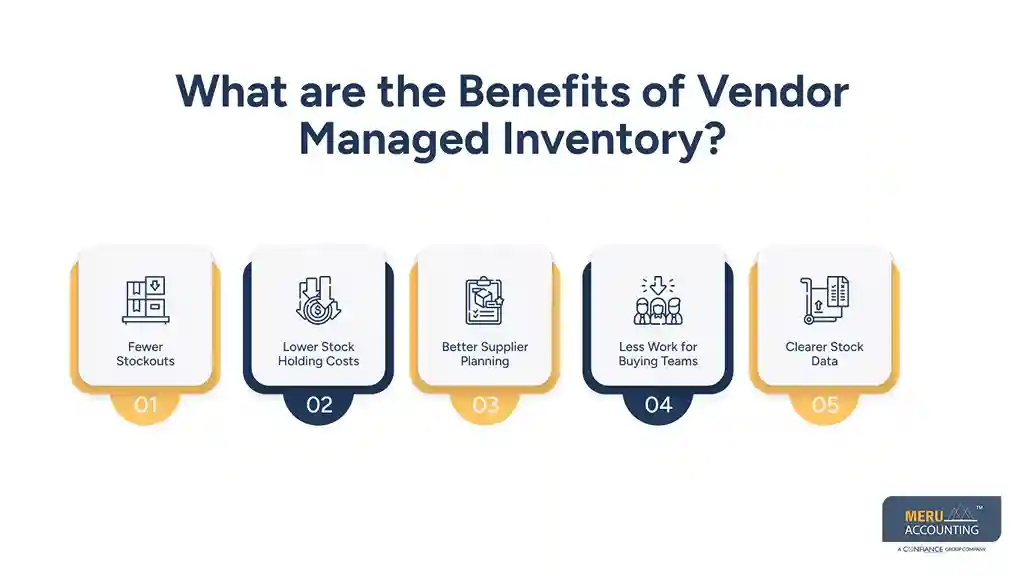
Less Work for Buying Teams
Staff spend less time checking every item and raising routine orders. They can focus more on supplier terms, demand changes, and products that need closer review, while agreed rules keep routine buying within set limits.
Clearer Stock Data
Shared reports give both sides a common view of sales, stock, and pending deliveries when they outsource vendor managed inventory. Firms that outsource vendor managed inventory can use these records to spot slow-moving items and review stock decisions with their suppliers.
What are the Common Challenges of Vendor Managed Inventory?
Poor Data Quality
A system may show 100 units in stock when only 70 are on the shelf. If the supplier trusts the wrong figure, the next delivery may be too small. Regular stock counts and checks between sales and inventory records can reduce such errors.
Too Much or Too Little Stock
A poor demand forecast can leave a business with excess goods or empty shelves. Stock limits should reflect sales patterns, lead times, and product life, with changes made when demand shifts.
Loss of Control Over Replenishment
The buyer may no longer approve each routine order. Without clear limits, this can lead to unwanted stock or higher spending. Order caps, approval rules, and agreed stock targets keep the process within the buyer’s needs.
Supplier Dependence
If one supplier manages stock for key products, a delay can affect daily sales. Backup supply plans, clear delivery terms, and regular reviews reduce the risk of relying on a single source.
Data Sharing and System Issues
Different stock systems may show different figures, which can cause missed orders or duplicate deliveries. Both sides should agree on data access, update times, and steps for fixing errors before these issues affect supply.
optional anymore
on running the business
How Can Businesses Measure Vendor Managed Inventory Performance?
Businesses that outsource vendor managed inventory need measures that show whether the plan cuts waste, keeps goods ready for sale, and controls costs. A business needs measures that show whether the plan cuts waste, keeps goods ready for sale, and controls costs. No single KPI gives the full picture, so results should be reviewed together.
Inventory Turnover Ratio
This ratio shows how often stock is sold and replaced during a set period. Divide the cost of goods sold by the average inventory value. A low result may signal excess stock, but a high result is not always good if the business often runs short.
Stockout Rate and Inventory Availability
The stockout rate tracks how often a product is unavailable when needed. Divide stockout events by total demand events and multiply by 100. Inventory availability shows how often goods are ready to meet demand, giving managers a view of service gaps.
Order Fill Rate
The order fill rate shows the share of orders or order lines filled in full from available stock. Divide the number filled in full by the total number of orders, then multiply by 100. A low result may point to weak stock planning or supply delays.
Demand Forecast Accuracy
Forecast accuracy shows how closely planned demand matches actual sales. Large gaps can lead to excess stock or missed sales. Businesses should use the same method and review period each time so that changes in results have a clear meaning.
Inventory Carrying Cost
This measure covers the cost of holding stock, including storage, insurance, handling, damage, and the cost of funds tied up in goods. Tracking these costs against average inventory value can show whether the VMI plan cuts the cost of holding stock.
Supplier Lead Time and On-Time Delivery Rate
Lead time is the period between placing or confirming an order and receiving the goods. The on-time delivery rate shows the share of deliveries that arrive by the agreed date. Both measures reveal whether the supplier can meet stock needs as planned.
Inventory Accuracy and Days of Supply
Inventory accuracy compares recorded stock with the actual count. Days of supply estimates how long current stock will last at the expected rate of use. Together, these figures show whether stock records and replenishment plans reflect real demand.
Return on Investment (ROI)
ROI compares the net gain from VMI with the total cost of running it. Include setup fees, software, staff time, and supplier charges, then compare them with savings and gains from fewer shortages. A positive result means the measured net gain exceeds the costs included in the calculation.
How to Calculate and Track Vendor Managed Inventory KPIs
Formulas for Key Inventory Performance Metrics
Once businesses understand what is vendor managed inventory, they can use the same formulas each month to compare results fairly.
- Inventory Turnover = Cost of Goods Sold ÷ Average Inventory Value
- Stockout Rate = Stockout Events ÷ Total Demand Events × 100
- Order Fill Rate = Orders Filled in Full ÷ Total Orders × 100
- Carrying Cost Rate = Annual Inventory Carrying Cost ÷ Average Inventory Value × 100
- On-Time Delivery Rate = On-Time Deliveries ÷ Total Deliveries × 100
- ROI = (Net Gain From VMI ÷ Total VMI Cost) × 100
For example, if 92 of 100 deliveries arrive on time, the rate is 92%. Businesses that outsource vendor managed inventory can use this result to review missed delivery dates and agree on steps to reduce delays.
Setting KPI Targets and Performance Benchmarks
Targets should reflect past results, product needs, and supplier lead times. A business that sells daily-use goods may need very high stock availability, while one selling seasonal goods may focus more on forecast accuracy and waste. Set goals that match the cost of failure rather than choosing figures without a clear basis.
Comparing Results Before and After VMI Implementation
Record stock levels, delivery results, and costs before the new plan begins. Compare them with results from similar periods after launch, while accounting for changes in sales, prices, and seasonal demand. This gives a fairer view of whether VMI made a real difference.
Using Inventory Reports to Identify Performance Gaps
For businesses that outsource vendor managed inventory, reports are useful when they identify a clear cause and next step. If stockouts rise while deliveries remain on time, the issue may be a weak forecast or low stock limits. If carrying costs rise, review excess stock, storage fees, and supplier order sizes before changing the plan.
Choose Meru Accounting for Better Inventory Cost Management
Our accounting, bookkeeping, and financial reporting services give businesses a clearer view of inventory expenses and financial results.
Track Inventory Costs With Meru Accounting
We record inventory-related expenses, such as freight, storage, handling, and supplier fees, based on the records provided. These reports give businesses a clearer view of stock costs.
Manage Cash Flow With Clear Financial Records
Our cash flow reports show how inventory spending affects available funds and daily operations. Businesses can use these records to plan expenses and manage cash needs.
Make Better Decisions With Financial Reports
Meru Accounting provides financial reports that show inventory values and related expenses. Businesses can review these figures alongside supplier KPIs to make informed stock decisions.
Review VMI Costs and Results Over Time
We help businesses review financial trends by comparing inventory expenses across periods. These records can show whether outsourcing vendor managed inventory delivers value for the business.
Our Expert Perspective
A business should not judge VMI by stock levels alone. Holding less stock may free up cash, but late deliveries, lost sales, and high supplier fees can offset those gains. Meru Accounting can provide clear financial records for managers to review costs alongside service and delivery results.
Key Takeaways
- Vendor managed inventory lets suppliers plan replenishment using sales and stock data shared by buyers.
- Understanding what is vendor managed inventory also means setting clear stock limits, maintaining accurate records, and reviewing supplier performance.
- Stockout rate, fill rate, turnover, and carrying cost show different parts of performance.
- Businesses should set KPI targets before launch and compare results over similar periods.
- Firms that outsource vendor managed inventory should agree on order limits, data access, and backup supply plans.
- Meru Accounting provides accounting, bookkeeping, and financial reporting services for reviewing inventory costs and cash flow.
FAQs
Vendor managed inventory is a stock system in which suppliers use a buyer’s sales and inventory data to plan when and how much stock to replenish.
Key vendor managed inventory KPIs include inventory turnover, stockout rate, order fill rate, forecast accuracy, carrying cost, and on-time delivery rate.
Calculate VMI ROI by dividing the net financial gain by the total VMI cost and multiplying the result by 100.
Common VMI challenges include poor inventory data, inaccurate forecasts, excess stock, stockouts, supplier delays, and limited control over replenishment.
Businesses can reduce inventory costs through accurate demand forecasts, suitable stock levels, timely replenishment, and regular reviews of storage and supplier costs.
optional anymore
on running the business