A client who trusts you with their books may also want you to handle their tax returns. The same goes for small businesses that need help with tax filings but don’t want to work with multiple firms. For accounting firms, these requests can open up new business opportunities. White label tax preparation software gives firms a way to meet this demand and offer tax services under their own brand.
Instead of building a separate tax department, firms can work with an outside provider for the tools and support they need. This can help them take on more tax clients, keep existing client relationships, and add new services without taking on the full cost of an in-house team. Let’s look at how it works and what firms should consider before choosing a solution.
What You Will Learn From This Blog
- What white label tax preparation software is and how it works.
- Why tax and accounting firms are adding more tax services.
- How white label tools can help firms serve more clients.
- Which features matter when you choose a tax platform.
- How white label tax solutions differ from standard tax software.
- How to choose a tax preparation partner and set up a smooth work plan.
What Is White Label Tax Preparation Software?
White label tax preparation software is a tax tool that a firm can offer under its own name and brand. A third-party vendor builds or runs the tool, while the firm may add its logo, colors, and brand details. This lets the firm give clients a branded tax service without having to build its own tax system.
The exact setup can vary by vendor. Some tools focus on tax return prep, while others may also help with client intake, file uploads, task flow, and team access. Some vendors offer only the software, while others also provide tax prep staff or expert support.
For example, a CPA firm may use a branded portal to collect tax forms from clients. Its team can then review the files, prepare returns, and track each case through the tax work cycle. The client sees the firm’s brand, even if some of the tech or prep work comes from an outside firm.
It is worth noting that white label tax preparation software does not always include tax prep work. A firm should check if the vendor offers a tool, staff support, or both. It should also set clear rules for who will review, sign, and file each return.
Why Are Tax and Accounting Firms Expanding Their Tax Services?
Tax preparation can be a key part of a firm’s growth plan. Many clients want help with more than one task. They may need tax returns, book work, payroll records, and year-round tax support from the same firm.
Here are some key reasons why firms are looking to add tax services.
- Meet More Client Needs
A client who uses a firm for monthly books may also need help with tax prep. If the firm does not offer this service, the client may hire another provider. By adding tax work, firms can meet more needs and build long-term client ties.
- Make Better Use of Existing Client Ties
Firms already know their clients’ books, income, costs, and workflow. This can help them spot tax needs and offer the right support. It can also make it easier to get the data needed for tax prep.
- Handle Peak Tax Season Work
Tax season can bring a sharp rise in work. Firms may need to review more files, fix missing data, and meet tight filing dates. A mix of in-house staff and outside tax support can help them deal with this rise in demand.
- Add a New Source of Income
Tax prep can add a new source of income to a firm’s core work. It can also help the firm offer more value to current clients. Yet, firms should first review the cost of staff, tools, review time, and support before they set their fees.
optional anymore
on running the business
How White Label Tax Preparation Software Helps Firms Expand Their Services
The right white label tax preparation software can help firms add tax work in a more planned way. It can also give them more room to grow while they keep control of the client tie and brand.
- Offer Tax Services Under Your Own Brand
White label tools let firms add their own logo and brand details to the client-facing tax portal. This can help keep the client journey in line with the firm’s other services. Clients can share files and view updates through a tool that looks like part of the firm’s own setup.
- Serve More Clients Without Hiring a Large Team
Some vendors offer access to tax prep staff along with their tools. This can help firms take on more work when their own team is at full capacity. They can use outside help for tasks such as data entry, return prep, and file checks, based on the agreed scope.
- Keep Client Work in One Place
A tax tool with client and task tracking can help teams see which files are ready, which need more data, and which need review. This can cut down on long email chains and missed follow-ups. It also gives staff a clear view of work due dates.
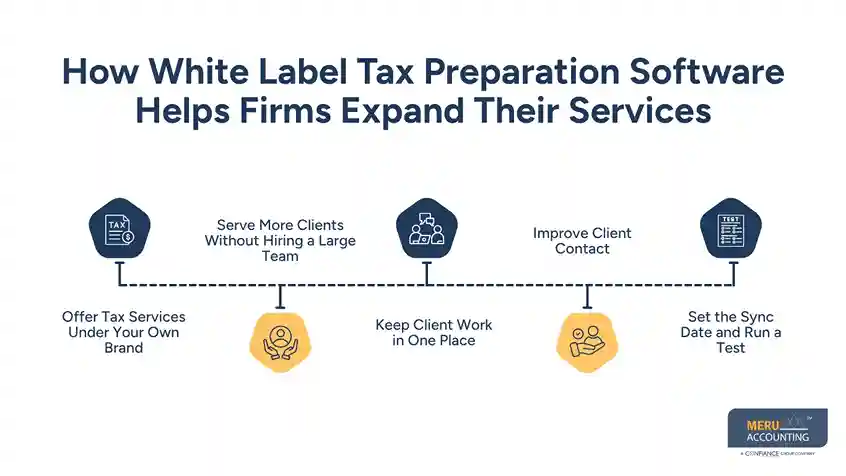
- Improve Client Contact
Client portals and auto alerts can help firms ask for missing forms and share updates. Clients can upload files at their own pace, while staff can track what is still due. This can make the tax prep process easier for both sides.
- Add Services at a Pace That Suits Your Firm
A firm may start with a small group of tax clients and add more as demand grows. With the right tools and partner, it can test its workflow, review costs, and plan staff needs before it takes on a larger load.
Key Features to Look for in White Label Tax Preparation Software
Not all tax tools offer the same features. Before you choose white label tax preparation software, check if it fits your firm’s workflow, client needs, and tax prep model.
- Custom Branding
Look for options to add your firm name, logo, colors, and other brand details. Check if the brand can be seen across the client portal, emails, and file-sharing tools.
- Secure Client File Uploads
Tax prep needs a lot of private data, such as income forms, bank details, and tax IDs. The tool should have secure file uploads, safe data storage, and clear access rules. Check if it uses data encryption and multi-factor login.
- Client and Task Tracking
A good tool should help your team track client files, open tasks, due dates, and return status. This can help staff see what needs action and avoid delays during busy months.
- Multi-User Access
As your firm grows, more staff may need to use the same system. Look for role-based access so each user can see only the data and tasks they need. This can help protect client data and keep work in order.
- Tax Form and Software Support
Check which tax forms, return types, and tax rules the tool can support. If you serve clients in more than one state or deal with both personal and business returns, make sure the tool fits those needs.
- Review and Quality Checks
Tax prep needs more than data entry. Look for tools that help flag missing files, track review steps, and keep a clear record of changes. Also ask how the vendor handles errors and who is in charge of the final review.
- Help and System Support
Check what type of help the vendor gives, when it is on hand, and how fast it deals with issues. Ask if you will have a set point of contact and if staff training is part of the setup.
White Label Tax Solutions vs. Traditional Tax Software: What's the Difference?
Both options can help firms prepare tax returns, but they serve a few different needs. The main gap is how the tool is used, who owns the client-facing brand, and whether outside service support is part of the deal.
Area | White Label Tax Solutions | Traditional Tax Software |
Branding | May let firms use their own brand on client-facing tools. | Often shows the software vendor’s brand. |
Client access | May include a branded portal for file sharing and updates. | Client access depends on the tool and plan. |
Work flow | May offer client, task, and team tracking. | Often focuses on tax prep and filing tasks. |
Outside support | Some vendors also offer tax prep staff. | Usually gives access to software, not prep staff. |
Growth | Can help firms add a branded tax service. | Can help teams prep more returns with the right plan. |
Control | Depends on the deal, staff roles, and review rules. | Firms manage prep work with their own team. |
A standard tax tool may be the right fit if your firm has its own staff and only needs software to prep and file returns. White label tax solutions may be a better fit if you want a branded client service or need outside prep support.
Before you sign up, ask the vendor what part of the plan is included. Check if it covers software use, client support, tax prep, review, e-filing, and updates. These are not the same service, so do not assume one plan will cover them all.
Expand Your Tax Services With Meru Accounting's White Label Tax Preparation Services
Your clients count on your firm for accurate tax work, and Meru Accounting helps you deliver it. We provide white label tax preparation services for CPA firms and accounting practices that need skilled support with individual and business tax returns. Our team understands the work behind a well-prepared return, from reviewing financial records to organizing tax documents and preparing supporting schedules.
Our Tax and Accounting Services Include:
- Individual Tax Preparation: Support with personal income tax returns and related records.
- Business Tax Preparation: Tax return preparation support for small and mid-sized businesses.
- Tax Document Review: Review of income records, expenses, and supporting documents.
- Bookkeeping and Reconciliation: Clean financial records and reconciled accounts for tax work.
- Year-End Accounting: Account reviews, adjustments, and financial reports.
At Meru Accounting, we follow your firm’s work process and quality standards, with careful attention to accuracy and deadlines. You retain control of your client relationships while our experienced team works behind your brand to support your tax practice.
Our Expert Insight
One common issue in tax preparation is treating a business’s net income as its taxable income. The two can differ due to nondeductible expenses, depreciation adjustments, and other tax rules.
For example, a business may report $12,000 in depreciation on its books, but its tax depreciation deduction may be different. A tax preparer must review the asset records and apply the right tax treatment rather than use the book figure as-is.
This is why tax preparation requires more than data entry. Firms need professionals who understand financial records, tax adjustments, and supporting schedules. Good software can speed up the work, but sound tax knowledge and careful review help prevent errors.
Key Takeaways
- White label tax preparation software can help firms offer tax services under their own brand.
- It may include tools for client files, task flow, and team access.
- Some vendors offer tax prep staff, while others only provide software.
- White label tax solutions can help firms serve more clients without building a large in-house team.
- Check data safety, tax form support, review steps, and vendor help before you choose a tool.
- Set clear rules for prep, review, client contact, and filing when you work with an outside partner.
FAQs
Yes. CPA firms can use white label tax preparation services to offer returns under their own brand while retaining control of client relationships and review procedures.
Depending on their expertise, providers may prepare individual returns (Form 1040), partnership returns (Form 1065), S corporation returns (Form 1120-S), and C corporation returns (Form 1120).
The firm should establish clear review and approval responsibilities with its provider. Paid preparers must also follow applicable IRS signing and preparer requirements.
Yes. Many platforms offer client records, document uploads, task tracking, and user access controls to help firms manage multiple tax engagements.
Pricing depends on return complexity, filing type, client volume, and the level of support included. Ask providers for separate pricing for software, preparation, and review.
optional anymore
on running the business