An employee handbook is one of the most valuable documents a business can create. It gives employees a clear understanding of workplace rules, company policies, employee benefits, payroll practices, and expected behavior.
When employees know what is expected, daily work becomes more organized, misunderstandings become less common, and HR teams can manage people with greater confidence.
Many businesses focus on hiring talented employees but overlook the value of a well-written employee handbook. Without clear policies, even simple workplace matters can turn into disputes, payroll errors, or compliance issues.
A carefully prepared workplace guide creates consistency across the organization and provides employees with a trusted source of information. While some businesses also use another term for the same document, both versions generally serve the same purpose of communicating workplace expectations and employment policies.
What You Will Learn From This Blog
- Understand what an employee handbook is and why every business should have one
- Learn how a workplace policy guide contributes to HR compliance
- Know the difference between an employee handbook and a company handbook
- Explore the important sections that should be included
- See how written payroll policies reduce payroll mistakes
- Learn common mistakes businesses should avoid
- Discover practical tips for creating an effective handbook
What is an Employee Handbook?
An employee handbook is a written guide that explains a company’s workplace policies, employment rules, employee rights, responsibilities, and payroll procedures. It acts as a reference document for both employees and managers, making workplace expectations clear from the beginning of employment.
Purpose of the Handbook
The main purpose of a structured workplace policy document is to explain workplace rules in one organized format. Employees know what the business expects, while employers have written policies to guide everyday decisions.
Guide For New Employees
New employees often have many questions during their first week. A structured workplace guide answers common questions about attendance, leave, working hours, payroll schedules, workplace conduct, and company benefits.
Reference For Daily Work
Employees can return to the guide whenever they need information about workplace policies. This reduces confusion and allows HR teams to answer fewer routine questions.
Written Record of Company Policies
Policies shared only through conversations are easy to misunderstand. A written workplace guide provides a consistent explanation of workplace rules for every employee.
Support For Business Consistency
Whether a business has ten employees or one thousand, the same policies should apply fairly. A well-prepared guide encourages equal treatment across departments and locations.
Why Every Business Needs an Employee Handbook
Every business, regardless of size, benefits from having a structured workplace policy document. Clear written policies reduce confusion, encourage fairness, and create a more organized workplace.
Creates Clear Workplace Expectations
Employees perform better when they understand company rules. The handbook explains attendance requirements, work hours, professional behavior, and performance expectations from the first day.
Reduces Workplace Confusion
Without written policies, employees may receive different answers from different managers. An employee handbook gives everyone the same information and reduces misunderstandings.
Encourages Fair Treatment
Managers can rely on written policies instead of making different decisions for similar situations. This promotes consistency and reduces the risk of employee complaints.
Strengthens Legal Compliance
Many jurisdictions encourage or require documented workplace policies to ensure employees are informed about key workplace rules and expectations.
A written handbook also demonstrates that the business has established formal employment practices, though requirements vary by location and should be reviewed with applicable labor laws and professional guidance.
Builds Employee Confidence
Employees feel more comfortable when they understand workplace policies, payroll practices, leave rules, and available benefits. Clear communication often creates a more positive work environment.
Employee Handbook Vs. Company Handbook: Is There a Difference?
Aspect | Employee Handbook | Company Handbook |
Definition | A guide focused on employee rules, responsibilities, and workplace policies. | A broader document covering company information along with employee guidelines. |
Primary Purpose | To communicate HR policies and employee expectations clearly. | To present both company culture and employee-related policies. |
Content Focus | HR rules, conduct, leave policies, payroll, and compliance. | Company values, history, structure, along with HR policies. |
Target Audience | Mainly employees. | Employees and sometimes external stakeholders. |
Scope | Narrow and HR-specific. | Broader organizational overview plus HR policies. |
Key Sections Every Employee Handbook Should Include
A complete employee handbook should cover the policies employees need throughout their employment. Clear sections reduce confusion, create consistency, and make it easier for managers to apply company rules fairly. A well-organized company handbook also serves as a reliable reference whenever employees have questions.
Company Introduction
Begin with basic information about the business, including its mission, values, and workplace culture. This section gives employees an understanding of the organization’s goals and how their work contributes to business success.
Employment Policies
Explain employment classifications, probation periods, working hours, attendance expectations, remote work rules, and overtime policies where applicable. Employees should clearly understand the conditions of their employment from the beginning.
Payroll And Employee Benefits
Describe payroll schedules, salary payment methods, overtime calculations, tax deductions, reimbursement procedures, paid leave, insurance, retirement benefits, and bonus policies if offered. Clear payroll information reduces unnecessary questions and promotes transparency.
Workplace Conduct
Include standards for professional behavior, anti-discrimination policies, harassment prevention, conflict resolution, use of company property, confidentiality requirements, and acceptable workplace communication. These policies encourage a respectful working environment.
Leave And Time-Off Policies
Explain annual leave, sick leave, maternity or paternity leave, public holidays, unpaid leave, and procedures for requesting time off. Employees should know both their rights and their responsibilities regarding leave.
Health, Safety, And Policy Updates
Outline workplace safety rules, emergency procedures, reporting requirements, data protection practices, and the process for updating company policies. Employees should also acknowledge that they have received and understood the handbook.
How an Employee Handbook Improves HR Compliance
An employee handbook is an important part of maintaining HR compliance because it documents workplace policies and ensures employees receive the same information. While the handbook alone does not guarantee legal compliance, it provides a strong foundation when supported by regular policy reviews and professional guidance.
Defines Workplace Policies Clearly
Written policies reduce uncertainty. Employees understand attendance rules, disciplinary procedures, reporting expectations, and workplace standards without relying on verbal instructions.
Encourages Consistent HR Decisions
Managers often face similar employee situations across departments. A documented workplace guide encourages consistent decision-making because managers follow the same written policies rather than personal judgment.
Reduces Employment Disputes
Many workplace disagreements begin with unclear expectations. When policies are documented and communicated through the handbook, businesses can refer to established procedures during discussions with employees.
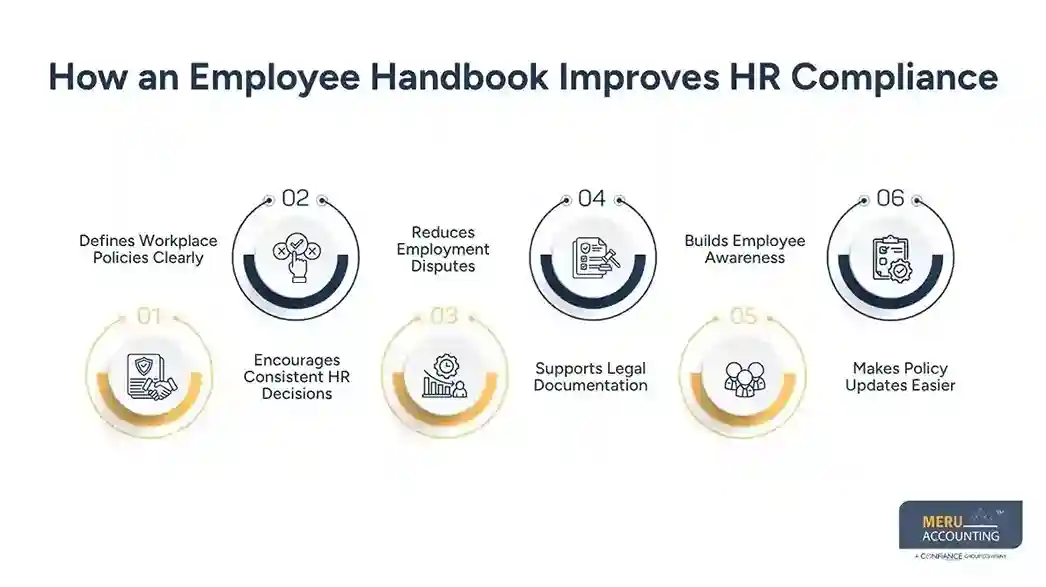
Supports Legal Documentation
Employment laws differ across countries and regions, and regulations change over time. Maintaining an updated employee handbook demonstrates that the business has documented its employment policies.
Employers should review the handbook regularly to align it with applicable labor laws and obtain legal advice when necessary.
Builds Employee Awareness
Employees are more likely to follow workplace rules when they understand them. A handbook explains reporting procedures, workplace ethics, equal employment practices, and employee responsibilities in one place.
Makes Policy Updates Easier
Business policies may change because of legal requirements or operational needs. Updating one company handbook and communicating the revisions to employees is more efficient than explaining changes individually.
How an Employee Handbook Simplifies Payroll Management
Payroll management involves more than paying salaries on time. It also includes attendance records, leave calculations, overtime, tax deductions, reimbursements, and compliance with employment regulations. A well-prepared employee handbook creates clear payroll rules that reduce confusion for both employees and payroll teams.
Explains Payroll Schedule
Employees should know exactly when salaries are processed, payment dates, and the methods used for salary transfers. Clear communication reduces unnecessary payroll inquiries each month.
Clarifies Attendance Rules
Payroll calculations often depend on attendance records. The handbook explains working hours, late arrivals, overtime approval, and absence reporting procedures, making payroll processing more accurate.
Defines Leave Calculations
Leave policies directly affect payroll. A written company handbook explains paid leave, unpaid leave, sick leave, holiday pay, and leave approval procedures so payroll calculations remain consistent.
Documents Employee Deductions
Payroll deductions such as taxes, retirement contributions, insurance premiums, or authorized recoveries should be explained clearly. Employees who understand deductions are less likely to question salary calculations.
Supports Accurate Record Keeping
Standard payroll policies encourage HR and payroll teams to maintain complete attendance records, leave balances, reimbursement documents, and employee information. Good record keeping also makes audits and internal reviews easier.
Reduces Payroll Errors
When payroll rules are written in the workplace guide, managers, HR professionals, and payroll staff work from the same information. This reduces manual mistakes, inconsistent calculations, and avoidable payroll disputes.
A practical example illustrates this well. Suppose an employee works approved overtime during a public holiday. If overtime approval, holiday pay, and payroll timelines are already explained in the workplace guide, both the employee and payroll team know how those hours will be calculated. This reduces confusion, avoids repeated questions, and creates a smoother payroll process.
Many businesses also review their organizational handbook each year to ensure payroll policies continue to match current employment regulations, internal procedures, and business operations. Regular reviews keep policies relevant and easier for employees to follow.
Common Mistakes to Avoid When Creating an Employee Handbook
A well-written workplace policy document can guide behavior, payroll processes, and HR decisions. However, many businesses make mistakes that reduce its value. A poorly prepared organizational reference document may even create confusion instead of solving it.
Using Complex and Unclear Language
When policies are written in difficult language, employees may misunderstand them. The employee handbook should use simple wording so every employee can clearly understand rules and procedures without confusion.
Not Updating Policies Regularly
Workplace rules, labor laws, and payroll systems change over time. If the company handbook is not updated, it may contain outdated information that leads to incorrect decisions.
Missing Important Payroll Details
Some businesses do not include full payroll explanations. Missing details about salary dates, overtime rules, or deductions in the workplace policy document can create repeated payroll queries and errors.
Ignoring Legal Requirements
A workplace policy document should reflect applicable labor laws and workplace regulations. Ignoring legal alignment can increase compliance risks for the business.
Making it Too Long and Unorganized
If the company handbook is not structured properly, employees may not read it. A clear format with sections and headings makes it easier to use.
Best Practices For Developing an Effective Employee Handbook
A strong workplace policy document stays simple, clear, and regularly updated. It must remain easy for employees as a daily reference guide. It should support workplace questions and payroll-related concerns clearly.
Keep Language Simple And Clear
Use direct language that employees can understand without confusion. The organizational handbook must avoid complex terms in all sections. It should explain policies using practical and simple everyday words.
Review Policies Regularly
Update the workplace policy document at least once every year. It should also change whenever laws or payroll systems update. Internal rules must also trigger timely updates in the document.
Include Payroll Transparency
Payroll schedules must be clearly explained in a simple, structured format. Deductions, overtime rules, and leave policies must remain fully clear. The organizational handbook reduces confusion during salary processing cycles.
Make It Easy To Access
Employees should access the workplace policy document in digital or printed form. Easy access ensures employees can refer to it whenever required. This improves awareness of workplace rules and payroll policies.
Train Employees During Onboarding
The organizational handbook must be introduced during employee onboarding sessions. New employees then understand workplace rules from their first day. This builds early clarity about policies and expectations quickly.
Get Professional Review
HR and finance experts should review the employee handbook carefully. This ensures accuracy in payroll and compliance-related sections. Proper review reduces risks of policy errors and confusion.
How Meru Accounting Supports HR Compliance and Payroll Documentation
At Meru Accounting, businesses are supported in building structured financial and HR systems that align with daily operations. Many organizations focus mainly on payroll execution, while often missing the importance of documentation, such as a workplace policy guide and organizational handbook, which support consistent HR practices.
We assist businesses by:
Structuring Payroll Policies For Clear Handbook Use
Payroll policies are structured so they can be clearly included in a workplace policy guide. This helps employees understand salary structure, overtime rules, and deductions easily.
Standardizing Attendance, Leave, And Salary Rules
Attendance, leave, and salary processes are organized into clear and uniform systems. These rules are documented in the organizational handbook for consistent application.
Supporting Compliance-Ready HR Documentation
HR documentation is prepared in alignment with internal policies and applicable requirements. This makes the employee handbook more reliable for audits and internal checks.
Ensuring Financial Records Align With Company Policies
Payroll and accounting records are aligned with written policies in the company handbook. This reduces gaps between HR records and salary processing.
Our goal is to help businesses reduce payroll errors, improve clarity, and maintain consistent HR practices through proper documentation and accounting support.
Our Expert Perspective
From our experience working with businesses across different sectors, a well-structured employee handbook is often the difference between smooth HR operations and frequent payroll confusion. Many companies underestimate how much time is lost answering repeated employee questions that could have been addressed in a clear company handbook.
We have observed that organizations with a properly maintained workplace policy document face fewer payroll disputes, faster onboarding, and better policy awareness among employees. A clear document also helps managers make consistent decisions without relying on informal explanations. Over time, this reduces internal friction and improves overall HR efficiency.
Key Takeaways
- An employee handbook sets clear workplace and payroll expectations
- A company handbook helps maintain consistent HR practices across teams
- Clear payroll rules reduce salary errors and employee confusion
- Regular updates are important for compliance and accuracy
- Simple language makes the handbook easier for employees to follow
- Businesses with written policies experience fewer disputes and better clarity
FAQs
What is the Main Purpose of an Employee Handbook?
An employee handbook explains workplace rules, payroll details, and employee responsibilities. It helps employees understand what is expected of them.
Why Do Businesses Need a Company Handbook?
A company handbook gives clear written rules for employees. It helps reduce confusion and keeps HR decisions consistent across the organization.
How Does an Employee Handbook Help Payroll Management?
A workplace policy document explains salary dates, deductions, overtime rules, and leave policies. This helps payroll teams calculate salaries correctly.
How Often Should a Company Handbook Be Updated?
A company handbook should be updated at least once a year or whenever there are changes in labor laws or company policies.
Can Small Businesses Use an Employee Handbook?
Yes, even small businesses can use a structured workplace policy document. It helps set clear rules from the start and avoids confusion as the business grows.