Imagine a business owner who spends the last three days of every month chasing unpaid invoices, checking payroll entries, matching bank transactions, and preparing expense reports. Sales are rising, new clients are coming in, but financial tasks keep taking time away from running the business. This is one reason why outsource accounting has become an important decision for growing companies.
Managing accounts is not just about entering figures into software. Every payment, expense, invoice, and tax record must be checked and recorded on time. As transaction volumes rise, even a small finance team can struggle to keep up with daily work.
Outsourcing offers another way to manage this workload. Instead of hiring more employees, a business can assign selected accounting tasks to an external team. The benefits of outsourcing accounting can include lower costs, access to skilled staff, better financial records, and more time for business operations.
But why outsource accounting when a company already has an accountant? The answer depends on its workload, costs, reporting needs, and plans for growth. This blog looks at five key advantages, other financial gains, and eight steps to start an outsourcing arrangement.
What You Will Learn From This Blog
- Why outsource accounting when financial tasks begin to take up too much time.
- Five key advantages of using external accounting services.
- The benefits of outsourcing accounting for small and growing firms.
- Eight steps to plan and start an outsourcing arrangement.
- How to compare accounting firms and avoid common mistakes.
- What to check before handing over business financial records.
Why Outsource Accounting Services for Business Growth?
A growing business does not always need a larger in-house finance team. Sometimes, it needs a better way to manage the work already coming in. For example, a company with rising sales may face more invoices, supplier bills, payroll entries, and bank transactions each month.
This is where understanding why outsource accounting becomes useful. An external firm can take charge of tasks such as bookkeeping, payroll, accounts payable, accounts receivable, and financial reporting.
The benefits of outsourcing accounting depend on the work assigned and the quality of the provider. A small firm may need monthly bookkeeping, while a larger company may require daily transaction records and regular financial reports.
The key is to select services that match the actual workload rather than pay for tasks the business does not need.
optional anymore
on running the business
5 Key Advantages Explaining Why Businesses Outsource Accounting
Lower Accounting and Operational Costs
Hiring an accountant involves more than paying a monthly salary. Businesses must also consider recruitment fees, staff training, paid leave, software licences, and other employee costs.
One reason why outsource accounting is worth considering is that a company can pay for a defined range of services instead of maintaining a full-time team. For example, a small firm may choose monthly bookkeeping rather than hire an employee for a few hours of work each day.
The benefits of outsourcing accounting become clearer when the business compares the full cost of both options.
Access to Experienced Accounting Professionals
A single accountant may not have the same level of knowledge in payroll, tax records, financial reporting, and accounts payable. Finding separate staff for every task can be costly for a small or mid-sized company.
Outsourcing gives businesses access to a team with different accounting skills. Before deciding why outsource accounting, owners should review the provider’s staff experience, industry knowledge, work history, and quality checks.
This can be useful when a business needs expertise in several areas but does not have enough work to employ separate specialists.
More Time to Focus on Core Business Activities
Consider a business owner who spends every Friday checking supplier bills instead of meeting new clients. Over time, routine accounting work can take attention away from sales, customer service, and business planning.
When owners understand why outsource accounting, they can decide which daily tasks should be handled by an external team. The benefits of outsourcing accounting include more time for work that directly contributes to business growth.
Owners can still review reports, approve major payments, and make financial decisions without managing every transaction themselves.
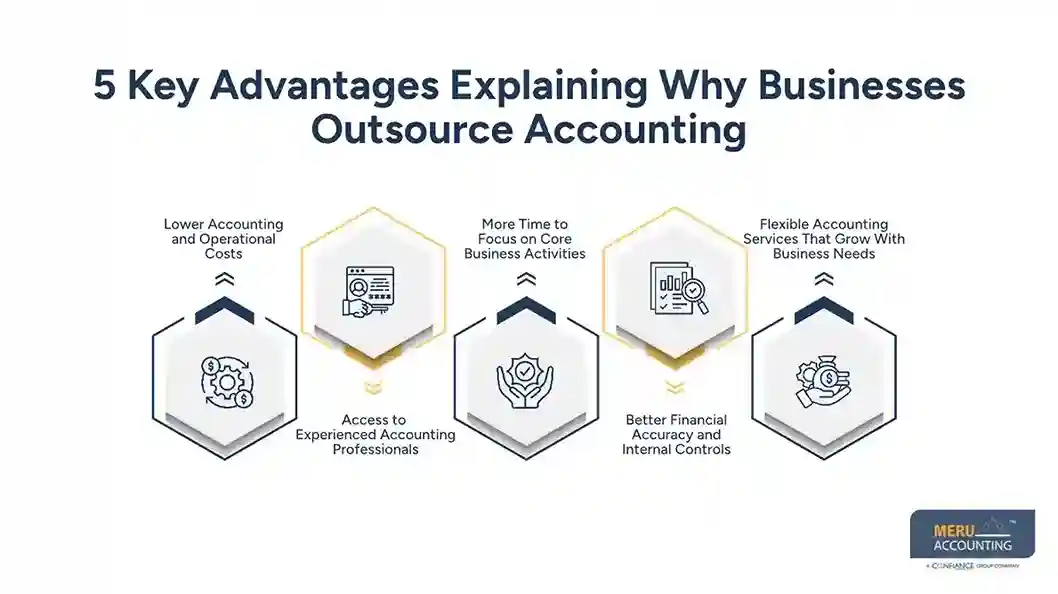
Better Financial Accuracy and Internal Controls
A single wrong entry can affect expense reports, account balances, and monthly results. Missed invoices or unmatched bank payments can also make it difficult to understand how much money a business owes or is due to receive.
An accounting provider can follow set procedures for data entry, bank reconciliation, and report review. Another reason why outsource accounting is useful is the option to define approval limits and separate duties between staff members.
These checks can reduce errors and make unusual transactions easier to identify. However, the business must still review its financial reports.
Flexible Accounting Services That Grow With Business Needs
A company handling 100 invoices each month may have very different needs when that number rises to 1,000. More sales can also bring extra payroll work, supplier payments, and tax records.
Outsourcing allows a business to add services as its workload grows. The benefits of outsourcing accounting include access to extra staff and services without recruiting a new employee for every increase in work.
This flexibility is one reason why outsource accounting can suit firms at different stages of growth.
Additional Benefits of Outsourcing Accounting for Small and Growing Businesses
Improved Cash Flow Monitoring and Financial Reporting
A business can report strong sales and still face a cash shortage if customers delay payments. Regular cash flow reports show which invoices are unpaid, which bills are due, and how much cash is available.
When assessing why outsource accounting, check whether the provider prepares monthly cash flow reports, aged receivable lists, and expense summaries. These records give owners a clearer view of upcoming payments and collection issues.
Access to Accounting Technology and Automation
Manual invoice entry and bank matching can take hours when a business handles a large number of transactions. Accounting software can record entries, match bank data, and create reports with less manual work.
The benefits of outsourcing accounting may include access to software that a small business may find costly to set up on its own. Before choosing a firm, check which tools it uses and whether your team can access the records.
Better Tax Preparation and Regulatory Compliance
Tax records need to match the firm’s income, expenses, payroll, and other financial details. Missing records or late filings can lead to penalties and extra costs.
A qualified provider can organise tax-related records and prepare reports for review. Understanding why outsource accounting matters even more when a business has several tax duties or operates across different regions.
Businesses should still confirm who handles tax filings and who gives final approval.
Reduced Hiring and Employee Management Responsibilities
Hiring an accounting employee involves job posts, interviews, training, payroll, leave planning, and staff reviews. These tasks can add to the workload of an owner who already manages daily operations.
Outsourcing transfers much of the staff management responsibility to the service provider. The benefits of outsourcing accounting include access to an accounting team without having to manage each member as an in-house employee.
How to Get Started With Accounting Outsourcing: A Step-by-Step Process
Step 1: Identify Your Business Accounting Requirements
Start by listing the financial tasks your business handles each day, week, and month. Check which activities take the most time and where delays or errors occur.
Step 2: Determine Which Accounting Tasks to Outsource
Decide whether you need bookkeeping, payroll, accounts payable, accounts receivable, tax preparation, or financial reporting. Select tasks based on your workload and the skills available in your current team.
Step 3: Set a Realistic Accounting Outsourcing Budget
Calculate your current spending on salaries, software, training, and other accounting costs. Compare these figures with the proposed outsourcing fee, including any extra charges.
Step 4: Evaluate Accounting Outsourcing Companies
Shortlist firms with relevant industry experience and a clear service scope. Ask for sample reports, staff details, client references, and examples of similar work.
Step 5: Review Data Security and Confidentiality Measures
Your accounting records may contain bank details, payroll data, and client information. Ask how the provider stores files, limits staff access, and handles data loss or security incidents.
Step 6: Define Service Agreements and Reporting Expectations
Put the agreed tasks, fees, deadlines, and approval duties in writing. Also state who handles errors, prepares reports, and responds to urgent financial queries.
Step 7: Transfer Financial Records and Establish Workflows
Share bank statements, invoices, payroll details, and past financial records through secure channels. Set clear steps for document sharing, payment approvals, and monthly report delivery.
Step 8: Monitor Performance and Review Accounting Results
Check reports, pending tasks, and error rates at regular intervals. Hold review meetings with the provider and change the service plan when your business needs shift.
How to Choose the Right Accounting Outsourcing Company
Industry Experience and Accounting Expertise
A provider familiar with your industry may understand its common costs, reporting needs, and tax duties. Ask about past projects, staff qualifications, and the types of businesses it serves.
Software Knowledge and Technology Compatibility
Check whether the firm works with your existing accounting software, such as QuickBooks or Xero. Compatible tools can reduce data transfer issues and keep financial records in a format your team can use.
Data Protection and Access Controls
Do not judge a provider’s security only by its promises. Ask about role-based access, secure file sharing, data backups, confidentiality terms, and its process for reporting a security breach.
Service Scope, Pricing, and Scalability
Compare the tasks included in each quote, along with extra fees for payroll, tax work, and year-end reports. Choose a plan that can change when your transaction volume or staff count rises.
Communication and Reporting Standards
Ask how often you will receive reports and how quickly the team responds to queries. A clear point of contact and fixed reporting dates can prevent missed updates and confusion.
Common Mistakes to Avoid When Outsourcing Accounting
Choosing a Provider Based Only on Low Pricing
A low monthly fee may not cover all the tasks your business needs. Compare the service scope, staff experience, review process, and extra charges before making a choice.
Ignoring Data Security Requirements
Sharing financial records without checking security can expose private business information. Review access rules, backup plans, confidentiality terms, and breach reporting duties first.
Failing to Define Service Responsibilities
Unclear duties can lead to missed payments, late reports, and gaps in tax work. Put task ownership, approval rights, reporting dates, and deadlines in the agreement.
Not Reviewing Financial Reports Regularly
Outsourcing does not mean handing over all control of business finances. Owners should check monthly reports, bank balances, unpaid bills, and unusual entries to stay aware of their financial position.
Meru Accounting's Outsourced Accounting Services
Choosing why outsource accounting is only one part of the decision; finding a firm that can manage the required work is just as important. Meru Accounting provides accounting and bookkeeping services for businesses across the USA, UK, Australia, Canada, and other markets.
Our service range includes bookkeeping, accounts payable, accounts receivable, payroll, financial reporting, and virtual CFO services. Businesses can select services based on their transaction volume, reporting needs, and internal team size.
Meru Accounting’s team works with widely used accounting platforms, including QuickBooks and Xero. Its professional credentials include QuickBooks Desktop Certified ProAdvisor, Xero Certified Advisor, and Xero Gold Champion Partner status.
For businesses reviewing why outsource accounting, Meru Accounting offers service options for different financial tasks and business needs. A clear service scope, agreed reporting dates, and defined approval rules form part of a well-planned outsourcing arrangement.
Our Expert Perspective
Outsourcing accounting should not mean that business owners stop looking at their numbers. An external team may record transactions and prepare reports, but owners still need to know which customers have unpaid bills, where costs are rising, and how much cash is available.
In our view, the real value of outsourcing lies in the quality of the financial information a business receives and how it uses that information. The benefits of outsourcing accounting are more useful when both sides follow clear work rules and review results on time.
Before signing an agreement, ask to see a sample report and understand how errors are handled. These small checks can make a major difference to the working relationship.
Key Takeaways
- Outsourcing can reduce the cost of hiring and managing an in-house accounting team.
- Businesses can access trained staff with skills in several accounting areas.
- The benefits of outsourcing accounting include more time for sales, customer service, and business planning.
- Firms should check data security, software, service fees, and staff experience before selecting a provider.
- A written agreement should define tasks, approval rights, and reporting dates.
- Regular financial reviews remain important even when an external firm manages daily accounting work.
FAQs
Growing businesses outsource accounting to control costs, access skilled accountants, manage rising financial tasks, and focus on business growth.
The hidden benefits include lower hiring costs, expert financial reviews, better cash flow tracking, access to accounting software, and flexible services.
Outsourcing reduces the need for full-time accounting staff, recruitment, employee training, software licences, and office-related expenses.
A business should assess its accounting needs, select tasks, set a budget, compare providers, check data security, sign an agreement, and review results.
Businesses should compare industry experience, accounting expertise, software skills, data protection, service pricing, and financial reporting standards.
optional anymore
on running the business