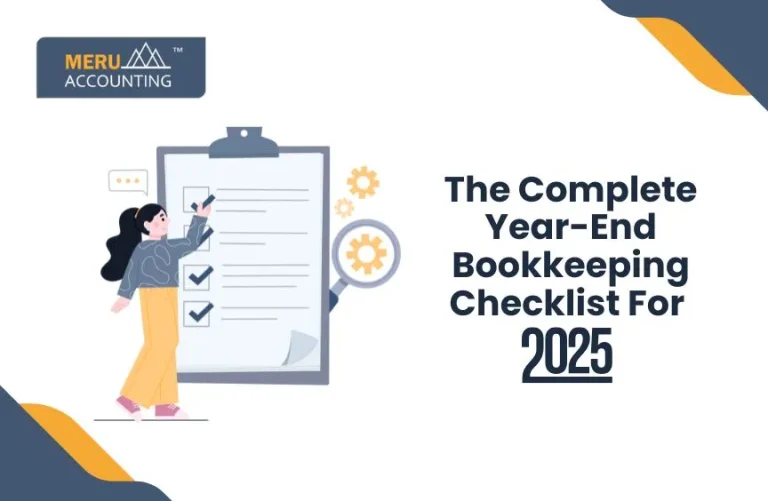
Businesses should begin considering their bookkeeping responsibilities as the end of the year draws near. Businesses can guarantee a smooth and well-organized transition into the new year by completing a thorough Year-Ended Bookkeeping Checklist. It is also important for businesses to regularly review their financial records before closing the year. This helps in identifying any missing entries, correcting errors, and ensuring all transactions are properly recorded.
Proper year-end bookkeeping also makes tax preparation easier and reduces last-minute stress during financial reporting. Businesses can avoid penalties and stay compliant by keeping their accounts well organized throughout the year.
Step-by-Step Year-End Bookkeeping Checklist for 2023:
Review Accounts Receivable
Examining your accounts receivable is the first item on the Year-end Bookkeeping Checklist. Checking all unpaid invoices and making sure they are recorded in your financial records are part of this process. To avoid any cash flow issues, you should also follow up with clients who have past-due payments.
Review Accounts Payable
It’s crucial to review your accounts payable next. To avoid any late fees or interest charges, check all outstanding bills and make sure they are paid on time. This is also a good time to review any ongoing costs and terminate any subscriptions or services that are no longer required.
Reconcile Bank Accounts
If you want to make sure that your financial records reflect your cash flow correctly, you must reconcile your bank accounts. To find any discrepancies, verify that your bank statements and accounting records match. Investigate any mistakes right away so they can be fixed before the year comes to a close.
Record Depreciation
Depreciation is the reduction in value of an asset over time. Recording depreciation is crucial for accurate financial reporting and tax purposes. Update your fixed asset register to reflect the current value of your assets and record depreciation.
This process also helps businesses maintain compliance with accounting standards and ensures that financial statements reflect the true value of assets. By keeping depreciation records updated, businesses can avoid overvaluing assets and improve the accuracy of profit calculations.
Regular tracking of depreciation also supports better financial planning. It helps business owners understand when assets may need replacement or upgrades, allowing for more effective budgeting and investment decisions.
Review Expenses
Examine each and every one of your business expenses to make sure they are accurately and properly recorded. Payroll costs, rent costs, utility costs, supply costs, and any other costs associated with running a business are included in this.
Reconcile Credit Card Statements
It’s crucial to reconcile your credit card statements with your accounting records, just like you would with your bank accounts, to make sure all expenses are accurately recorded. Additionally, now is a good time to review any unused credit card accounts and close them.
Update Your Budget
Based on the financial performance of your company, review your budget for the following Financial Year-end Closing Checklist and make any necessary adjustments. To make sure you’re on track to reach your financial objectives, this includes modifying your projected expenses and income.
Prepare Financial Statements
Create a balance sheet, income statement, and cash flow statement to give a clear picture of your company’s financial performance through Financial Year-end Closing Checklist. Examining your financial ratios and determining your company’s financial stability at this time is also a good idea.
Close Your Books
It’s time to close your books for the year once all bookkeeping duties are finished. This entails making any necessary corrections, confirming the accuracy of all financial records, and getting ready for the accounting tasks of the upcoming year.
Small and medium-sized enterprises in the US, UK, Australia, New Zealand, Hong Kong, Canada, and Europe can turn to Mere Accounting, a CPA firm, for comprehensive outsourced bookkeeping and accounting solutions.
FAQs:
1. What is a year-end bookkeeping checklist?
A year-end bookkeeping checklist is a list of financial tasks businesses complete before closing the financial year. It helps ensure records are accurate, organized, and ready for tax filing and financial reporting.
2. How does Meru Accounting improve year-end financial management?
Meru Accounting helps businesses maintain accurate financial records, generate clear reports, and prepare organized data for better year-end decision-making.
3. How often should businesses review their bookkeeping records?
Businesses should review bookkeeping records regularly throughout the year, but a detailed review at year-end is important for financial accuracy and compliance.
4. When should businesses start preparing for year-end bookkeeping?
Businesses should begin preparing a few months before the financial year ends to avoid last-minute errors and ensure all records are complete and updated.