When a startup reaches the last moments of the year, you may feel heavily occupied. Your teams may rush to finish tasks. You can also check what worked and what didn’t turn out well. As a startup, you can try to clean up records so the next year starts fresh. But, how will you make sure everything gets done before the year ends? A clear year end financial checklist can help you through this stage. It can help you see the big picture and the small gaps that hide in the rush of daily work.
In this blog, we will look at each major area that a startup may want to review. Each part in this year end financial checklist has steps that flow in a simple way so any founder or team member can follow the process and avoid missing out anything before the year ends.
Complete year end financial checklist
Here’s a complete year end financial checklist you must follow to clean up your books and plan ahead:
1. Review Your Financial Statements
Many founders start here because the statements may reveal things that memory does not. These numbers tell how the year went and where the business might stand.
Balance Sheet
It may show what the startup owns and what it owes. Some balances may look old or strange. When a number did not move for months, the reason may need a closer look.
Income Statement
This part tells you how the revenue and cost behaved. Some expenses may rise faster than expected. Some revenue lines may slow down. These shifts can shape next year’s plan.
Cash Flow Statement
Many new founders mix profit with cash. Yet both are very different. This statement may show how money moved in and out and which areas created stress.
2. Spot Red Flags and Reconcile All Accounts
Strange entries and repeated invoices can hide deeper issues. Unknown charges may appear in small places. Fixing these early may save long hours during audits.
Your bank accounts, credit cards and cash logs must match the records. A small mismatch may look harmless but can cause confusion later.
3. Verify Outstanding Invoices and Payments
A business may show profit on paper yet still feel broke. Late payments can slow everything. The end of the year is a good time to clean this up.
Follow Up on Receivables
Reach out to clients who still owe you. A simple note may remind them. Clear receivables can give a true idea of your cash position.
Pay Pending Bills
Clearing dues can bring clean books. It may also help build trust with vendors who supported the startup.
Write Off What May Not Be Recovered
Some invoices may have no chance of recovery. If a client vanished or stopped responding, your accountant may guide you on marking it as bad debt.
4. Organize Expense Records
A startup that keeps clean expense records can save time when filing reports or reviewing budgets.
Group by Clear Categories
Create simple groups like rent, utilities, team costs, software, marketing, travel and supplies. This may make it easier to see where most money went.
Digitize Everything
Scan receipts and save them in a tool. Digital records can be searched fast and shared with ease.
Separate Business and Personal Costs
Some founders mix both without intent. Still this may cause stress during reporting. Keeping them apart gives a clear view of real business spend.
5. Review Budget Against Actual Spending
Plans rarely stay the same. When the year ends, your budget may look far from what happened.
Spot the Gaps
If some costs crossed the planned limit, take a closer view. Maybe you hired early or spent more on tools.
Mark the Wins
Some parts may show savings. These insights can help shape next year’s plan.
Adjust Future Forecasts
Use this review to build a practical budget. A realistic plan may improve cash stability.
6. Check Payroll and Employee Records
Payroll issues may cause stress for teams. A review at year end can help avoid errors.
Review Pay Slips
Make sure salaries, bonuses and benefits match your records and reflect correct dates.
Confirm Tax Withholding
Withholding mistakes may lead to trouble in filing season. Checking now may reduce risks.
Update Team Information
Some staff may have new bank details or new addresses. Keeping all data correct helps avoid delays.
7. Prepare Early for Tax Season
Many startups wait for deadlines and then rush. Early steps can ease the process.
Gather All Records
Invoices, receipts, payroll data, contractor payments and bank statements all play a part. Having them in one place saves time.
Review Possible Deductions
Some business costs may offer deduction benefits. Items like software, travel, supplies and marketing may qualify. An early review may help you prepare.
Talk With a Tax Professional
A good tax advisor may guide you and help avoid errors. Early advice may save time and reduce stress.
8. Evaluate Your Accounting System
The system you use can shape how clean your records look. Year end is a good time to test if the system still fits your needs.
Check System Performance
Ask if the process feels smooth or heavy. If reports take long to find, your setup may need a change.
Look at Better Tools
Many startups move to cloud tools as they grow. It may reduce manual work and make data easy to track.
Train the Team
Sometimes the tool is fine but the team needs small guidance. A short training session may fix errors and improve accuracy.
9. Review Subscriptions and Vendor Agreements
Startups often buy tools when they need speed. Later, some old tools stay active even when no one uses them.
Audit Subscriptions
List all recurring payments. You may find tools that you forgot to cancel.
Negotiate Renewals
When agreements come up for renewal, vendors may adjust the price. Asking early may save money.
Check Hidden Fees
Some charges appear without warning. Reviewing them each year may give you clarity.
9. Assess Inventory and Assets
This part applies to both physical items and digital tools. Assets age and lose value.
Count and Match
Compare actual stock with records. If something is missing, note the reason.
Dispose What Has No Value
Some items may not serve a purpose anymore. Selling or donating them may clear space.
Record Depreciation
Assets lose value each year. Updating this part keeps your books clean.
11. Plan for Funding Needs
Year end can be the time when you think of funds for the next stage.
Prepare Clear Reports
Investors often ask for clear summaries. Clean numbers and simple charts may create trust.
Analyze Burn Rate
Knowing how long your money can last may help you plan hiring and spending.
Revisit Financial Goals
Some goals may need adjustment based on what you learned this year.
12. Review Compliance and Legal Duties
Compliance needs careful checks since missing documents may cause trouble.
Renew Licenses
Some licenses or permits may expire soon. Renewing early can prevent issues.
Review Ownership Documents
Check records related to shares and roles and board decisions. They must be stored well.
Keep All Files Safe
Store digital and paper copies in secure places so you can access them when needed.
13. Evaluate Insurance Coverage
Some startups forget insurance for years and then face sudden risks.
Check Current Policies
See if your present coverage still matches your size.
Add What May Be Missing
Areas like cyber risk or liability may need attention.
Update Contact Details
Insurance partners need correct information for claims.
14. Set Next Year Financial Goals
After reviewing past work, you may look ahead with a clear mind.
Define Practical Targets
Goals for revenue, cost control and expansion must stay realistic.
Plan Reserve Funds
A small emergency pool may help during slow months.
Link Each Goal to a Metric
Track results through simple metrics like cash flow and margins.
15. Audit Data Security and Access
Your financial data must stay safe.
Update Passwords
Simple changes may prevent trouble.
Review Access Levels
Only grant access to people who need it for their role.
Backup Data
Cloud storage or external devices can save you from sudden loss.
16. Reflect on Lessons Learned
When the year closes, reflection may provide insight.
Record What You Learned
Noting wins and mistakes may help shape future habits.
Share with the Team
Everyone can gain from these insights.
Celebrate Milestones
Progress may come slow, but it deserves credit.
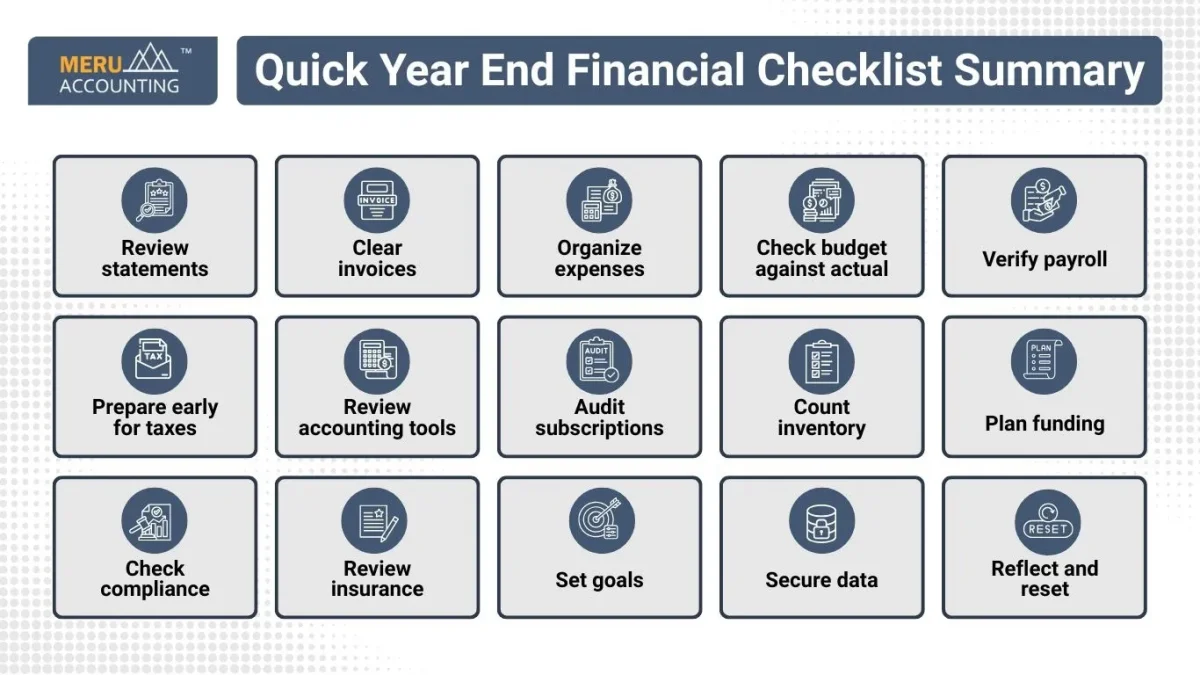
Quick Year End Financial Checklist Summary
- Review statements
- Clear invoices
- Organize expenses
- Check budget against actual
- Verify payroll
- Prepare early for taxes
- Review accounting tools
- Audit subscriptions
- Count inventory
- Plan funding
- Check compliance
- Review insurance
- Set goals
- Secure data
- Reflect and reset
Don’t miss this year end financial checklist. Following all the points in this checklist can help you plan perfectly for the upcoming financial year.
Need more help with bookkeeping of your startups? At Meru Accounting, we empower startups with cost-effective remote accounting and bookkeeping services. We can help you follow all the points in the year end financial checklist given above and plan for the next year. Our outsourced services have helped many startups around the world in growing their business. Contact us now and get expert bookkeepers working for your startup business.
FAQs
- What is a year end financial checklist for a startup?
It is a simple list of steps that may guide a startup as it checks records, clears old items, and closes the year with ease. - Why may a startup need a year end checklist?
It may help cut errors, show what was missed, and give a calm view of how the business is doing. - When should a startup start the year end review?
Most teams begin two or three months before the year ends so there is time to fix gaps. - Can small or early stage startups use the same checklist?
Yes. Even a small team may gain from clear steps that keep books neat. - Does the full review take a long time?
The time may change based on how clean the records are and how well things were tracked. - What may happen if a startup skips the checklist?
Missed entries or wrong values can show up later and cause stress during tax work. - Can the checklist help during investor talks?
Yes. Clean numbers may build trust and make the team look prepared. - Can a founder do the full review alone?
Some tasks can be done alone though experts may add more clarity. - How often should budgets be reviewed during the year?
Many teams check them each quarter so the year end work feels lighter. - What should a startup do with expense records?
It may keep clear logs so there are no mix ups and planning feels easy. - Do missing invoices change the yearly reports?
Yes. They may shift how income appears and lead to wrong totals. - Should payroll be checked at the end of each year?
Yes. Even small slips in payroll can create issues later. - Why should a startup review its subscriptions?
Some unused tools may drain money through the year without notice. - Is data backup part of the year end checklist?
Yes. A backup may guard the team from loss due to system or human errors. - Should a startup review its insurance each year?
Yes. Needs change with time and a yearly review may help adjust plans. - Can early tax prep make the year end smoother?
Yes. Early prep may cut stress and give time to settle any gaps. - Are cloud tools useful for the year end process?
They may ease tracking and reduce manual tasks. - What documents must a startup keep safe?
Invoices, receipts, payroll files, bank records, and tax papers must stay secure. - How can a team make the next year end review easier?
By keeping records clean through the year so the final steps feel light. - Should the full team join the year end work?
Yes. Shared awareness may lead to better choices and cleaner books.