For many owners, tax work can feel hard, costly, and time-consuming. Tax accounting for small business gives owners a clear way to track income, costs, deductions, tax dates, and filing needs. Good tax work is not only about filing a return at year-end. It also means keeping sound records during the year and making sure tax choices fit the business.
The right tax accounting for a small business plan can reduce errors, keep records in order, and give owners a clearer view of their tax duties. The IRS states that good records should show business income, expenses, assets, and other items used on a tax return.
What You Will Learn From This Blog
- Understand what tax accounting for small business includes and why it matters.
- Learn why accurate tax records and timely filing are important.
- Explore the key tax accounting services available to small businesses.
- Discover the main benefits of professional tax accounting services.
- Understand the factors that affect small business tax accounting services cost.
- Learn what to expect from a small business tax accountant.
- Know how to choose the right tax accounting service for your business.
- Identify common tax accounting mistakes and ways to avoid them.
- Learn how Meru Accounting can meet your small business tax needs.
What Is Tax Accounting for Small Business?
Tax accounting for small business is the process of recording, reviewing, and reporting business finances for tax purposes. It covers income, expenses, deductions, assets, payroll data, tax payments, and required tax forms. Proper tax accounting gives owners a clear record of business activity and creates a sound base for tax filing.
Tax work starts with clean and complete books. Records should show sales, costs, payments, assets, invoices, receipts, and other items that support the tax return. A tax professional can review these records to find missing receipts, mixed personal and business costs, wrong entries, or income that was not recorded. Fixing such issues before filing can reduce errors and tax risk.
Tax accounting for small business also includes tax filing and tax planning. Filing turns business records into the required federal, state, or local tax forms based on the business structure and tax duties. Tax planning looks ahead at income, expenses, deductions, estimated tax payments, and key tax dates. A regular review during the year can keep records ready and reduce last-minute tax work.
Why Tax Accounting Matters for Small Businesses
Better Record Control
Clean records give owners a clear view of income and costs. The IRS notes that records should support the income, expenses, and credits shown on a tax return.
Fewer Filing Errors
A proper review can catch missing data and wrong entries before a return is filed. Tax accounting for small business gives the process a set review path.
Better Tax Planning
Tax planning can be done before year-end. An owner may review cash flow, asset buys, estimated tax needs, and other items with a qualified tax adviser.
Clear Tax Duties
Tax duties can differ by business type. A sole owner, partnership, corporation, or employer may have different forms and payment rules.
Less Year-End Stress
When records are kept all year, tax work does not need to start from zero near the filing date. The work can be spread across the year.
Key Tax Accounting Services for Small Businesses
Bookkeeping Review
For tax accounting for small businesses, a tax service may review income and expense records before filing. The goal is to make sure the books give a sound base for tax work.
Tax Return Preparation
A small business tax accountant can prepare the required federal, state, and local returns based on the client’s facts and records.
Tax Planning
A small business tax accountant may review expected profit, planned purchases, deductions, and payment needs before the year ends.
Estimated Tax Support
As part of tax accounting for small businesses, some self-employed people may need support with quarterly estimated tax payments. The IRS notes that self-employed people generally pay income tax and self-employment tax, often through estimated payments.
Payroll Tax Work
Businesses with staff may have payroll tax duties and record-keeping needs. Employment tax records should generally be kept for at least four years under IRS guidance.
Benefits of Tax Accounting for Small Business
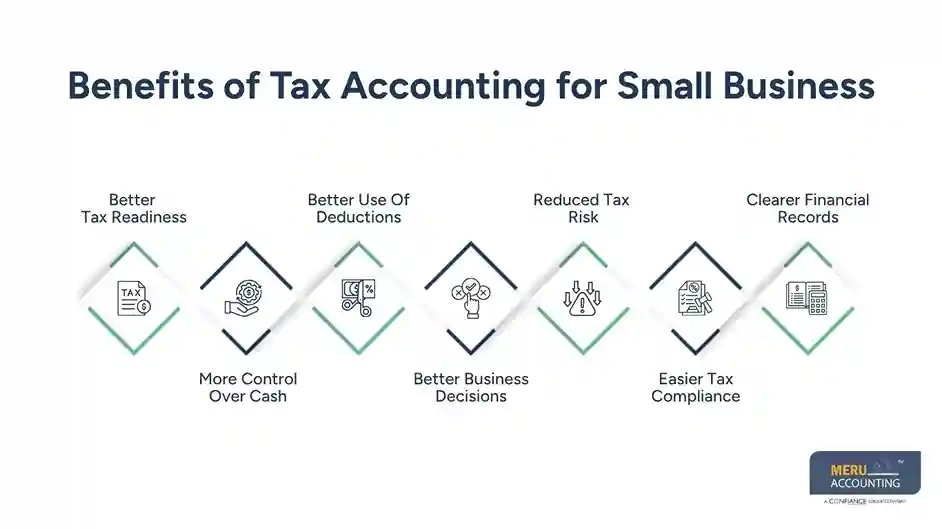
Better Tax Readiness
Tax accounting for small business keeps tax records in better shape during the year. Owners can gather receipts, invoices, bank data, and other files before the return is due.
More Control Over Cash
Tax work can show upcoming tax payments and major costs. That can give owners a better view of cash needs.
Better Use Of Deductions
A small business tax accountant can review expenses and ask whether each item has proper support. Not every business cost is automatically deductible, so records and tax rules must be checked.
Better Business Decisions
Tax accounting for small businesses can also provide useful information for decisions about hiring, asset purchases, business structure, and payment timing. Tax advice should be based on the owner’s full facts.
Reduced Tax Risk
A structured process can reduce the risk of missing records or filing data. The business owner still remains responsible for the information reported on the return.
Easier Tax Compliance
Regular tax reviews can keep filing dates, payment dates, and record needs on track. A clear process can also reduce last-minute work when tax deadlines approach.
Clearer Financial Records
Tax-focused reviews can identify missing entries, unclear expenses, and account issues. Clean records make it easier to understand business activity and prepare accurate tax returns.
optional anymore
on running the business
How Much Do Small Business Tax Accounting Services Cost?
Typical Pricing Models
The cost of small business tax accounting services can vary based on the work involved. Some firms use a fixed fee, while others charge by service, return, hour, or month.
Basic Tax Filing
A simple business with clean records may need only basic tax accounting for small businesses, such as return preparation. A more complex business may need bookkeeping review, tax planning, payroll work, and several tax forms.
Monthly Tax Support
Ongoing work may cost more than one-time filing. However, monthly service can spread the work across the year and reduce the amount of catch-up work needed before filing.
Complex Tax Situations
Multiple entities, employees, property, investments, foreign activity, or several income sources can raise the small business tax accounting services cost.
Why Quotes Differ
Two businesses may have the same sales but require different levels of tax accounting for small business support. Ask for a clear quote that states what is included, what is extra, and when payment is due.
Factors That Affect Small Business Tax Accounting Services Cost
Business Structure
The type of entity can affect forms, records, and tax work. A sole proprietor may have different needs from a corporation or partnership.
Number Of Transactions
A business with hundreds of monthly entries may need more review time than one with a small number of transactions.
Number Of Tax Forms
More forms can increase the small business tax accounting services cost. State filings, payroll forms, information returns, and other filings may add work.
Bookkeeping Quality
Clean books can lower the amount of correction work needed for tax accounting for small businesses. Poor or incomplete books may require extra review before tax filing.
Extra Advisory Work
Tax planning, notice response, amended returns, and year-round advice may be priced outside basic filing work. Ask about these items before signing an agreement.
What to Expect From a Small Business Tax Accountant
Initial Review
A small business tax accountant should first learn about the business, entity type, income sources, records, prior returns, and current tax needs.
Document Request
Expect requests for bank records, income reports, expense data, payroll details, prior returns, asset records, and other tax documents. These records help support accurate tax accounting for small businesses throughout the year.
Questions And Checks
A good small business tax accountant should ask questions when a transaction is unclear. Guessing is not a sound tax process.
Filing Review
Before filing, review the return and key figures. The IRS advises taxpayers to review a business tax return before signing it.
Ongoing Advice
Tax work does not have to end after filing. A small business tax accountant can also discuss tax dates, records, estimated payments, and changes in the business.
How To Choose The Right Tax Accounting Services for Your Small Business
Check Qualifications
Ask about education, tax training, experience, and relevant credentials. The right professional should have experience handling tax accounting for small businesses and understand the requirements that apply to your business.
Review Industry Experience
Choose a firm that knows your type of business. A retailer, contractor, consultant, and property owner can have very different tax needs.
Ask About Fees
Ask how the fee is set and what the quote includes. Compare service scope, not just the lowest price.
Check Communication
Clear communication matters when tax questions arise. Ask who will handle your account and how often you can expect updates.
Check Year-Round Support
The IRS advises small businesses to consider whether a tax professional is available throughout the year.
Common Tax Accounting Mistakes Small Businesses Should Avoid
Mixing Personal And Business Costs
Using one account for both personal and business spending can make records hard to review. Separate accounts can make tax records easier to track.
Missing Small Expenses
Small costs can add up over a year. Keeping receipts and supporting records helps maintain accurate tax accounting for small businesses.
Ignoring Estimated Taxes
Some self-employed owners may need estimated payments. The IRS provides Form 1040-ES for individuals who need to calculate such payments.
Waiting Until Filing Time
Late record work can lead to rushed decisions. A year-round tax process gives more time to check data and fix gaps.
Choosing Price Over Quality
The lowest quote may not cover the work your business needs. Compare skills, service scope, response time, and total small business tax accounting services cost.
How Meru Accounting Approaches Tax Accounting for Small Business
Business-Specific Tax Review
At Meru Accounting, we treat tax accounting for small businesses as a business-specific task. Our team reviews your business type, income, expenses, records, and tax needs before work begins.
Clear Service Scope
A clear service scope makes the process easier to manage. We explain what the service covers, which records are needed, and what may fall outside the agreed work.
Year-Round Tax Support
Tax accounting for small businesses should not only happen at filing time. Meru Accounting can provide ongoing accounting and tax support so owners can review tax needs during the year.
Record And Tax Checks
Our team can review accounting records before tax work starts. Such checks can find missing data, unclear entries, or records that need correction before filing.
Practical Tax Guidance
A small business tax accountant should explain tax matters in simple terms. Meru Accounting focuses on clear guidance so owners can understand key tax duties and decisions.
Transparent Pricing
The cost of small business tax accounting services should be clear before work starts. Meru Accounting can define the service scope and explain the fee based on the work your business needs.
Our Expert Perspective
From our experience, effective tax accounting for small businesses starts with clean records and early planning. Owners should keep receipts, invoices, bank records, payroll data, and past tax returns in order throughout the year, rather than waiting until filing time. When reviewing small business tax accounting services cost, price should not be the only factor; service scope, tax experience, communication, and follow-up also matter. A small business tax accountant should explain key figures, answer questions, and review unusual items before filing. Regular tax reviews are also important when a business hires staff, buys assets, earns more income, changes its structure, or enters a new location. Keeping tax needs under review gives owners more time to fix record gaps and make informed tax decisions.
Key Takeaways
- Tax accounting for small business covers tax records, planning, reporting, and filing.
- Accurate and updated records provide a strong base for tax work.
- Tax duties can vary based on business type, income, location, and activities.
- A small business tax accountant can review records and identify key tax needs.
- The cost of small business tax accounting services depends on the work and services required.
- Ask for a clear fee structure before starting any tax service.
- Keep personal and business expenses separate to maintain clean records.
- Review income, expenses, receipts, and tax records throughout the year.
- Review your tax return carefully before signing and submitting it.
- Choose a qualified tax professional with experience that fits your business needs.
FAQs
Tax accounting for small business can include bookkeeping review, tax return preparation, tax planning, estimated tax work, and payroll tax support.
A small business tax accountant can be useful when your tax work is complex, your business is growing, or you need year-round tax advice.
The cost of small business tax accounting services depends on business size, records, tax forms, entity type, and extra services. Ask for a written quote before work starts.
Yes. A small business tax accountant can review expected income, costs, deductions, tax payments, and planned business changes before the tax year ends.
Businesses should keep records of income, expenses, assets, payroll, invoices, receipts, bank activity, and other documents that support tax return entries.
optional anymore
on running the business