




Dental accounts receivable solutions can reveal a gap that revenue reports often miss: money a practice has earned but has not yet collected. A practice can complete hundreds of procedures in a month, bill for them, and still have a large share of that money sitting in unpaid claims or patient balances. The work has been done. The revenue may even show in reports. But until the money is collected and posted, it cannot help pay the bills.
The real question is not simply, “How much did the practice earn?” It is, “How much of that money has actually been collected?”
That distinction matters when you are planning payroll, buying supplies, adding staff, or deciding whether the practice can take on a new expense. A large A/R balance may look good on paper, but old balances can be hard to turn into cash .
Effective dental accounts receivable solutions give practice owners a better way to track that gap. With timely follow-up, clean records, and regular A/R reviews, you can see where money is held up and what needs attention. Good dental office bookkeeping adds another layer of control by keeping payments, deposits, and financial records in sync.
What You Will Learn From This Blog
In this guide, you will learn:
- What dental accounts receivable solutions include
- Why dental practices often have slow or aging A/R
- Ways to improve collections and reduce old balances
- Which dental A/R metrics are worth tracking
- How dental office bookkeeping supports better cash flow
- When outside accounting and A/R support may make sense
What Are Dental Accounts Receivable Solutions?
Dental accounts receivable solutions are processes and services used to track, review, and collect money owed to a dental practice.
A dental practice may have two main types of A/R:
- Insurance A/R: Money due from dental insurance plans after claims are filed.
- Patient A/R: Money due from patients after insurance payments, deductibles, copays, or other charges.
Good A/R management starts with clear records. Each payment should be posted to the right account. Claims and patient balances should be reviewed on a set schedule. Older balances should not sit without action.
The process also needs good bookkeeping. If payments, deposits, adjustments, or write-offs are not recorded with care, the A/R report may not show the full picture.
That is why A/R and bookkeeping work best when they are viewed as linked parts of the practice’s financial process.
Why Dental Practices Struggle With Accounts Receivable
A/R issues can build up for many reasons. Some are tied to billing, while others come from gaps in follow-up or record-keeping.
Delayed or Denied Insurance Claims
Claims may be held up due to missing data, coding issues, plan rules, or other errors. If a claim is not tracked after it is sent, the balance can remain open for weeks or months.
Unpaid Patient Balances
Patients may leave a balance after insurance pays its share. Without a clear payment process and timely follow-up, small balances can add up to a large amount of money.
Inconsistent Follow-Up
A practice may have a good billing team but still lose time if follow-up is not done on a set schedule. Old claims and patient balances need clear next steps.
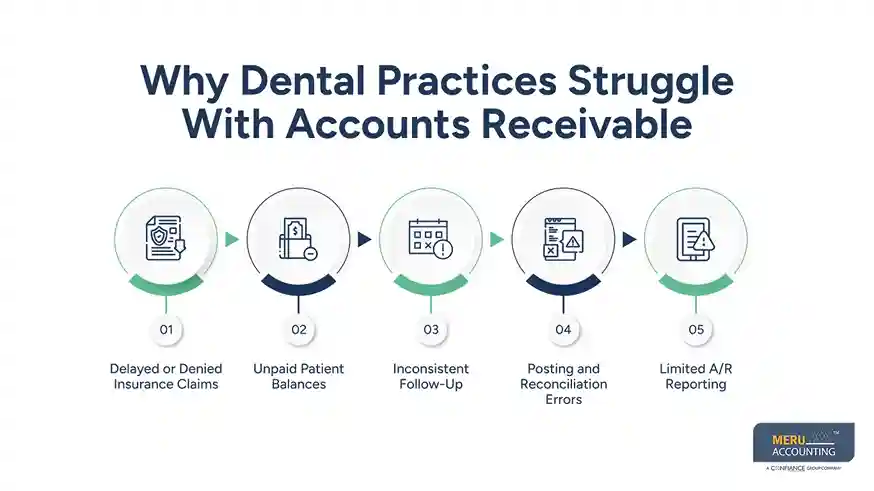
Posting and Reconciliation Errors
A payment that is posted to the wrong account can make one balance look unpaid while another looks overpaid. Bank and account reconciliation can help catch these issues.
Limited A/R Reporting
A total A/R figure does not tell the whole story. Practice owners need to know how much is current, how much is aging, and whether the balance is tied to patients or insurers.
optional anymore
on running the business
How to Improve Dental Accounts Receivable and Collections
Improving A/R does not always require a major change. Small steps, done on a set schedule, can make the process more consistent.
1. Review A/R Aging Reports
Start with an aging report that groups open balances by age. A common view includes 30, 60, 90, and 120+ day balances.
This helps the practice spot old accounts before they become harder to collect.
2. Separate Insurance and Patient A/R
Insurance balances and patient balances often need different follow-up steps. Keeping them separate makes it easier to see where cash is tied up.
3. Follow Up on Claims Early
Do not wait until a claim is very old before checking its status. Set a clear review cycle for open claims and flag claims that need correction or added information.
4. Set Clear Patient Payment Rules
Patients should know what they owe and when payment is expected. Clear estimates, payment options, and billing notices can reduce confusion and make collection calls easier.
5. Track Old Balances
Aging balances deserve more attention than a simple total A/R number. Review the oldest accounts and decide whether each one needs a claim check, patient contact, correction, or another action.
6. Reconcile Payments and Deposits
Payments should match the records in the practice and the related bank activity. Regular reconciliation can help find missing entries, duplicate postings, and other errors.
7. Review Collection Trends
Look at A/R over time instead of reviewing it only when cash gets tight. A rising balance can be an early sign that claims, posting, or collection work needs attention.
Dental A/R Metrics Worth Tracking
The right metrics can give practice owners a quick view of collection health.
Days in Accounts Receivable
This shows how long, on average, it takes to collect money owed to the practice. A rising number can point to slower collections.
A/R Aging
Review balances by age, such as current, 30, 60, 90, and 120+ days. This shows whether old debt is growing.
Collection Rate
The collection rate helps show how much of the amount due is actually being collected. It is useful when viewed over time.
Outstanding Insurance Claims
Track open claims and how long they have been unpaid. A growing list of old claims may point to a need for better claim follow-up.
Patient Balances
Review both the total patient A/R and the age of those balances. Small unpaid amounts can add up across a large patient base.
Adjustments and Write-Offs
Keep an eye on adjustments, refunds, and write-offs. Large or unusual changes may need review to confirm that records are correct.
A Practical Dental Accounts Receivable Checklist
Use this checklist as part of a monthly or regular A/R review:
- Review the latest A/R aging report.
- Separate insurance and patient balances.
- Check claims that have been open too long.
- Review patient balances that are past due.
- Follow up on high-value or older accounts.
- Confirm payments are posted to the right accounts.
- Reconcile deposits with financial records.
- Review adjustments and write-offs.
- Compare current A/R with prior periods.
- Flag trends that may affect cash flow.
- Assign clear next steps for unresolved balances.
The key is consistency. A checklist is useful only when someone reviews it and acts on what it shows.
Dental Accounts Receivable Solutions by Meru Accounting
A strong A/R process starts with knowing where the money is, how long it has been outstanding, and what needs action next. That is the approach we take at Meru Accounting in our dental accounts receivable solutions.
For dental practices, we look beyond the total A/R balance and help break it into the details with our dental accounts receivable solutions:
Area | How We Help |
A/R review | Review outstanding balances and aging to spot accounts that need attention. |
Patient & insurance A/R | Track patient balances and insurance receivables separately for clearer follow-up. |
Payment posting | Keep payments and transactions recorded against the right accounts. |
Reconciliation | Reconcile bank and financial accounts to help keep records aligned with actual activity. |
Reporting | Provide financial reports that help practice owners see collection and cash-flow trends. |
Bookkeeping | Maintain cleaner financial records through ongoing dental office bookkeeping support. |
This gives practice owners a clearer view of what has been billed, what has been collected, what remains outstanding, and where delays may be affecting cash flow.
Our role is not simply to report a large A/R number at month-end. We help create a more consistent process for reviewing receivables, keeping records accurate, and giving practice owners the financial information they need to make better decisions.
Our Expert Insight
A common mistake is to treat a high A/R balance as the main problem. In practice, the more useful question is why the balance is still open. A patient balance, an unpaid insurance claim, a recent adjustment, and an old denied claim may all appear in A/R, but each calls for a different response. Looking at the age and source of outstanding balances can help practice owners focus on the accounts that need attention rather than chasing every balance in the same way.
We also see a close link between A/R and the quality of the underlying financial records. When payments, adjustments, deposits, or write-offs are not recorded correctly, the A/R report may not reflect what the practice is actually owed. Consistent dental office bookkeeping, regular reconciliation, and clear financial reports give owners a more reliable view of collections and cash flow. That is why we recommend reviewing A/R as part of the practice’s regular financial process, not only when outstanding balances start to rise.
Key Takeaways
- Dental A/R can affect cash flow even when a practice has strong revenue.
- Insurance claims and patient balances need different follow-up steps.
- Aging reports help identify balances that need attention.
- Regular payment posting and reconciliation support more accurate records.
- Tracking A/R metrics can reveal collection trends early.
- Dental office bookkeeping supports better visibility into cash flow and receivables.
- The right dental accounts receivable solutions can help create a more consistent collection process.
FAQs
Rising days in A/R, older unpaid balances, and slower collections can signal an issue. The total A/R balance alone does not tell the full story.
Yes. Keeping them separate makes it easier to see where money is held up and determine the right follow-up.
Common reasons include claim denials, missing details, coding errors, eligibility issues, and delayed follow-up. Finding the cause helps determine the next step.
Yes. Accurate payment posting, reconciliations, and A/R records give practice owners a clearer view of outstanding balances and cash flow.
Consider dental accounts receivable solutions when A/R is aging, staff cannot keep up with follow-up, or the practice lacks clear receivables reports. Outside support can bring more consistency to the process.
optional anymore
on running the business


