
Running a dental office requires great patient care as well as financial management. Without one of them, the success of a dental practice is almost impossible. They need to deal with payroll, office bills, vendor costs, insurance claims, taxes, and many more financial tasks. When you do not care for any of them, costs may surge, and profits may decline over time. Hence, bookkeeping for dentists is considered equally important.
Having clear financial records helps practice owners know where income comes from, where it goes, and how costs can stay in check. A strong bookkeeping process gives dentists the insight they need to make smart business choices.
As dental offices face higher labor costs, supply costs, and equipment costs, proper dental bookkeeping becomes even more important. In this blog, we will see how It helps spot extra costs, improve profitability, and support long-term growth.
What You Will Learn From This Blog
In this blog, you will learn:
- What bookkeeping for dentists involves
- Why dental offices need special financial tracking
- How dental bookkeeping improves cash flow control
- Ways bookkeeping helps raise profits
- The benefits of outsourcing bookkeeping services
- Key ways to cut overhead costs and improve financial results
What Is Bookkeeping for Dentists?
Bookkeeping for dentists is the process of recording, sorting, and managing all financial activity in a dental office. It gives a clear view of income, costs, assets, debts, and overall financial health.
Common bookkeeping tasks include:
- Recording patient payments
- Tracking insurance payments
- Managing vendor bills
- Tracking office costs
- Reconciling bank accounts
- Handling payroll records
- Preparing financial reports
Unlike general bookkeeping, bookkeeping for dentists focuses on the needs of dental offices. Dental practices often deal with insurance billing, care plans, lab fees, and special equipment costs that need close financial tracking.
When bookkeeping is handled the right way, practice owners can track results, manage costs, and plan for future growth with more trust in the numbers.
Why Dental Practices Need Specialized Dental Bookkeeping
Dental offices face financial challenges that differ from those of many other firms. They must balance patient care with office tasks while managing many income streams and costs.
Specialized dental bookkeeping helps meet these needs by giving clear financial records made for the dental field.
Some common challenges include:
Managing Insurance Payments
Insurance claims often take time to process. Tracking these payments the right way helps make sure income comes in on time and unpaid balances are watched closely.
Controlling Supply Costs
Dental supplies are a major office cost. Bookkeeping helps spot spending trends and avoid extra orders.
Monitoring Equipment Purchases
Dental offices often invest in tools and equipment. Proper financial records help track these buys and support future budget plans.
Handling Payroll Costs
Labor costs are often one of the highest costs in a dental office. Specialized bookkeeping helps track payroll spending and keep records right.
Meeting Tax Rules
Dental offices must follow federal, state, and local tax rules. Well-maintained records make tax filing easier and lower the risk of issues.
Without reliable dental bookkeeping, practice owners may find it hard to spot financial issues before they turn into bigger problems.
Improving Cash Flow Through Effective Dental Bookkeeping
Cash flow is one of the most important parts of a successful dental office. Even offices with good profits can face problems if cash flow is not managed well.
Effective dental bookkeeping helps improve cash flow by giving clear and timely financial data.
Tracking Accounts Receivable
Unpaid patient balances and slow insurance payments can affect cash on hand. Regular tracking helps offices collect payments faster and reduce late accounts.
Managing Payment Cycles
Bookkeeping systems help track when payments are due and when bills must be paid. This gives better control over cash movement during the month.
Finding Revenue Delays
Clear financial records make it easier to find payment delays and fix collection issues fast.
Supporting Better Budget Plans
Cash flow reports help practice owners estimate future income and costs with more accuracy. This cuts down on surprises and improves planning.
Maintaining Financial Stability
Good cash flow control helps make sure there are enough funds for payroll, supplies, rent, and other office costs.
Strong bookkeeping practices give a clear view of daily financial activity and support better cash flow choices.
Using Bookkeeping for Dentists to Increase Profitability
Many dental offices focus heavily on raising revenue. While revenue growth is important, profits also depend on cost control and better day-to-day workflow. Bookkeeping for dentists helps practice owners find ways to improve profits in several ways.
Understanding Expense Patterns
Detailed financial records show where money is being spent. This helps find areas where costs can be cut without affecting patient care. For example, a practice may find it is spending more than planned on office supplies, lab fees, or front desk costs.
Measuring Service Performance
Bookkeeping reports can help dentists review the financial results of different services. Knowing which care options bring higher profits allows offices to focus on services that add the most value to growth.
Reducing Unnecessary Spending
Financial data often shows repeat costs, unused tools, or poor buying habits. Fixing these issues can improve profit margins.
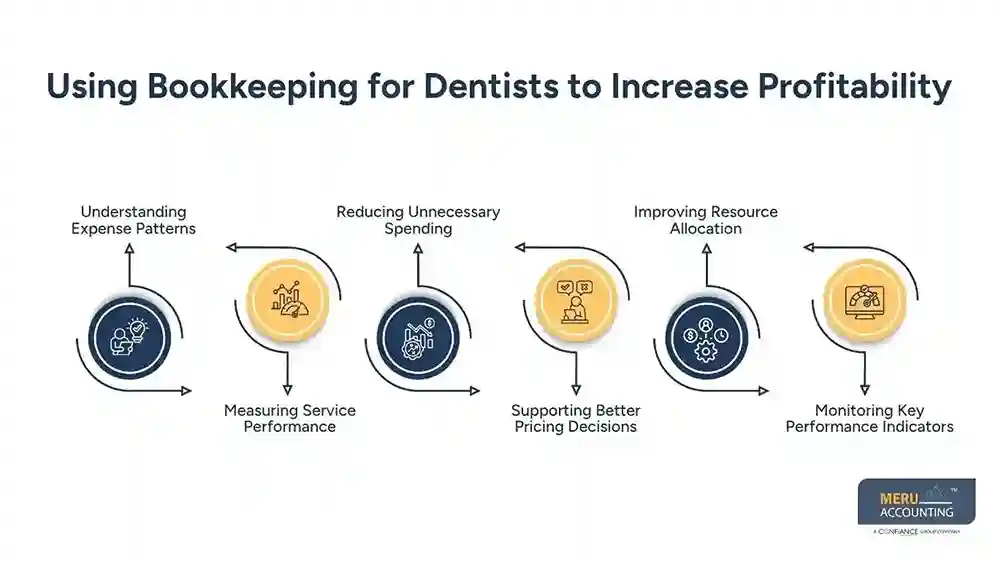
Supporting Better Pricing Decisions
Clear cost tracking helps show whether service fees match office costs and local market rates. This data allows dentists to make smart pricing choices while staying competitive.
Improving Resource Allocation
Practice owners can use financial reports to decide where to place time, staff, and resources for the best return.
Monitoring Key Performance Indicators
Bookkeeping gives access to key metrics such as:
- Revenue growth
- Cost ratios
- Net profit margins
- Collection rates
- Payroll percentages
Regular review of these metrics helps support steady profit growth.
Benefits of Outsourcing Bookkeeping for Dentists
Many dental offices choose to outsource bookkeeping tasks to skilled experts. Outsourcing can provide both financial and work-related benefits.
Access to Industry Expertise
Professional bookkeepers who work with dental practices understand field-specific financial needs and reporting rules. Their skills help improve accuracy and workflow.
Saving Valuable Time
Dentists and office managers already have busy schedules. Outsourcing bookkeeping allows staff to focus more on patient care and daily work.
Improved Financial Accuracy
Skilled bookkeeping professionals follow proven steps that reduce mistakes and keep records correct. Reliable data supports better choices across the office.
Timely Financial Reporting
Regular financial reports give a clear view of office results and help spot issues early. This allows management to act fast when financial conditions change.
Better Compliance Support
Professional bookkeeping services help keep records neat and ready for tax filing and compliance needs.
Scalability for Growing Practices
As practices grow, financial tasks become more complex. Outsourced bookkeeping services can grow with the business without adding more in-house staff.
By outsourcing bookkeeping for dentists, offices gain access to skilled help while lowering office workload.
Meru Accounting's Dental Bookkeeping Services
At Meru Accounting, we understand the financial challenges faced by healthcare professionals. Our bookkeeping for dentists helps dental offices improve financial control, lower overhead, and raise profits.
Our services include:
- Bookkeeping and financial record management
- Bank and credit card reconciliations
- Payroll support
- Accounts payable and receivable management
- Cash flow tracking
- Financial reporting and review
- Tax-ready financial records
- Budget planning and forecasting
Our skilled team works closely with dental offices to build strong financial workflows that support long-term success. Through accurate dental bookkeeping and custom accounting solutions, we help practice owners gain a better view of their financial results and make smart business choices.
Our Expert Insight
One of the most common issues we see in dental offices is a lack of insight into daily financial activity. Many practice owners focus mainly on revenue while missing cost trends that slowly reduce profits. Accurate bookkeeping for dentists provides the data needed to find hidden costs, improve collections, and strengthen cash flow control.
Practices that review financial reports on a regular basis are often better prepared to make timely choices, control overhead costs, and improve overall profits. Financial success is not only about bringing in more revenue. It is also about knowing where money is spent and making sure resources are used in the best way.
Key Takeaways
- Bookkeeping for dentists provides clear financial tracking and reporting.
- Specialized dental bookkeeping meets the unique needs of dental offices.
- Strong bookkeeping systems help improve cash flow and payment tracking.
- Financial records help find ways to lower overhead costs.
- Cost tracking supports better budgeting and profit planning.
- Regular reports improve business decision-making.
- Outsourcing bookkeeping can save time and improve financial accuracy.
- Better financial insight supports long-term growth and stability.
- Effective bookkeeping helps increase profitability.
FAQs
Bookkeeping for dentists helps track income, costs, cash flow, and financial results. It provides the data needed to manage costs and improve profits.
Dental bookkeeping helps track spending trends, monitor office costs, and find areas where expenses can be reduced without affecting patient care.
Yes. Accurate bookkeeping helps track patient payments, insurance payments, and unpaid balances, leading to better cash flow control.
Many practices gain from outsourcing because it provides access to skilled help, improves accuracy, and saves valuable office time.
Most dental offices should review financial reports each month to track results, control costs, and make smart business decisions.