
What is a syndication in real estate? It is an investment structure where several investors pool money to buy, own, or operate a real estate asset. A sponsor, also called a syndicator, usually manages the deal and handles property operations, financing, reporting, and investor relations.
For anyone asking what is a syndication in real estate, the accounting side is just as important as the investment structure. Investor capital, rental income, property costs, debt, fees, distributions, and profits must be recorded in the right accounts.
This blog explains what is a syndication in real estate, how the deal is structured, how real estate syndication works, and what records sponsors need. It also covers tax matters and real estate syndication bookkeeping practices for 2026.
What You Will Learn From This Blog
- What is a syndication in real estate and why investors use this structure.
- How real estate syndication works from raising capital to selling the property.
- Common types of real estate syndications.
- How sponsors, investors, and entities are structured.
- What financial records a syndication needs.
- Key tax and compliance points for 2026.
- Practical bookkeeping steps for sponsors and property owners.
How Real Estate Syndication Works
Investors Pool Capital
A syndication combines money from several investors into one real estate investment. Each investor receives an ownership interest based on the deal documents.
How real estate syndication works starts with recording every capital contribution. The books should show the investor, payment date, amount, and type of contribution.
The Sponsor Manages The Deal
Knowing what is a syndication in real estate also means understanding the sponsor’s role in finding the property, arranging financing, managing operations, and overseeing the investment.
The sponsor may also receive fees or a share of profits. These payments should be recorded separately from property operating costs.
The Entity Buys The Property
A separate LLC or partnership may be created to own the property. Investor funds and loan proceeds are then used for the purchase and other deal costs.
This entity structure is an important part of how real estate syndication works because it keeps the deal’s financial activity separate from other business activity.
Property Income And Costs Are Recorded
Rental income and other receipts are recorded along with expenses such as repairs, insurance, property tax, utilities, and management fees.
What is a syndication in real estate from a cash-flow view? It is an investment where property-level activity must be tracked before cash can be allocated or distributed.
Investors Receive Distributions
Investors may receive cash from operating income, refinancing, or the sale of the property.
The payment amount and timing depend on the deal agreement. Each payment should be matched to the correct investor and recorded in the books.
Common Types Of Real Estate Syndications
Multifamily Syndications
Multifamily deals often involve apartment buildings or other residential rental properties. Records may include rent, vacancies, repairs, insurance, taxes, and loan costs.
What is a syndication in real estate for a multifamily deal depends on the property, ownership entity, financing, and investor agreement.
Commercial Syndications
Commercial deals may involve office buildings, retail centers, warehouses, or mixed-use properties.
The books need to capture lease income and property costs based on the actual transactions and agreements.
Development Syndications
Development deals raise capital for land purchases, construction, or major property work.
Costs may include land, labor, permits, architects, materials, interest, and other project expenses. These costs should be tracked by category.
Value-Add Syndications
A value-add deal may involve buying a property that requires repairs or upgrades before the sponsor seeks higher rent or a sale.
How real estate syndication works in this model may include higher early costs followed by changes in rental income and property value.
Debt-Focused Deals
Some real estate investment structures focus on lending rather than direct property ownership.
Their records may include loan principal, interest income, fees, payments, and outstanding balances. The accounting treatment depends on the legal structure.
How Real Estate Syndication Is Structured
General Partner
The general partner or sponsor normally manages the investment. Duties may include finding the property, arranging financing, overseeing operations, and reporting to investors.
What is a syndication in real estate can differ from one deal to another because sponsor rights and duties depend on the legal documents.
Limited Partners
Limited partners generally provide capital and receive an agreed economic interest in the investment.
Their contributions, allocations, and distributions should be tracked separately so each investor has a clear account.
Special-Purpose Entity
A syndication may use a separate LLC or partnership for one property or investment.
Keeping a separate bank account and ledger for the entity creates a clear record of the deal’s income, costs, debt, and equity.
Capital Contributions
Investor funds should be recorded when received. The record should include the investor, date, amount, and relevant transaction details.
These records form the base for investor reporting and year-end accounting.
Profit And Distribution Waterfall
A waterfall sets the order in which available cash is distributed. It may include return of capital, preferred returns, and later profit splits.
How real estate syndication works cannot be understood from cash payments alone because taxable income and cash distributions may differ.
What Is Real Estate Syndication Bookkeeping?
What is a syndication in real estate from an accounting view? It is a deal where property activity and investor activity must be recorded in a clear and connected manner.
Real estate syndication bookkeeping covers transactions such as investor contributions, rental income, property costs, loans, distributions, and other financial activity.
Track Investor Capital
Each investor should have a record of contributions, distributions, and other relevant capital changes.
The records should match the deal documents and be updated when new capital enters or cash is paid out.
Record Property Income
Rental income, fees, and other property receipts should be posted to suitable income accounts.
This gives the sponsor a clearer view of property performance and cash activity.
Record Property Expenses
Repairs, insurance, taxes, utilities, management fees, and other costs should be recorded under suitable categories. Understanding what is a syndication in real estate also means understanding how property-level expenses are separated from investor-level transactions.
Capital improvements may require different accounting or tax treatment from normal repairs, so the tax adviser should review such items.
Track Debt
Loan proceeds, principal payments, interest, and loan fees should be recorded separately.
The loan balance in the books should also be checked against lender statements during the monthly close.
Reconcile Accounts
Bank and loan accounts should be reconciled on a regular basis.
This can identify missing transactions, duplicate entries, incorrect payments, or other errors before financial reports are issued.
optional anymore
on running the business
What Financial Records Does A Real Estate Syndication Need?
General Ledger
The general ledger records income, expenses, assets, liabilities, and equity.
For real estate syndication bookkeeping, the ledger should be organized so major transactions can be traced to supporting documents.
Investor Capital Records
Investor records should show contributions, distributions, and relevant changes in capital.
The IRS notes that a partner’s tax basis is not the same as the capital account reported on Schedule K-1.
Bank Statements
Bank statements provide evidence of actual cash movement.
They can be used to verify investor deposits, property income, operating costs, loan proceeds, and distributions.
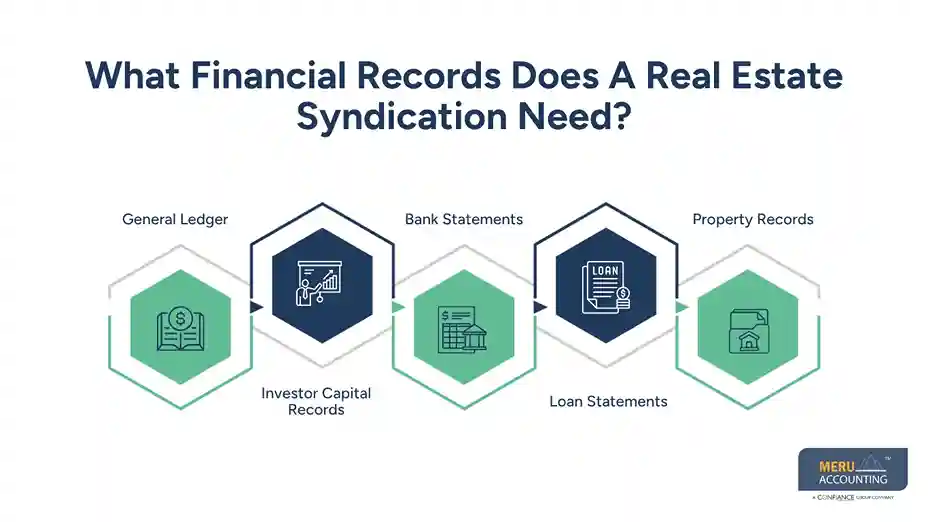
Loan Statements
Loan statements show principal, interest, fees, and outstanding debt.
These records should be checked against the accounting ledger to keep the liability balance accurate.
Property Records
Property records may include purchase documents, closing statements, improvement costs, depreciation data, and sale information.
Keeping these records in one place gives the tax preparer the source data needed for year-end work.
Tax And Compliance Considerations For Real Estate Syndication Bookkeeping
Form 1065
A partnership generally files Form 1065 to report its income, deductions, gains, and losses. Partnership income generally passes through to the partners for federal income tax purposes.
Accurate books are important because errors in partnership records can affect partner-level reporting.
Schedule K-1
Schedule K-1 reports each partner’s share of income, deductions, credits, and other items.
Partners must also track their own outside tax basis, which is not simply the capital account shown on the K-1.
Depreciation
Real estate may generate depreciation deductions under applicable tax rules.
The purchase price, eligible costs, placed-in-service date, and asset details should be retained so the tax preparer can calculate depreciation correctly.
Investor Distributions
A cash distribution can affect an investor’s basis and may have tax consequences depending on the facts.
What is a syndication in real estate from a tax view may therefore differ from the amount of cash an investor receives.
Securities Compliance
Some syndication interests may be securities. The SEC states that securities offerings generally must be registered or qualify for an available exemption. Regulation D includes exemptions such as Rules 504, 506(b), and 506(c).
Sponsors should obtain qualified legal advice on offering rules, investor eligibility, disclosures, and state requirements.
Best Practices For Real Estate Syndication Bookkeeping In 2026
Keep Separate Books
Maintain separate books and bank accounts for each syndication entity.
This keeps transactions tied to the correct property and reduces the risk of mixing funds between deals.
Close Books Monthly
Review bank accounts, loan balances, property records, and investor transactions every month.
A monthly close gives the sponsor time to find and correct errors before year-end tax work.
Update Investor Schedules
Maintain current schedules for investor contributions, ownership, distributions, and capital balances.
These schedules should agree with the general ledger and deal documents.
Review Deal Documents
The operating agreement, subscription records, loan papers, and distribution terms should be available during the accounting process.
These documents show how real estate syndication works for that specific investment and should guide the accounting setup.
Keep Source Documents
Store invoices, bank statements, loan records, closing documents, investor records, and distribution details in an organized system.
A clear document trail makes it easier to check a transaction when questions arise.
Why Choose Meru Accounting For Real Estate Syndication Bookkeeping?
Property Accounting
Meru Accounting provides bookkeeping and accounting services for real estate entities that need property income and expenses recorded in organized accounts.
Investor Accounting
At Meru Accounting, we provide accounting work for investor contributions, distributions, and capital records based on the documents supplied by the client.
Monthly Financial Reports
Meru Accounting provides accounting services that organize income, expenses, assets, liabilities, and equity for monthly review.
Tax-Ready Records
Meru Accounting provides bookkeeping and accounting services that keep financial records ready for review by the tax professional handling partnership tax work and K-1 preparation.
Our Expert Perspective
What is a syndication in real estate from an accounting perspective? It is a structure where property records and investor records need to connect without mixing the two.
Our accounting perspective is that real estate syndication bookkeeping should be set up when the deal starts rather than rebuilt at tax time. Clear records for capital, debt, property costs, income, and distributions make later review more direct.
Key Takeaways
- Investors often search what is a syndication in real estate when they want to understand how pooled capital is used to buy income-producing property.
- How real estate syndication works depends on the sponsor, property, entity, financing, and investor agreement.
- Investor contributions, property income, expenses, debt, and distributions should be recorded separately.
- Real estate syndication bookkeeping should connect property-level records with investor-level records.
- Form 1065 and Schedule K-1 are important for many partnership syndications.
- A partner’s K-1 capital account should not be treated as the same as the partner’s outside tax basis.
- Some syndication offerings may be subject to federal and state securities rules.
- Monthly reconciliation and organized source records can make year-end reporting easier.
FAQs
It is a structure where several investors pool money to buy or operate a real estate asset.
The sponsor may manage the books in-house or hire an accounting firm to record property transactions, investor funds, loans, and distributions.
Investor contributions are recorded as capital received by the investment entity and assigned to the appropriate investor account.
Bank accounts, loan balances, property income, expenses, investor payments, and distributions should be checked against the accounting records each month.
The books record the sale proceeds, remaining debt, selling costs, gain or loss, and final distributions based on the deal terms.
optional anymore
on running the business