Meru Accounting

Rental Property Bookkeeping: How to Manage Rental Reconciliation & Owner Draws

Contents
Want to learn more?

Subscribe for business tips, tax updates, financial fundamental and more


    Rental Property Bookkeeping: How to Manage Rental Reconciliation & Owner Draws

    A rental property can look profitable until you ask one simple question: Where did the money go? Rent came in, the mortgage was paid, a plumber fixed a leak, property tax was due, and the owner took some cash out. The bank balance shows activity, but it does not always show the full picture. That is why rental property bookkeeping becomes important. It connects rent, property costs, bank activity, and owner draws to the right accounts. 

    Clear records can show what each property earned, what it cost to run, and how much cash the owner actually took out. For owners with more than one property, bookkeeping for rental property becomes even more useful. When rent and costs from several units are mixed together, it can be hard to tell which property is making or using the most cash.

    What You Will Learn From This Blog

    • How to set up rental property bookkeeping for one or more rental properties.
    • How to organize rental income and property costs.
    • How to reconcile rent and expenses with bank activity.
    • How to record and track owner draws.
    • Which common errors can affect rental financial reports.
    • How Meru Accounting provides bookkeeping for rental property services.

    What is Rental Property Bookkeeping and Why Does It Matter?

    Rental property bookkeeping is the process of recording and organizing the money that comes in and goes out of a rental property. This includes rent received, late fees, repairs, insurance, property tax, utilities, loan payments, bank charges, and owner withdrawals.

    A bank balance alone cannot show how well a property is doing because it may also include loan funds, transfers, or money taken by the owner. Clear records separate these transactions so the actual income and costs of the property can be reviewed.

    For owners with several rental units, keeping each property’s activity clear is just as important. For example, if rent and repair costs from three homes are combined in one account, it can be hard to see which property has higher costs or lower rental income. 

    Accurate bookkeeping for rental property links transactions to the right property and keeps supporting records such as invoices, receipts, leases, and bank statements. This makes monthly reviews easier and gives owners a clearer view of property-level cash flow.

    Tax records also need care because rental income and expenses can have different tax treatment. The IRS states that rental income generally must be reported, while certain rental expenses may be deductible under the applicable rules. Some costs, such as improvements, may need to be treated differently and recovered through depreciation rather than deducted as a current expense. 

    Owner withdrawals should also remain separate from property expenses. If an owner takes $2,000 from a rental account for personal use, rental property bookkeeping should record that amount as an owner draw or the appropriate equity transaction rather than as a repair or operating cost. This keeps the property’s financial results more accurate and easier to review.


    How to Set Up Bookkeeping for Rental Property

    Start With Separate Accounts

    Accurate bookkeeping for rental property starts with a clear bank setup. A separate account is also an important part of rental property bookkeeping because it makes deposits, payments, transfers, and withdrawals easier to identify.

    Build Useful Income Categories

    Rent may not be the only money a property receives. Monthly rent, late fees, parking income, and other valid receipts can have suitable categories so the income report is easy to review.

    Group Costs By Type

    Repairs, insurance, property tax, utilities, management fees, loan interest, and other costs should have clear categories. This structure gives owners a better view of where rental cash is being spent.

    Create an Owner Draw Account

    Owner withdrawals should not be placed under repairs or another property expense. A separate owner draw or equity account keeps personal cash use apart from operating costs.

    Keep Proof Behind Each Entry

    Every important entry should have a source. Keep invoices, receipts, lease records, bank statements, payment records, and other documents with the financial data. This documentation strengthens rental property bookkeeping by creating a clear trail for later review.

    How to Reconcile Rental Income and Property Expenses

    Begin With The Bank

    Bank reconciliation is a key part of rental property bookkeeping. Compare the bank statement with the accounting record and match each rental deposit and property payment to the right transaction.

    Compare Rent Due and Rent Paid

    Suppose monthly rent is $1,800, but only $1,200 reaches the bank. The $600 difference needs an explanation. It could be a partial payment, tenant credit, or another item that needs review.

    Check Fees and Deposits

    Late fees, payment charges, refunds, and security deposits need careful review. The IRS notes that a security deposit generally isn’t rental income when held for return to the tenant, though amounts kept under the lease can receive different treatment.

    Match Bills to Payments

    A repair invoice dated March 29 may not be paid until April 5. The accounting record should make this timing clear and prevent the same bill from being entered twice.

    Break Down Loan Payments

    A mortgage payment is not simply one rental expense. It can include principal, interest, and other amounts. The records should separate these parts based on the loan statement and applicable accounting and tax treatment.

    Good financial management isn't
    optional anymore
    Meru Accounting handles the accuracy, so you can focus
    on running the business

    How to Record and Track Owner Draws

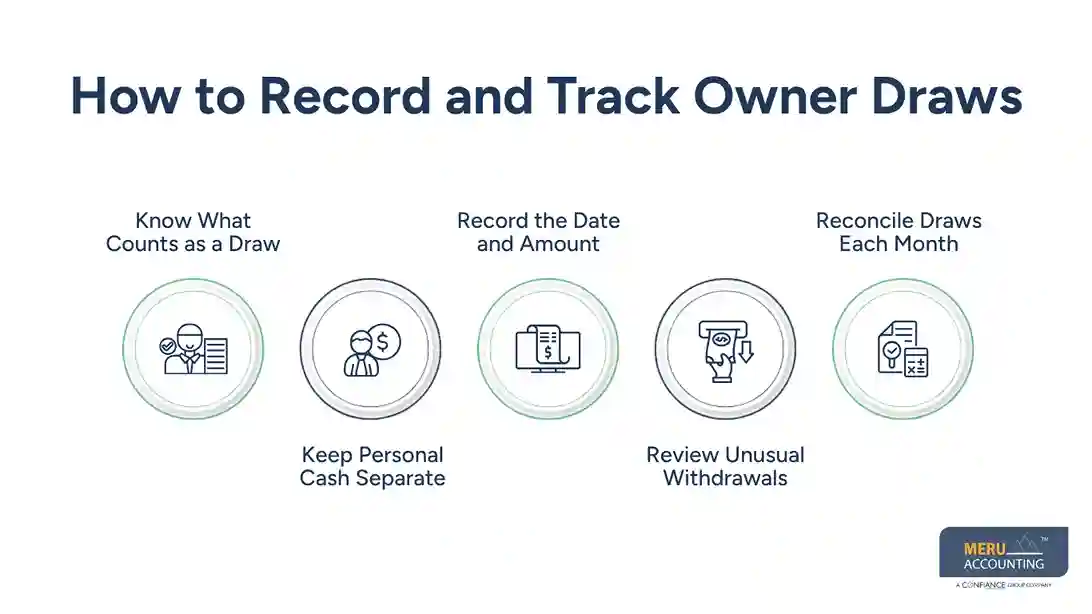
    Know What Counts as a Draw

    An owner draw is money taken by an owner for personal use. It is different from money spent to maintain the rental. Rental property bookkeeping should make this difference clear.

    Keep Personal Cash Separate

    If an owner takes $1,500 from the rental account to pay a personal bill, it should not be coded as a property expense. Bookkeeping for rental property should show it as an owner withdrawal or the suitable equity transaction.
    rental property bookkeeping

    Record the Date and Amount

    Each withdrawal should show the date, amount, bank account, and owner account. A short note can also explain the transaction. This makes later reviews much easier.

    Review Unusual Withdrawals

    Large or repeated withdrawals should be checked. They may be valid owner draws, but they can also reveal personal costs that were posted to a property account by mistake.

    Reconcile Draws Each Month

    At month-end, compare the owner draw account with bank activity. Regular review can find missing withdrawals, duplicate entries, and wrongly coded personal purchases.

    Common Rental Property Bookkeeping Errors to Avoid

    Mixing Personal and Rental Spending

    Using one bank account for rent and personal spending may seem easy at first, but it creates more work later. Separate accounts give the records a cleaner transaction trail.

    Losing Track Of Rent

    Rent can arrive through bank transfers, checks, cash, or payment platforms. If one payment is missed, the income report may be wrong. Effective bookkeeping for rental property is a key part of rental property bookkeeping because it matches each receipt with the correct tenant and rental period.

    Calling Every Property Cost a Repair

    A major improvement does not always receive the same treatment as a normal repair. The IRS provides specific rules for repairs, improvements, and depreciation.

    Leaving Small Charges Unchecked

    A $15 bank fee may look minor, but many small charges can add up over a year. Unmatched bank items should be reviewed instead of being left without an explanation.

    Posting Draws as Expenses

    If an owner takes $3,000 and it is posted as a property expense, the reported property costs may be overstated by the same amount. A separate draw account prevents this common error.

    Best Practices for Accurate Rental Property Financial Records

    Reconcile Before You Forget

    Monthly reconciliation is much easier than trying to rebuild a year’s transactions at tax time. Regular rental property bookkeeping gives owners a chance to find errors while invoices, bank statements, and payment records are still easy to locate.

    Look at Each Property

    Owners with several units should review each property separately. Bookkeeping for rental property can show rent, repairs, insurance, taxes, and other costs by property instead of placing every transaction into one total.

    Keep Repair Details

    A receipt that says only “property work” may not explain what was done. Keep the invoice, date, property, type of work, and payment record so the transaction can be reviewed later.

    Track Major Property Costs

    Major work should not automatically be treated like a small repair. Keep purchase and improvement records so the correct accounting and tax treatment can be reviewed.

    Review Before Tax Filing

    Before records go to a tax professional, review the income statement, balance sheet, bank reconciliation, owner draws, and property-level transactions. This final check can identify missing or unusual entries before tax work begins.

    Why Choose Meru Accounting for Rental Property Bookkeeping?

    Review Rental Income

    Meru Accounting provides rental property bookkeeping services that can organize rental income by property and period. Rent, fees, and other receipts can be checked against bank activity.

    Classify Property Costs

    Meru Accounting provides bookkeeping for rental property with clear categories for repairs, insurance, tax, utilities, interest, management fees, and other property costs.

    Reconcile Bank Activity

    Meru Accounting can review rental deposits and property payments against bank records. The review can identify missing entries, duplicate transactions, unmatched payments, and unusual items.

    Track Owner Draws

    Meru Accounting can record owner withdrawals separately from property costs. This keeps personal cash taken from the property from being mixed with expenses.

    Our Expert Perspective

    Rental property bookkeeping should not become a once-a-year clean-up task. A simple monthly check can answer four questions: Did all rent come in? Were all property costs recorded? Does the bank match? Did the owner take any cash out?

    For bookkeeping for rental property, these checks create a practical routine. The goal is not to make the records complex. It is to make each transaction clear enough for the owner, accountant, and tax professional to review.

    Key Takeaways

    • Keep rental income and property costs separate from personal spending to maintain clear financial records.
    • Reconcile bank activity with rental records each month to maintain accurate rental property bookkeeping and identify missing or incorrect transactions.
    • Review the rent received against the rent due to identify unpaid or partial tenant payments.
    • Record owner draws separately from property expenses so personal withdrawals do not affect expense totals.
    • Review major property work before classifying it as a repair because some costs may require different tax treatment.
    • Keep invoices, receipts, leases, loan records, and bank statements to provide support for recorded transactions.
    • Review each property separately when managing multiple rental units to understand the income and costs of each property.
    • Check financial records before tax preparation to identify missing entries, errors, or unusual transactions.
    • Use current IRS rules and qualified tax advice when making rental property bookkeeping decisions about rental income and expenses.


    FAQs

    Rental property bookkeeping is the process of recording rent, property costs, bank activity, owner draws, and other transactions linked to a rental property.

    To reconcile rental property income, compare rent due with rent received and match each payment to the bank statement, tenant, and correct rental period.

    Owner draws should be recorded in a separate owner draw or equity account and should not be recorded as rental expenses.

    No, an owner draw is generally not a deductible rental expense because it is money taken by the owner rather than a cost of operating the property.

    Common rental expenses to track include repairs, insurance, property tax, utilities, management fees, loan interest, and other costs related to operating the property.

    Good financial management isn't
    optional anymore
    Meru Accounting handles the accuracy, so you can focus
    on running the business