Meru Accounting

Tax Benefits for Small Business Owners: Proven Ways to Protect Tax Savings With Better Bookkeeping

Contents
Want to learn more?

Subscribe for business tips, tax updates, financial fundamental and more


    Tax Benefits for Small Business Owners: Proven Ways to Protect Tax Savings With Better Bookkeeping

    Tax season is not the best time to start looking for tax savings. By then, the year is over, bills may be hard to find, and some costs may be hard to trace. For small business owners, good books can make a big difference. They can help you spot costs that may qualify for tax benefits for small business owners and give your tax pro the records needed to review them.

    Good bookkeeping does more than keep your profit and loss report up to date. It helps sort business costs, track assets, match bank activity, and keep proof of what you paid. The IRS says good records help businesses track deductible costs, prepare tax returns, and support items reported on those returns.

    What You Will Learn From This Blog

    • How better bookkeeping can help protect tax savings
    • Which small business tax deductions are worth tracking all year
    • Why receipts, bills, and invoices matter
    • What tax records your business should keep
    • How tax-ready books can make tax prep less rushed
    • When tax advisory help can add value to your year-end process

    How Better Bookkeeping Helps Protect Your Tax Savings

    A tax deduction is only useful if you can support it. If a business cost is left out of your books, it can be easy to miss when tax work starts. If it is placed in the wrong account, your tax pro may also need more time to check what it was for.

    A good bookkeeping system gives you a clear view of income and costs as the year moves on. It can help you:

    • Record costs close to the date they happen
    • Keep business and personal costs apart
    • Match bank and card activity to your books
    • Track unpaid bills and customer payments
    • Keep asset costs in the right place
    • Flag costs that need more proof
    • Keep key tax records in one place

    The IRS notes that business books should show gross income, deductions, and credits. It also says a business may use an electronic system if it keeps a full and correct record of its data.

    This is where tax benefits for small business owners and good bookkeeping meet. Your books do not decide what you can claim. Instead, they give your tax pro a clear base to review what may be allowed under the tax rules for your business.

    Monthly work is often more useful than a once-a-year cleanup. When you review your books each month, you can ask simple questions while the details are still fresh: What was this charge for? Was it for the business? Do we have the bill? Was this a new asset or a normal cost?

    That small review can help reduce missed costs and make year-end tax work more accurate.

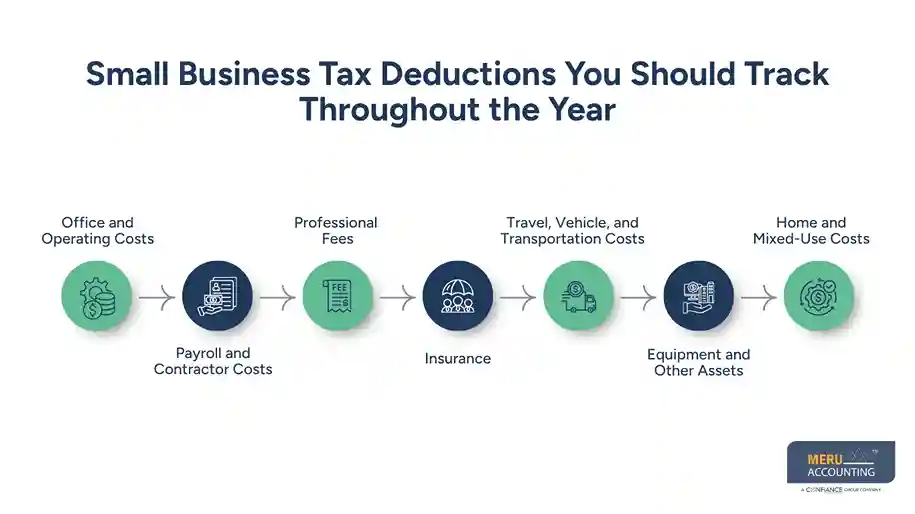
    Small Business Tax Deductions You Should Track Throughout the Year

    Not every business has the same costs, and not every cost is deductible. In general, the IRS says a business expense must be both ordinary and necessary to qualify as a deductible business expense. An ordinary cost is common and accepted in the business, while a necessary cost is helpful and suitable for the business.
    Tax Benefits for Small Business Owners: Proven Ways to Protect Tax Savings With Better Bookkeeping

    Some common areas to track include:

    Office and Operating Costs

    These may include office supplies, rent, utilities, software, and other day-to-day costs tied to running the business. Clear account names can help you see where money goes and give your tax pro a better view of your costs.

    Payroll and Contractor Costs

    Keep payroll, employee benefits, and contractor payments well organized. These records can also support other tax and payroll work. Employment tax records have their own recordkeeping rules, so keep them with care. The IRS says employers should keep employment tax records for at least four years.

    Professional Fees

    Legal, accounting, tax, and other professional fees may be part of the business cost base. Keep the invoice and a clear note on the service when the reason may not be clear from the payment alone.

    Insurance

    Business insurance can be a key cost for many firms. Track each policy and payment in the right account. This helps avoid a year-end search through bank statements.

    Travel, Vehicle, and Transportation Costs

    These costs often need more detail than a simple bank charge. The IRS notes that travel, gift, and transportation costs have specific proof rules.

    Keep items such as dates, business purpose, receipts, and other required details as part of your normal process.

    Equipment and Other Assets

    Do not treat every large purchase like a normal day-to-day expense. Equipment, furniture, and other assets may need separate records for tax use and for the books.

    The IRS says asset records should show items such as the purchase date, price, improvements, business use, depreciation, and details on when the asset is sold or disposed of.

    Tracking these costs well can help your tax pro review depreciation and other tax treatment that may apply.

    Home and Mixed-Use Costs

    Some owners use part of a home, car, phone, or other item for business. These costs may need a split between business and personal use. Do not claim the full cost just because a payment came from a business account.

    The IRS states that personal, living, and family costs are generally not deductible. For costs with both business and personal use, the business share must be separated from the personal share.

    These are some of the key areas where small business tax deductions may come into play. The right treatment depends on your business, the type of cost, and the tax rules for the year.


    Good financial management isn't
    optional anymore
    Meru Accounting handles the accuracy, so you can focus
    on running the business

    Why Receipts, Invoices, and Supporting Records Matter for Tax Deductions

    A bank statement can show that money left your account. It may not show why you spent it.

    That is why supporting records matter. A receipt, bill, invoice, card statement, canceled check, or other proof can help show what the cost was and how it relates to the business.

    The IRS says supporting documents can include sales slips, paid bills, invoices, receipts, deposit slips, and canceled checks. These records support entries in the books and items reported on a tax return.

    For example, a $600 card charge marked only as “PAYMENT” may not tell much. An invoice that says “annual business software plan,” with the date and vendor, gives far more useful proof.

    This is also why receipt capture should be part of your normal bookkeeping flow, not a task saved for tax season.

    For some costs, more details may be needed. Auto, travel, gifts, and similar expenses can have extra proof rules.

    Tax Records Small Business Owners Should Keep

    Your tax file should be more than a pile of receipts. It should give a clear view of income, costs, assets, payroll, and other key business activity.

    Useful records may include:

    • Sales invoices and income records
    • Business bank statements
    • Credit card statements
    • Expense receipts
    • Vendor bills and invoices
    • Payroll records
    • Contractor payment records
    • Loan statements
    • Asset purchase records
    • Depreciation records
    • Travel and mileage records
    • Prior tax returns
    • Tax forms received from clients or vendors
    • Records that explain large or unusual transactions

    The IRS does not require every business to use one special recordkeeping system. You can use a system that fits your business if it clearly shows income and expenses.

    How long you need to keep each record can vary. The IRS says records should generally be kept until the period of limitations for the related return runs out, with different rules for some cases.

    That means your bookkeeping system should make it easy to find old records when needed, not just current-month data.

    Meru Accounting’s Tax Advisory Services for Small Businesses

    Tax work is easier when your books are kept with tax needs in mind from the start. At Meru Accounting, we help small businesses keep their financial records organized and ready for tax review.

    Our tax advisory support includes:

    • Review of business income and expense records
    • Tax-focused bookkeeping review
    • Identification of records that may need more support
    • Review of business and personal cost separation
    • Tax-ready account and transaction cleanup
    • Support for year-end bookkeeping
    • Financial records prepared for your tax professional
    • Ongoing accounting support based on your workflow

    We work with your existing accounting process and can support systems such as QuickBooks, Xero, and Zoho Books. Our goal is to keep your books clear throughout the year so tax work does not turn into a last-minute hunt for missing data.

    For small business owners, this can also make it easier to discuss possible tax benefits for small business owners with their tax advisor using clean, well-sorted records.

    Our Expert Insight

    In practice, tax-ready books are not just about having every transaction entered. We look for changes that need a second look. A sharp rise in meals, travel, contractor costs, or vehicle expenses can point to missing details or a change in how the business is using its funds.

    We also pay close attention to large purchases, owner transactions, loan activity, and uncategorized charges. These items can have a different tax treatment from routine operating costs, so they should be reviewed before the books are closed.

    This approach gives small business owners more than clean financial reports. It creates a clear trail from the original transaction to the final tax records, making it easier for a tax professional to review potential tax benefits and address issues before filing.

    Key Takeaways

    • Good books can help you find and support eligible tax savings.
    • Track business costs throughout the year instead of rebuilding records at tax time.
    • Keep receipts, invoices, and other proof with your bookkeeping records.
    • Separate personal costs from business costs.
    • Track assets and large purchases with care.
    • Some expenses, such as travel and vehicle costs, need extra records.
    • Keep tax records for the required period based on the type of record.
    • Work with a tax pro when you need help deciding what qualifies.
    • Use monthly bookkeeping to keep your records ready for tax review.

    FAQs

    Tax benefits can include eligible business expense deductions and certain credits or other tax breaks. What applies depends on the business type, income, expenses, and tax year.

    Common areas include office costs, supplies, insurance, payroll, professional fees, business travel, and certain asset costs. Each expense must meet the rules that apply to it.

    Yes. Current, well-sorted books make it easier to review business costs and spot transactions that may need tax review before a return is filed.

    Supporting proof is important, but the exact records needed can vary by expense. The IRS lists receipts, invoices, bills, statements, and other documents as examples of records used to support business costs.

    There is no single period for every record. The IRS says the time depends on the type of record and the related tax matter; three years is a general rule in many cases, while some records need to be kept longer.

    Good financial management isn't
    optional anymore
    Meru Accounting handles the accuracy, so you can focus
    on running the business