
Bookkeeping for startups can seem like a back-office task until an investor asks one simple question: “Can you show me where this number came from?” Then old bank entries, unpaid bills, missing invoices, or unclear founder payments can lead to more questions.
Fundraising in 2026 isn’t only about showing revenue growth. Your financial records should clearly explain cash use, costs, debt, margins, and how much funding you may need next. The IRS also advises businesses to keep records that support income, expenses, and tax filings.
That’s why we recommend reviewing your records before fundraising begins. With startup bookkeeping solutions, you can identify missing documentation, reconcile key accounts, and address discrepancies before investors start asking questions.
What You Will Learn From This Blog
- Why clean books matter before a startup raises funds.
- Which financial records investors may ask to see.
- How to find common errors before due diligence.
- How bookkeeping for startups connects with key startup metrics.
- Where startup bookkeeping solutions can fit into fundraising prep.
- How Meru Accounting can prepare and review startup financial records.
Why Bookkeeping for Startups Matters Before Fundraising
Give Investors a Clear View of Financial Health
Bookkeeping for startups brings sales, costs, cash, debt, and other figures into one financial record. This gives investors a clearer view of how the business is performing before they assess the funding request.
Show How the Startup Uses its Cash
Revenue does not show where your cash goes each month. Your books can show spending on payroll, marketing, software, suppliers, and other costs that affect your cash position.
Find Errors Before Due Diligence
A duplicate expense or missing entry can change your reports and lead to more questions. Reviewing the books before due diligence gives you time to find and fix these issues.
Reconcile Reported Cash With Bank Balances
If your bank shows $500,000 but your books show $540,000, you need to find the reason before sharing the reports. Bank reconciliation can identify missing, duplicate, or wrongly posted transactions.
Keep Financial Records Ready For Investor Requests
Fundraising can bring requests for reports, statements, tax files, debt details, and other records at short notice. Keeping bookkeeping for startups current means you do not have to rebuild months of data during the fundraise.
What Financial Records Should Startups Prepare for Investors?
Profit and Loss Statement
This report is one of the core outputs of bookkeeping for startups, showing sales, direct costs, operating expenses, and profit or loss. Keep monthly figures ready so you can explain major changes instead of giving only one annual total.
Balance Sheet
A balance sheet shows what the startup owns, owes, and has in equity. Check cash, receivables, payables, loans, and other major balances before sharing it.
Cash Flow Report
Cash flow tells a different story from profit. A startup may report sales but still use cash each month, so investors may want to understand where cash comes from and where it goes.
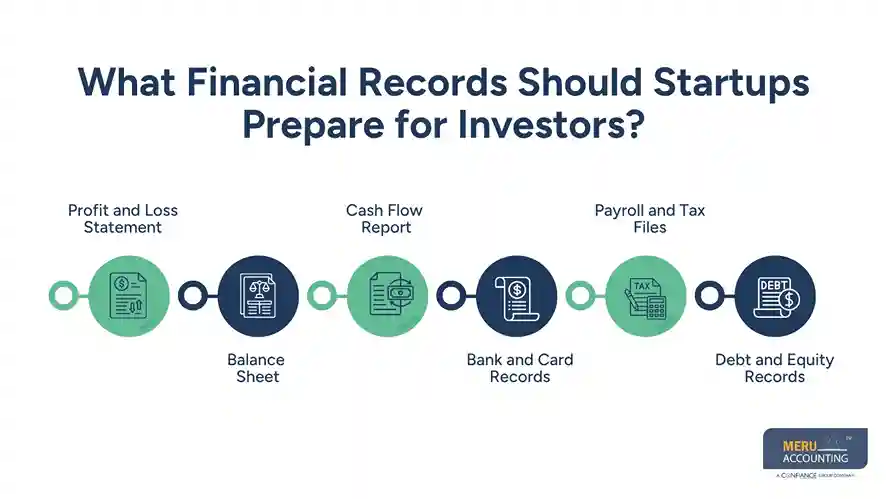
Bank and Card Records
Bank statements and card records give a source for many entries in bookkeeping for startups. Match them with accounting data and keep invoices, receipts, and other proof where needed.
Payroll and Tax Files
Payroll can be one of a startup’s highest costs. Keep payroll reports, tax filings, tax payments, and related records together so staff costs and tax balances can be checked.
Debt and Equity Records
Loans, founder funds, and equity transactions should have clear records. The amounts in these files should agree with the figures shown in the accounting system.
How to Clean Up Your Bookkeeping for Startups Before a Fundraise
Reconcile Every Bank Account
Start with the bank. Match each statement with the accounting system and check old unmatched items, duplicate entries, missing payments, and deposits that were posted to the wrong account.
Review Unpaid Invoices
Look at every open customer invoice. Ask whether it is still due, already paid, disputed, or unlikely to be collected, since bookkeeping for startups should keep outstanding customer balances current. Old balances should have a clear reason for staying open.
Check Unpaid Bills
Do the same with supplier bills. A bill that was paid but still shows as open can distort your liabilities, while a missing bill can make costs look lower than they are.
Fix Owner and Founder Entries
Founder payments often enter the books in different ways. Decide whether each amount is a loan, capital contribution, reimbursement, or business expense and record it in the right place.
Review Software Links
Bank feeds, payment tools, payroll systems, and accounting software may not always pass data in the way you expect. Startup bookkeeping solutions should include checks on the data after it enters the books.
Set a Close Process
Do not wait for fundraising to create order. Set a monthly close routine for bank checks, sales, bills, payroll, taxes, and reports so each month ends with a known status.
How to Track Startup Metrics Through Bookkeeping
Monthly Recurring Revenue (MRR)
MRR shows the monthly revenue tied to recurring plans or contracts. Bookkeeping for startups should keep recurring sales separate from one-time income, so the figure isn’t based on mixed revenue types.
Customer Acquisition Cost (CAC)
CAC compares customer acquisition costs with the number of new customers gained during a set period. Your startup bookkeeping solutions should keep the relevant costs and time period consistent when calculating this figure.
Customer Lifetime Value (LTV)
LTV estimates the revenue a customer may generate during the time they stay with the business. Your sales, customer, pricing, and churn data should remain consistent before using the metric.
Gross Margin
Gross margin shows how much remains after direct costs are taken from sales. For a software startup, this may include hosting or payment costs, while another business may have product or direct labor costs.
Burn Rate and Cash Runway
Burn rate shows how much cash the startup uses over a period. Cash runway then gives an estimate of how long the available cash may last if the current spending rate continues.
optional anymore
on running the business
How Startup Bookkeeping Solutions Support Fundraising Preparation
One Source for Finance Data
Startup bookkeeping solutions can bring sales, bank, bills, payroll, and payment data into an accounting system. The goal is not just to collect data but to keep the figures checked and properly classified.
Monthly Financial Review
A monthly review is an important part of bookkeeping for startups, giving founders a chance to spot unusual costs, old receivables, cash changes, or missing entries. These checks are far easier to handle month by month than all at once before a fundraise.
Investor-Ready Reports
Startup bookkeeping solutions can be set up to produce regular profit and loss, balance sheet, and cash flow reports. Your reporting needs may vary based on the business, investor, and funding structure.
Data Checks Before Due Diligence
Before investor review begins, compare your books with bank records, tax files, sales data, debt records, and other source documents. This creates a clearer trail when questions come up.
Clear records for Key Metrics
MRR, CAC, LTV, gross margin, and burn rate should not exist as numbers in a separate spreadsheet with no source. Startup bookkeeping solutions can keep the financial data behind these figures easier to trace.
Records That Stay Ready
Fundraising can take longer than planned. Keeping your books current through bookkeeping for startups means new sales, costs, payroll, and cash movements can be added while the process continues instead of rebuilding the records later.
How Meru Accounting Can Prepare Startup Books for Fundraising
Book Review Before the Raise
Meru Accounting provides bookkeeping services for startups preparing for fundraising. Our team can review sales, expenses, bank activity, payroll, debt, receivables, and payables before financial data is shared.
Bank and Payment Checks
Our team can compare bank and payment activity with accounting entries and flag items that need review. This gives you a clearer base for financial reports and investor questions.
Financial Report Preparation
Meru Accounting can prepare and review profit and loss, balance sheet, and cash flow reports. We can also review major changes in sales, costs, cash use, and liabilities across reporting periods.
Metric and Cash Review
Our team can review the figures used for MRR, CAC, LTV, gross margin, burn rate, and cash runway against the financial data maintained through bookkeeping for startups. Each figure can then be checked against the financial data used to calculate it.
Ongoing Startup Bookkeeping
Your books should not become clean for one funding round and then fall behind again. Meru Accounting provides ongoing bookkeeping so monthly sales, bills, payroll, bank activity, and other entries stay current.
Our Expert Perspective
One thing founders often miss is that fundraising numbers need to be consistent, not just correct. For example, revenue in the accounting records, sales reports, and investor deck should not tell three different stories. The same applies to cash burn, debt, and customer metrics. When these figures line up, and the reason for any difference is clear, bookkeeping for startups becomes easier to review when financial questions come up during a fundraise.
Key Takeaways
- Keep bookkeeping for startups current before fundraising begins.
- Prepare profit and loss, balance sheet, and cash flow reports.
- Reconcile bank and card accounts before sharing financial data.
- Review receivables, payables, payroll, tax, debt, and equity records.
- Make sure key startup metrics can be traced to source data.
- Use startup bookkeeping solutions as part of a regular monthly process.
- Fix unclear or old entries before due diligence starts.
- Keep the books updated while the fundraising process is still underway.
FAQs
Bookkeeping for startups keeps financial statements, cash flow, expenses, liabilities, and revenue records accurate and ready for investor review.
A startup should maintain updated profit and loss statements, balance sheets, cash flow reports, bank records, tax filings, payroll records, debt details, and equity records.
Reconcile bank accounts, review unpaid invoices and bills, correct duplicate entries, check founder transactions, and update financial reports.
Startup bookkeeping solutions can include monthly bookkeeping, bank reconciliation, transaction reviews, financial reporting, and accounting data cleanup.
Accurate bookkeeping gives investors a clearer view of revenue, expenses, cash flow, liabilities, and the startup’s overall financial position.
optional anymore
on running the business