If you are asking how much does a CPA charge per hour, the answer can vary based on the size of your firm, the work needed, and the level of skill required. A sole owner with clear financial records may pay less than a firm with staff, many accounts, complex tax work, and filings in many states.
A common planning range for CPA work is about $150 to $400 or more per hour. Basic work may cost less, while tax planning, audit work, and complex business matters may cost more. Some CPAs also use set fees or monthly plans instead of hourly billing.
What You Will Learn From This Blog
- How CPA rates can vary by firm size and work needs.
- Why basic financial work may cost less than complex tax work.
- Which tasks can raise the total CPA fee.
- How to plan your CPA cost before you hire a firm.
- How to find an affordable CPA for small business needs without choosing only by price.
- How real business cases can affect the final cost.
How Much Does a CPA Charge Per Hour?
So, how much does a CPA charge per hour in real use? A broad range is about $150 to $400 or more. A small firm may charge less for basic work, while a senior CPA may charge more for tax planning, business advice, or complex filings.
Hourly billing is only one way to set CPA fees. A CPA may charge a set fee for a tax return, a monthly fee for accounting work, or a mix of fixed and hourly fees.
Basic CPA Work
Basic CPA work may include financial record review, account checks, tax form review, or year-end entries. Clear and complete records can reduce the time needed for review.
Tax Planning Work
Tax planning can cost more because the CPA must review income, costs, prior returns, business type, and planned changes. This work calls for tax skill and sound judgment.
Review and Advisory Work
A CPA may review reports, cash flow, profit, costs, or business plans. The rate may rise when the task needs senior-level skill or a deeper review.
Fixed Fee Vs Hourly Fee
An hourly rate does not always show the full cost. A CPA who charges $200 per hour but needs two hours may cost less than one who charges $125 but needs five hours.
Why Rates Vary
Location, CPA experience, firm size, tax season demand, business type, and record quality can affect the rate. Ask what the fee covers before you compare two quotes.
optional anymore
on running the business
CPA Hourly Rates By Business Size
Business size gives one way to judge how much does a CPA charge per hour for your needs. More sales, staff, accounts, and reports often mean more work.
CPA Costs for Freelancers and Solopreneurs
A freelancer with one bank account and clear financial records may need only a few hours of CPA work. A rough planning range is $150 to $300 per hour, based on the task and CPA.
CPA Costs for Small Businesses
Small firms may need payroll, sales tax work, monthly accounting, and tax filings. Many may see rates near $175 to $350 per hour, though fixed plans are also common.
CPA Costs for Growing Businesses
As sales and staff grow, the work may need more review. A growing firm may pay $200 to $400 or more per hour for senior CPA work, tax planning, or deeper report review.
CPA Costs for Mid-Sized Businesses
Mid-sized firms may have many accounts, entities, states, or tax matters. Senior CPA work may cost $250 to $500 or more per hour, while some work is priced by project.
Why Size Changes The Bill
Business size affects the number of records, accounts, forms, and checks needed. A larger firm may also need more than one person to complete the work.
CPA Hourly Rates By Business Complexity
Complexity can matter more than sales. A firm with $2 million in sales and simple records may need less CPA time than a smaller firm with many states, entities, or tax matters.
Simple Bookkeeping and Tax Needs
Simple work may cover clear financial records, one entity, few accounts, and a basic tax return. This is often at the lower end of the rate range.
Businesses With Payroll and Multiple Accounts
Payroll adds pay data, tax reports, employee records, and review work. More bank and credit accounts also mean more records to check each month.
Businesses With Complex Tax Filings
Partnerships, S corporations, stock plans, asset sales, and other tax matters can need more review. The CPA may also need to check prior returns and tax records.
Multi-State and Multi-Entity Businesses
A business that works in many states can face more filing needs. Each entity may also have its own financial records, tax forms, and reports to review.
Clear Records Vs Incomplete Records
The state of your financial records can change the fee. Missing receipts, old entries, wrong account links, and unreconciled accounts may add many hours to the work.
What Factors Affect CPA Hourly Rates?
Knowing how much does a CPA charge per hour is useful, but you also need to know what drives the rate.
CPA Experience
A CPA with deep tax or industry skill may charge more than a junior staff member. You are paying for skill, judgment, and time.
Type of Service
Book review, tax filing, tax planning, audit work, and business advice do not require the same level of work. Ask for a clear list of services before hiring.
Business Location
CPA rates can differ by city and state. Firms in areas with higher labor costs may have higher billing rates.
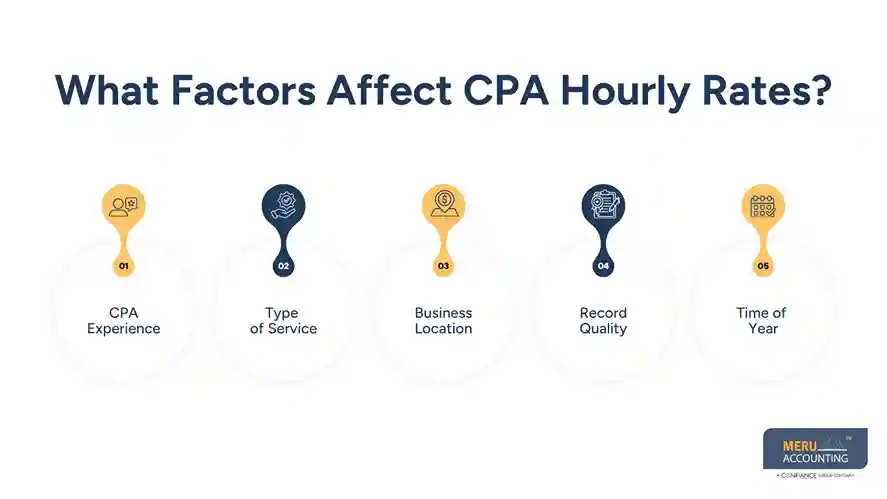
Record Quality
Clear records can cut review time. The IRS also stresses the need for records that support income, costs, and tax figures.
Time of Year
Tax season can bring a high workload. Ask whether the rate changes during busy periods and whether rush work costs more.
How to Estimate Your CPA Costs Before Hiring
Before you ask how much does a CPA charge per hour, list the work you need. This makes it easier to compare quotes from different firms.
List Your Main Tasks
Write down needs such as tax filing, monthly accounting, payroll review, tax planning, or year-end work. Do not ask for a price without stating what you need.
Count Your Accounts
Note your bank, card, loan, and payment accounts. More accounts can mean more review time each month.
Check Your Financial Records
See if your records are up to date and if accounts are matched and checked. A CPA can give a better quote when the records are in order.
Ask for a Time Range
If the CPA bills by the hour, ask for an estimated number of hours. A rate alone does not tell you the likely final cost.
Ask About Extra Fees
Ask about filing fees, rush work, clean-up work, tax notices, and work outside the normal plan. Get these points in writing before work starts.
How to Find an Affordable CPA for Small Business
Finding an affordable CPA for small business needs does not mean picking the lowest hourly rate. The better goal is to find a fair price for the work you need.
Compare the Full Scope
Ask each firm to list what the quote covers. One quote may include monthly review, while another may cover only tax filing.
Check CPA Credentials
The IRS says paid tax return preparers generally need a PTIN. Taxpayers should also check the preparer’s credentials and record before hiring.
Ask About Fixed Plans
A monthly or fixed plan may be easier to budget than an open hourly bill. It can also make the total cost easier to track.
Review Communication Terms
Ask who will handle your work and how questions are billed. Clear terms can prevent surprise costs.
Do Not Judge Price Alone
A low rate may not be low in the end if the work takes much longer. Look at skill, scope, records, and total expected cost when choosing an affordable CPA for small business work.
CPA Hourly Rate Examples by Business Scenario
These examples show why how much does a CPA charge per hour has no single answer.
Solo Business With Simple Records
A solo owner with one entity and clear records may need a few hours for tax work and review. At $200 per hour, four hours would mean about $800 before any extra fees.
Small Business With Employees
A firm with 10 employees may need payroll review, tax work, and year-end checks. If six hours are billed at $250 per hour, the CPA time would be about $1,500.
E-Commerce Business
An online seller may have sales from many channels, payment fees, returns, stock, and many daily entries. More data can mean more review time even when the company is small.
Multi-State Business
A business that sells or works across many states may need more tax review. The CPA may need to check state rules, filing needs, and records for each state.
Growing Company With Complex Reporting
A growing firm may need tax planning, monthly reports, cash flow review, and year-end work. A senior CPA may charge $300 or more per hour for part of this work.
How Meru Accounting Can Fit Your CPA Cost Plan
Meru Accounting provides accounting and bookkeeping services for firms that need clear financial records, tax-ready data, payroll support, AP-AR work, and financial reporting.
Instead of looking only at how much does a CPA charge per hour, a business can first define which work needs CPA-level review and which routine accounting work can be handled by an accounting team. This can make the full finance cost easier to plan.
Meru Accounting provides services using tools such as QuickBooks, Xero, Zoho Books, NetSuite, Odoo, and Power BI. The right mix depends on the size, records, and needs of the firm.
For owners seeking an affordable CPA for small business needs, it is worth comparing the cost of CPA time with the cost of routine accounting work. The goal is to assign each task to the right level of skill.
Clear Work Scope
Meru Accounting can set a clear scope for recurring accounting tasks. This gives owners a better view of what is done each month.
Accounting Records
Clear financial records give the CPA better data to review at tax time. The IRS notes that business records should support income, costs, assets, and tax figures.
Tax-Ready Records
Tax work needs sound financial data. The IRS also says paid preparers must use professional judgment and ask questions when information seems wrong, incomplete, or inconsistent.
Scalable Accounting Services
As a firm grows, its accounting needs can change. A clear service plan can change as the number of accounts, staff, sales, and reports grows.
Focus on the Right CPA Work
Routine data tasks do not always need senior CPA time. Separating routine accounting from higher-level tax and review work can make the full cost easier to manage.
Our Expert Perspective
CPA pricing should be judged by the work needed, not by the hourly rate alone. A lower rate may still lead to a higher bill if the work takes more time or needs extra review. For small firms, clear financial records, a defined service scope, and a written fee plan can make CPA costs easier to track and compare. The right choice is one that matches the firm’s tax needs, reporting needs, size, and level of complexity.
Key Takeaways
- How much does a CPA charge per hour can vary widely, with about $150 to $400 or more being a useful planning range for many services.
- CPA rates can rise with complex tax work, senior skill, many states, many entities, or incomplete records.
- Business size matters, but complexity can matter even more.
- An hourly rate alone does not show the final cost.
- Ask for the expected hours, service scope, extra fees, and payment terms before hiring.
- An affordable CPA for small business work should be judged by total value and scope, not only by the lowest rate.
- Clear financial records can reduce the time needed for review and tax work.
- The IRS stresses sound records and professional judgment in tax preparation.
FAQs
A CPA may charge about $175 to $350 per hour for small business work, based on the service, location, records, and CPA experience.
A CPA may charge about $150 to $400 or more per hour for tax work, with complex returns often costing more due to added review and tax planning.
A CPA may charge $250 to $500 or more per hour for large or complex firms that need advanced tax, reporting, audit, or advisory work.
CPA hourly rates can change based on business size, tax needs, number of accounts, payroll, number of states, entity structure, record quality, and the CPA’s level of experience.
An affordable CPA for small business may use a fixed monthly or project fee instead of hourly billing, so the total cost depends on the services included and the amount of work required.
optional anymore
on running the business