WIP construction accounting gives contractors a clear view of job costs, work done, bills sent, and expected profit. At month-end, these figures must show the true state of each job. Missing bills, late cost updates, or wrong entries can lead to poor reports and weak cost control.
Many firms still use spreadsheets to build WIP reports and match account balances. As the number of jobs grows, this work takes more time and can lead to more errors. WIP construction accounting automation can speed up data checks, cut repeat work, and give owners reports on time. This blog explains when to automate, which tasks to focus on, and how to keep reports right.
What You Will Learn From This Blog
- How WIP construction accounting tracks job costs, bills, and profit.
- Why manual month-end reports may have errors or delays.
- When contractors should automate WIP reports and account checks.
- How WIP accounting for contractors can use linked data and set rules.
- How to plan automation while keeping human checks in place.
Introduction to WIP Construction Accounting
WIP construction accounting tracks the costs, bills, work done, and expected profit of jobs that are still in progress. It gives contractors a clear view of each job’s financial status before the work ends.
At month-end, teams check these figures to see if costs match the budget, bills match the work done, and expected profit stays on track. Accurate WIP construction accounting also makes it easier to find cost overruns and missing records before they affect reports.
A WIP report shows key figures such as the contract value, approved changes, costs to date, estimated cost to finish, total bills sent, and expected gross profit.
Contractors may also use the cost-to-cost method to measure progress when it suits the contract and the rules that apply. For example, if a job has $400,000 in eligible costs and an estimated total cost of $1 million, the measured progress is 40%. The team must use sound cost records and up-to-date estimates to make sure this figure shows the work done.
WIP accounting for contractors also shows the link between earned revenue, client bills, and cash flow. These figures may differ because a firm can earn revenue before it gets paid or bill a client before the related work is done.
By checking these gaps each month, contractors can track job results, update cost plans, and plan for cash needs. Regular WIP reviews also give owners a sound basis for choices about job costs, bills, and expected profit.
Common Month-End Reporting Challenges in Construction Accounting
Manual Data Entry and Spreadsheet Errors
Staff often copy figures from payroll, supplier bills, and job reports into spreadsheets. One wrong formula or duplicate entry can change the result. WIP construction accounting automation can cut manual work and flag errors for review.
Delayed Job Cost Updates and Missing Records
Late bills, labour hours, and change orders can leave job costs out of date at month-end. This may make a job look more profitable than it is. Sound job cost tracking needs clear cut-off rules and a set way to record costs that have been incurred but not yet billed.
Inaccurate Revenue and Cost Forecasts
Old cost estimates can lead to poor profit forecasts. A rise in labour hours or material prices may change the cost to finish a job. WIP construction accounting should use current job data and regular checks to keep estimates in line with the work left to do.
Time-Consuming Account Reconciliation
Staff may spend hours matching the general ledger with job costs, supplier bills, and billing records. If totals do not match, they must trace each gap. Auto checks can flag items that do not match, so staff can focus on the cause.
Poor Control Over Job Changes
Changes to job scope or price can affect the contract value and expected profit. If the project team records a change but the accounts team does not update the job file, the WIP report may use old data. A shared record and clear approval steps can prevent this issue.
When Should Contractors Automate Month-End WIP Reporting?
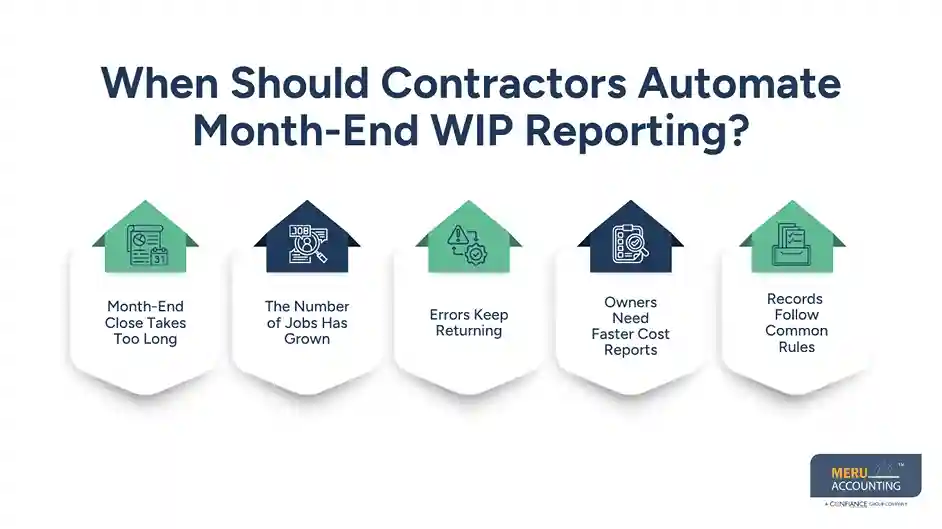
Month-End Close Takes Too Long
If staff spend days gathering files and fixing reports, it may be time to automate. Track the time spent on each task and find the main causes of delay. WIP construction accounting tools can speed up repeat checks and data entry.
The Number of Jobs Has Grown
A process that works for five jobs may fail when a firm handles dozens. More jobs mean more bills, cost codes, and estimates to check. WIP accounting for contractors can use automation to handle this growth and keep records more uniform.
Errors Keep Returning
Repeated gaps between job reports and the general ledger may point to a process issue. If staff fix the same errors each month, set rules and alerts can cut repeat work. Check the most common errors before you choose what to automate.
Owners Need Faster Cost Reports
Late reports can leave owners unaware of rising costs or lower profit margins. Auto WIP construction accounting reports can flag major changes as new data comes in. This gives managers time to check the cause and act.
Records Follow Common Rules
Automation works best when each job has a clear ID, set cost codes, and clear review steps. If records use different formats, fix them before linking systems. Poor data can still lead to poor reports, even with new tools.
How Automation Improves WIP Accounting for Contractors
Faster Data Collection
Linked systems can bring labour, supplier bills, job costs, and billings into one process. Staff spend less time copying data and more time checking it. This makes WIP accounting for contractors easier to manage at month-end.
Consistent WIP Calculations
A set formula applies the same approved rules to each job. This cuts the risk of changed formulas or mixed methods across spreadsheets. WIP construction accounting still needs tested rules and the right method for each contract.
Clear Reconciliation Alerts
Auto checks can flag duplicate bills, missing job codes, and gaps between the ledger and job reports. Each alert should lead to a review. Staff must find the cause and fix the record before closing the books.
Better Cost Forecasts
Current job costs make it easier to check the cost to finish. If labour hours rise above the plan, the project manager can update the estimate and explain the change. This gives WIP construction accounting a sound base for profit reports.
A Clear Audit Trail
Good systems record changes, approvals, and source data. Staff can trace figures back to their source and explain why a report has changed. This record also makes month-end checks easier.
optional anymore
on running the business
How to Automate Month-End WIP Reporting and Reconciliation
Step 1: Review the Current Month-End Process
List each task, from collecting bills to signing off on the final report. Note who sends each file, where errors occur, and which steps take the most time. Set clear goals before you change the process.
Step 2: Standardize Job Cost Codes and Financial Records
Use common codes for labour, materials, subcontractors, and tools or machines. Give each job a unique ID and record approved changes in one place. WIP accounting for contractors needs clear, uniform records before auto reports can be trusted.
Step 3: Connect Accounting and Project Data
Link the accounting ledger with job cost, payroll, and billing data where it makes sense. Check that job IDs match and that the link does not create duplicate entries. Test a small group of jobs before using the process across the firm.
Step 4: Automate WIP Calculations and Reconciliation Checks
Set approved rules for WIP calculations and checks between account records. Add alerts for missing costs, bills that do not match, and large changes in expected profit. WIP construction accounting automation should flag issues, not make unapproved changes to key figures.
Step 5: Review Variances Before Closing the Month
Compare the report with the prior month, job budget, and latest cost estimate. Ask project managers to explain major changes in cost or expected profit. A qualified reviewer should check key estimates and approve the final report.
Why Choose Meru Accounting for WIP Construction Accounting?
Clear Job Cost Records
Meru Accounting provides accounting and bookkeeping services for construction firms. The team can check how labour, material, and subcontractor costs are added to each job. This makes missing or wrongly coded entries easier to find.
Regular Month-End Reviews
A set review process gives owners a clear view of job costs, bills, and expected profit. Meru Accounting can check account balances, open bills, cost changes, and WIP reports based on the firm’s records.
Better Control Over WIP Reports
WIP construction accounting depends on sound data and fair cost estimates. Meru Accounting can check key gaps and flag estimates that need input from project managers before the books close.
Processes That Fit Your Firm
Each contractor has its own job numbers, systems, and reporting needs. Meru Accounting can review the current process and suggest changes that fit the firm’s needs. Human checks stay in place for key accounting choices.
Our Expert Perspective
Automation works best when a firm has set cost codes and sound records. Start with repeat tasks, such as data entry and account matching, then add WIP calculations and alerts. Keep people in charge of cost estimates, unusual items, and final approval.
Key Takeaways
- WIP construction accounting tracks job costs, bills, work done, and expected profit.
- Late costs and poor estimates can lead to wrong month-end reports.
- Automate when manual work, repeated errors, or slow reports delay the close.
- WIP accounting for contractors needs common job IDs and cost codes.
- Auto alerts flag gaps, but staff must check and fix them.
- Test each new process and keep a clear record of changes and approvals.
FAQs
A month-end WIP construction accounting report shows contract value, job costs, earned revenue, total bills sent, and estimated costs to finish each job.
WIP construction accounting automation can gather job data, run set calculations, flag errors, and speed up month-end reports and account checks.
Contractors should check WIP accounts each month to find missing costs, billing gaps, and wrong entries before closing the books.
Late supplier bills, missing labour costs, wrong job codes, and old cost estimates are common causes of errors in WIP accounting for contractors.
Contractors can link accounting and project data, set review alerts, and use WIP construction accounting checks to find gaps before final approval.
optional anymore
on running the business