You finish a project, send the invoice, and expect a solid profit. But once you add up labor, materials, equipment, and other costs, the numbers may not look as good as expected. Subcontractor bookkeeping helps you keep track of those costs, payments, and job income as the work moves forward.
For construction subcontractors, clean books make it easier to see what you’ve earned, what you’ve spent, and what you’re still owed. Good bookkeeping for construction subcontractors can also help you spot cost issues early, manage cash flow, and make better decisions on your next job.
What You Will Learn From This Blog
In this blog, you will learn:
- What subcontractor bookkeeping includes
- Which costs and income to track
- How to set up books for each job
- How to track bills, invoices, and payments
- How to handle retainage
- Common bookkeeping errors to avoid
- When outsourced bookkeeping may help
What Is Subcontractor Bookkeeping?
Subcontractor bookkeeping is the day-to-day work of tracking the money that comes into and goes out of a construction business. It can cover job income, labor, tools, supplies, fuel, bills, payments, and other costs tied to your work.
The key is to link the right cost or payment to the right job. A cost may look small on its own, but many small costs can cut into job profit. When each cost is logged in the right place, you can see the true cost of a job.
Good books also make tax work and year-end work much easier. Your CPA can use clean records to review income, costs, and key reports. You also have a clear record if a client asks about a bill or payment.
What Should Construction Subcontractors Track?
Good subcontractor bookkeeping starts with knowing what to track. Your list may vary by trade, but most subcontractors need to keep a close eye on the items below.
Job Income
Track each client bill and payment by job. This helps you see how much you have billed and how much you have been paid.
Labor Costs
If you have staff, track wages, payroll taxes, and other labor costs. If you hire other workers or firms, track those costs in the right job cost group.
Materials and Supplies
Keep records for items bought for a job. This may include wood, wire, pipe, paint, fasteners, or other trade supplies.
Tools and Equipment
Track costs for tools, gear, rentals, repairs, and other equipment used for your work. Some costs may need to be split if an item is used on more than one job.
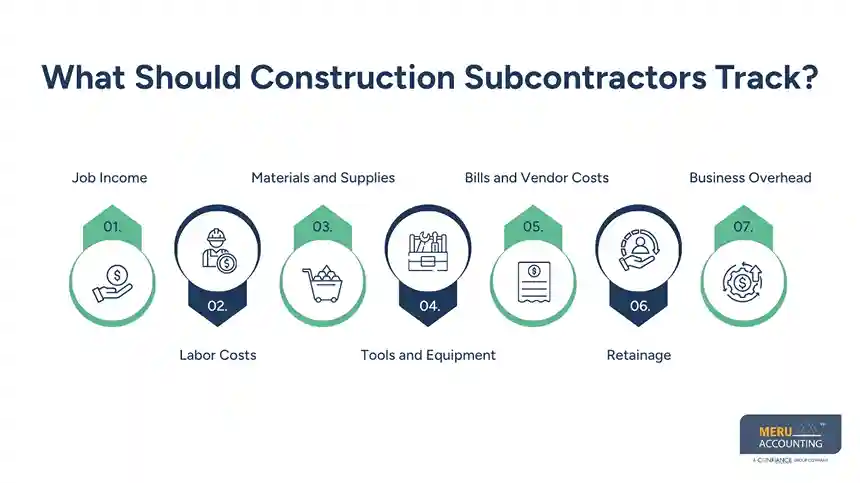
Bills and Vendor Costs
Record bills from vendors and service firms as they come in. This helps you know what you owe and when each bill is due.
Retainage
If a client holds back part of your payment until a job is done, track that amount with care. Retainage that is due but not yet paid should not be lost in your books.
Business Overhead
Not all costs belong to one job. Insurance, office costs, phone bills, software, and other overhead should be tracked in the right account.
optional anymore
on running the business
How to Set Up Bookkeeping for Construction Subcontractors
A clean setup makes daily work much easier. The goal of bookkeeping for construction subcontractors is not just to record money. It is to make each record useful.
Build a Clear Chart of Accounts
Set up income and cost accounts that fit your trade. Keep the list simple enough to use but detailed enough to give you useful reports.
For example, you may have accounts for labor, materials, equipment rental, fuel, repairs, insurance, and office costs.
Set Up Jobs in Your Accounting System
Create a job or project record for each client or site. Use the same job names across bills, invoices, payments, and cost records.
This makes it much easier to review the full cost of a job.
Keep Business and Personal Costs Apart
Use business bank and card accounts for business costs. Mixing personal and business spending can make your books hard to check and can lead to errors.
Keep Receipts and Bills
Save receipts, vendor bills, invoices, and other key records. Add job details when you enter each cost so you do not have to guess later.
Reconcile Your Accounts
Check your books against bank and card records on a set schedule. This can help you find missing entries, duplicate costs, and other errors before they grow.
How to Track Income and Expenses by Job
Job-level tracking is one of the most useful parts of subcontractor bookkeeping. It helps you see which jobs make money and which ones need a closer look.
Start by giving each job its own record. When you get a bill for materials, fuel, equipment, or other direct costs, assign it to the right job. Do the same for client invoices and payments.
You should also know the difference between direct job costs and overhead. A pipe bought for one job is a direct cost. An office rent bill is usually an overhead cost. Keeping these groups apart gives you a better view of job results.
Review your job costs as work moves forward. If a job is taking more labor or materials than planned, you can spot the issue early. This gives you a chance to check the cause before the job is done.
For bookkeeping for construction subcontractors, this type of job view can also help with future bids. Past job data can show where costs ran high and where your estimates may need to change.
How to Handle Invoices, Payments, and Retainage
Cash flow can be a big issue for subcontractors. You may finish work long before all the money is in your bank account. Your books need to show what has been billed, what has been paid, and what is still due.
Send invoices based on the terms in your contract. Record each invoice under the right client and job. Then track payments as they come in and match them to the right invoice.
Retainage needs extra care. If part of a payment is held until the work is done, record the amount that is still due. Do not treat the full contract amount as cash in the bank when part of it has not been paid.
Also review your accounts receivable often. Look for old unpaid bills and follow up based on your payment terms. A clear aging report can help you see where cash may be stuck.
Common Subcontractor Bookkeeping Mistakes to Avoid
Even a small error can affect job profit and cash flow. Here are some common issues to watch for.
Not Tracking Costs by Job
If job costs are placed in general expense accounts, it can be hard to know what each project really cost.
Mixing Personal and Business Spending
This can make bank reviews and tax work harder. Keep separate accounts and use them for the right purpose.
Ignoring Small Costs
Fuel, tools, fees, and small supply costs can add up. Track them instead of leaving them out.
Failing to Track Retainage
Unpaid retainage can be easy to miss. Keep it in a clear account so you know what is due.
Waiting Too Long to Reconcile
Old records are harder to fix. Regular bank and card checks can help you catch issues sooner.
Using One Account for Too Many Costs
A chart of accounts that is too broad may hide key job costs. Use clear cost groups that fit your trade and reporting needs.
Subcontractor Bookkeeping Services by Meru Accounting
Your jobs move fast. Your bookkeeping should keep up. Meru Accounting brings hands-on experience in subcontractor bookkeeping, helping construction businesses keep their job costs, income, bills, and financial records organized and up to date.
Our Subcontractor Bookkeeping Services
- Job Cost Tracking: Track labor, materials, equipment, and other job costs.
- Accounts Payable & Receivable: Manage bills, invoices, payments, and outstanding balances.
- Bank & Credit Card Reconciliation: Keep your accounts accurate and up to date.
- Monthly Bookkeeping & Reports: Get clear financial reports to see how your business is doing.
- Bookkeeping Cleanup: Fix errors and bring outdated or messy books back in order.
- Tax-Ready Records: Keep your financial records organized for tax filing and CPA review.
We work with QuickBooks, Xero, and Zoho Books and can fit into your current workflow. With multi-industry experience and a hands-on team, Meru Accounting gives you reliable bookkeeping support without adding more work to your plate.
Our Expert Insight
One thing we often see in subcontractor books is a gap between profit and cash flow. A job can show a profit on paper while cash is still tied up in unpaid invoices, retainage, or bills that are due.
That’s why we recommend reviewing job profit along with A/R, A/P, and cash flow. Looking at all three gives you a clearer view of the business and can help you spot cash issues before they become a problem.
Key Takeaways
- Track income and costs for each construction job.
- Keep labor, materials, equipment, and other job costs in clear groups.
- Separate direct job costs from business overhead.
- Record invoices, payments, and retainage with care.
- Reconcile bank and card accounts on a regular basis.
- Review unpaid invoices and job costs often.
- Use clean records to support tax work and better job planning.
- Consider outsourced bookkeeping when daily books take time away from running your business.
FAQs
Yes. Tracking income and costs by job helps you see which projects are profitable and where costs are running high.
Record each expense under the right job and category. Keep receipts and bills with your records so you can check costs when needed.
Track retainage separately from payments already received. The exact accounting treatment depends on your contract terms and accounting method.
It depends on the business and its tax and reporting needs. A CPA can help you choose the method that fits your situation.
At least monthly. More frequent reviews may help if you have many transactions or tight cash flow.
optional anymore
on running the business