A customer pays an invoice on time, but the accounting system still shows the amount as overdue. Another payment reaches the bank account without an invoice number, leaving the finance team unsure where to post it. Situations like these can create confusion in financial records. Accounts receivable reconciliation brings bank deposits, customer invoices, and payment entries together to find and correct such differences.
A clear process also gives businesses better control over outstanding balances and cash received. For companies handling large payment volumes, outsourced accounts receivable reconciliation can provide additional processing capacity.
What You Will Learn From This Blog
- How accounts receivable reconciliation works in daily accounting.
- Methods for matching bank deposits with customer invoices.
- Common payment errors and their effect on AR records.
- Practical ways to maintain accurate reconciliation records.
- How automation handles routine matching and exceptions.
- When outsourced accounts receivable reconciliation makes business sense.
What is Accounts Receivable Reconciliation?
Imagine a business receives $12,000 from three customers, but its accounting system shows only $9,000 in recorded receipts. The remaining $3,000 may relate to missing entries, unidentified deposits, or delayed payment updates.
Accounts receivable reconciliation involves comparing bank deposits with customer invoices and payment records to find such differences. It also checks whether partial payments, credit notes, refunds, and outstanding amounts are correctly recorded. The result is a clearer picture of how much customers owe and how much the business has received.
How Does the Accounts Receivable Reconciliation Process Work?
The process follows a series of checks, starting with customer invoices and ending with approved adjustments. Each stage addresses a different source of payment differences.
Reviewing Customer Invoices and Outstanding Balances
Start with the open invoice report. Check invoice values, due dates, customer details, and previous payments against the sales register to find missing or repeated entries.
Matching Bank Deposits With Accounts Receivable Records
Compare bank deposits with recorded receipts using payment dates, amounts, customer names, and transaction references. A matching amount alone may not be enough when several customers pay similar amounts.
Verifying Payment Entries and Customer Account Balances
Check whether each receipt has reduced the correct customer’s balance. For example, a $2,000 payment against a $5,000 invoice should leave $3,000 outstanding.
Investigating Unmatched Transactions and Discrepancies
Look beyond the accounting entry when a payment does not match. Bank references, remittance emails, and customer statements may reveal missing invoice details or an incorrect allocation.
Recording Adjustments and Closing Reconciliation Periods
Record confirmed corrections with suitable evidence and approval. Keep unresolved items on a separate list so they are not treated as completed during period closing.
optional anymore
on running the business
Bank-to-AR Matching: Key Steps and Methods
A bank deposit does not always identify the invoice it belongs to. Bank-to-AR matching uses transaction details and customer records to connect incoming funds with the right receivables.
Matching Customer Payments With Open Invoices
Use invoice numbers, customer codes, amounts, and payment references to identify the related receivable. Send uncertain matches for review instead of allocating them based only on assumptions.
Handling Partial Payments and Multiple Invoice Settlements
One customer may pay several invoices through a single transfer or settle only part of one bill. Split the receipt across the relevant invoices and retain the unpaid amount as an open balance.
Identifying Unapplied Cash and Unidentified Deposits
Keep unidentified receipts separate until their source is confirmed. Check remittance advice, payer details, and bank references before applying funds to a customer account.
Reconciling Bank Fees, Deductions, and Payment Shortfalls
A customer may transfer less than the invoice value because of bank fees, agreed discounts, or disputed charges. Verify the reason and record only approved deductions.
Managing Payment Differences Across Accounting Systems
Different platforms may use separate customer codes, date formats, or transaction references. Compare the source records and document any changes made during data transfer.
Common Accounts Receivable Reconciliation Errors
A small posting mistake can affect several customer records if it remains unnoticed. The following issues deserve regular attention during accounts receivable reconciliation.
Duplicate or Missing Customer Payment Entries
A receipt may appear twice when staff enters it manually after a bank import. Missing entries create the opposite problem, showing an invoice as unpaid even after money has reached the bank.
Incorrect Invoice Amounts and Payment Allocations
An incorrect invoice value or wrong payment allocation changes the reported customer balance. Check the original invoice and receipt before correcting the ledger.
Unrecorded Bank Deposits and Delayed Transactions
Bank deposits may be absent from accounting records because of delayed imports or missed entries. Compare transaction dates and posting dates before treating the difference as an error.
Unapplied Cash and Unidentified Customer Payments
Receipts without clear invoice details can remain unallocated for long periods. This may lead to unnecessary payment reminders and incorrect ageing reports.
Timing Differences Between Bank and AR Records
A payment entered on the last day of a month may appear in the bank statement during the next period. Track such items and confirm their status after the bank entry appears.
Incorrect Credit Notes, Refunds, and Write-Offs
An incorrect credit note or unapproved write-off can reduce receivables without a valid reason. Check supporting documents and approval records before changing customer balances.
Best Practices for Accurate Accounts Receivable Reconciliation
Accurate records depend on regular checks, clear ownership, and consistent procedures. Businesses should build these practices into their routine accounting work.
Establishing Regular Reconciliation Schedules
Match high-volume transactions daily and review remaining balances at set intervals. Avoid leaving all payment checks until the month-end closing period.
Maintaining Accurate Customer and Invoice Records
Keep customer codes, invoice numbers, payment terms, and contact details updated. Correct master data reduces confusion when several customers make payments on the same day.
Using Standardised Payment Matching Procedures
Set matching rules based on invoice numbers, amounts, and bank references. Define when staff can post an exact match and when manual approval is required.
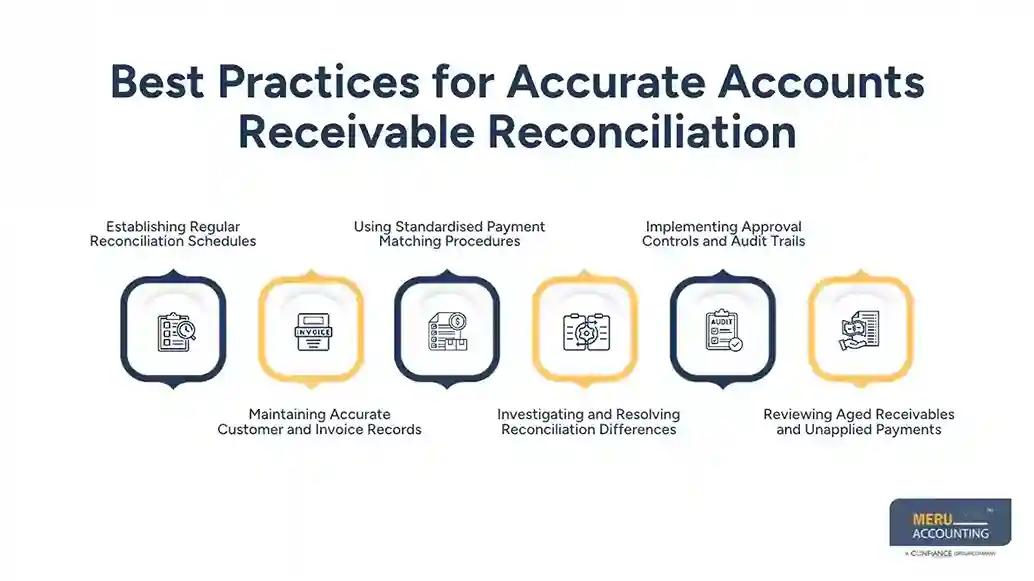
Investigating and Resolving Reconciliation Differences
Assign each unmatched item to a responsible team member. Record its value, reason, and status until the difference is resolved or explained.
Implementing Approval Controls and Audit Trails
Require approval for material adjustments, refunds, and write-offs. Retain the transaction history and supporting documents for future review.
Reviewing Aged Receivables and Unapplied Payments
Compare ageing reports with unapplied cash records. A customer shown as overdue may already have paid, but the receipt could still be waiting for allocation.
How Automation Improves Accounts Receivable Reconciliation
Manual matching becomes difficult when businesses handle thousands of transactions. Automation can take care of routine comparisons and direct unusual entries to finance staff for review.
Automated Bank-to-AR Transaction Matching
Accounting software compares bank entries with open invoices using amounts, dates, and references. Exact matches can be processed faster, while unclear items remain pending.
AI-Based Payment Identification and Cash Application
AI tools can read remittance details and suggest which invoices a payment may cover. Staff should verify uncertain suggestions before posting them to customer accounts.
Integration Between Banking Platforms and Accounting Software
Bank feeds transfer transaction details into accounting systems, reducing repeated data entry. Integrated platforms also make payment records easier to review.
Automated Exception Detection and Discrepancy Reporting
Software can flag duplicate receipts, unusual amounts, and missing references. Exception reports give finance teams a focused list of transactions requiring attention.
Real-Time Reconciliation Monitoring and Financial Reporting
Dashboards display pending matches, unresolved differences, and customer balances. Managers can review these items during the month rather than waiting for closing reports.
Accounts Receivable Reconciliation Challenges and Solutions
Even well-managed finance teams face difficulties when payment details are incomplete or transaction volumes rise. The right process can address these issues without weakening financial controls.
Handling High Volumes of Customer Transactions
Large payment volumes can create backlogs and delay account reviews. Batch matching and automated exception reports can reduce routine processing time.
Managing Multiple Bank Accounts and Payment Channels
Businesses receiving funds through several banks, cards, and payment gateways should maintain separate transaction records for each source.
Resolving Short Payments and Deduction Disputes
Check customer agreements, invoices, and remittance details before accepting deductions. Record disputed amounts separately until the issue is resolved.
Addressing Inconsistent Customer Remittance Information
When invoice numbers are missing, compare payer names, amounts, dates, and customer emails. Keep uncertain receipts unallocated until their source is confirmed.
Maintaining Reconciliation Accuracy During Month-End Closing
Complete regular matching during the month and review pending items before closing. This reduces last-minute corrections and unexplained differences.
When Should Businesses Consider Outsourced Accounts Receivable Reconciliation?
Outsourcing becomes worth considering when internal finance teams cannot keep up with payment reviews. An outsourced accounting team can handle defined matching and verification tasks while management retains control over approvals.
Signs Your Business Needs Outsourced Accounts Receivable Reconciliation
Growing unapplied cash, repeated matching errors, delayed reports, and rising AR backlogs may indicate that the current team needs additional capacity.
In-House vs. Outsourced Accounts Receivable Reconciliation
In-house teams offer direct access to internal records, while outsourced accounts receivable reconciliation provides extra processing capacity. The choice depends on workload, cost, data controls, and reporting needs.
Key Services Included in Outsourced AR Reconciliation
Services may cover bank matching, invoice allocation, payment verification, customer ledger reviews, and discrepancy reporting, depending on the agreed scope.
Benefits of Outsourcing AR Matching and Payment Verification
External teams can manage routine checks and reduce internal workloads. This gives finance managers more time to review cash flow and unresolved customer balances.
Factors to Consider When Selecting an AR Reconciliation Service Provider
Check accounting knowledge, data security, software experience, reporting frequency, and approval procedures. Also define how the provider will report unmatched payments and unresolved differences.
Accounts Receivable Management and Reconciliation Services by Meru Accounting
Meru Accounting provides accounting and bookkeeping services covering customer account reviews, payment records, and AR activities. These services can be aligned with the client’s accounting system and reporting requirements.
Customer Account and Invoice Review
Our team reviews customer ledgers, invoice details, and outstanding balances to identify missing or incorrect records.
Bank and Payment Reconciliation
We compare bank deposits with recorded customer receipts, including payment dates, amounts, and transaction references.
Unapplied Cash Review
Meru Accounting examines unallocated receipts and available remittance details to identify the correct customer accounts.
Accounts Receivable Reporting
Accurate AR records and reports cover outstanding invoices, customer balances, and pending payment items.
Outsourced Accounts Receivable Reconciliation
Our outsourced accounts receivable reconciliation services cover bank-to-AR matching, payment verification, and customer ledger reviews based on business requirements.
Our Expert Perspective
The real value of accounts receivable reconciliation lies in finding differences before they affect business decisions. A payment left unapplied for several weeks can lead to incorrect ageing reports, while an unapproved deduction can understate receivables. Businesses should review these items regularly, retain supporting records, and use automation for routine checks without removing human approval.
Key Takeaways
- Accounts receivable reconciliation compares invoices, receipts, and bank deposits.
- Bank-to-AR matching connects incoming funds with the correct customer invoices.
- Unapplied cash, duplicate entries, and timing differences are common issues.
- Regular checks and approval controls maintain accurate AR records.
- Automation speeds up matching and identifies unusual transactions.
- Outsourced accounts receivable reconciliation can provide extra processing capacity.
FAQs
Compare bank deposits with customer payment entries, match receipts to open invoices, and investigate unmatched amounts.
Common causes include missing payment entries, duplicate receipts, bank fees, unapplied cash, and timing differences.
Review bank references, customer details, and remittance advice to identify payments and allocate them to the correct invoices.
Yes, accounting software can match bank transactions with invoices, identify exceptions, and prepare reports for manual review.
Services typically include bank-to-AR matching, payment verification, invoice allocation, unapplied cash review, and customer ledger reconciliation.
optional anymore
on running the business