
Outsource account receivable services are becoming a key part of modern finance operations for companies that want steady cash flow and fewer payment delays. Many firms now prefer structured receivables management because internal teams often struggle to track overdue invoices, follow up on clients, and maintain regular collection cycles.
When businesses rely on these professional services, they gain organized processes that reduce delays and improve payment timing.
In the modern business environment, unpaid invoices can affect daily operations, vendor payments, and growth plans. This is why many companies also turn to outsourced receivables management to reduce manual workload and maintain consistency in collections.
What You Will Learn From This Blog
- How outsource account receivable services work in real business operations
- Why companies prefer outsourcing accounts receivable over in-house teams
- Common challenges in invoice collection and payment delays
- Ways to outsource account receivable services to speed up outstanding payments
- How to choose the right service provider
- Best practices for better cash flow control
- How Meru Accounting supports businesses in receivables management
What Are Outsource Account Receivable Services?
Outsource account receivable services refer to professional financial support where a dedicated team manages invoice tracking, payment collection, and customer follow-ups on behalf of a business. These services ensure that every invoice is monitored from the date it is issued until the payment is received, reducing the chances of missed or delayed follow-ups. Businesses using these services get better control over their receivables and improved visibility of outstanding payments.
These services include systematic invoice tracking and monitoring, where each customer bill is recorded and followed through its entire lifecycle. Teams also handle regular payment follow-ups through emails or calls to ensure that dues are cleared on time. In addition, structured credit control processes are applied to review customer payment terms and reduce the risk of overdue accounts, along with detailed cash flow reporting that helps businesses plan their finances more effectively.
Outsource account receivable services also manage dispute resolution by quickly addressing invoice-related issues with clients to avoid payment delays. Along with this, many providers use automated systems to send reminders and update invoice status in real time, making the entire collection process more consistent and timely.
Why Businesses Choose Outsourcing Accounts Receivable for Faster Collections
Faster Payment Cycles
Companies often experience quicker invoice recovery when payment follow-ups are managed in a structured way. Regular reminders and scheduled communication reduce delays and encourage clients to clear dues on time.
Reduced Internal Workload
With outsourcing accounts receivable, finance teams can focus on planning and reporting instead of chasing overdue invoices. This reduces operational pressure and allows staff to handle higher-value financial tasks with better accuracy and attention.
Better Cash Flow Stability
Using outsource account receivable services ensures a steady inflow of cash, which supports payroll, vendor payments, and daily operational needs without interruption. It also helps businesses avoid sudden liquidity gaps during peak expense periods.
Skilled Finance Teams
Experienced professionals manage invoice handling and client communication with a clear process. This reduces errors and improves consistency in collection activities. Their structured approach also ensures faster resolution of payment issues.
Lower Operational Costs
Organizations can reduce expenses related to hiring, training, and maintaining large in-house receivables teams while still maintaining effective collection performance. This cost control allows businesses to allocate resources to growth-focused areas.
Improved Collection Discipline
Regular follow-up schedules and structured communication ensure that customers remain aware of pending dues, leading to more disciplined payment behavior. Over time, this strengthens payment habits and reduces overdue accounts significantly.
Key Challenges In In-House Accounts Receivable Management
Manual Tracking Errors
In-house teams often make mistakes in tracking invoices, which leads to missed payments and delays in reconciliation. These errors create gaps in financial records and affect cash visibility.
Delayed Follow-Ups
Follow-ups are often not done on time when teams are handling multiple responsibilities. This delay increases the chance of invoices becoming overdue and reduces collection efficiency.
Limited Reporting Clarity
Internal systems may not always provide clear or updated reports on outstanding invoices. As a result, management struggles to get a real-time view of receivables.
High Work Pressure On Teams
Finance teams usually manage multiple accounting tasks together, which reduces their focus on collections. This divided attention impacts consistency in recovery efforts.
Poor Customer Communication
In-house teams may not maintain consistent communication, while outsourcing accounts receivable ensures regular and professional contact. This inconsistency often results in slower responses from customers and extended payment cycles.
Weak Credit Control
Without strict policies, businesses face higher overdue risks. Outsource account receivable services brings structured credit control systems.
How Outsource Account Receivable Services Help Speed Up Outstanding Invoice Collection
Structured Follow-Up System
Outsource account receivable services use a fixed follow-up schedule that ensures every overdue invoice is tracked and managed on time. Consistent scheduling improves discipline in the overall collection process.
Priority-Based Collections
High-value invoices are prioritized in outsourcing accounts receivable, ensuring faster recovery of major outstanding amounts. Focused recovery efforts strengthen overall cash flow stability.
Customer Behavior Tracking
Service providers analyze payment patterns, which helps teams predict delays and act early. Early detection of risk improves recovery planning and reduces overdue cases.
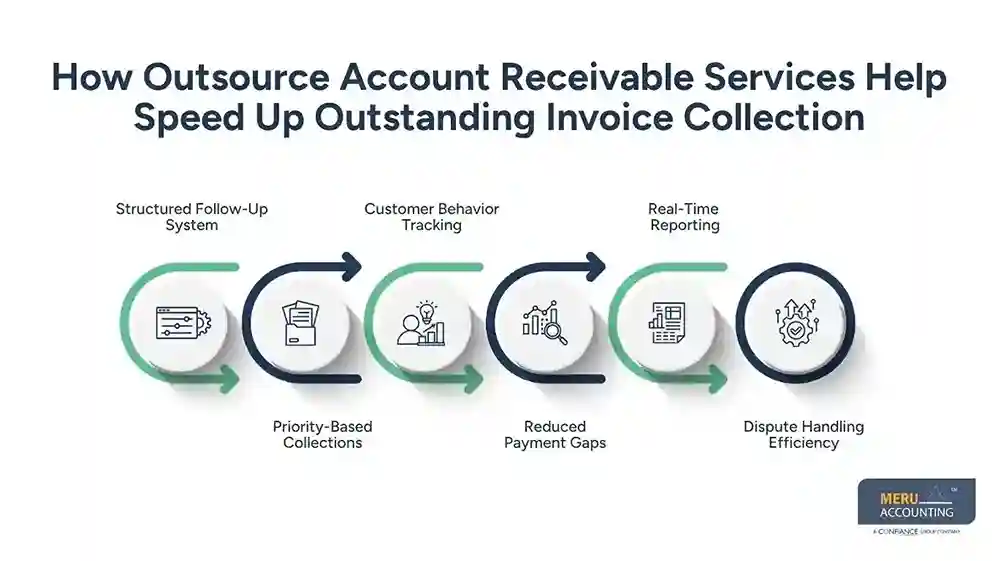
Reduced Payment Gaps
Consistent reminders lower the time between invoice due dates and actual payments, improving working capital efficiency through shorter collection cycles. Stronger cash flow visibility also allows businesses to plan expenses and investments with greater confidence.
Real-Time Reporting
Businesses receive continuous updates on outstanding invoices, enabling quick action when required. Instant visibility supports faster financial decision-making and improved control over cash flow.
Dispute Handling Efficiency
Quick resolution of invoice issues in these services prevents long payment delays. Efficient dispute management ensures smoother and faster collections.
How to Choose the Right Outsource Account Receivable Services Provider
Industry Experience
Choose providers with strong experience in this service, especially in your business sector. Relevant experience helps improve accuracy and reduces collection delays.
Technology Usage
Modern tools improve accuracy in receivables management, so ensure providers use updated accounting software. Advanced systems also enable better tracking and faster reporting.
Communication Process
Clear communication is important for handling clients professionally in receivables management. Strong communication ensures smoother customer interactions and better recovery rates.
Data Security Standards
Financial data must be protected when using outsourcing accounts receivable, so check security policies carefully. Robust security measures prevent unauthorized access and data breaches.
Reporting Quality
Good providers offer clear, regular, and easy-to-understand reports. Transparent reporting helps businesses make faster financial decisions.
Scalability Options
As your business grows, outsource account receivable services should be able to handle increasing invoice volumes. Scalable solutions ensure consistent performance during business expansion.
Best Practices To Maximize Results From Outsourcing Accounts Receivable
Set Clear Credit Terms
Clear payment terms reduce confusion. Outsource account receivable services work best when terms are well defined. Well-defined policies help prevent disputes and late payments.
Maintain Updated Records
Accurate data helps outsourcing accounts receivable teams follow up without delays or errors.
Updated records improve overall efficiency and accuracy in collections.
Regular Review Meetings
Frequent reviews with providers ensure better control over outstanding invoices. Consistent monitoring helps identify and fix issues quickly.
Use Automated Systems
Automation reduces manual errors and improves follow-up speed, while automated workflows ensure timely and consistent reminders for all pending invoices.
Faster processing cycles further enhance accuracy and reduce delays in overall receivables management.
Monitor Customer Patterns
Tracking payment behavior helps teams take early action on delays, while behavior insights improve forecasting accuracy and strengthen risk control. Early identification of slow-paying customers supports proactive collection strategies and reduces future overdue risks.
Align Internal Teams
Coordination between finance teams and service providers improves overall outcomes and ensures a smoother, more unified collection process. Clear communication and shared workflows further enhance consistency and reduce operational gaps.
How Meru Accounting Improves Cash Flow and Invoice Collection Efficiency
Meru Accounting offers structured outsource account receivable services designed for businesses across the USA, Canada, and other global markets. Our team focuses on reducing outstanding invoices through clear tracking systems, timely follow-ups, and detailed reporting.
With strong experience in outsourcing accounts receivable, Meru Accounting helps businesses maintain steady cash flow and reduce payment delays. We use modern accounting tools, trained professionals, and industry-specific processes to manage receivables with accuracy.
Our approach ensures that every invoice is monitored from start to payment completion, reducing risk and improving financial stability. Businesses working with us also benefit from transparent communication and real-time updates on outstanding invoices.
Our Expert Perspective
In our experience, unpaid invoices are rarely just a delay issue—they often indicate gaps in receivables management processes.
We have observed that businesses using outsource account receivable services achieve faster collections due to structured follow-ups and consistent tracking.
This approach also reduces internal workload, allowing finance teams to focus more on cash flow planning and strategic financial decisions.
Key Takeaways
- Outsource account receivable services reduces delays in invoice collection
- Structured follow-ups improve payment speed
- Internal teams save time and reduce workload
- Better reporting leads to stronger financial control
- Outsourcing accounts receivable improves cash flow stability
- Choosing the right provider is important for long-term results
FAQs
Outsource account receivable services involves expert teams managing invoice tracking, payment follow-ups, and collections through structured financial processes.
Structured follow-ups, automated reminders, and priority-based collections ensure faster recovery of overdue invoices and improved payment cycles.
Outsourcing accounts receivable reduces workload, minimizes errors, improves reporting accuracy, and strengthens overall collection efficiency compared to in-house handling.
Common issues like missed follow-ups, weak credit control, delayed communication, and poor visibility of receivables get resolved through structured management systems.
Selection depends on industry experience, technology adoption, reporting standards, data security measures, communication quality, and scalability options.