
A franchise owner receives three monthly reports. All three show healthy sales, yet one outlet struggles to pay its suppliers, another has rising staff costs, and the third has an unexplained gap between sales and bank deposits. Where is the money going? This is where accounting for franchise businesses becomes important.
Franchise operations involve more than recording income and expenses. Owners must track payments to franchisors, compare outlet performance, manage tax duties, and keep financial records consistent. A clear reporting process can reveal problems before they affect cash flow or business decisions.
What You Will Learn From This Blog
- How accounting for franchise business records initial fees, royalties, and advertising costs.
- How to compare financial results across multiple outlets.
- Which software features matter when a franchise expands.
- How to manage tax filings and financial records.
- Which financial measures help evaluate unit-level performance in accounting for franchise business.
What is Franchise Accounting and How Does It Work?
Accounting for franchise business records the financial activity of franchisors and franchisees under their business agreements. It covers sales, expenses, royalty fees, advertising payments, payroll, taxes, and assets.
Consider a franchisee operating four retail stores. Each store sends sales data, pays suppliers, and incurs local costs. These records enter the accounting system under separate location codes. Management can then review each store’s results and prepare combined reports. Franchise accounting solutions bring these figures together while keeping individual transactions traceable.
Key Accounting Requirements for a Franchise Business
A franchise agreement creates financial obligations from the day a business opens. Recording these obligations correctly prevents disputes over payments and gives owners a reliable record of their investment.
Franchise Fees and Initial Investment Accounting
An initial franchise fee may cover training, brand access, and setup rights. The owner may also purchase equipment, furniture, and other assets. Accounting for franchise business requires the correct classification of each payment because an upfront fee, an asset purchase, and a routine expense may receive different accounting treatment.
Royalty Fee Calculation and Recording
A royalty bill should match the sales terms in the agreement. Suppose an outlet reports $60,000 in eligible monthly sales and owes 5% to the franchisor. The royalty is $3,000. Check refunds, discounts, and exclusions before recording the payable amount.
Marketing and Advertising Fund Accounting
A franchisor may collect a monthly advertising contribution from every outlet. Keep this amount separate from local promotional spending. Franchise accounting solutions should make it possible to trace contributions and compare them with the relevant statements.
Sales Tax, Payroll Tax, and Income Tax Records
A franchise with outlets in different states cannot assume that every location follows the same tax rules. Maintain separate sales, wage, withholding, and payment records. Review the duties that apply to each legal entity and location.
Lease, Equipment, and Asset Accounting
A new outlet may require a building lease, kitchen equipment, computers, or store fixtures. Accounting for franchise business requires recording each item with its cost and purchase date. Review lease terms, depreciation, repairs, and asset disposals during regular account checks.
optional anymore
on running the business
Accounting for Franchise Business: Multi-Location Financial Reporting
A network-wide profit figure can hide the reason one outlet earns more than another. Accounting for franchise businesses must give management access to both combined results and the figures behind each location.
Consolidated Financial Statements Across Multiple Locations
When a franchise group operates through related entities, consolidated statements may be required. These reports combine relevant financial data and account for transactions between related entities. The reporting method must match the ownership structure and applicable accounting standards.
Location-Wise Revenue and Expense Tracking
Imagine two outlets with $75,000 in monthly sales. One spends $20,000 on wages, while the other spends $29,000. Separate expense records make the difference visible and give managers a reason to review staffing and sales volume.
Intercompany Transactions and Reconciliation
Shared staff, central offices, and group purchases can create balances between related entities. As part of accounting for franchise business, record both sides of each transfer and match them before closing the accounts. Unchecked differences can distort combined reports.
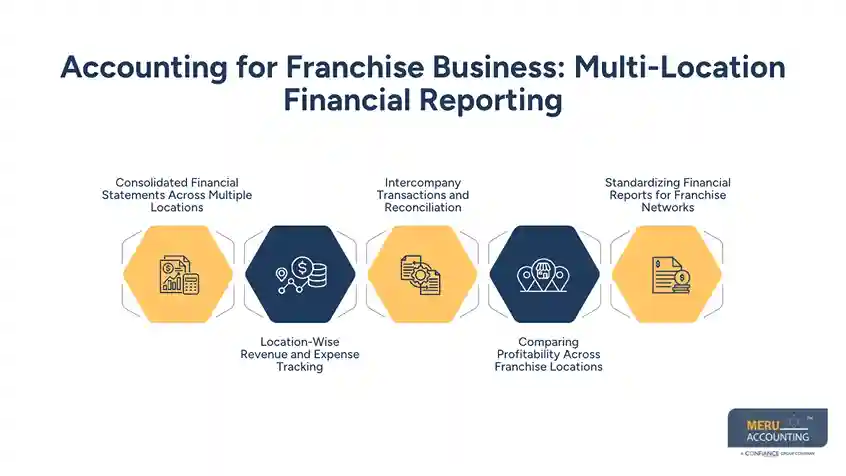
Comparing Profitability Across Franchise Locations
The highest-selling outlet is not always the most profitable. Compare gross margins, rent, labour, and operating costs before judging performance. Franchise accounting solutions can place these measures side by side for a fair review.
Standardizing Financial Reports for Franchise Networks
If outlets use different account names or reporting dates, management cannot make fair comparisons. Apply one chart of accounts, common expense codes, and fixed closing dates across the network.
Choosing the Right Accounting Software for Franchise Businesses
A software choice made for one outlet may become costly when the business expands. The right system should meet the requirements of accounting for franchise business while allowing additional locations to enter the same reporting structure.
Essential Accounting Software Features for Multi-Location Operations
Check whether franchise accounting solutions offer location-based reports, general ledger controls, bank reconciliation, expense tracking, and user permissions. Managers should be able to review financial data without giving every employee unrestricted access.
Centralized Accounting and Location-Wise Financial Tracking
A central platform can collect data from all outlets without merging their individual records, making accounting for franchise business more organised across multiple locations. Owners can check total revenue and still trace a supplier bill or sales entry to its source location.
POS, Payroll, Inventory, and Payment System Integration
Manual entry between separate systems can create duplicate sales or missing costs. POS integration records sales, payroll links share wage data, and inventory links provide stock figures. These connections reduce repeated entry and improve record matching.
Automated Royalty Calculations and Financial Reporting
Some franchise accounting solutions can calculate royalties from recorded sales using agreed rates. However, contract terms, refunds, discounts, and excluded sales still need review before the amount is approved.
Popular Accounting Software Options for Franchise Businesses
QuickBooks Online and Xero may suit smaller operations with routine bookkeeping needs. NetSuite may suit larger groups requiring ERP and multi-entity reporting. Compare price, integrations, user controls, and reporting features before choosing.
Common Franchise Accounting Challenges and How to Address Them
A small error at one outlet may seem harmless. When the same error occurs across ten outlets, it can affect the entire financial report. Franchise accounting solutions need clear checks to prevent such problems.
Inconsistent Financial Records Across Locations
One manager may classify delivery charges as marketing costs, while another records them as operating expenses. A shared chart of accounts and written entry rules prevent these differences from affecting reports.
Delayed Sales Reporting and Royalty Payments
Late POS reports can lead to incorrect royalty statements or missed payment dates. Set a fixed deadline for sales submissions and match the figures with system reports before approving payments.
Expense Allocation and Intercompany Accounting Errors
Accounting for franchise business expenses requires a consistent method for dividing shared costs for software, administration, and staff. Document the basis of allocation and review intercompany balances before monthly closing.
Cash Flow Visibility Across Multiple Franchise Units
An outlet may report a profit but lack enough cash to pay wages next week. Track supplier bills, expected receipts, payroll dates, and loan payments to identify possible shortages before they become urgent.
Maintaining Consistent Accounting Policies
Staff changes should not change the way transactions are recorded. Set written rules for sales, expenses, assets, and monthly closing to standardise accounting for franchise business operations. Train new staff before they take responsibility for financial entries.
Tax and Regulatory Compliance in Franchise Accounting
Tax compliance becomes more demanding when a franchise crosses state or local boundaries. Each location may have different registration, collection, and filing duties.
Federal, State, and Local Tax Requirements
Accounting for franchise business operations requires reviewing federal income tax, state income tax, sales tax, and local tax duties. Keep a filing calendar for every legal entity and review applicable rules with a qualified tax professional.
Sales Tax Collection and Reporting Across Locations
A product sold in one state may have a different tax treatment elsewhere. Franchise accounting solutions should maintain records of taxable sales, exempt transactions, tax collected, and returns filed for each relevant location.
Payroll Tax Compliance for Franchise Employees
Payroll records must show wages, tax withholdings, employer tax costs, and tax deposits. The IRS generally requires employment tax records to be kept for at least four years.
Franchise Disclosure and Financial Reporting Requirements
The FTC Franchise Rule requires franchisors to provide a Franchise Disclosure Document to prospective buyers. Item 19 covers financial performance representations when the franchisor chooses to provide them. Franchisees must also review their own contractual reporting duties.
Recordkeeping, Audits, and Financial Documentation
A missing invoice can delay an audit or make an expense difficult to verify. Accounting for franchise business operations requires keeping bank statements, contracts, payroll reports, invoices, and tax filings in an organized record system.
Best Practices for Accurate Franchise Financial Management
Effective financial control is built through routine checks rather than a single year-end review. Accounting for franchise business should include clear approval steps and regular account reviews.
Establishing Standardized Accounting Procedures
Write down how staff should record sales, enter bills, claim expenses, and approve payments. Assign duties at each outlet and apply the same process when opening a new location.
Conducting Regular Bank and Account Reconciliations
Match bank statements with ledger entries every month. Investigate missing deposits, duplicate payments, outstanding items, and unexplained charges before closing the reporting period.
Monitoring Royalty Payments and Franchise Fees
Compare royalty statements with eligible sales and agreed rates when managing accounting for franchise business. Review adjustments and payment dates, then retain confirmations for future checks.
Reviewing Location-Wise Financial Performance
Look beyond total sales during monthly reviews. Use franchise accounting solutions to compare gross profit, labour, rent, stock costs, and operating expenses across locations that need closer attention.
Preparing for Financial Audits and Tax Filings
Keep invoices and supporting documents linked to ledger entries. Review open adjustments and account balances before year-end so that tax filings and audit checks do not depend on last-minute record collection.
Key Financial Metrics Every Franchise Business Should Track
Numbers become useful when they answer a business question. Franchise accounting solutions should show whether outlets are growing sales, controlling costs, and generating enough cash.
Revenue and Profit Margin by Location
Compare revenue, gross profit, and operating profit across outlets. Accounting for franchise business also involves reviewing falling margins, which may point to higher labour, rent, or stock costs despite rising sales.
Same-Store Sales Growth
Compare revenue from locations that operated during both periods. This measure shows whether existing outlets are gaining sales without the effect of newly opened units.
Royalty Revenue and Collection Rate
Track royalties billed, received, and overdue. These figures are important in accounting for franchise business, as they show whether franchisees are meeting payment terms and reporting sales correctly.
Labor and Operating Expense Ratios
Measure wages, rent, and other costs as a share of revenue. A rising labour ratio may indicate that staffing costs are increasing faster than sales.
Franchise Unit Profitability and Cash Flow
Review operating profit alongside cash received and spent. A profitable outlet may still face payment pressure when stock purchases, supplier bills, or loan payments fall due.
Why Choose Meru Accounting?
Meru Accounting provides accounting and bookkeeping services for businesses that require organized financial records and regular account reviews. Our services can be aligned with the reporting needs of franchise operations, including accounting for franchise business structures.
- Multi-Location Bookkeeping: Our team records sales, expenses, and supplier bills under the correct location codes.
- Financial Reporting: We prepare reports covering revenue, expenses, and account balances for individual outlets and the overall business.
- Bank Reconciliation: Meru Accounting matches ledger entries with bank statements and reviews differences.
- Accounts Payable and Receivable: We record bills, track outstanding balances, and maintain payment records.
- Payroll and General Ledger: Our team maintains payroll entries and reviews ledger accounts.
Our Expert Perspective
A combined profit figure rarely tells the full story of a franchise network. Owners should examine the sales, costs, and royalty records behind each outlet when reviewing accounting for franchise business operations. Monthly checks can reveal errors that would otherwise remain hidden until tax filing or an audit.
Key Takeaways
- Accurate records are essential for effective accounting for franchise business, including franchise fees, royalties, assets, expenses, and taxes.
- Maintain separate financial records for every outlet.
- Use common accounting rules across locations.
- Choose software based on reporting and integration needs.
- Match royalty statements with actual sales data.
- Reconcile bank accounts and review records monthly.
- Track profit margins, cash flow, labour costs, and sales growth.
FAQs
Accounting for a multi-location franchise tracks sales, expenses, royalties, and cash flow separately for each outlet while preparing combined financial reports.
QuickBooks Online, Xero, and NetSuite are popular options, depending on the number of outlets, reporting needs, and business size.
Royalty fees are usually calculated as a fixed amount or a percentage of eligible sales, based on the franchise agreement.
Accounting for franchise business requires income statements, balance sheets, cash flow statements, location-wise profit reports, and royalty payment records.
US franchise businesses must follow applicable federal, state, and local tax rules, including income tax, sales tax, payroll tax, and recordkeeping requirements.
optional anymore
on running the business