Payroll is one of those business costs that can look simple on the surface but involve a lot of moving parts behind the scenes. A paycheck covers more than an employee’s take-home pay. It also includes tax withholdings, employer contributions, benefits, and other costs that must be recorded and tracked. So, what is payroll accounting, and why should business owners pay attention to it?
Payroll accounting is how a business records employee pay and all related costs in its financial books. These records help owners understand labor costs, track payroll liabilities, and keep financial reports accurate. With the right process in place, businesses can avoid messy records and make better use of their financial data. For companies that need extra support, outsourced payroll accounting services can also help keep these tasks on track without adding to the in-house workload.
What You Will Learn From This Blog
- What payroll accounting means and how it works.
- How to record wages, taxes, benefits, and payroll dues.
- Why payroll accounting matters as a business grows.
- Common payroll issues and ways to avoid them.
- When to use outsourced payroll accounting services.
What Is Payroll Accounting?
Payroll accounting is the process of recording and tracking all costs tied to employee pay. It covers gross wages, net pay, tax withholdings, employer taxes, bonuses, and staff benefits. These records form part of a company’s books and help show the true cost of its staff.
To understand what is payroll accounting, it’s useful to look beyond the pay stub. A business must record what it owes staff, what it withholds for tax, and what it pays on top of wages. Each item has a place in the books.
For example, if a firm pays an employee $5,000 in gross wages, the full amount is a wage cost. The employee may take home less after tax and other withholdings. The firm must also track the tax it holds back and any extra payroll tax it owes as an employer.
This is why payroll accounting plays a key role in sound financial records. It links payroll data with the general ledger, cash flow reports, and tax records.
How Does Payroll Accounting Work?
Payroll accounting follows a set process each pay cycle. The aim is to record pay, tax, and other costs in the right accounts and match them with cash paid out.
Here are the main steps:
1. Collect employee and time data
The process starts with staff records, pay rates, work hours, overtime, paid leave, and any bonuses. The payroll team checks this data before pay is run. Any missing or wrong data can lead to errors.
2. Calculate gross pay
Gross pay is the total amount an employee earns before tax and other cuts. It may include hourly wages, salary, overtime, tips, bonuses, or sales pay.
3. Work out taxes and other withholdings
The firm then works out the amounts to take from each paycheck. These may include federal income tax, Social Security, Medicare, state tax, and staff benefit costs.
4. Record employer payroll costs
Employers may owe their share of Social Security and Medicare taxes, federal and state unemployment taxes, and other costs. These amounts must be tracked apart from employee withholdings.
5. Post payroll journal entries
The payroll data is then posted to the right accounts in the general ledger. Wage costs, tax dues, benefit costs, and cash paid must all be clear in the books.
6. Pay employees and tax agencies
The firm sends net pay to staff and pays the tax and benefit amounts due to the right parties. It must also track payment dates and keep proof of each payment.
7. Reconcile payroll accounts
At the end of the pay cycle or month, the team checks payroll records against bank data and the general ledger. This helps spot unpaid tax dues, wrong entries, and other gaps.
optional anymore
on running the business
Why Is Payroll Accounting Important for Growing Businesses?
As a company adds staff, payroll costs can take up a larger share of its budget. Good payroll records help owners track these costs and plan for future needs.
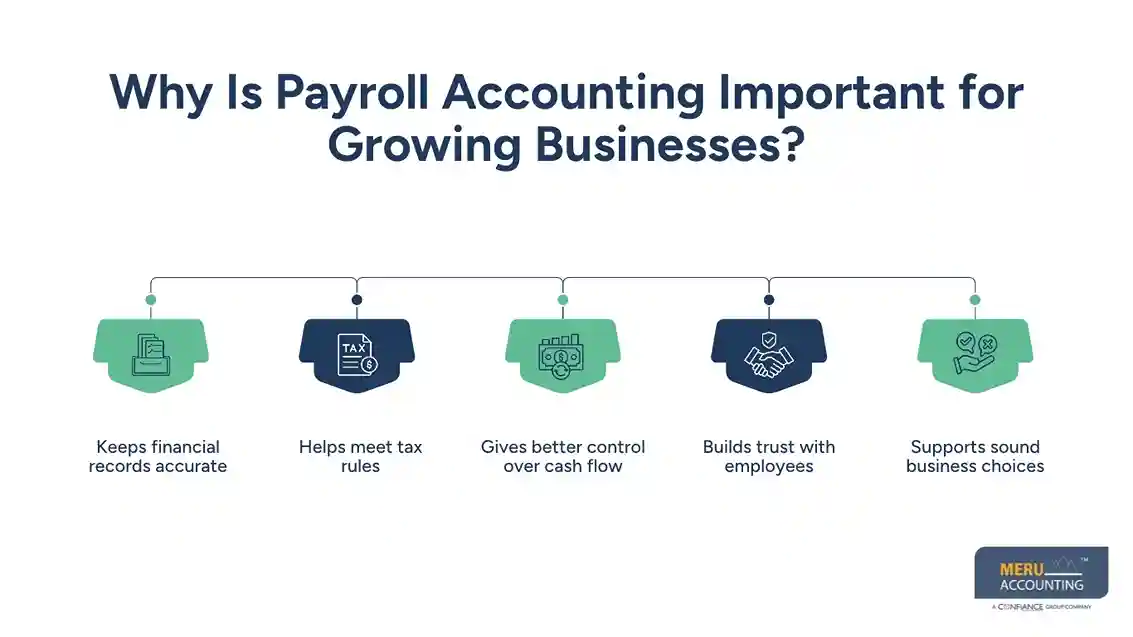
Here are some key reasons why payroll accounting matters.
1. Keeps financial records accurate
Payroll is often one of the largest costs for a firm. If wages, taxes, or benefits are not posted right, the income statement and balance sheet may show the wrong figures.
A clear payroll process helps make sure each cost is in the right account and period. This gives owners a more true view of business costs.
2. Helps meet tax rules
Employers must follow federal, state, and local payroll tax rules. These can include tax deposits, tax forms, and year-end wage reports.
For US firms, this may mean filing Form 941, Form 940, and Form W-2, based on their tax and filing needs. Good payroll records help track tax dues and support timely filing.
3. Gives better control over cash flow
Payroll dates are fixed, so firms must keep enough cash on hand to pay staff and tax dues. Payroll accounting helps owners see what is due and when.
It also helps them plan for pay raises, new hires, bonuses, and other staff costs. This is key when a firm is growing but needs to keep spending in check.
4. Builds trust with employees
Staff expect to be paid the right amount on time. Wrong pay, late checks, or errors in tax withholdings can cause stress and hurt trust.
Good payroll records help firms check pay data, fix errors, and answer staff questions with clear facts.
5. Supports sound business choices
Payroll data can help owners see how much each team or role costs. It can also show how labor costs change over time.
For firms with more than one site or team, this data helps with staff plans, budgets, and cost reviews.
What Are the Main Components of Payroll Accounting?
To manage payroll with care, firms must track each part of employee pay and the costs tied to it.
Component | What It Means |
Gross pay | Total wages earned before tax and other cuts. |
Net pay | The amount an employee takes home after cuts. |
Employee tax withholdings | Tax taken from staff pay, such as federal income tax and FICA. |
Employer payroll taxes | Taxes the firm pays, such as its share of Social Security and Medicare. |
Benefits and deductions | Health plans, 401(k) plans, and other staff costs or pay cuts. |
Payroll liabilities | Amounts the firm owes for wages, taxes, and benefits. |
Accrued payroll | Pay earned by staff but not yet paid or posted. |
Each item must be tracked in the right account. This helps firms keep their books clear and avoid gaps in their records.
A Simple Payroll Accounting Example
Suppose a firm has a total gross payroll of $5,000 for one pay cycle. It withholds $1,000 for employee taxes and other cuts. The firm also owes $400 in employer payroll taxes.
The basic record would look like this:
Account | Debit | Credit |
Wage expense | $5,000 | — |
Employer payroll tax expense | $400 | — |
Employee tax withholdings payable | — | $1,000 |
Net wages payable | — | $4,000 |
Employer payroll taxes payable | — | $400 |
Total | $5,400 | $5,400 |
When the firm pays staff, it clears the $4,000 net wages payable. Tax and other dues are cleared as they are paid.
Note: This is a basic example. Actual entries may vary based on benefit plans, state rules, pay types, and the firm’s accounting method.
Common Payroll Accounting Challenges as a Business Grows
Payroll tasks that once took little time can become harder as a firm adds staff, sites, and pay plans.
Some common issues include:
- Wrong employee data: Old pay rates, tax details, or bank data can lead to wrong pay.
- Missed tax dates: A busy team may miss a tax deposit or filing date.
- Poor record matching: Payroll data may not match bank records or the general ledger.
- More complex pay plans: Overtime, bonuses, paid leave, and benefits add more steps.
- Weak control over access: Too many staff may have access to pay data, which raises the risk of errors or data misuse.
- Late payroll entries: If pay costs are not posted in the right month, reports may show the wrong labor costs.
These issues can affect staff trust, tax records, and key reports. A clear process, regular checks, and set roles can help reduce the risk.
Best Practices for Managing Payroll Accounting
A good payroll process should be clear, safe, and easy to review. These steps can help firms keep better control as they grow.
1. Keep employee records up to date
Review pay rates, tax forms, bank data, and benefit details when staff join or their details change. Limit access to private staff data.
2. Set a clear payroll schedule
Set dates for time entry, review, pay runs, tax deposits, and account checks. Share the schedule with staff and team leads.
3. Use clear review steps
Have a second person check key payroll data before funds are sent. Review large pay changes, bonus entries, and one-time payments with care.
4. Reconcile payroll accounts each month
Match wage costs, tax dues, benefit costs, and cash payments with the books. Clear old or wrong balances before they affect reports.
5. Keep proof of payroll records
Save pay reports, tax forms, payment proof, and journal entries. Set a clear file process so records are easy to find when needed.
6. Review labor costs on a regular basis
Compare payroll costs with sales, budgets, and past months. This can help owners spot rising costs and plan new hires with more care.
7. Know when to get expert help
If payroll takes too much time or tax rules become hard to track, outside help may be worth a look. The right team can help keep records in order while in-house staff focus on core work.
Outsourced Payroll Accounting Services by Meru Accounting
Payroll decisions affect more than employee paychecks. They also shape labor budgets, staffing costs, and the financial data business owners use to plan their next steps. Having the right accounting support makes it easier to manage these demands without stretching your internal team.
Meru Accounting provides outsourced payroll accounting services for businesses that need dependable support with payroll-related accounting work. Our services are designed to fit your business needs, whether you require regular payroll accounting assistance or help managing a growing volume of payroll records.
Our services include:
- Payroll Cost Accounting: Tracking salary, wage, overtime, bonus, and employee benefit costs.
- Payroll Bookkeeping: Maintaining payroll-related records and keeping entries organized in your accounting books.
- Payroll Tax Accounting Support: Tracking employer tax costs and employee tax deductions in the books.
- Payroll Reconciliation: Reviewing payroll records against accounting and payment data.
- Payroll Financial Reporting: Providing payroll expense data for monthly reports and budget reviews.
- Payroll Catch-Up and Cleanup: Bringing overdue or incomplete payroll accounting records up to date.
Whether you are looking for ongoing payroll accounting assistance or need help getting your existing records back on track, Meru Accounting offers dedicated support at a fraction of the cost of an in-house team.
Our Expert Insight
Payroll data can reveal more than what a business spends on employees. It can also show whether its staffing model is working. For example, rising overtime costs may point to understaffing, poor shift planning, or an uneven workload.
We recommend reviewing payroll trends alongside revenue and business output. This helps owners spot labor cost issues early and make better decisions about hiring, scheduling, and team budgets.
Key Takeaways
- Payroll accounting tracks wages, taxes, benefits, and other staff costs in the books.
- It helps firms keep clear records and meet payroll tax rules.
- Good payroll records support cash flow plans and sound business choices.
- Growing teams need clear paychecks, set roles, and monthly account reviews.
- Outsourced payroll accounting services can help firms manage payroll records without adding more work to in-house teams.
FAQs
Payroll accounting records employee wages, taxes, benefits, and related costs in a company’s books. Payroll processing focuses on calculating paychecks and paying employees. Both work together but serve different purposes.
Payroll accounting affects wage expense, payroll tax expense, cash, accrued wages, tax payable, and employee benefit liability accounts. The exact accounts depend on the company’s pay and benefit plans.
Bonuses and overtime are generally recorded as compensation expenses in the period they are earned. Employers must also account for applicable payroll taxes and deductions.
Yes. Incorrect wage entries, missed liabilities, or unrecorded employee benefits can overstate profits, understate expenses, and cause balance sheet errors. Regular reviews help keep financial statements accurate.
A business should consider outsourcing when payroll records become difficult to manage, internal accounting staff lack capacity, or payroll reporting and reconciliations fall behind. Outsourced support can help maintain accurate books without hiring additional full-time staff.
optional anymore
on running the business