A construction project can look profitable on paper but tell a different story once the bills come in. Labor costs run over budget, material prices rise, and delays add to the final cost. A construction tax accountant helps contractors track these changes, see their true profit, and plan for tax bills before they become a burden.
With accurate job cost reports and a sound tax plan, contractors can make better bids, control costs, and keep more cash available for daily needs. This guide explains how job costing and tax planning work together, which tax breaks may apply, and how the right accounting support can help a construction business stay on track.
What You Will Learn From This Blog
- How a construction tax accountant helps track costs and job profit.
- Why job costing matters for bids, budgets, and cash flow.
- How to plan for tax bills and choose the right tax method.
- Which tax write-offs may apply to your firm.
- How expert accounting support can help you run a sound business.
What Does a Construction Tax Accountant Do?
A construction tax accountant helps a firm keep its books in order, track costs, and meet tax rules. Unlike a general tax pro, an accountant with construction know-how can work with job costs, long-term contracts, retainage, and uneven cash flow.
Key tasks may include:
- Job cost review: Track labor, supplies, tools, and other costs for each job.
- Tax prep and planning: Review tax rules, plan for tax bills, and file returns.
- Cash flow review: Check when funds will come in and when bills fall due.
- Bookkeeping support: Keep income, costs, and account balances up to date.
- Reports: Show job profit, cost trends, and key risks.
A construction tax accountant can also help you set up a chart of accounts that fits your work. This makes it easier to sort costs by job and cost type. Clear records help you see which jobs earn a profit and which need a closer look.
Why Job Costing and Tax Planning Matter in Construction
Job costing tracks the income and costs tied to each project. It helps you compare the bid with the cost to do the work. Without it, a firm may rely on total sales and bank balances to judge how well it is doing.
For example, a contractor may bid $150,000 for a job and plan to spend $105,000. If the final cost rises to $125,000, the gross profit falls from $45,000 to $25,000. The firm needs to know why costs rose before it bids on a similar job.
Tax planning matters because construction income and costs may span more than one tax year. The right way to report them can depend on the type of contract, the firm’s size, and tax rules. Poor records can lead to missed write-offs, wrong tax estimates, or a cash crunch when taxes are due.
Job costing and tax planning work best when they use the same set of sound records. Cost data helps you judge job profit, while tax planning helps you set funds aside and make informed choices.
How a Construction Tax Accountant Helps With Job Costing
1. Tracks Costs by Job
A construction tax accountant helps sort costs by project and type. These may include crew pay, payroll taxes, raw materials, rented gear, fuel, and subcontractor fees.
This lets you see where each dollar goes. It also helps you spot costs that were posted to the wrong job or left out of a report.
2. Compares Bids With Actual Costs
A bid is based on an estimate, but real costs can change. A tax accountant can help compare the first budget with costs to date and the latest cost to finish.
If a job has used 70% of its labor budget but is only 40% done, the firm may need to act. It could review crew hours, change orders, or the work plan before costs rise further.
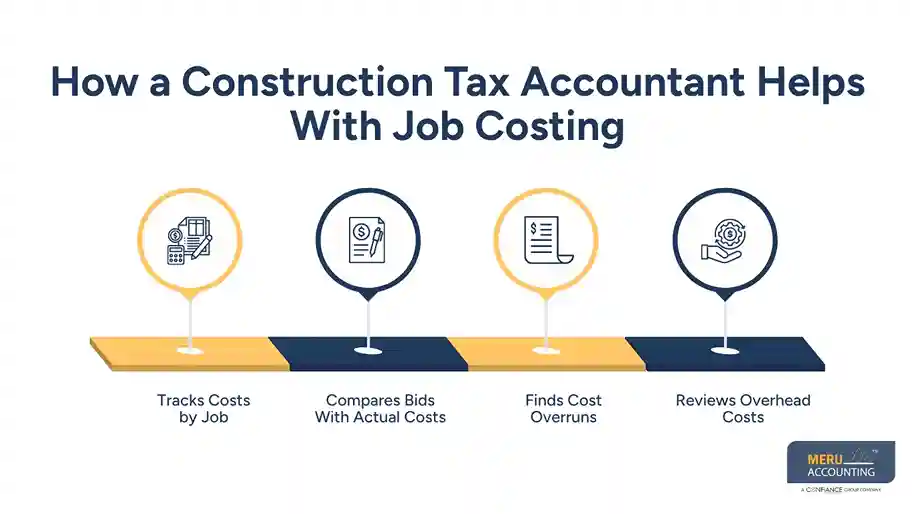
3. Finds Cost Overruns
Cost overruns can stem from waste, price hikes, rework, idle crews, or poor bids. Job cost reports help show which costs are above plan and why.
A clear report gives the owner facts to use. The firm can then change its bid rates, review supplier deals, or improve how it plans each job.
4. Reviews Overhead Costs
Some costs support many jobs rather than one job alone. These may include office rent, admin pay, insurance, and shop costs. A sound method can spread these costs across jobs in a fair and steady way.
If overhead is left out of bids, a firm may win work but fail to earn enough to cover its full cost base. The right cost method helps the owner set prices with a clearer view of the margin needed.
Construction Tax Planning Strategies for Contractors
1. Choose the Right Tax Accounting Method
The way a firm reports income and costs can affect when tax is due. Cash and accrual methods treat income and costs in different ways, but tax rules may limit which method a construction firm can use.
The choice can depend on gross receipts, the type of work, and contract terms. A construction tax accountant can review these facts and help you choose a method that fits the rules. Do not change methods without checking if IRS approval is needed.
2. Review Long-Term Contract Rules
Some construction jobs run across tax years. For tax purposes, a firm may need to use the percentage-of-completion method or may qualify for another method, such as the completed-contract method, subject to IRS rules and limits.
The percentage-of-completion method reports income over the life of a job based on progress. The completed-contract method may defer income and costs until a job is done when the firm and contract qualify. These methods can lead to very different tax results.
Your accountant can review contract types, project length, and the rules that apply to your firm. This helps you plan for tax bills and avoid using a method that does not fit your work.
3. Plan for Estimated Tax Payments
Many business owners must pay tax during the year rather than wait until they file a return. If you do not set cash aside, a large tax bill can strain funds needed for payroll, supplies, and new jobs.
Review expected profit and prior tax bills on a set schedule. Then update your tax plan when job margins or income change. A cash forecast can help you keep funds ready for tax dates without leaving too little for daily costs.
4. Plan Equipment Purchases and Depreciation
Trucks, heavy tools, and other gear can cost a lot up front. Tax rules may allow a firm to deduct some costs at once or spread them over time through depreciation. The right choice depends on the asset, its use, and the rules in force.
Before buying gear just for a tax break, review the full cost. A tax deduction does not make a poor purchase a good one. Your accountant can help weigh cash needs, job demand, and the tax impact before you buy.
optional anymore
on running the business
Common Tax Deductions and Credits for Construction Businesses
A construction firm may be able to deduct ordinary and necessary costs tied to its work. The exact tax treatment depends on the cost, how the firm uses it, and the rules that apply.
Common items to review include:
- Labor costs: Wages and eligible employer payroll taxes.
- Materials and supplies: Costs used on jobs, subject to the right tax treatment.
- Tools and gear: Eligible costs or depreciation for work assets.
- Vehicle costs: Business-use costs, backed by sound mileage or expense records.
- Insurance and licenses: Eligible costs tied to business use.
- Subcontractor fees: Payments for work done under valid contracts.
- Retirement plans: Some employer costs may qualify for a deduction or credit.
- Research or energy credits: Some firms may qualify if they meet the specific rules.
Keep bills, receipts, payroll records, and job reports to support each claim. Do not assume every cost is a current deduction. For example, some job costs may need to be held in inventory or assigned to a contract before they can be claimed. A tax pro can review the facts and help you claim the write-offs you are due.
Construction Tax Accounting Services by Meru Accounting
Construction accounting takes more than tracking income and expenses. Contractors need accurate books, clear job cost reports, and tax plans that fit their contracts and business goals. At Meru Accounting, we provide accounting support that helps construction firms manage project costs and make informed financial decisions.
Our construction tax accounting services include:
- Bookkeeping: Record job income, expenses, payroll, and vendor bills.
- Job Costing: Track project costs, compare budgets with actual spending, and review profit margins.
- Tax Planning and Preparation: Review tax obligations, eligible deductions, and contract accounting needs.
- Accounts Payable and Receivable: Manage vendor payments, customer invoices, and outstanding balances.
- Financial Reporting: Review business performance, cash flow, and upcoming expenses.
- Software Support: Work with QuickBooks, Xero, or Zoho Books based on your existing setup.
We bring these services together to give you a clearer picture of project costs and overall business performance. Our team works with your current systems and processes wherever practical, providing reliable accounting support tailored to your business needs.
Our Expert Insight
One detail contractors should watch is the gap between the amount billed and the work completed. Billing ahead of schedule does not always mean a job is profitable, just as delayed billing does not always mean a loss. Both need to be reviewed alongside actual costs and project progress.
We recommend updating the estimated cost to complete each major job as labor rates, material prices, and work plans change. If the forecast shows a lower profit margin than expected, contractors can review the cause and adjust their plans before the job ends. These updated estimates also give their accountant a more reliable basis for financial reports and tax planning.
Key Takeaways
- Job costing shows what each project costs and earns.
- A construction tax accountant can help track costs, review margins, and plan for tax bills.
- Contract type and IRS rules affect how construction income is reported.
- Keep clear records to support tax deductions and credits.
- Review job costs, cash flow, and tax forecasts on a regular basis.
- Construction tax accounting services can give owners sound data without the full cost of an in-house team.
FAQs
They review job costs, contract income, subcontractor payments, retainage, and tax records to help ensure accurate reporting and tax compliance.
Job costing tracks project income and expenses, helping contractors report costs correctly and apply the right tax rules to construction contracts.
It depends on the firm’s size, contract type, and IRS rules. A construction tax accountant can help determine which methods are allowed.
Yes, eligible purchases may qualify for immediate deductions or depreciation over time, depending on the asset and current tax rules.
Track income and expenses throughout the year, review expected profit, and set aside funds for taxes and required estimated payments.
optional anymore
on running the business