An outsourced payroll specialist handles key pay tasks, such as wage math, tax cuts, pay slips, and staff pay records. For U.S. firms, this can cut the daily load on HR and finance teams while keeping pay data clear and tax tasks on track. The right specialist also sets checks, meets due dates, and keeps staff data safe.
Payroll errors can lead to late pay, wrong tax bills, staff complaints, and extra costs. Hiring an outside expert gives a firm access to payroll skills without the cost of a full-time hire. Still, good results need clear roles, sound data, and routine checks. Before you choose a service, learn what it covers, what it costs, and how to set it up.
What You Will Learn From This Blog
- The key tasks of an outsourced payroll specialist and the value this role can bring to a firm.
- The payroll management services a firm may need, from pay runs to tax reports.
- The main cost drivers, fee plans, and extra fees to check before you sign a deal.
- The steps to shift payroll to an outside expert, test the work, and track results.
- The risks of payroll outsourcing and the checks that can help avoid them.
Key Responsibilities of an Outsourced Payroll Specialist
An outsourced payroll specialist handles agreed pay tasks based on firm rules, staff data, and the terms of the deal. The role may vary by firm, but it often covers these key tasks.
Payroll Data Review
The expert checks staff details, pay rates, work hours, leave, bonuses, and approved changes before each pay run. Any gaps or unclear data must be flagged before pay is set.
Wage and Deduction Calculations
The expert works out gross pay, overtime, approved cuts, and net pay from the data on file. Checks at this stage can cut the risk of overpay or underpay.
Tax Duties and Filing Support
The expert may work out tax cuts, draft payroll tax reports, and handle agreed tax forms and payments. The deal must state who files tax forms, sends tax funds, and checks that each task is done.
Employee Pay and Records
The role may cover bank pay, pay slips, year-end tax forms, and staff pay records. Access to these files must be limited to staff who need them for work.
Payroll Reports and Issue Handling
The expert makes reports on wages, taxes, cuts, and pay costs for the firm to review. They must also flag errors, state what changed, and log how each issue was fixed.
Benefits of Hiring an Outsourced Payroll Specialist
An outsourced payroll specialist can be a good fit when pay tasks take up too much staff time or a firm lacks in-house payroll skills. The value rests on firm size, the level of service, and the quality of the work.
Reduced Payroll Processing Costs
An outside expert can cut the need to hire, train, and keep a full-time payroll worker. A firm may also spend less on staff training and system care, but real savings depend on service fees and the tasks kept in-house.
Improved Payroll Accuracy and Compliance
A skilled expert checks pay rates, tax data, cuts, and filing dates. This can lower the risk of errors, but the firm must still check key reports and make sure all tax tasks are done.
Time Savings for HR and Finance Teams
Tasks such as data entry, pay math, and report prep can take hours each pay cycle. Outsourcing gives staff more time for hiring, budget checks, cash flow plans, and other core work.
Secure Employee Data Management
A good provider uses access rules, safe file sharing, and clear data rules to guard pay records. Before you share private data, check the provider’s security terms, plan for data leaks, and review rules for data storage and removal.
Scalable Payroll Operations for Growing Businesses
A firm may add staff, change pay dates, or open new sites as it grows. An outsourced payroll specialist can scale the service to meet these needs if the provider has the right tools and knows the rules for each site.
What Payroll Management Services Does an Outsourced Payroll Specialist Provide?
The scope of payroll management services rests on the provider and the firm’s needs. Before you hire an outsourced payroll specialist, check which tasks are part of the fee, which cost extra, and which remain the firm’s duty.
Payroll Processing and Salary Calculations
An outsourced payroll specialist works out gross pay, overtime, bonuses, leave pay, and net pay from approved data. A clear check must cover odd work hours, pay rate changes, and one-time pay before each run.
Tax Withholding and Payroll Tax Filings
Payroll management services may cover tax cuts at the federal, state, and local level, along with tax forms and agreed filing tasks. U.S. tax rules vary by state, so check the provider’s role and the firm’s duty to review forms and fund tax payments.
Employee Benefits and Deduction Management
The expert can log approved health plan cuts, pension funds, wage orders, and other valid cuts. The firm must share up-to-date plan data and make sure each cut is valid under the rules that apply.
Direct Deposits and Payslip Preparation
The provider may make payslips and send bank pay files through an agreed pay system. The firm must check bank data, pay dates, and sign-off steps to cut the risk of late or wrong pay.
Payroll Reporting and Recordkeeping
Payroll management services often cover pay summaries, tax reports, cut records, and year-end data. These files let finance teams check wage costs, match pay entries to the books, and prep for audits or tax checks.
How Much Does an Outsourced Payroll Specialist Cost?
The cost of an outsourced payroll specialist varies by staff count, pay cycle, work scope, and the number of tax sites. No one fee fits every firm, so ask for a quote based on your real pay needs.
Factors That Affect Outsourced Payroll Costs
Key cost drivers are staff count, pay runs per month, worker types, benefit plans, and the states where staff work. Extra work, such as fixing old data or doing complex year-end tasks, may raise the total fee.
Common Payroll Pricing Models
A provider may charge a base monthly fee plus a fee per worker, a set fee per pay run, or a fixed fee for a set list of tasks. Compare quotes with the same staff count, pay cycle, tax scope, and task list.
Outsourced Payroll Specialist vs. In-House Payroll Costs
An in-house role may cost more than base pay. The firm must also count payroll tax, staff benefits, leave, training, and pay software costs. Outsourcing swaps some of these costs for service fees, but the firm still needs staff to check data, approve changes, and review results.
Hidden Costs to Consider Before Outsourcing
Ask about setup fees, year-end tax forms, extra pay runs, tax form changes, system links, and extra help fees. Check if the fee covers tax filing and tax pay tasks or if these cost extra.
optional anymore
on running the business
Step-by-Step Implementation of Outsourced Payroll Services
A clear plan gives the firm and provider time to check data, set roles, and test pay before the first live run. These steps can make the shift to outsourced payroll services easier to track and review.
Assess Your Current Payroll Process
List the pay cycle, tools, staff roles, tax tasks, and common pay errors. This check sets a clear base and shows which tasks need to change.
Define Payroll Requirements and Service Scope
List the tasks the provider will handle, the reports the firm needs, and the due dates for each pay cycle. State who signs off on pay changes, funds pay runs, checks tax reports, and deals with staff queries.
Select an Outsourced Payroll Specialist
Compare providers based on U.S. payroll skills, data safety, system links, deal terms, and reply times. Ask for a sample report and a clear fee list before you make the final choice.
Prepare Employee Records and Payroll Data
Check staff names, tax forms, pay rates, bank data, benefits, leave balances, and year-to-date pay totals. Fix gaps before the move, as poor source data can pass errors to the new system.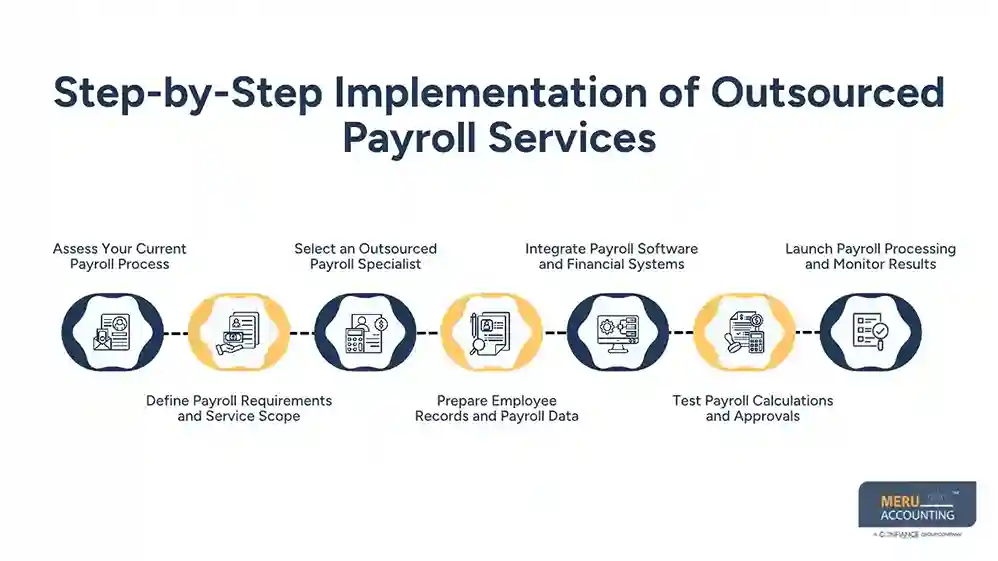
Integrate Payroll Software and Financial Systems
Link payroll with books, time logs, and HR tools where needed. Test how wages, taxes, benefits, and other costs post to the ledger so pay totals match the books.
Test Payroll Calculations and Approvals
Run a test pay cycle and match its results with checked records or a past pay run. Check gross pay, net pay, cuts, tax sums, bank files, and ledger entries before you approve live use.
Launch Payroll Processing and Monitor Results
Start live pay only after key checks pass, and each person knows their role. Review the first few pay runs with care, track errors and late tasks, and fix gaps with the provider.
Common Challenges in Payroll Outsourcing and How to Avoid Them
Outsourcing does not remove all pay risks. Clear rules, sound data, and routine checks still matter when an outside expert runs daily pay tasks.
Incomplete or Inaccurate Employee Records
Missing tax data, old pay rates, or wrong bank details can cause pay errors. Work with an outsourced payroll specialist to check key data before the move and report changes through an approved route.
Payroll Software Integration Issues
A failed system link can cause double entries, missing costs, or wrong totals. Test key data flows before launch and name one person to check sync errors and fix them.
Data Privacy and Security Risks
Payroll files hold private and bank data that need safe handling. Use role-based access, safe file sharing, multi-factor login, and clear rules for data storage and removal.
Missed Payroll Deadlines and Communication Gaps
Late sign-offs or unclear handoffs can delay pay and tax tasks. Set cut-off dates, name backup contacts, and agree on a clear path for urgent issues.
Best Practices for Managing an Outsourced Payroll Specialist
A clear work plan gives an outsourced payroll specialist firm rules to follow while keeping the business aware of its pay duties. These steps also make it easier to spot issues before they affect staff.
Set Clear Responsibilities and Approval Workflows
Write down who sends data, signs off on changes, releases pay, and checks tax reports. Where practical, keep sign-off rights apart from data entry, mainly for bank changes and large one-time payments.
Establish Payroll Deadlines and Reporting Standards
Set due dates for timesheets, bonus sign-off, draft pay, and final approval. Agree on report format and timing so finance staff can check the data before pay is sent.
Review Payroll Reports and Reconcile Payments
Match pay totals with bank payments, tax dues, and book entries each cycle. Check any gaps and log the fix instead of carrying the issue into the next month.
Monitor Service Quality and Compliance
Track errors, late pay runs, reply times, and open cases. Hold routine reviews with the provider and check that agreed tax filing and record tasks are done.
Payroll Management Services by Meru Accounting
Meru Accounting provides payroll management services for U.S. firms that need a clear process for pay runs, staff records, and reports. The service scope can fit staff count, pay cycle, and the tools the firm already uses.
Meru Accounting works with firms to set payroll tasks, review steps, and links between pay data and finance records. Before work starts, the deal must state who handles tax forms, pay sign-off, staff data changes, and year-end tasks.
If your team spends too much time on payroll, review your current process and mark the tasks that can move to an outside expert. A clear plan sets the base for well-run payroll work.
Our Expert Perspective
Payroll outsourcing works best when both sides share clear duties. An outsourced payroll specialist can run daily tasks, but the firm must give sound data, approve changes on time, and check key results. For U.S. firms, this matters as tax and work rules can vary by state and local area. A clear task list, tested sign-off steps, and routine checks help both sides cut risk.
Key Takeaways
- An outsourced payroll specialist handles agreed tasks such as pay math, tax cuts, staff records, and tax reports.
- Payroll management services can cut staff workload, but costs and results rest on the work scope and source data.
- Compare fee plans and check setup costs, tax duties, system links, and year-end fees before you sign a deal.
- Use a clear rollout plan with data checks, system tests, sign-off rules, and close checks of the first live pay runs.
- Keep firm oversight in place with pay reviews, bank checks, and routine talks with the provider.
FAQs
An outsourced payroll specialist can cut staff workload, work out pay, and handle agreed tax and reporting tasks.
The fee rests on staff count, pay cycle, tax sites, and the payroll management services in the deal.
Review the current pay process, choose a provider, check staff data, link systems, test pay, and launch the service.
Payroll management services may cover pay math, tax cuts, tax forms, benefit cuts, bank pay, pay slips, and pay reports.
Yes, firms must know their legal duties and check that all required tax forms and payments are done on time.
optional anymore
on running the business