A SaaS business can gain new subscribers, renew annual plans, and grow its sales, but keeping track of what it actually earns isn’t always simple. Monthly billing, refunds, plan changes, and upfront payments can make financial records harder to manage. A CPA for SaaS companies understands these details and helps ensure your financial records reflect how your business earns and spends money.
Beyond bookkeeping, a SaaS CPA can help with revenue recognition, tax planning, financial reports, and cash flow management. In this blog, we’ll look at the services they provide, when to hire one, and what it may cost your business.
What You Will Learn From This Blog
- What a CPA does for a SaaS business and why industry knowledge matters.
- The key accounting issues that SaaS firms face.
- What services a SaaS CPA can provide.
- When to hire a CPA and what the cost may look like.
- How expert CPA support can help your business grow.
What Is a CPA for SaaS Companies?
A CPA for SaaS companies is a licensed accountant who works with software firms that sell access to cloud-based tools and apps. They know how subscription plans, renewals, refunds, and long-term contracts affect financial records. They also know the rules that apply to revenue, tax, and financial reports.
Unlike a general accountant, a SaaS-focused CPA knows that cash received and revenue earned are not always the same. For example, if a customer pays $1,200 for a one-year plan, the full amount may be paid up front. But if the service is given over 12 months, the revenue is often earned over that same period.
A CPA can help set up the right way to track this income. They can also review costs, tax needs, and reports to help you make sound choices.
What Does a CPA for SaaS Companies Do?
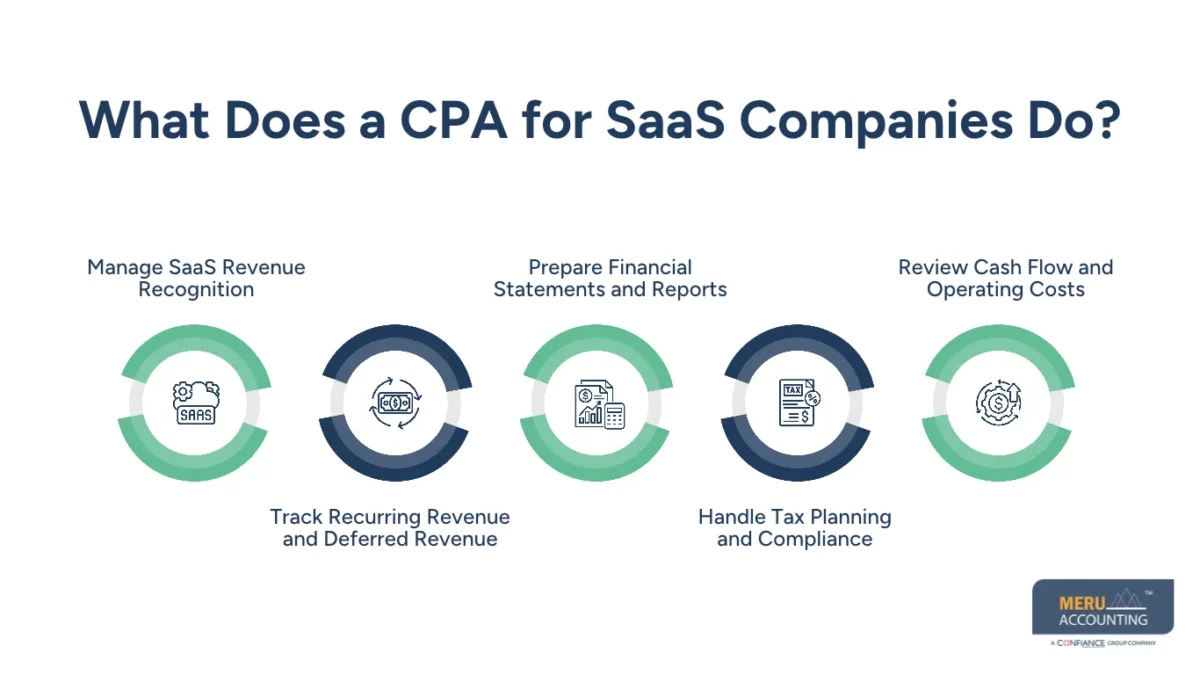
A CPA for SaaS companies handles key finance tasks and helps keep your books in line with the needs of a software firm. Their work may include:
1. Manage SaaS Revenue Recognition
SaaS firms often earn income over time, not all at once. A CPA can help set up revenue rules based on the terms of each plan or contract. This may include monthly plans, yearly deals, upgrades, and refunds.
For firms that follow U.S. GAAP, ASC 606 sets the rules for when and how to record revenue. A CPA can help review contracts and set up a process that meets these rules.
2. Track Recurring Revenue and Deferred Revenue
Monthly and annual recurring revenue are key SaaS metrics. A CPA can help track these figures and check if the data is sound. They can also help record deferred revenue, which is money paid by a client for a service that has not yet been given.
For example, if a client pays for a full year in advance, the part not yet earned may sit as a liability on the balance sheet. This helps keep income reports clear and avoids showing more revenue than the firm has earned.
3. Prepare Financial Statements and Reports
A CPA can help prepare and review key reports, such as:
- Income statement: Shows revenue, costs, and profit or loss.
- Balance sheet: Shows what the firm owns and owes.
- Cash flow statement: Shows how cash moves in and out of the firm.
These reports help founders see how the business is doing. They can also help with loan requests, investor talks, and board reviews.
4. Handle Tax Planning and Compliance
Tax needs can vary based on where your firm has staff, clients, and business links. A CPA can review your tax setup, track due dates, and help plan for tax costs. They may also help with income tax, sales tax, and state tax needs.
For SaaS firms that sell in many states, sales tax can be complex. Rules for software and digital services vary by state. A CPA can help assess where your firm may need to collect and file sales tax.
5. Review Cash Flow and Operating Costs
A SaaS firm may have costs for cloud hosting, product design, sales, ads, and staff. A CPA can help track these costs and review how they affect cash flow.
They can also help build cash flow plans so you can see if you have enough funds for payroll, product work, and other costs. This is key for startups that need to manage cash with care.
What Accounting Challenges Do SaaS Companies Face?
SaaS firms have a few finance needs that differ from those of firms that sell goods or one-time services. A CPA who knows this field can help address issues such as:
1. Revenue From Monthly and Annual Plans
A SaaS firm may bill clients each month or once a year. Some clients may also sign multi-year deals. Each type of plan can affect when revenue is earned and how it should be shown in the books.
2. Deferred Revenue
When a client pays before the service period starts or ends, the firm may need to record part of that cash as deferred revenue. This needs to be tracked and moved to earned revenue over time.
3. Customer Acquisition Cost (CAC)
SaaS firms spend on ads, sales teams, and other ways to gain new clients. CAC helps show how much it costs to win one new client. A CPA can help review the data and check that costs are tracked in the right way.
4. Software Development Costs
Building and improving a SaaS product can lead to high costs. Some costs may need to be expensed, while others may qualify for asset treatment under the rules that apply. The right treatment depends on the work done and the stage of the project.
5. Sales Tax Across States
A SaaS firm may have clients in many states, and each state may treat software sales in a different way. This can make it hard to know where to register, collect tax, and file returns.
What Services Does a SaaS Accounting CPA Provide?
A SaaS accounting CPA can offer a range of services based on your firm’s size, setup, and needs.
1. SaaS Bookkeeping
This includes recording sales, costs, payroll, bills, and bank activity. Clean books help you see how much your firm earns and spends each month.
2. Revenue Recognition and Reporting
A CPA can help set up revenue records for monthly plans, yearly plans, refunds, and contract changes. They can also review reports to help make sure revenue is shown in the right period.
3. Tax Preparation and Planning
This may include tax return prep, tax estimates, sales tax review, and tax plans. Good tax records can help reduce errors and avoid missed due dates.
4. Budgeting and Financial Forecasting
A CPA can help build budgets based on planned sales, staff costs, product work, and other needs. Forecasts can help founders plan for growth and see when cash may run low.
5. Audit and Compliance Support
As a SaaS firm grows, it may need to meet more rules for reports and records. A CPA can help prepare schedules, review account balances, and gather records for an audit. If an audit is needed, the CPA can help your team get ready.
optional anymore
on running the business
When Should a SaaS Company Hire a CPA?
There is no set revenue level at which every SaaS firm must hire a CPA. The right time depends on how complex your books and tax needs have become.
Here are some signs that you may need CPA support:
- You have started billing clients: You need a sound way to track plans, payments, refunds, and income.
- You offer annual or multi-year deals: Revenue may need to be spread over the service term.
- You sell in more than one state: You may need help with sales tax rules and filing needs.
- You plan to raise funds: Investors may ask for clear books, reports, and cash flow data.
- Your team is growing: More staff can mean added payroll, tax, and cost needs.
- Your books are hard to manage: Late reports and poor records can make it hard to know how the firm is doing.
Hiring a CPA early can help build sound finance habits before these issues become harder to fix.
How Meru Accounting Supports SaaS Companies With CPA Services
SaaS businesses need accounting support that goes beyond basic bookkeeping. At Meru Accounting, our team understands subscription-based business models, recurring revenue, and the financial needs of software companies. We bring multi-industry experience and practical accounting knowledge to help SaaS businesses maintain accurate records and make informed financial decisions.
Our SaaS accounting and CPA services include:
- Bookkeeping: Manage daily transactions, expenses, bank reconciliation, and monthly close.
- Revenue Accounting: Track subscriptions, deferred revenue, refunds, and revenue recognition.
- Financial Reporting: Prepare financial statements and review MRR, ARR, and cash flow.
- Tax Services: Support tax preparation, tax planning, and state sales tax compliance.
- Payroll Accounting: Track payroll expenses and maintain accurate payroll records.
Whether you’re a growing startup or an established SaaS company, Meru Accounting provides accounting support that fits your business needs. With experienced professionals and flexible outsourcing, you can get dependable financial support at a fraction of the cost of maintaining an in-house accounting team in the U.S.
Our Expert Insight
One mistake SaaS founders can make is treating a rise in Monthly Recurring Revenue (MRR) as proof that the business is becoming more profitable. New customers may increase MRR, but the cost of acquiring and supporting them can also rise.
For example, a company may spend more on sales, marketing, and customer support to grow its subscriber base. If these costs rise faster than recurring revenue, the business may see growth without a similar improvement in profit.
We recommend reviewing MRR alongside customer acquisition cost (CAC), customer churn, and gross margin. These figures help show whether new revenue is sustainable and whether the cost of serving customers is affecting profitability. Founders should also review these trends over several months rather than judge performance from a single reporting period.
Key Takeaways
- A CPA for SaaS companies helps manage accounting, tax, reports, and cash flow.
- SaaS firms need care with recurring revenue, annual plans, and deferred revenue.
- ASC 606 plays a key role in revenue recognition for firms that follow U.S. GAAP.
- A SaaS accounting CPA can help with books, tax, forecasts, and audit prep.
- Hiring a CPA early can help set up sound financial steps as the firm grows.
- CPA costs depend on the work needed, the size of the firm, and the level of support.
FAQs
A bookkeeper manages daily records, while a CPA handles tax, compliance, and financial planning. Many SaaS businesses benefit from both.
Provide subscription contracts, billing reports, bank statements, payroll records, expense receipts, and tax returns.
Yes. A CPA can review financial statements, revenue records, and account balances before investor review.
Not necessarily. State tax and registration requirements depend on the company’s business activities and tax obligations.
Look for SaaS industry experience, clear reporting practices, tax expertise, and a service plan that can scale with your business.
optional anymore
on running the business