A property manager’s day can go from handling a tenant complaint to approving a major repair bill or sorting out an owner’s payment. But who is keeping an eye on the financial impact of all these decisions? For many firms, financial planning takes a back seat to daily operations. A CFO advisor for property managers helps bring that bigger financial picture into focus, so business owners know what their numbers are telling them.
From setting the right management fees to planning for rising costs, property management firms face financial decisions that can shape their long-term success. Having the right CFO support can help owners make those calls with better insight rather than relying on guesswork.
What You Will Learn From This Blog
- The main financial problems property management companies face as they grow.
- How a CFO advisor for property managers helps improve cash flow, cost control, and profit.
- Which financial reports and key numbers property managers should track.
- When to consider outsourced CFO services.
- What to look for when choosing a CFO advisor for your business.
Why Financial Management Is Challenging for Property Management Companies
Property management companies often handle money for many owners, tenants, and properties at the same time. Each property may have its own rent, repair costs, vendor bills, and cash needs. This makes it hard to get a clear view of the company’s overall financial health.
For example, a company may collect steady management fees but still face cash flow gaps due to late client payments, high payroll costs, or rising office expenses. At the same time, poor records can make it hard to tell which services or properties bring in the most profit.
Growth adds more pressure. Hiring staff, adding new clients, and managing more properties all raise the need for better budgets and financial plans. Without clear reports and regular reviews, owners may make choices based on old data or rough estimates.
A CFO advisor for property managers helps bring these numbers together. They review financial data, set clear goals, and help owners plan for both daily needs and future growth.
optional anymore
on running the business
7 Key Financial Challenges a CFO Advisor for Property Managers Can Help Solve
1. Cash Flow Gaps and Delayed Rent Collections
Late rent payments can affect the cash flow of a property management business. Even when rent is due on time, delays in payment can make it hard to pay vendors, staff, and other bills. The issue can become more serious when a company manages many properties.
A CFO advisor reviews cash flow trends and helps set up clear plans to track money coming in and going out. They can also help build cash flow forecasts based on rent dates, fee income, vendor bills, and other costs.
This gives owners a better view of future cash needs. They can plan payments, set cash reserves, and take action before a cash shortage affects daily work.
2. Rising Property Maintenance and Operating Costs
Repair work, vendor fees, insurance, utilities, and staff costs can rise over time. If these costs are not tracked, they can reduce profit without being noticed.
A CFO advisor for property managers can review cost reports and compare actual spending with the budget. They can also help spot costs that keep rising and review vendor spending to find areas where the business can save.
For example, if repair costs at one property are much higher than those at similar properties, the advisor can help review the reason. It may be due to old systems, repeat repair work, or poor vendor rates.
This helps property managers make better cost choices without cutting services that tenants and owners need.
3. Poor Budgeting and Financial Forecasting
Many property managers make budgets based on past costs. While past data is useful, it may not show future needs. New clients, staff costs, repair work, and changes in rent income can all affect the plan.
A CFO advisor helps build budgets based on real costs, income trends, and business goals. They can also prepare forecasts for the next few months or years.
These plans help owners see whether they can afford to hire more staff, take on new properties, or invest in better tools. They also make it easier to adjust spending when actual results differ from the plan.
4. Inaccurate Financial Records and Reporting
Poor records can lead to wrong reports and weak business choices. Missing bills, late entries, wrong cost codes, and mixed accounts can make it hard to know the true state of the business.
Property management firms also need to keep owner funds and company funds separate. A lack of clear records can create errors in owner reports and make it hard to track each property’s income and costs.
A CFO advisor can review the reporting process, set clear checks, and help improve the flow of financial data. They can also work with the bookkeeping team to make sure reports are complete and ready for review.
Good records help owners trust their reports and make choices based on facts.
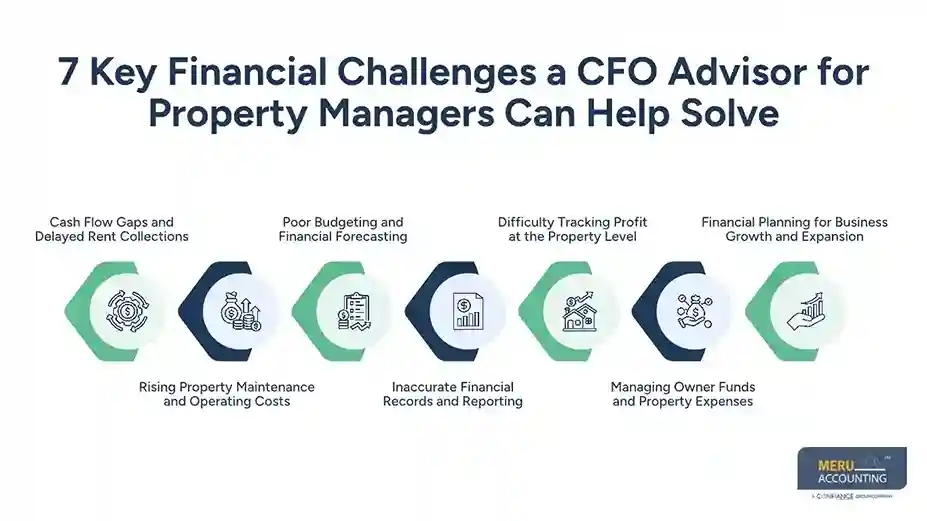
5. Difficulty Tracking Profit at the Property Level
A company may earn good total revenue but still lose money on some properties or clients. This can happen when the firm does not track the cost of managing each property.
For example, one client may need more staff time, frequent site visits, and extra vendor support. If the company charges the same fee as it does for a less demanding client, the profit margin may be much lower.
A CFO advisor for property managers can help set up property-level and client-level reports. These reports show income, staff costs, vendor costs, and other expenses linked to each account.
With this data, owners can review service fees, change work plans, or decide which client types best fit their business.
6. Managing Owner Funds and Property Expenses
Property managers often handle rent collections, security deposits, repair funds, and payments on behalf of property owners. These funds need clear records and proper control.
Poor tracking can lead to payment errors, late owner reports, and a lack of clarity about how much money is due or held for each property.
A CFO advisor can help review cash controls, payment checks, and reporting steps. They can also help set up clear review rules for owner payments and property expenses.
The goal is to make sure funds are tracked with care and that each owner gets clear and timely reports. Property managers must also follow the rules that apply to client funds in their state.
7. Financial Planning for Business Growth and Expansion
Adding more properties may seem like a good way to grow revenue. But growth also brings new costs, such as staff, software, office space, insurance, and vendor support.
Without a clear plan, a company may take on more work than its team or cash flow can support.
A CFO advisor for property managers helps review the cost of growth and estimate the income it may bring. They can prepare growth forecasts, review profit margins, and help set targets for new clients.
This allows owners to judge whether a new deal makes financial sense before they commit time and money.
How a CFO Advisor Helps Property Managers Make Better Financial Decisions
A CFO advisor does more than review past results. They help property managers use financial data to plan their next steps.
Here are some ways they support better decisions:
- Building budgets and forecasts: They use past results and future plans to set clear income and cost targets.
- Improving cash flow: They review payment cycles, expected bills, and cash needs to help prevent shortfalls.
- Tracking key numbers: They help monitor profit margins, operating costs, revenue per property, and client growth.
- Improving financial reports: They help create clear reports that show where the business stands and what needs attention.
- Planning for growth: They review the cost and likely return of new clients, staff, and business plans.
With this support, property managers can move beyond day-to-day money tasks and focus on choices that help the business grow.
When Should Property Management Companies Consider an Outsourced CFO?
Not every property management company needs a full-time CFO. However, there comes a point when basic bookkeeping and routine reports are not enough to guide the business.
Here are some signs that it may be time to seek CFO support:
- You manage more properties but lack clear financial reports.
- Cash flow is hard to plan, even when revenue is steady.
- You are unsure which clients or properties bring in the most profit.
- Costs keep rising, but you cannot find the main reasons.
- You plan to grow but lack a clear budget or forecast.
- You spend too much time reviewing financial data instead of running the business.
An outsourced CFO for property management companies can fill this gap. You get access to senior financial skills without the cost of a full-time CFO. This can work well for firms that need regular financial guidance but do not yet need a full-time finance leader.
How to Choose the Right CFO Advisor for Your Property Management Business
The right advisor should understand both financial planning and the way property management firms work. Before you hire one, review these key points:
- Industry knowledge: Look for an advisor who knows property income, repair costs, owner funds, vendor bills, and client reports.
- Financial planning skills: They should be able to prepare budgets, cash flow forecasts, and profit reports that help guide business choices.
- Clear reporting: Ask how they will share results and explain key numbers. Reports should be easy to read and useful for daily decisions.
- Range of support: Check whether they can help with cash flow planning, cost reviews, growth plans, and financial controls.
- Regular communication: Your advisor should be easy to reach and ready to explain changes in your numbers. You should know what needs attention and why.
A good CFO advisor for property managers should do more than share reports. They should help you act on the data and make better plans for your business.
Outsourced CFO Services for Property Management Companies by Meru Accounting
At Meru Accounting, we provide outsourced CFO services for property management companies to help them make better financial decisions.
Our team can support your business with:
- Cash Flow Planning and Forecasting: Review expected income, upcoming payments, and cash needs to help your business prepare for shortfalls and plan spending.
- Budgeting and Cost Control: Build operating budgets, compare actual expenses with planned costs, and identify areas where spending needs attention.
- Property-Level Profitability Analysis: Review revenue and costs by property or client account to help you understand which contracts are delivering healthy margins.
- Financial Reporting and Performance Review: Prepare and review financial reports that give you a clear picture of revenue, expenses, operating costs, and business performance.
- Growth and Expansion Planning: Assess the financial impact of taking on new properties, hiring staff, changing service fees, or expanding into new markets.
- Financial Process and Internal Control Review: Examine reporting workflows, payment approvals, expense tracking, and financial controls to help reduce errors and improve oversight.
Our multi-industry experience allows us to support businesses with different operating models and financial needs. We work alongside your existing accounting team or provide broader financial support based on your requirements. You get access to trained accounting professionals and CFO-level financial guidance without having to build a full-time finance department.
Planning to grow your property management business without losing sight of profitability? Talk to Meru Accounting about outsourced CFO support that fits your business needs.
Our Expert Insight
One financial detail property management firms should never overlook is the difference between cash held on behalf of property owners and cash available to run the management business. A bank balance may look healthy, but a large part of that money could belong to owners and be set aside for repairs, security deposits, or other property costs. Treating this balance as available business cash can lead to poor spending decisions and cash shortages later.
We recommend keeping owner funds clearly separate from operating funds and reconciling each property’s records with its bank activity on a regular basis. Any difference should be reviewed before owner statements and payments are finalized. This is not just a bookkeeping task; it is an important financial control that protects owner funds and gives management teams a more accurate view of their actual working capital.
Key Takeaways
- Property management firms face cash flow, cost control, reporting, and growth challenges.
- A CFO advisor for property managers helps turn financial data into clear business plans.
- Property-level reports help owners see which clients and properties bring in the most profit.
- Regular budgets and cash flow forecasts help firms plan for future costs.
- Outsourced CFO services offer access to senior financial support without hiring a full-time CFO.
FAQs
Yes. Outsourced CFO services offer access to senior financial guidance without the cost of hiring a full-time CFO. The level of support can be tailored to the company’s needs and budget.
Key metrics include operating profit margin, revenue per managed unit, cost per unit, client retention, accounts receivable days, and maintenance expenses.
Compare fee income with the cost of managing each property, including staff time, maintenance coordination, and administrative work. This helps determine whether current fees leave enough room for profit.
Yes. An outsourced CFO can assess expansion costs, forecast revenue, and help determine whether the business has the financial resources to take on more properties.
An accountant focuses on financial records, reconciliations, and reports. A CFO advisor uses that financial data to guide budgeting, forecasting, business strategy, and growth decisions.
optional anymore
on running the business