A property management bookkeeper plays an important role in tracking rent, recording costs, checking bills, and keeping property records up to date. For property managers, landlords, and real estate firms, the cost of bookkeeping must match the work done, the number of units managed, and the level of detail needed in each report. A low fee may seem like a good deal, but errors, late reports, and extra charges can raise the total cost over time.
Choosing between an in-house bookkeeper and outsourced property management bookkeeping calls for a clear review of fees, service scope, staff skills, and reporting needs. The right choice depends on the size of the portfolio, the number of monthly transactions, and the type of properties under management.
This blog explains what affects bookkeeping fees, how to compare pricing plans, and how to assess the return on your spending. It also covers key checks that property management firms can use to make a sound choice.
What You Will Learn From This Blog
- The main duties of a property management bookkeeper and their role in daily finance work.
- Why bookkeeping costs matter when you manage rental homes, flats, or commercial sites.
- Which factors shape fees, from unit count to software and report needs.
- How outsourced property management bookkeeping compares with in-house work.
- How to review service plans, spot extra charges, and compare total costs.
- How to measure the return on bookkeeping spend and choose a service that fits your needs.
What Does a Property Management Bookkeeper Do?
A property management bookkeeper records money that comes in and goes out for each property. A property management bookkeeper also keeps clear records for owners, tenants, vendors, and management teams.
Record Rental Income
A property management bookkeeper records rent, late fees, deposits, and other income. Each payment must match the right tenant, property, and month so that unpaid rent is easy to spot.
Track Property Costs
Bookkeeping records cover repairs, cleaning, insurance, utilities, and service fees. A property management bookkeeper sorts each cost into the right account so that managers can review spending by property.
Manage Bills and Payments
The bookkeeper records vendor bills, checks due dates, and tracks payments. Clear records reduce duplicate entries and make it easier to see which bills are still due.
Reconcile Bank Accounts
Bank reconciliation compares the books with bank statements to find missing entries, wrong amounts, or duplicate records. A property management bookkeeper should review these differences each month and keep a record of any fixes.
Prepare Financial Reports
Monthly reports may show rent earned, costs paid, unpaid rent, cash balances, and income by property. These reports give owners a clear view of their funds and property results.
Why Bookkeeping Costs Matter for Property Management Companies
Bookkeeping fees affect both daily cash flow and the profit earned from each property. A property management bookkeeper should provide work that fits the firm’s needs without adding costs that offer little value.
Protect Property Profit
Small errors in rent or repair costs can affect net income over time. Correct books show where costs rise and which properties earn less than planned.
Keep Owner Records Clear
Property managers often handle funds for many owners. Separate records for each owner and property make it easier to explain rent, costs, and balances.
Reduce Time Spent on Admin
When records are clear, staff spend less time fixing entries or checking old bills. The value of a property management bookkeeper includes the time the team can use for tenant needs and property work.
Plan Cash Needs
Reports on rent due, vendor bills, and cash on hand give managers a better view of near-term needs. They can plan for repairs, insurance, and other costs before payment dates arrive.
Factors That Affect Property Management Bookkeeping Costs
There is no single fee that fits every firm. The price charged by a property management bookkeeper depends on the work involved, the quality of the source records, and the level of service needed.
Number of Units and Properties
A firm with 20 rental units may have fewer entries than one with 200 units. More properties often mean more rent payments, bills, bank accounts, and owner reports.
Monthly Transaction Volume
The number of transactions can matter as much as the unit count. A property with many short-term stays or frequent repairs may need more work than a property with long-term tenants and steady rent.
Type of Property
Residential rentals, office sites, shops, and mixed-use buildings can have different record needs. Commercial leases may include service charges, shared costs, and other items that take more time to track.
Software and Data Quality
Cloud accounting tools can reduce manual entry when bank feeds and records are set up well. Poor records, missing bills, or a change in software may add time and raise fees.
Reporting and Service Scope
Basic data entry costs less than a plan with bank checks, rent reports, owner statements, and month-end close. Before hiring a property management bookkeeper, list the reports, checks, and deadlines your firm needs.
Outsourced Property Management Bookkeeping: Costs and Benefits
Outsourced property management bookkeeping means hiring an outside firm or service provider to manage some or all bookkeeping tasks. It can suit firms that need skilled staff but do not want to hire a full in-house team.
Pay for the Work You Need
Some providers charge a fixed monthly fee, while others bill by the hour or by transaction count. Outsourced property management bookkeeping can fit a small firm when the service plan covers its actual workload.
Avoid Some Staff Costs
An in-house hire may involve salary, training, leave cover, equipment, and payroll costs. An outsourced plan may combine several tasks under one fee, but firms must still check what the fee leaves out.
Access Skilled Staff
A provider with property accounting experience may know how to track rent, deposits, vendor bills, and owner balances. Ask who will do the work, who will review it, and how errors will be fixed.
Set Clear Service Deadlines
Outsourced property management bookkeeping works best when both sides agree on due dates for bank checks and monthly reports. Late source files or slow replies can delay the close, even when the provider is ready to work.
optional anymore
on running the business
How to Compare Property Management Bookkeeping Pricing Models
A fair comparison goes beyond the monthly fee. Review the work, the skills of the team, and the full cost of each plan before choosing a property management bookkeeper.
Compare Service Packages and Pricing Structures
Fixed monthly plans offer a set fee, while hourly plans charge for time spent. Outsourced property management bookkeeping may also use unit-based or transaction-based pricing. Ask for a written quote based on your real workload.
Review the Scope of Work and Extra Charges
Check whether the fee covers bank checks, owner reports, bill entry, and month-end close. Ask about extra charges for old records, urgent work, software setup, and tax-season requests.
Assess Industry Experience and Accounting Skills
Choose a property management bookkeeper who knows rental income, deposits, owner funds, and property costs. Ask for examples of similar work and the steps used to check entries before reports go out.
Check Report Accuracy and Turnaround Times
Ask when monthly reports will be ready and who reviews them. Outsourced property management bookkeeping should include clear deadlines, a process for fixing errors, and a named person for queries.
Calculate the Total Cost of Bookkeeping Ownership
Add service fees, software, staff time, training, and any extra charges. Compare the full yearly cost, not just the first monthly quote, when you assess each property management bookkeeper.
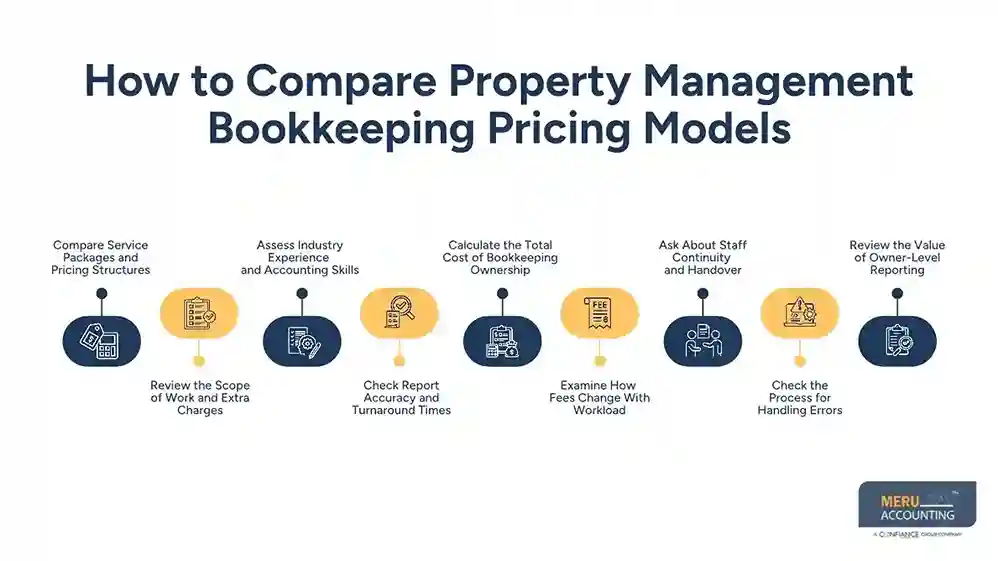
Examine How Fees Change With Workload
Ask the provider what happens when rent payments rise, new bank accounts are added, or several properties need separate reports. A clear rate plan should explain which changes affect the fee and which tasks remain covered by the agreed price.
Ask About Staff Continuity and Handover
Find out who will manage your records each month and what happens if that person leaves or takes time off. Check whether the provider keeps clear work notes and has a handover process that prevents delays or missing records.
Check the Process for Handling Errors
Ask what happens when a payment is entered twice, a bill is assigned to the wrong property, or a bank balance does not match the books. Confirm who will fix the issue, how soon it will be resolved, and whether correction work carries an extra charge.
Review the Value of Owner-Level Reporting
Check whether the reports show results for each property or only give one combined view of the full portfolio. Property-level figures can make it easier to spot rising repair costs, unpaid rent, and gaps between planned and actual spending.
How to Calculate the ROI of a Property Management Bookkeeper
Return on investment (ROI) compares the value gained with the cost paid. A property management bookkeeper can offer value through time saved, fewer errors, and better control of property costs.
Measure Time Saved
Suppose your team spends 25 hours each month on bookkeeping and the new service cuts that to 10 hours. You save 15 hours a month, or 180 hours a year, which can be used for other work.
Track Error and Rework Costs
Record time spent fixing duplicate bills, missing rent entries, and bank differences before and after the change. Outsourced property management bookkeeping may reduce this waste when the service includes sound checks and clear records.
Compare the Full Yearly Cost
For example, an in-house bookkeeper may cost $3,500 per month in salary and related costs, while an outside service may quote $1,800 per month. The possible difference is $20,400 per year, but compare the scope and quality before treating it as a saving.
Use a Simple ROI Formula
Subtract the total service cost from the value gained, then divide the result by the total service cost and multiply by 100. Include only gains you can measure, such as hours saved or lower rework costs, rather than assuming every gain comes from bookkeeping.
Review Results Each Quarter
Check report dates, error rates, hours spent, and total fees every three months. A property management bookkeeper should meet agreed targets, and the service plan should change when the number of units or transactions rises.
Property Accounting Services From Meru Accounting
Meru Accounting provides bookkeeping and accounting services for property managers, landlords, and real estate firms. Our services cover rental income, property costs, accounts payable, accounts receivable, bank reconciliation, and financial reporting.
Bookkeeping for Rental Properties
Our team records rent, fees, repair costs, and other property transactions. A property management bookkeeper can keep records grouped by property so that managers can review income and costs with greater clarity.
Accounts Payable and Receivable
We record vendor bills, track payment dates, and review amounts due from tenants. Our process keeps bill records clear while the client retains control of payment approval and release.
Monthly Reconciliation and Reports
We reconcile bank records and prepare reports based on the agreed service scope. Outsourced property management bookkeeping from Meru Accounting can give managers a clearer view of cash balances, unpaid rent, and property costs.
Accounting Software and Workflows
Our team works with accounting platforms such as QuickBooks, Xero, Zoho Books, and NetSuite. The right setup depends on the client’s current system, reporting needs, and number of properties.
Our Expert Perspective
Bookkeeping costs should be judged on the quality of the records, not just the price on a quote. Before hiring a property management bookkeeper, check how the provider handles owner balances, bank differences, missing bills, and late rent. Clear duties and review steps can prevent small errors from turning into larger issues.
Key Takeaways
- Compare the full cost of a property management bookkeeper, including software, staff time, and extra fees.
- Review the number of properties, transaction volume, and report needs before asking for quotes.
- Check the scope, staff skills, deadlines, and error review process before hiring a provider.
- Compare outsourced property management bookkeeping with in-house work using the same tasks and cost measures.
- Calculate ROI with clear figures for time saved, fewer errors, and total service fees.
- Review the service each quarter as your property portfolio changes.
FAQs
Compare monthly fees, transaction volume, service scope, report quality, and extra charges to find the right fit for your property portfolio.
Fees depend on the number of properties, monthly transactions, property type, accounting software, and level of reporting required.
Outsourcing can reduce staffing and training costs when the service fee matches the workload and covers the required tasks.
Compare fixed monthly fees, hourly rates, per-unit charges, and per-transaction rates against the same list of services.
Subtract the total bookkeeping cost from the measurable financial gains, divide by the total cost, and multiply by 100 to calculate ROI.
optional anymore
on running the business