

A dental practice can collect payments from patients, receive checks from insurance companies, and pay several labs and suppliers in the same week. But do the books show where every dollar came from and what it was spent on? This is one of the day-to-day challenges a dental bookkeeper helps solve, especially when patient balances, insurance adjustments, and office bills pile up.
Good bookkeeping is not just about entering numbers. It means keeping payment records in sync, spotting unusual costs, and making sure income and expenses are recorded in the right accounts. With accurate records, dentists can get a clearer picture of their practice’s finances without having to sort through piles of bills and payment reports.
What Does a Dental Bookkeeper Do?
A dental bookkeeper records and tracks the money that comes into and goes out of a dental practice. The work covers daily sales, patient payments, insurance income, staff pay, bills, and other costs. The aim is to keep the books up to date so the owner can see the true state of the business.
Here are some key tasks a dental bookkeeper may handle:
- Record daily income: Enter patient payments, card receipts, checks, and other funds in the books.
- Track unpaid balances: Keep records of what patients and insurers still owe.
- Record insurance income: Enter payments, write-offs, and other claim-related changes.
- Track daily costs: Record rent, wages, dental supplies, lab fees, and utility bills.
- Reconcile bank accounts: Match bank activity with the records in the books.
- Prepare reports: Share clear reports on income, costs, cash flow, and profit.
A bookkeeper may also work with the front desk and billing staff to clear up gaps in payment records. However, bookkeeping is not the same as dental billing. Claim coding, claim filing, and direct follow-up with insurers are separate tasks unless they are part of the agreed service.
optional anymore
on running the business
How a Dental Bookkeeper Tracks Patient Payments
Patient payments are a key source of income for most dental practices. These may come from cash, cards, checks, care plans, or third-party finance firms. A dental bookkeeper records each payment and checks that it matches the right visit or patient account.
1. Record payments by type
Each payment should be entered with the right date, amount, and payment type. This makes it easier to track cash, card sales, checks, and online payments. It also helps the team find gaps between the daily payment log and the bank deposit.
2. Track patient balances
Not all patients pay the full amount at the time of care. Some may have a set payment plan or owe a balance after their insurance pays its share. A bookkeeper can track these amounts and flag old balances for review.
3. Match payments with bank deposits
The total shown in the payment system should match the amount sent to the bank, after fees, refunds, and other valid changes. Bank checks help spot missing deposits, double entries, and wrong amounts.
4. Review refunds and payment changes
Refunds, voids, and card disputes can affect the books. Each change should have a clear record and reason. This helps avoid false income figures and keeps the patient account in line with the books.
A good payment record gives dentists a better view of money collected each day. It also helps the team spot issues before they grow into larger gaps.
Managing Dental Insurance Claims and Reimbursements
Insurance income can be hard to track because the amount billed is not always the amount paid. A claim may be paid in full, paid in part, denied, or left open for more review. A dental bookkeeper helps keep the money side of these events clear.
1. Track claims and expected payments
The billing team can share a list of claims sent to insurers, along with the amounts billed and the dates filed. These details help the bookkeeper track expected income and compare it with funds received.
2. Record insurance payments
When an insurer sends a payment, the amount should be entered in the books and matched with the right claim or payment report. If one payment covers many patients, the total should be split and checked against the payment details.
3. Record write-offs and claim changes
The amount billed to an insurer may differ from the amount the plan allows. Contract write-offs, patient shares, and other changes must be shown in the right place. This keeps the books from showing more income than the practice can collect.
4. Flag unpaid claims and short payments
If an insurer pays less than expected or does not pay at all, the gap should be flagged for the billing team. They can then check for a denial, missing data, or a need to send more details.
5. Match insurance funds with bank records
Insurance payment reports should match bank deposits. This check helps find missing funds, wrong entries, and payment gaps.
It is worth noting that a bookkeeper does not always file claims or appeal denials. Those duties often sit with the dental billing team. Still, good records help both teams work with the same figures.
Tracking and Controlling Dental Practice Expenses
Income is only one part of a dental practice’s financial health. Owners also need to know how much it costs to run the office. A dental bookkeeper records these costs and helps the owner see where money goes.
Common costs to track include:
- Dental supplies: Gloves, masks, tools, and other items used for patient care.
- Lab fees: Costs for crowns, bridges, dentures, and other work sent to outside labs.
- Staff pay: Wages, payroll taxes, staff benefits, and related costs.
- Office costs: Rent, power, water, phone, and internet bills.
- Equipment costs: Repairs, service plans, and new tools or machines.
- Marketing costs: Website fees, ads, print work, and other ways to reach new patients.
- Insurance and fees: Business cover, bank fees, and other service costs.
A bookkeeper can also sort costs by type and track them over time. This helps the owner spot a rise in lab fees, supply costs, or staff costs.
For example, if supply costs rise each month while patient volume stays the same, the owner may need to review order sizes, vendor rates, or stock use. These checks help cut waste without putting patient care at risk.
Financial Reports Every Dental Practice Should Review
Clear reports help dentists see if the practice is earning enough, paying its bills, and using cash well. A dental bookkeeper can prepare these reports and help keep the figures up to date.
1. Profit and Loss Statement
This report shows income, costs, and net profit over a set time. It helps owners see which costs are rising and whether income is enough to cover them.
2. Balance Sheet
A balance sheet shows what the practice owns, what it owes, and the owner’s share in the business. It gives a view of the practice’s financial position on a set date.
3. Cash Flow Statement
This report shows how cash moves in and out of the practice. It helps owners plan for payroll, rent, loan payments, and large bills.
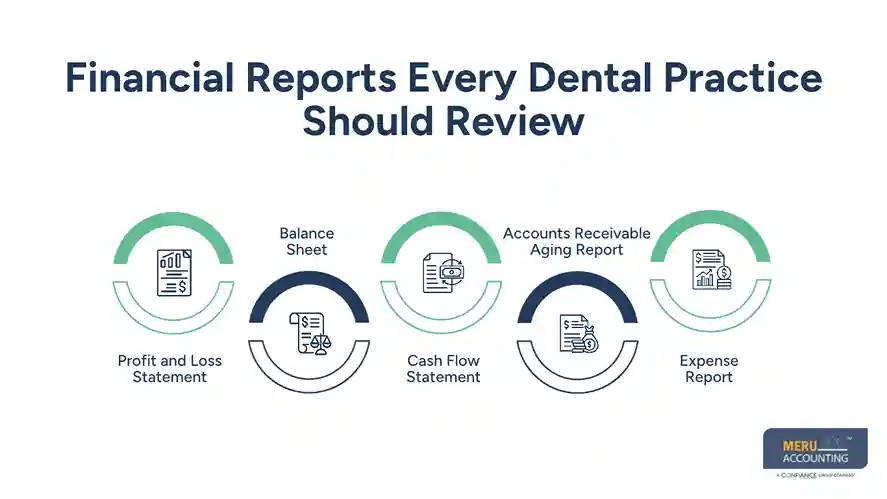
4. Accounts Receivable Aging Report
This report groups unpaid balances by how long they have been due. It can help the team spot old patient balances and open insurance amounts that need review.
5. Expense Report
An expense report shows where the practice spends its money. Owners can use it to compare costs across months and find areas that need closer review.
Dentists should not look at these reports in isolation. For example, a practice may show a profit but still face a cash shortage if too much money is tied up in unpaid balances.
Common Bookkeeping Challenges Dental Practices Should Avoid
Even a busy practice can face errors when payment and cost records are not checked on time. Some common issues include:
- Mixing production with collections: The value of care given is not the same as the cash received. Treating both as the same can give a false view of income.
- Missing insurance changes: Failing to record write-offs or short payments can make income and unpaid balances look wrong.
- Late bank checks: Delayed bank matching can make missing funds and duplicate entries harder to find.
- Poor expense records: Missing bills or wrong cost codes can affect profit reports and tax records.
- Mixing personal and business costs: Using one bank account for both makes it harder to track real business costs.
- Old unpaid balances: Not reviewing aged balances can hide slow payments and open claim issues.
Regular checks and clear records can help prevent these issues. A dental bookkeeper can set a monthly close routine to review income, costs, bank records, and open balances before reports are shared.
Bookkeeping Services for Dental Clinics by Meru Accounting
A dental practice has several financial records that need to agree: patient ledgers, insurance payment reports, bank deposits, payroll records, and vendor bills. When these records do not match, owners may struggle to understand their actual collections or monthly costs. Meru Accounting provides bookkeeping services for dental clinics to help keep these records connected and give practice owners a more useful view of their finances.
- Patient Collections and Payment Reconciliation: Recording cash, card, check, and financing payments, tracking refunds, and matching collections with bank deposits.
- Insurance Payment Recording: Entering insurance reimbursements, contractual adjustments, and payment differences using reports provided by the practice.
- Dental Practice Expense Accounting: Tracking dental supplies, lab bills, equipment costs, staff pay, rent, and other operating expenses by category.
- Accounts Receivable Tracking: Maintaining records of outstanding patient and insurance balances so the practice can identify amounts that need follow-up.
- Accounts Payable Management: Recording vendor bills, checking due dates, and keeping payment records up to date.
- Bank and Credit Card Reconciliation: Comparing recorded transactions with bank and card statements to identify missing entries, duplicate charges, and other differences.
- Monthly Financial Reporting: Preparing profit and loss statements, balance sheets, cash flow reports, and expense summaries to help owners review practice performance.
Whether a practice needs help catching up on old records or wants ongoing monthly support, Meru Accounting can provide a dedicated accounting team to handle these tasks. Our focus is to give dentists reliable financial records that help them review collections, control operating costs, and plan the next stage of their practice.
Our Expert Insight
One area dental practices should watch is how insurance adjustments affect accounts receivable. For example, if a practice bills $1,000 for a procedure but the insurer’s allowed fee is $700, the $300 difference should be recorded as a contractual adjustment, not as an unpaid balance. Leaving it in accounts receivable can make the practice’s outstanding revenue look higher than it really is.
We recommend reviewing insurance payment reports against patient ledgers and fee schedules each month. This helps catch incorrect adjustments, old balances, and payment discrepancies before they affect financial reports. It also gives practice owners a more accurate view of what they can actually collect.
Key Takeaways
- A dental bookkeeper helps track patient payments, insurance income, and office costs.
- Each patient payment should match the right visit and bank record.
- Insurance payments, write-offs, and open claims need clear records.
- Tracking supply, lab, staff, and office costs helps owners spot waste.
- Monthly reports give a clear view of profit, cash flow, and unpaid balances.
- Regular bank checks and account reviews help reduce errors.
- Outside bookkeeping support can help dental practices keep their books up to date.
FAQs
Dental practices can use patient ledgers and payment reports to record collections, refunds, and unpaid balances. Regular reconciliation with bank deposits helps catch missing payments and posting errors.
Insurance write-offs should be recorded based on the contracted fee and the insurer’s explanation of benefits (EOB). This keeps contractual adjustments separate from amounts still owed by patients or insurers.
Production reflects the value of dental services provided, while collections show the payments received. Insurance processing delays, patient balances, contractual adjustments, and payment plans can cause the two figures to differ.
Bank and credit card accounts should generally be reconciled monthly. Patient payment records, insurance deposits, and major expense accounts should also be reviewed regularly to catch errors before month-end reports are finalized.
Yes. An outsourced bookkeeping team can work with a practice’s existing accounting and dental management systems, depending on software compatibility and access. This helps maintain financial records without requiring the practice to change its entire workflow.
optional anymore
on running the business