A hospital can treat hundreds of patients in a week and still lose money on certain services. A medical practice may have strong revenue on paper but struggle with unpaid claims, rising supply costs, or high payroll expenses. These are not always signs of low demand. Often, they point to gaps in financial planning and control. That’s why accounting for healthcare industry businesses needs to go beyond recording payments and paying bills.
From insurance reimbursements and patient collections to staffing costs and medical supplies, every part of a healthcare business affects its bottom line. Effective healthcare business accounting helps providers see which services generate revenue, where costs are rising, and how much income is actually reaching the bank. This guide explores how to track these numbers and use them to make better financial decisions.
What You Will Learn From This Blog
- What healthcare accounting covers and why it matters.
- How healthcare businesses earn and track revenue.
- Which costs have the biggest impact on profit.
- How to manage income, expenses, and cash flow.
- Which financial reports healthcare owners should review.
- How better accounting can support long-term growth.
What Is Accounting for the Healthcare Industry?
Accounting for the healthcare industry is the process of recording, tracking, and reviewing the money that flows through medical businesses. It covers patient fees, insurance payments, payroll, medical supplies, rent, equipment, and other costs.
However, healthcare accounting is not just about recording sales and bills. Providers must also track unpaid claims, patient balances, payment delays, refunds, and contract terms. These items can affect the income shown in financial reports.
For example, a clinic may provide $50,000 worth of care in a month but receive only $35,000 in payments during that time. The gap may include claims that are still under review, unpaid patient bills, or denied claims. If the clinic does not track these amounts, it may struggle to plan its cash needs.
Good accounting helps owners:
- Keep clear and up-to-date financial records.
- Track payments from patients and insurers.
- Review costs across teams and services.
- Plan for payroll, bills, and tax payments.
- Check profit and cash flow each month.
- Make informed choices about hiring and growth.
The goal is to give healthcare owners a clear view of their finances while keeping daily work on track.
Understanding Revenue Sources in Healthcare Businesses
Healthcare businesses earn money from more than one source. Tracking each source helps owners understand how much income they can expect and where payment delays may occur.
1. Patient Payments
Patients may pay for visits, tests, treatments, and other services. Payments can come at the time of care or after an invoice is sent.
Healthcare providers should track cash, card, online, and payment plan receipts. They should also keep records of refunds and unpaid patient balances. This helps ensure that each payment is linked to the right service and patient account.
2. Insurance Reimbursements
Private health plans are a major source of income for many healthcare providers. Once care is given, the provider sends a claim to the insurer for payment.
The amount received may differ from the billed amount due to contract rates, deductibles, co-pays, and claim denials. Accounting teams must review these differences and record the right amount as income.
3. Medicare and Medicaid Payments
Many healthcare providers receive payments from Medicare and Medicaid. These programs have set rules for claims, rates, and payment. Errors in billing or missing records can delay payment.
Providers should track claims by payer and review unpaid amounts on a regular basis. This makes it easier to spot delays and follow up on claims that need action.
4. Other Income Sources
Some healthcare businesses earn money from lab work, medical tests, rent, wellness plans, or other services. These funds should be recorded under the right income type.
Separate income records help owners see which services bring in the most money and which may need a closer review.
Major Expenses Healthcare Businesses Need to Track
A clear view of costs is key to keeping a healthcare business in good shape. Even a busy clinic can face low profit if its costs rise faster than its income.
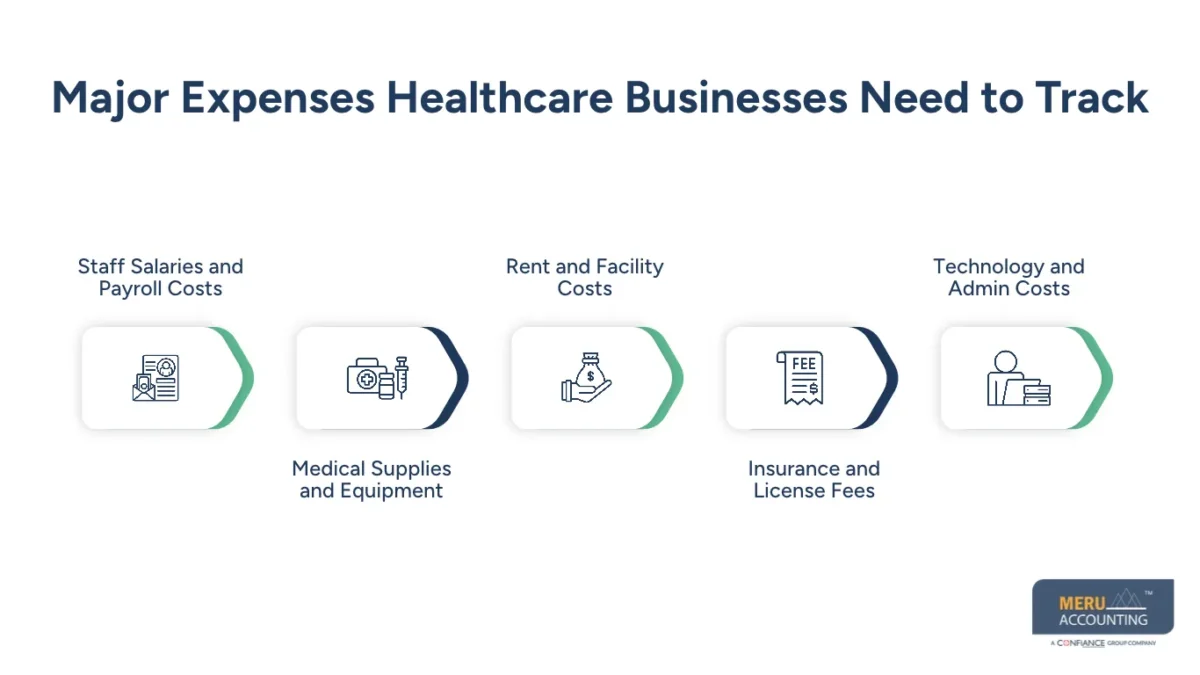
Here are the main expenses to track:
1. Staff Salaries and Payroll Costs
Staff costs are often one of the largest expenses for healthcare providers. They include doctor and nurse pay, admin staff wages, overtime, benefits, payroll taxes, and contract staff fees.
Owners should review staff costs against patient volume and income. This helps them plan shifts and avoid high labor costs without putting care at risk.
2. Medical Supplies and Equipment
Medical supplies may include gloves, masks, syringes, drugs, and test kits. Large equipment may include scan machines, dental chairs, and lab tools.
Tracking these costs helps prevent waste, spot price rises, and plan for future needs. Large equipment buys should also be recorded based on the right accounting rules.
3. Rent and Facility Costs
Rent, power, water, repairs, cleaning, and waste removal add to the cost of running a clinic or hospital.
These costs may seem small on their own, but they can add up over time. Monthly reviews help owners spot bills that have risen or services they no longer need.
4. Insurance and License Fees
Healthcare businesses may pay for malpractice cover, general liability cover, permits, and license renewals. These costs are vital to daily operations and should be part of the yearly budget.
5. Technology and Admin Costs
Billing tools, practice systems, payroll software, data storage, and IT support also add to overhead. Tracking these costs helps owners assess whether each tool adds value to the business.
How Healthcare Business Accounting Manages Revenue and Expenses
Effective healthcare business accounting brings income and costs into one clear system. It helps owners see what has been earned, what has been paid, and what is still due.
Here are key ways it supports better financial control:
- Track income by source: Record patient fees, insurer payments, and public health plan income under clear groups. This helps owners see where revenue comes from.
- Review unpaid claims: Check claim status and follow up on old balances. This can help reduce delays and improve cash flow.
- Match payments to records: Reconcile bank deposits with billing and payment records. This helps find missing, duplicate, or incorrect entries.
- Track costs by type: Group payroll, rent, supplies, and other costs. Owners can then see which areas use the most funds.
- Plan cash flow: Compare expected payments with bills due. This helps ensure there is enough cash for payroll and daily needs.
- Review results each month: Compare income and costs with past months and the budget. This helps owners act before small issues grow.
When these tasks are done on time, owners can make better choices and reduce the risk of poor records or cash gaps.
optional anymore
on running the business
Key Financial Reports Every Healthcare Business Should Review
Financial reports help owners judge how well their business is doing. They show more than the amount in the bank and can point to issues that need quick action.
Financial report | What it shows | Why it matters |
Income statement | Income, costs, and profit over a set period | Shows if the business is making money |
Balance sheet | Assets, debts, and owner equity | Shows the firm’s financial position |
Cash flow statement | Cash coming in and going out | Helps plan bills and payroll |
A/R aging report | Unpaid patient and insurer balances | Helps track late payments |
Budget vs. actual report | Planned costs compared with real costs | Shows where spending is too high |
Healthcare owners should review these reports each month. They should also compare results with past periods to spot trends. For example, a rise in income may look good, but if unpaid claims rise at the same time, cash flow may still be under stress.
How to Measure and Improve Healthcare Business Profitability
Profit is what remains after costs are taken from income. But healthcare owners need to look beyond total sales to see how well each part of the business performs.
Here are some ways to measure and improve profit:
1. Review Operating and Net Profit Margins
Operating profit shows how much the core business earns after day-to-day costs. Net profit shows what remains after all costs and other items are taken into account.
Reviewing both helps owners see if rising costs are eating into their earnings.
2. Track Revenue per Patient
Revenue per patient shows the average income earned for each patient over a set period. It can help owners compare services, patient groups, and changes in income.
This figure should be reviewed with care, as service mix and payer rates can vary.
3. Review Costs by Service Line
A clinic may offer visits, lab tests, scans, and other care. Each service has its own staff, supply, and equipment costs.
Reviewing income and costs by service helps owners see which areas earn a good return and which need a closer look.
4. Reduce Waste and Control Costs
Regular reviews can reveal unused tools, high supply costs, excess overtime, and repeat admin work. Owners can then take steps to cut waste without lowering the quality of care.
5. Improve Claim Follow-Up
Late or denied claims can tie up money that the business has already earned. A clear process for checking claim status, fixing errors, and following up can help speed up payment.
Accounting for Healthcare Industry by Meru Accounting
A closer look at a healthcare business’s books can reveal more than unpaid bills or rising expenses. It can show whether insurance payments match recorded revenue, how much money remains tied up in patient balances, and which operating costs are putting pressure on profit. Meru Accounting helps healthcare businesses get a clearer view of these numbers through dedicated outsourced accounting support.
Our services cover the financial tasks that keep healthcare operations running:
- Healthcare Bookkeeping: Record patient receipts, insurance payments, vendor bills, and operating expenses. Maintain accurate books that reflect day-to-day financial activity.
- Accounts Receivable Management: Track outstanding patient balances and insurance receivables. Review aging reports and payment records to help identify overdue amounts.
- Accounts Payable Management: Keep track of bills from medical suppliers, equipment vendors, landlords, and service providers. Monitor due dates and maintain clear payment records.
- Payroll Accounting: Maintain payroll records, track wage expenses, and record payroll-related costs to help healthcare businesses monitor labor spending.
- Financial Reporting: Prepare income statements, balance sheets, and cash flow reports to help owners assess revenue, expenses, and overall financial performance.
- Accounting Cleanup and Catch-Up: Organize incomplete records, correct bookkeeping gaps, and bring overdue accounts up to date for more reliable financial reporting.
For a healthcare practice, reliable financial information can make a real difference when planning staff costs, reviewing service profitability, or preparing for expansion. Meru Accounting provides the accounting support behind those decisions, helping healthcare owners spend less time managing financial records and more time focusing on their practice.
Our Expert Insight
High revenue does not always mean high profit for a healthcare practice. A service may bring in substantial income but also require costly equipment, supplies, and staff time. Another service may generate less revenue but deliver better margins.
We recommend reviewing profitability by service line, not just by the practice as a whole. Compare the income from each service with its direct costs, including labor and supplies, and account for shared overhead when assessing overall performance. This helps healthcare owners make better decisions about pricing, staffing, and resource use rather than focusing on revenue alone.
Key Takeaways
- Accounting helps healthcare businesses track income, costs, and cash flow.
- Patient fees, private insurance, Medicare, and Medicaid are key revenue sources.
- Payroll, medical supplies, rent, and IT are major costs to review.
- Monthly reports help owners spot cash gaps and rising costs.
- Claim follow-up and cost reviews can support better profit.
- Sound accounting records help owners make clear business choices.
FAQs
Many healthcare businesses use accrual accounting because it records revenue when earned and expenses when incurred, rather than only when cash changes hands. This gives owners a clearer view of unpaid claims, outstanding bills, and financial performance.
A medical practice should record contractual adjustments, claim denials, and payer underpayments separately. This helps keep reported revenue accurate and makes it easier to identify payment gaps.
Useful KPIs include operating profit margin, days in accounts receivable, claim denial rate, collection rate, payroll cost as a share of revenue, and revenue per patient. These measures help owners assess financial performance and spot issues early.
Monthly reviews are a good practice. Owners should check income statements, balance sheets, cash flow, and budget variances to identify unusual costs, changes in revenue, and potential financial risks.
Common records include patient payment summaries, insurance remittance statements, vendor invoices, payroll records, bank statements, equipment purchase records, and tax documents. Healthcare businesses should also follow applicable record retention, privacy, and tax rules.
optional anymore
on running the business