An IRS letter arrives on a Monday morning. Your business records show that the tax was paid, but the notice says an amount is still due. Do you reply yourself, call your tax preparer, or hire a cpa tax accountant with IRS representation experience? The answer depends on what the notice says and who is qualified to act for you.
A tax professional may handle much more than an annual tax return. The right expert can review past filings, check disputed figures, plan for future tax costs, and represent you in eligible IRS matters. However, someone skilled at preparing returns may not be the best fit for a complex tax dispute.
Fees also vary with the work involved. A basic return, a business tax plan, and an audit response require different levels of time and skill. Before hiring a cpa tax accountant, compare the service you need with the professional’s credentials, experience, fees, and representation rights. Businesses that need regular accounting work may also consider Outsourced CPA Tax Services.
What You Will Learn From This Blog
- The practical differences between a CPA and a tax accountant.
- The credentials and experience to check when hiring a cpa tax accountant.
- Why tax preparation, planning, and IRS case fees vary.
- What a qualified professional can do during an IRS dispute.
- Which questions can reveal unclear fees or service limits.
- When Outsourced CPA Tax Services may suit a business.
CPA vs. Tax Accountant: Key Differences in Qualifications and Services
The title alone does not tell you what a tax professional can do. A CPA holds a state-issued license, while the term tax accountant can describe people with different levels of training and credentials. When choosing a cpa tax accountant, compare the qualifications with the work you need.
Education and Licensing
A CPA must meet the licensing rules set by the relevant state board, including education, examination, and experience requirements. Other tax accountants may have accounting degrees or tax training without a CPA license. Check the credential the professional actually holds.
Tax Return Preparation
Both CPAs and other tax preparers may prepare returns. The key question is whether they understand your type of income and tax forms. A business with staff, inventory, and rental income may need a tax professional with experience across those areas.
Tax Planning and Advice
Tax planning looks at a decision before it affects your return. For example, a business buying equipment may need to review the tax treatment and timing of the expense. A qualified tax professional can explain whether planning advice is included or charged separately from return preparation.
Business and Financial Reporting
Some CPAs also work on financial statements, account reviews, and business reporting. A tax preparer who mainly handles individual returns may not offer those services. Choose a professional whose skills match the work you expect, rather than paying for a title alone.
IRS Representation Rights
CPAs, enrolled agents, and attorneys who meet IRS practice rules generally have broad representation rights before the IRS. Some other preparers have limited rights. Check the cpa tax accountant’s status before hiring them to handle an audit, collection issue, or appeal.
optional anymore
on running the business
What to Evaluate When Choosing a CPA Tax Accountant
A useful first meeting should answer three questions: Does this person know my type of tax case, can they explain the work, and is the fee clear? These checks can help you compare each cpa tax accountant on the same basis.
Verify Current Credentials
Check the CPA’s license with the relevant state board of accountancy. If the person prepares federal tax returns for a fee, ask for their PTIN where required. Do not treat a website profile or business card as proof that the professional holds an active license.
Check Relevant Work Experience
Ask about cases similar to yours. A freelancer with a few income sources may need a different level of service from a company with payroll, contractors, and several business locations. Relevant experience is more useful than a broad claim of tax expertise when choosing a tax professional.
Review the Service Agreement
The agreement should list the returns, tax years, and tasks covered by the fee. Check whether amended returns, IRS letters, audit meetings, and follow-up advice cost extra. A clear agreement with your tax advisor can prevent a dispute over what you expected the firm to do.
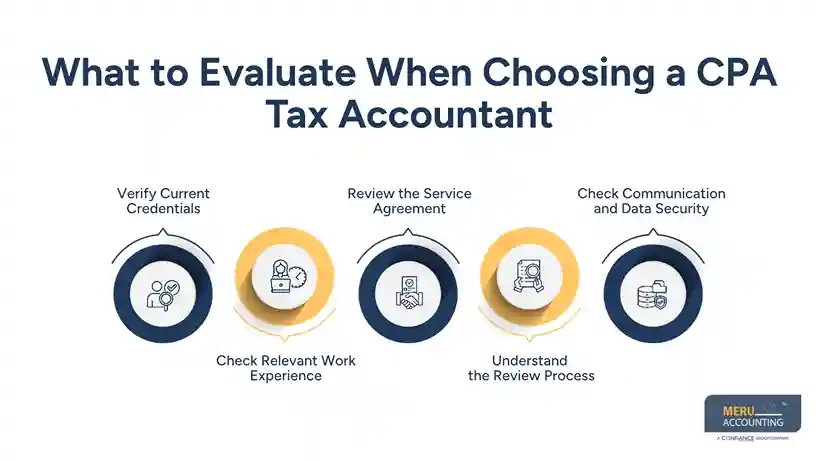
Understand the Review Process
Ask who prepares your return and who checks it before filing. Find out how the firm verifies income, deductions, tax payments, and supporting records. Your tax advisor should explain who is responsible if the review finds missing or conflicting information.
Check Communication and Data Security
Tax work can stall when a question goes unanswered or a key document is missing. Ask who will handle your case, how files are shared, and when replies are usually sent. A cpa tax accountant should also explain how you can access your tax records and retain copies for your own files.
CPA Tax Accountant Pricing: What Determines the Cost?
A quote means little until you know what work it covers. A tax professional may charge different fees for a simple return, detailed tax planning, or an IRS dispute because each task needs a different level of review. The same applies when comparing outsourced tax and accounting services for ongoing business needs.
Tax Return Preparation Fees
A return with one wage statement may take less work than a business return with asset sales, several income sources, and complex deductions. Ask your tax preparer whether the quote includes state returns, electronic filing, and post-filing questions. Missing records can add to the fee.
Hourly Rates for Tax Planning and Advisory
Planning fees depend on the records reviewed and the decisions under study. For example, a business considering a new vehicle may need advice on business use, expense treatment, and recordkeeping. Ask your tax advisor for an estimated number of hours and the hourly rate before work begins.
IRS Audit Representation and Resolution Fees
An audit can require invoices, bank records, receipts, and explanations for reported figures. A tax debt case may need a separate review of payment options. Ask the tax professional whether the fee covers the full matter or only the first review and response.
Fixed Fees vs. Hourly Billing
A fixed fee works well when the task and required records are clear. Hourly billing may be more suitable when an IRS dispute could involve several rounds of questions. Before hiring a cpa tax accountant, confirm how the firm will seek approval if the work exceeds the estimate.
Questions to Ask About Pricing and Additional Charges
Ask whether meetings, amended returns, IRS calls, and extra state filings carry separate fees. Request the payment terms in writing. When comparing tax preparation fees, be cautious if a preparer bases the fee on a share of your refund or promises an outcome before reviewing the facts.
IRS Representation: What a CPA Tax Accountant Can Do
IRS representation involves more than preparing a return. A qualified cpa tax accountant may review notices, present records, discuss tax adjustments, and act for a taxpayer under the required authorization. The result depends on the facts, the evidence, and the applicable tax rules.
Responding to IRS Notices and Tax Inquiries
A tax professional can compare the notice with your return, payment records, and income documents. If the IRS reports a mismatch, the professional can check the figures and prepare a response where authorized. The notice deadline should guide your next step.
Representing Taxpayers During IRS Audits
Suppose the IRS asks for proof of business travel expenses. A qualified tax professional can review receipts, travel records, and the business purpose before presenting the case. Keep your records complete and never ask a professional to claim an expense that cannot be supported.
Negotiating Payment Plans and Tax Settlements
If you cannot pay the full tax bill, a tax advisor can review options such as an installment agreement or an offer in compromise. Eligibility depends on IRS rules and your financial details. No professional can promise that the IRS will accept a settlement.
Handling Tax Disputes and Appeals
When the IRS proposes a change, your tax advisor can review the reasons and the evidence behind the decision. Depending on the case, you may submit more records or seek an appeal. Do not ignore deadlines while deciding how to respond.
When to Consider an Enrolled Agent or Tax Attorney
An enrolled agent may suit a case focused on federal tax issues and IRS dealings. A tax attorney may be more suitable for complex legal disputes or potential criminal tax exposure. Compare each professional’s experience with the issue you face before making a choice.
Questions to Ask Before Hiring a CPA Tax Accountant
Use the first meeting to test whether the professional can explain your case in plain terms. These questions can also reveal gaps that a low quote may hide when you compare cpa tax accountant services.
Who Will Prepare and Review My Return?
Find out who handles the records, checks the figures, and signs the return. Ask how errors found after filing will be handled and whether correction work by your tax preparer costs extra.
Can You Represent Me Before the IRS?
Confirm that the professional has the required rights for your case. Ask whether calls, document requests, meetings, and appeals are included in the fee quoted by your cpa tax accountant.
Which Records Do You Need From Me?
Request a list of income statements, receipts, prior returns, and other records. Sending complete information early can reduce delays and extra work caused by missing documents, making the process more efficient for both you and your tax professional.
What Happens if More Work is Needed?
Ask how the firm prices an amended return, a new IRS notice, or an unexpected tax issue. Agree on a process for approving extra fees before your cpa tax accountant starts additional work.
Meru Accounting: Outsourced CPA Tax Services for Businesses
Hiring a full-time tax team may not suit every business. Some firms need regular accounting records, payroll reports, and financial statements, while tax filing or IRS representation may require a separately defined service. Meru Accounting provides accounting services that businesses can review against these needs, including Outsourced CPA Tax Services suited to their agreed scope.
Accounting and Bookkeeping Services
Our accounting and bookkeeping services cover transaction records, account reconciliation, and financial reporting. These records give business owners a clearer view of income and expenses and provide a sound base for tax preparation. Outsourced CPA Tax Services can be considered alongside these tasks when the business needs a wider service scope.
Payroll and Accounts Management
Payroll, supplier bills, and customer balances all affect business records. Meru Accounting provides payroll, accounts payable, and accounts receivable services. Businesses considering Outsourced CPA Tax Services should confirm the tasks, deadlines, and reporting duties included in the service agreement.
Services Based on Business Needs
Outsourced CPA Tax Services may suit firms that need regular accounting work without building a full internal team. We discuss transaction volume, reporting needs, and task ownership before setting the service scope. Confirm tax filing and IRS representation separately.
Accounting Software Experience
Our team works with QuickBooks, Xero, Zoho Books, NetSuite, and Odoo. The right setup depends on your current system and reporting needs. When considering Outsourced CPA Tax Services, confirm which platform, access rights, and tasks are covered by the proposed service.
Clear Workflows and Reporting
We define the records required, the tasks assigned, and the expected reporting schedule with each client. Clear duties make it easier to track pending work and know who must act next. These details should also be set out when agreeing on Outsourced CPA Tax Services.
Our Expert Perspective
The best cpa tax accountant is not always the one with the lowest fee or the longest list of services. The better choice is the person who can explain the work, state what records are needed, and tell you what happens if the IRS questions a figure.
A business with clean books may need a routine return and a planning review. A business facing an IRS notice may need a separate review of past filings, evidence, deadlines, and representation rights. Outsourced CPA Tax Services may suit ongoing accounting needs, but the agreement should state whether tax filing and IRS representation are included.
Before you decide, compare the proposed work rather than the headline fee. Ask what the professional will review, what you must provide, and which services require a separate agreement.
Key Takeaways
- Choose a cpa tax accountant whose credentials and experience match your tax needs, whether you require annual filing, tax planning, or IRS representation.
- Compare pricing based on the services included, the complexity of your tax records, and any extra charges for tax planning or audit representation from a cpa tax accountant.
- Verify IRS representation rights before hiring a professional to handle notices, audits, tax disputes, or payment arrangements.
- Review the engagement agreement carefully to understand service limits, document requirements, deadlines, and responsibilities.
- Maintain accurate financial records and retain copies of filed returns, payment receipts, and supporting documents.
- Consider Outsourced CPA Tax Services when your business needs regular accounting, bookkeeping, payroll, or financial reporting without building a full in-house team.
FAQs
A CPA holds a state-issued professional license, while a tax accountant may have different qualifications and tax preparation experience.
A cpa tax accountant’s fee depends on the return type, income sources, record quality, and complexity of the tax work.
A qualified CPA can generally represent taxpayers before the IRS during audits, tax disputes, and collection matters with proper authorization.
Compare the professional’s credentials, IRS case experience, representation rights, fees, and ability to handle your specific tax issue.
Outsourced CPA Tax Services may suit small businesses that need accounting, tax-related work, and financial reporting without hiring a full-time team.
optional anymore
on running the business