A construction project can be on schedule, the workers can be on site, and the client can be satisfied, yet the contractor may still struggle to pay the next supplier bill. The reason is often a gap between the money spent on ongoing work and the payments received from clients. This is where construction cash flow management software becomes important.
Unlike businesses that receive payments soon after a sale, construction companies often wait for project milestones, invoice approvals, and contract-based payments. During this time, wages, material costs, equipment rentals, and subcontractor bills continue to fall due. A profitable project can therefore create short-term cash pressure if its income and expenses are not planned well.
Construction cash flow management software brings financial reports into the picture before these gaps turn into larger problems. From unpaid invoice lists to Work-in-Progress (WIP) reports, each record reveals something about the company’s financial position. This blog looks at the reports contractors should review, what each report reveals, and how the right software can make cash planning more accurate.
What You Will Learn From This Blog
- Why a profitable construction project can still face a cash shortage.
- Which nine financial reports deserve regular attention from contractors.
- How construction cash flow management software tracks project income and expenses.
- Which features matter when choosing construction cash flow forecasting software.
- How to use financial reports to plan customer collections and supplier payments.
- How accurate accounting records contribute to better financial decisions.
What is Construction Cash Flow Management Software?
Imagine a contractor handling three projects at once. One client has an invoice pending approval, another project needs a large material purchase, and a third is waiting for a retainage release. Looking at the bank balance alone will not show the full financial picture. Construction cash flow management software brings these details together. It tracks incoming payments, outgoing expenses, project budgets, outstanding invoices, and expected cash movements. Contractors can review how much money is available, what payments are due, and which customer receipts are still pending.
Unlike basic accounting tools, construction cash flow management software is designed around project-based financial activity. It connects accounting records with job costs, progress billings, WIP figures, and payment schedules. This makes it useful for contractors managing several jobs with different costs and billing terms.
optional anymore
on running the business
Why is Cash Flow Management Important for Construction Companies?
Construction companies rarely spend and collect money at the same time. A contractor may pay workers every week but receive payment from a client only after a milestone is approved. The difference between these dates can affect the entire project schedule.
Construction cash flow management software allows contractors to examine these gaps through actual financial records and expected payments.
Managing Delayed Customer Payments
A completed stage of work does not always mean money will reach the bank that day. Invoice approval, missing documents, and client payment terms can delay receipts by 30, 60, or more days.
Regular cash reviews in construction cash flow management software reveal which invoices are overdue and how much money remains tied up in unpaid customer balances.
Planning Material and Labor Costs
A large material order or an increase in labor hours can change the amount of cash a project needs. These costs often arise before the next client payment arrives.
Reviewing upcoming expenses against expected receipts through construction cash flow forecasting software gives contractors a better basis for planning purchases and payroll.
Avoiding Cash Shortages
A project can show positive profit while the company has too little cash to meet its next payment deadline. This usually happens when income is recorded before the related customer payment is received.
Cash reports in construction cash flow management software reveal the difference between recorded revenue and actual money available.
Maintaining Supplier Relationships
A delayed supplier payment can affect the next material delivery. Subcontractors may also reconsider their work schedule when agreed payments remain pending.
Tracking due dates and available funds lets contractors plan payments without losing sight of supplier terms.
Key Financial Reports Every Contractor Should Review
No single financial report can explain the complete financial position of a construction company. A cash flow statement shows money movement, while job costing and WIP reports reveal what is happening within individual projects.
Construction cash flow management software can bring these records together, but contractors still need to understand what each report is telling them.
Cash Flow Statement
A cash flow statement answers a basic question: Where did the company’s money come from, and where did it go? It groups cash movements into operating, investing, and financing activities.
For contractors, this includes customer receipts, wages, material payments, equipment purchases, and loan transactions. The closing balance shows available cash, while the movement during the period reveals whether operations are bringing in enough money.
Accounts Receivable Aging Report
An accounts receivable aging report shows how long customer invoices have remained unpaid. For example, a contractor may have ₹5 lakh due within 30 days and another ₹2 lakh outstanding for more than 90 days.
The older balances deserve closer attention. Contractors can use construction cash flow management software to check whether delays come from invoice errors, pending approvals, or missed payment dates and set collection priorities accordingly.
Accounts Payable Aging Report
While receivables show money expected from clients, accounts payable shows money the company must pay. The report groups supplier and subcontractor bills according to their due dates.
A contractor with ₹8 lakh in bills due over the next 15 days needs to plan for those payments before committing funds elsewhere. Reviewing this report also reduces the risk of late fees and strained supplier terms.
Work-in-Progress (WIP) Report
A WIP report shows how much work has been completed, how much has been billed, and how much cost remains to complete a project. It also compares contract value, costs incurred, and estimated project profit.
For example, a job may be 60% complete but only 40% billed. This difference can point to underbilling or a delay in the billing process. Contractors should review WIP estimates often because changes in labor, material prices, or project scope can affect expected profit.
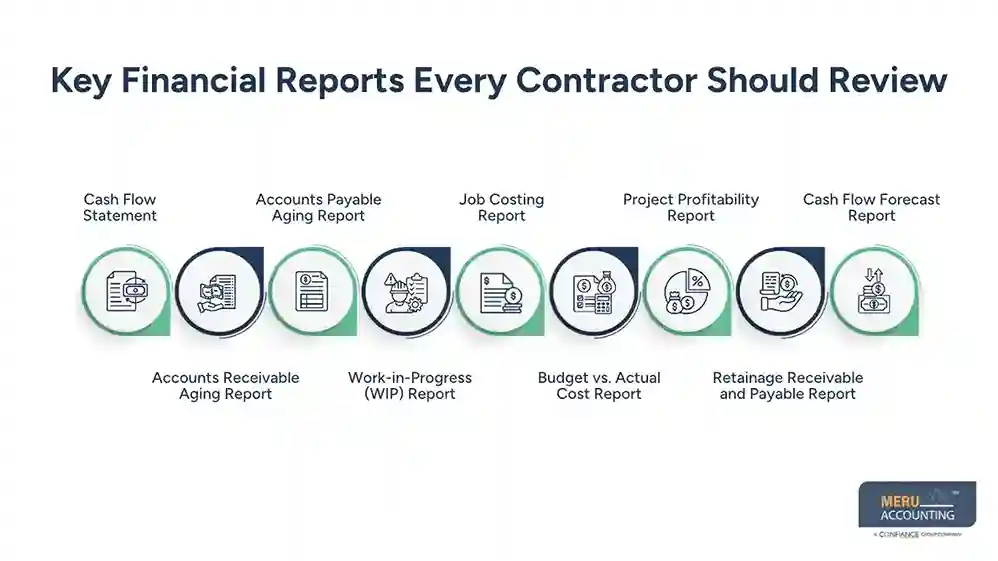
Job Costing Report
A job costing report shows where the money is being spent on a particular project. It breaks costs into categories such as labor, materials, equipment, and subcontractor charges.
Suppose the estimated material cost is ₹10 lakh, but actual spending has already reached ₹12 lakh. Construction cash flow management software brings this difference to attention, allowing the contractor to check price changes, excess usage, or incorrect cost allocation.
Budget vs. Actual Cost Report
A project budget is based on expected costs, but actual spending may not follow the original plan. This report places both figures side by side for each major cost category.
If equipment rental was budgeted at ₹2 lakh but has reached ₹3 lakh, the contractor can investigate the extra expense. Such differences should be reviewed before they affect the remaining project budget.
Project Profitability Report
A project profitability report shows whether a construction job is earning the expected return. It compares project revenue with the costs recorded against that job.
Two projects with similar contract values may have very different profit margins because of labor costs, material rates, or delays. Reviewing project profitability through construction cash flow management software gives contractors a better basis for future bids and pricing decisions.
Retainage Receivable and Payable Report
Retainage is money held back from a payment until certain contract conditions are met. A contractor may be waiting for a client to release 5% of the contract amount while also holding back a similar amount from a subcontractor.
This report tracks both balances and their expected release dates. Without regular reviews, these amounts can remain outstanding long after the related work has been completed.
Cash Flow Forecast Report
A cash flow forecast report looks ahead rather than only showing past transactions. It estimates future receipts and payments using customer invoices, contract milestones, supplier bills, payroll dates, and planned expenses.
Construction cash flow management software can use these details to estimate when available funds may fall below upcoming payment needs. Contractors should compare forecast figures with actual results each month and revise estimates when project dates or costs change.
How Construction Cash Flow Management Software Tracks Project Finances
A construction company’s financial position can change with every approved invoice, material purchase, and subcontractor payment. Construction cash flow management software connects these transactions with the projects they belong to.
- Records Project Income: Tracks contract values, approved change orders, progress billings, customer receipts, and unpaid invoices.
- Tracks Project Expenses: Records labor, materials, equipment rentals, and subcontractor charges under the correct project codes.
- Monitors Payment Dates: Keeps customer invoice dates, supplier due dates, and retainage release dates in one financial record.
- Compares Costs With Budgets: Places actual project spending against approved estimates to reveal cost differences.
- Updates Financial Reports: Uses recorded transactions to prepare cash flow, job cost, and accounts aging reports.
- Shows Future Cash Needs: Construction cash flow forecasting software uses expected receipts and planned expenses to estimate future cash balances.
The figures are only as reliable as the records entered into the system. An unrecorded supplier bill or an outdated project completion date can change the forecast and give contractors the wrong picture.
Key Features to Look for in Construction Cash Flow Forecasting Software
Not every accounting system offers the same level of project-based financial tracking. Before selecting construction cash flow forecasting software, contractors should check whether its features match their billing methods, project size, and reporting needs.
Real-Time Cash Position Tracking
A contractor should not have to wait until month-end to find out how much cash is available. Look for construction cash flow management software that displays bank balances, recorded receipts, and pending payments together.
Project-Based Cash Flow Forecasting
Company-wide cash figures may hide the financial needs of individual jobs. The software should show expected receipts and expenses for each project, including milestone payments and planned purchases.
Accounts Receivable and Payable Tracking
Late customer payments and upcoming supplier bills are two major sources of cash pressure. Features such as aging groups, due dates, invoice status, and payment records should be easy to review.
WIP and Job Cost Integration
WIP figures and job costs should connect with the same project records. This allows contractors to compare completed work, billings, actual expenses, and estimated costs to complete.
Financial Report Generation
Construction cash flow management software should prepare cash flow statements, aging reports, job cost reports, and budget comparisons. Filters for project, date range, and account category make financial reviews more useful.
Retainage and Payment Schedule Tracking
Retainage should not disappear from the financial records simply because it is not yet payable. Choose a system that records amounts held, release conditions, expected dates, and outstanding balances.
How to Use Financial Reports to Improve Construction Cash Flow
Reports become valuable when their findings lead to a clear action. Contractors can use construction cash flow management software to connect financial data with everyday decisions about collections, purchases, and project spending.
Identify Delayed Customer Payments
Start with the accounts receivable aging report and find invoices that have crossed their due dates. Check whether the client is waiting for an approval, a corrected invoice, or a missing project document.
Set follow-up dates and record the reason for each delay rather than treating every overdue invoice in the same way.
Monitor Upcoming Supplier and Subcontractor Payments
Review bills due within the next 7, 15, and 30 days using construction cash flow management software. Compare the total with expected customer receipts and current available cash.
This gives the finance team time to plan payments around actual due dates instead of reacting when suppliers begin following up.
Compare Project Costs With Approved Budgets
Check job cost and budget reports for categories where actual spending has crossed the estimate. A rise in material prices, extra labor hours, or equipment downtime may explain the difference.
Record the reason and revise the remaining cost estimate when needed.
Identify Cash Shortfalls Before They Occur
Construction cash flow forecasting software can show when expected payments may not cover planned expenses. Review payroll, material purchases, loan payments, and subcontractor bills for the same period.
If the forecast shows a gap, examine overdue invoices, purchase schedules, and available credit before the payment date arrives.
Review Project-Level Profitability
Use construction cash flow management software to compare contract revenue, actual costs, and expected profit for every active job. A project with rising costs or slow billing may need closer review even when the overall business has enough cash.
Use these findings to assess current project performance and prepare more accurate estimates for future contracts.
How Meru Accounting Manages Construction Accounting and Financial Reporting
A construction cash flow management software system can prepare reports, but the figures behind those reports still need to be recorded and checked correctly. Meru Accounting provides accounting and bookkeeping services for construction businesses that require organized financial records.
- Project Cost Recording: Recording labor, material, equipment, and subcontractor expenses under the correct accounts and project codes.
- Accounts Payable and Receivable: Maintaining supplier bills, customer invoices, payment dates, and outstanding balances.
- Bank Reconciliation: Matching bank transactions with accounting records and checking discrepancies before finalizing financial statements.
- Financial Reporting: Preparing financial reports that show income, expenses, outstanding balances, and project costs.
- Month-End Closing: Reviewing ledger entries, account balances, and adjustments to keep monthly records up to date.
Our Expert Perspective
One point contractors should not overlook is the difference between reported profit and available cash. A project may show a healthy margin while a large part of its revenue remains unbilled or unpaid.
We recommend reviewing cash flow, accounts aging, WIP, and job cost reports together rather than treating each report as a separate task. This brings payment delays, cost changes, and project billing gaps into the same discussion. Accurate records and regular reviews are just as important as the software used to prepare them.
Key Takeaways
- A profitable construction project can still face a cash shortage when customer payments arrive after major expenses fall due.
- Construction cash flow management software tracks project income, costs, customer receipts, and supplier payments.
- Contractors should review nine key reports, including cash flow statements, aging reports, WIP, and job profitability.
- Accounts receivable and payable reports show the money expected from clients and the amounts due to suppliers.
- Job costing and budget reports reveal where project spending differs from estimates.
- Construction cash flow forecasting software estimates future receipts and payments to reveal possible cash gaps.
- Correct accounting entries and regular financial reviews are necessary for reliable reports.
FAQs
Contractors should review cash flow statements, accounts aging, WIP, job costing, budget comparisons, retainage, and project profitability reports.
Construction cash flow management software records labor, material, equipment, and subcontractor costs against individual projects to track spending and available funds.
The best way is to compare expected customer payments, project milestones, supplier bills, payroll, and upcoming expenses using construction cash flow forecasting software.
Contractors can review overdue invoices, upcoming bills, WIP reports, and cash flow forecasts to identify payment gaps and rising project costs early.
A cash flow forecast report estimates future receipts and payments, allowing construction companies to plan expenses and prepare for possible cash shortages.
optional anymore
on running the business