A founder may spend months getting a startup off the ground, only to discover that a few tax decisions made in the early days have created a much bigger problem. An LLC taxed the wrong way, a missed payroll filing, or a deduction claimed without proper records can all lead to unexpected costs. This is why bringing in a startup tax accountant early can be a smart move, not just another business expense.
Tax rules aren’t always easy to follow, especially when a new business has limited staff and no in-house finance team. From the first tax return to quarterly payments and state filing rules, having the right tax services for startups can help founders make sound decisions without losing focus on running the business.
What You Will Learn From This Blog
- Why new businesses face a higher risk of tax errors.
- 10 common tax mistakes startups should avoid.
- How a startup tax accountant helps with tax planning and compliance.
- What tax services for startups should cover.
- How small tax errors can lead to added costs.
- When to hire a tax pro and what to look for.
Why Startups Are More Vulnerable to Costly Tax Mistakes
New firms often have small teams, tight budgets, and few set work rules. Founders may handle sales, hiring, billing, and tax tasks at the same time. This can make it hard to track each tax duty.
Tax rules also vary by business type, state, and source of income. A sole owner, an LLC, and a C corporation may not pay tax in the same way. A firm with staff must also deal with payroll tax, while one that sells goods may need to collect sales tax.
Another risk is poor recordkeeping. When owners mix work and personal costs or fail to save receipts, they may not have enough proof to support a tax claim. These gaps can lead to errors on tax returns and delays during an IRS review.
A startup tax accountant helps build a sound tax plan early. This can reduce errors and give owners a clear view of what they owe, when they must pay, and which records they need to keep.
10 Common Tax Mistakes New Businesses Should Avoid
Even small tax errors can grow into large costs over time. Here are 10 common issues that new firms should watch for.
1. Choosing the Wrong Business Structure
The way a firm is set up affects how it pays tax. For example, a sole proprietorship, LLC, S corporation, and C corporation each have their own tax rules.
Some founders pick a structure based only on setup costs or ease of filing. They may not think about self-employment tax, owner pay, or how future profits will be taxed.
An accountant can review the firm’s goals, income, and plans before the owner picks a legal structure. A tax pro can also explain if a later tax election may make sense.
2. Missing Tax Registration Requirements
New firms may need to get an Employer Identification Number (EIN), register for state tax accounts, or apply for sales tax permits.
Missing a required step can delay payroll, cause filing issues, or lead to fines. A startup tax accountant can help owners learn which tax accounts they need and when to set them up.
3. Mixing Personal and Business Expenses
Using one bank account for both work and personal costs makes it hard to track business income and expenses. It can also make tax prep more complex.
Owners should open a separate business bank account and use it for work costs. They should also keep clear records of each payment and save receipts for valid business expenses.
4. Overlooking Deductible Startup Costs
New owners may miss costs that can lower their taxable income. These may include market research, ads, legal fees, and other costs tied to setting up the firm.
But not all early costs can be claimed in the same way. Under IRS rules, some startup costs may qualify for a first-year deduction, while the rest may need to be spread over time.
A tax pro can review these costs and apply the right tax rules.
5. Misclassifying Employees and Independent Contractors
Some startups hire workers as contractors to keep costs low. But a worker’s title or contract does not decide their tax status.
The IRS looks at factors such as control over work, pay terms, and the nature of the work. Wrong worker status can lead to unpaid payroll taxes, interest, and fines.
An accountant can help review worker status and set up the right tax forms and payroll process.
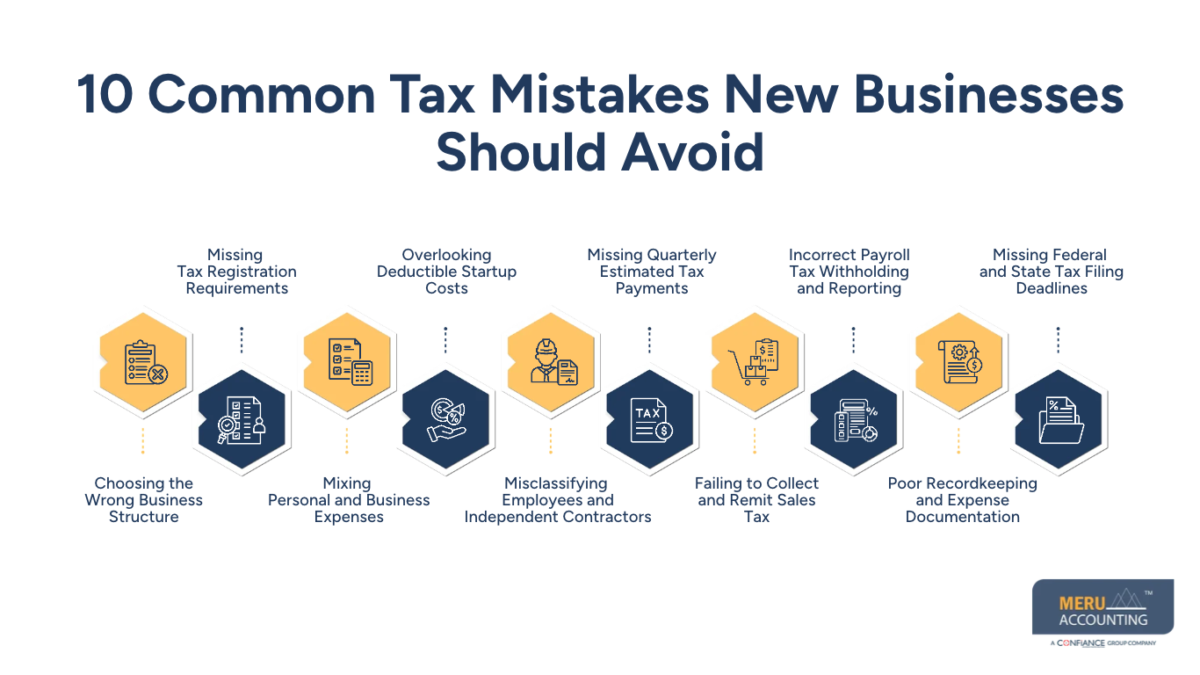
6. Missing Quarterly Estimated Tax Payments
Many new owners do not have tax taken out of their business income. They may need to pay estimated taxes during the year.
If they wait until tax season to pay the full amount, they may face an underpayment penalty. A startup tax accountant can review income and costs to help work out a sound payment plan.
7. Failing to Collect and Remit Sales Tax
Startups that sell goods or some taxable services may need to collect sales tax. The rules vary by state and can also apply when a firm sells to buyers in other states.
A business may have sales tax duties once it meets a state’s economic nexus rules. Failing to register, collect, or file on time can lead to back taxes and fines.
Tax support can help owners track where they have sales tax duties and meet each state’s rules.
8. Incorrect Payroll Tax Withholding and Reporting
When a startup hires staff, it must follow rules for income tax withholding, Social Security, Medicare, and federal unemployment tax.
Errors in payroll tax can lead to unpaid balances and IRS notices. Owners must also file the right forms and pay taxes on time.
A tax pro can help set up payroll tax rules, review reports, and track key dates.
9. Poor Recordkeeping and Expense Documentation
Tax returns rely on clear and correct records. Missing bills, bank records, or receipts can make it hard to prove that a cost was for business use.
Startups should track sales, costs, payroll, loans, and owner funds. A startup tax accountant can help set up a clear process to review and match these records each month.
10. Missing Federal and State Tax Filing Deadlines
Startups may have to file more than one tax return each year. The due dates depend on the type of firm, tax account, and state rules.
Missing a due date can lead to late filing or late payment penalties. A tax pro can set up a tax calendar and help owners file the right forms on time.
How a Startup Tax Accountant Helps Prevent Tax Mistakes
A tax accountant does more than file returns once a year. The right pro can help set up tax systems, review key records, and guide owners through tax choices.
Here are some key ways an accountant can help.
- Business structure guidance: Reviews the firm’s goals and tax needs to help owners choose a suitable setup.
- Tax registration: Helps identify the EIN, state tax accounts, and permits the firm may need.
- Deduction review: Checks startup costs and work expenses to find valid tax claims.
- Quarterly tax planning: Reviews income and costs to help estimate tax payments.
- Payroll tax support: Helps set up payroll tax rules and track filing dates.
- Sales tax support: Helps assess state tax duties and filing needs.
- Tax return review: Checks key figures and forms before returns are filed.
A startup tax accountant can also help owners plan for future tax needs. For example, a firm that plans to hire staff or sell in new states may face new tax duties. Early planning can help the owner prepare before these changes take place.
Tax Services for Startups: What Should Be Included?
The right mix of tax services for startups depends on the firm’s size, type, and stage of growth. Some firms may need help only at tax time, while others need support throughout the year.
Service | What It Covers |
Business tax prep | Prepares and files the right federal and state tax returns. |
Tax planning | Reviews income, costs, and tax duties to help plan ahead. |
Bookkeeping | Tracks sales, bills, costs, and other key records. |
Payroll tax support | Helps with tax withholding, payroll reports, and tax deposits. |
Sales tax support | Helps track sales tax duties, returns, and payment dates. |
Tax notice support | Helps review IRS or state tax notices and plan the next steps. |
A good tax plan should match the firm’s needs. For example, a solo founder may need help with estimated tax payments and business expense records. A startup with staff may also need payroll tax support.
optional anymore
on running the business
Real-World Examples: How Small Tax Errors Can Become Expensive
Small errors can lead to extra tax, fines, and more work. Here are a few examples of how this can happen.
Tax mistake | Possible result | How an accountant helps |
Missed estimated tax payments | Underpayment penalty and added tax costs. | Reviews income and helps plan payments. |
Wrong startup cost claims | Incorrect tax deductions or a return that needs to be fixed. | Checks costs against IRS rules. |
Worker misclassification | Unpaid payroll taxes, interest, and fines. | Reviews worker status and tax duties. |
Missed sales tax duties | Back taxes, interest, and state penalties. | Checks nexus rules and filing needs. |
Example: A startup earns income during the year but does not set aside money for tax. At filing time, the owner finds that the tax bill is much higher than expected. If the owner also missed required estimated payments, an underpayment penalty may apply.
A tax pro can help avoid this issue by reviewing income during the year and helping the owner plan for tax payments.
Tax Services for Startups by Meru Accounting
A missed tax payment or an incorrectly claimed expense can be costly, but fixing poor records months after a tax return is filed can be even more difficult. Meru Accounting helps startups build a more reliable approach to tax management, from the first business tax return to ongoing compliance as the company grows.
Our team provides practical tax services for startups, backed by experience in business tax preparation, bookkeeping, payroll, and financial reporting. We focus on the areas where new businesses often need the most support:
- Business Tax Preparation: Organize financial records, review tax-related entries, and prepare business tax returns based on the company’s tax structure.
- Startup Tax Planning: Review business expenses, potential deductions, estimated tax payments, and tax obligations to help founders plan ahead.
- Bookkeeping and Tax-Ready Records: Track income, expenses, bills, and payments while keeping financial records organized for tax filing.
- Payroll Tax Support: Help manage payroll records, tax withholdings, employer tax obligations, and related filings.
- Sales Tax Support: Assist with sales tax tracking, filing requirements, and payment records.
- Tax Cleanup and Catch-Up: Review past transactions, correct bookkeeping gaps, and organize records that may affect tax preparation.
Our accounting professionals follow a review process to check financial records and identify discrepancies that may need attention. We also work with accounting software suited to each business, making it easier to maintain accurate books and keep tax information up to date.
Whether you need help preparing your first business tax return or want ongoing support with bookkeeping, payroll, and tax planning, Meru Accounting can provide a dedicated accounting team at a fraction of the cost of an in-house setup.
Our Expert Insight
A common blind spot for startup founders is assuming that an early-stage business has no major tax obligations until it becomes profitable. That’s not always true. For example, a startup with no net income may still have payroll tax filings, sales tax returns, or state reporting requirements to meet.
We recommend assessing tax obligations based on the business structure, activities, and location rather than profit alone. This helps founders avoid overlooking filing duties simply because the business is still in its early stages.
Key Takeaways
- Startups face tax risks due to small teams, tight budgets, and new tax duties.
- The right business structure can affect how much tax a firm pays.
- Owners should keep personal and business costs apart.
- Startup costs, payroll, and sales tax need the right tax treatment.
- Missing estimated tax payments or filing dates can lead to added costs.
- A startup tax accountant can help with tax planning, record checks, and filing.
- Regular bookkeeping makes tax prep easier and helps owners track cash flow.
- The right tax services for startups should fit the firm’s size and stage of growth.
FAQs
The cost depends on the startup’s business structure, transaction volume, filing needs, and level of support. Basic tax preparation may cost less than ongoing tax planning, bookkeeping, and payroll support.
Yes, in some cases. A startup may qualify for certain refundable tax credits even if it has no revenue. However, a business loss does not automatically mean a tax refund. Eligibility depends on the type of credit, business structure, and applicable tax rules.
Some qualifying startup costs may be deducted in the first year under IRS Section 195, subject to applicable limits. Costs above the allowed immediate deduction may generally be amortized over 180 months once the business becomes active.
Not necessarily. Money received in exchange for equity is generally treated as a capital contribution rather than taxable business income. However, loans, grants, convertible notes, and other funding arrangements may have different tax treatment.
Yes. Startups can outsource tax preparation, bookkeeping, payroll accounting, and other financial tasks instead of hiring a full in-house team. This can provide access to professional accounting support while keeping staffing costs manageable.
optional anymore
on running the business