Managing rental property involves more than collecting rent and paying bills. Landlords must track income, record expenses, review tax deductions and meet filing deadlines. As property ownership grows, these tasks become harder to manage without proper financial records. This is when accountants for landlords become important.
Rental property owners face tax matters involving mortgage interest, repairs, depreciation, capital gains and property sales. A small reporting error can affect taxable income or lead to questions from tax authorities. Professional advice gives landlords a clear view of their tax duties and financial position.
Working with accountants for landlords is useful when managing several properties or dealing with complex ownership. Landlord accounting services also keep income and expense records organised for tax reviews and financial planning.
What You Will Learn From This Blog
- The role of accountants for landlords in rental property tax reporting.
- When landlords should seek professional accounting advice.
- Tax rules covering rental income, expenses and depreciation.
- How Landlord accounting services manage property finances.
- Common tax mistakes and ways to avoid them.
- Documents to prepare before meeting an accountant.
- How Meru Accounting provides accounting and bookkeeping services.
Understanding the Role of Accountants for Landlords
Accountants for landlords review rental income, property costs, tax records and financial reports. Their work may include preparing tax returns, checking eligible deductions and reviewing the correct treatment of property expenses.
For U.S. landlords, rental income and expenses are generally reported through Schedule E of Form 1040. Professional Landlord accounting services can include:
- Income Reporting: Recording rent, advance payments, and other taxable rental receipts.
- Expense Review: Checking insurance, repairs, utilities and eligible management costs.
- Tax Preparation: Organising rental figures for the required tax schedules.
- Depreciation Records: Tracking property costs and eligible improvements.
- Financial Reports: Preparing income and expense statements for each property.
- Tax Planning: Reviewing the possible tax impact of purchases and sales.
When Should Landlords Hire Professional Accountants?
Landlords may manage one property without regular accounting advice. However, as rental activity grows, accountants for landlords become more useful for reviewing records, tax duties and property costs.
When Managing Multiple Rental Properties
Several rental units can mean different tenants, rent dates, repair bills and insurance costs. Landlord accounting services can separate transactions by property and prepare individual profit reports. This makes it easier to compare rental earnings and identify units with higher running costs.
When Rental Income and Expenses Become Difficult to Track
Rent payments, advance rent, maintenance bills and tenant charges must be recorded correctly. Accountants for landlords can compare bank statements, rent records and invoices to identify missing entries. This also gives owners a clearer record of taxable income.
When Preparing Annual Rental Property Tax Returns
Annual tax filing requires accurate rental income and expense figures. An accountant can review eligible deductions, depreciation and ownership details before preparing the return. In the U.S., residential rental income is generally reported on Schedule E, subject to the applicable rules.
When Buying, Selling, or Transferring Rental Properties
A property purchase or sale can affect its tax basis, depreciation and taxable gain. Accountants for landlords can review purchase costs, improvements, selling expenses and past depreciation. Early advice is useful before ownership or property details change.
When Facing Tax Audits or Compliance Issues
Tax authorities may ask landlords to provide rent records, bank statements, invoices and proof of deductions. Landlord accounting services can organise these documents and identify gaps. A qualified tax professional can also explain the response process and advise when specialist advice is needed.
When Rental Property Ownership Structures Become Complex
Properties may belong to individuals, family members, partnerships or companies. Each structure can have different reporting and tax duties. Accountants for landlords can review ownership shares, financial records and the tax impact of a proposed change.
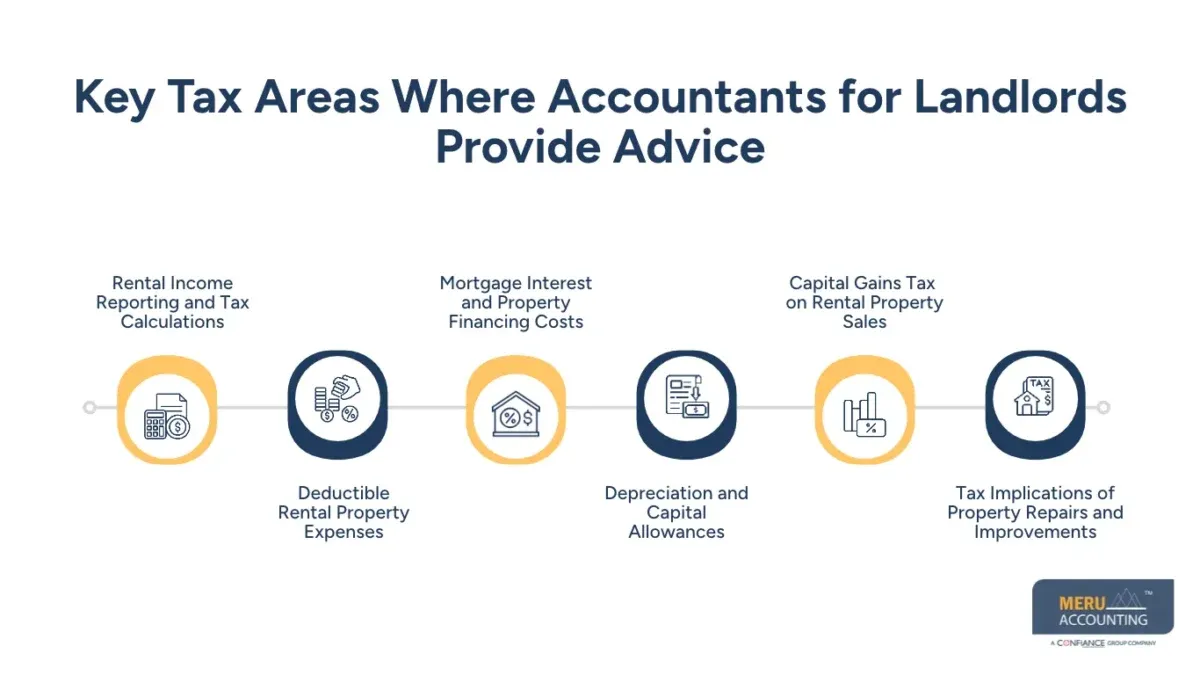
Key Tax Areas Where Accountants for Landlords Provide Advice
Rental property tax rules cover several areas, and each cost may receive different treatment. Accountants for landlords review these matters to keep income, expenses and property records accurate.
Rental Income Reporting and Tax Calculations
Rental income may include monthly rent, advance payments and certain tenant payments made for the owner. Landlords should also review security deposits because refundable deposits are generally treated differently from amounts kept as rent. An accountant can check payment records before tax reporting.
Deductible Rental Property Expenses
Eligible costs may include insurance, advertising, maintenance, utilities and management fees. However, personal costs cannot be claimed as rental expenses. Landlord accounting services can review invoices and separate eligible costs from personal spending.
Mortgage Interest and Property Financing Costs
Mortgage interest on qualifying rental property may be deductible under applicable tax rules. Principal repayments are not treated as regular rental expenses. Accountants for landlords can review loan statements and separate interest, principal and other financing charges.
Depreciation and Capital Allowances
Depreciation allows landlords to recover the cost of certain income-producing assets over time. In the U.S., residential rental buildings generally have a 27.5-year recovery period under standard MACRS rules. Land is not depreciable, so the property cost must be split correctly.
Capital Gains Tax on Rental Property Sales
Selling a rental property may create a taxable gain based on the sale proceeds and adjusted tax basis. Past depreciation can also affect the calculation. Accountants for landlords can review purchase costs, improvements and selling expenses before the sale is reported.
Tax Implications of Property Repairs and Improvements
Routine repairs may qualify as current expenses, while major upgrades may need to be capitalised and depreciated. For example, fixing a tap differs from replacing an entire roof. An accountant can review the work and decide its correct tax treatment.
How Landlord Accounting Services Improve Rental Property Financial Management
Accurate financial records give owners a clear view of rent, costs and property earnings. Landlord accounting services also make tax preparation and regular financial reviews easier.
Rental Income and Expense Tracking
Regular tracking keeps rent receipts and property bills in one organised record. Accountants for landlords can group transactions by property, month and expense type. This makes missing payments and unusual costs easier to identify.
Property-Level Profit and Loss Reporting
Separate profit and loss reports show how much each property earns and costs to maintain. Owners can compare units and review their rental performance. This is useful when deciding whether to change rent or review maintenance spending.
Mortgage, Loan, and Interest Record Management
Loan statements include interest, principal payments and other charges. These amounts should not be recorded as one expense. Landlord accounting services can organise loan records and track interest for each rental property.
Tax Documentation and Financial Recordkeeping
Landlords should retain rent statements, invoices, bank records and property purchase documents. Accountants for landlords can organise these records and maintain details of depreciation and improvements for future tax calculations.
Cash Flow Monitoring and Rental Profit Analysis
Rental profit and cash flow are not the same. Loan principal payments, vacant periods and large repairs can affect available cash. Landlord accounting services can prepare cash flow reports to show when rental income and property payments occur.
Tax Return Preparation and Filing Coordination
Tax returns need accurate income, expense and depreciation figures. Accountants for landlords can review the records, prepare the relevant schedules and coordinate filing within the required deadlines.
optional anymore
on running the business
Common Tax and Accounting Mistakes Landlords Should Avoid
Poor records can lead to incorrect deductions, missing income and tax filing problems. Professional Landlord accounting services can identify these issues before annual returns are prepared.
Mixing Personal and Rental Property Finances
Using one bank account for personal and rental payments makes expense tracking difficult. Landlords should keep separate accounts where practical and retain proof of property-related payments.
Missing Deductible Rental Expenses
Small costs such as cleaning, advertising and minor repairs may be missed during tax preparation. Accountants for landlords can review invoices and payment records to identify eligible expenses.
Misclassifying Repairs and Capital Improvements
Recording a major upgrade as a normal repair may lead to an incorrect deduction. Landlords should retain invoices and details of the work so the accountant can determine the correct treatment.
Maintaining Incomplete Rental Income Records
Missing rent payments, advance rent or tenant-paid expenses can affect reported income. Owners should compare rent records with bank statements at regular intervals.
Overlooking Tax Filing Deadlines
Late returns or unpaid tax may lead to penalties and interest. Landlord accounting services can help owners organise tax records and track filing dates based on their tax obligations.
Incorrectly Reporting Rental Property Sales
Ignoring selling costs, improvements or past depreciation can lead to an incorrect gain calculation. Accountants for landlords can review the full property history before the sale is reported.
What Documents Should Landlords Prepare Before Meeting an Accountant?
Complete records allow an accountant to review rental activity with greater accuracy. Landlord accounting services are easier to arrange when owners prepare the following documents:
Rental Income Statements and Lease Agreements
Provide monthly rent statements, tenant payment records, lease agreements and details of advance rent or security deposits.
Mortgage Interest and Loan Statements
Share annual mortgage statements, loan agreements and details of interest paid during the tax year.
Property Maintenance and Repair Invoices
Collect bills for plumbing, electrical work, cleaning, painting and major property upgrades.
Insurance, Utility, and Property Tax Records
Provide insurance statements, utility bills, property tax notices and proof of payment for each rental unit.
Previous Tax Returns and Financial Statements
Previous returns show earlier income, depreciation claims and tax details. Include past profit and loss reports where available.
Property Purchase and Sale Documents
Share purchase agreements, closing statements, title records and sale documents to establish property costs and calculate taxable gains.
Why Choose Meru Accounting for Rental Property Accounting?
Rental property owners need clear financial records to review income, track costs and prepare for tax filing. Meru Accounting provides accounting and bookkeeping services for businesses and property-related financial operations.
Our accounting services include:
- Transaction Recording: Recording rent receipts and property expenses.
- Expense Classification: Grouping maintenance, insurance and utility costs.
- Financial Reporting: Preparing income and expense reports.
- Account Reconciliation: Comparing bank entries with recorded transactions.
- Record Organisation: Maintaining financial data for year-end reviews.
Meru Accounting also works with QuickBooks and Xero accounting platforms. Property owners can consider our accounting and bookkeeping services for organised financial records. Specialist tax filing and tax advice should be confirmed according to the property location and agreed service scope.
Our Expert Perspective
One common issue in rental property accounting is that owners focus on rent received but give less attention to expense records. This can create problems during tax filing or property sales.
Accountants for landlords can review rental transactions throughout the year instead of waiting until tax season. Our view is that regular checks of rent, repairs, loan interest and property costs give owners a more accurate financial record.
Key Takeaways
- Accountants for landlords review rental income, expenses, depreciation and tax reporting.
- Multiple properties may require separate income and expense reports.
- Mortgage interest and principal payments must be recorded separately.
- Repairs and capital improvements can receive different tax treatment.
- Property sales require a review of the adjusted tax basis and depreciation.
- Landlord accounting services keep financial records organised.
- Landlords should prepare invoices, rent statements and loan records before meeting an accountant.
- Regular reviews can reduce errors in rental property tax reporting.
FAQs
A landlord should hire an accountant when managing several properties, preparing tax returns, claiming depreciation, or dealing with complex rental income and expenses.
Accountants for landlords record rental income, review property expenses, calculate depreciation and prepare financial reports for tax filing.
Yes, eligible repairs and maintenance costs may be deductible, while major improvements generally need to be capitalised and depreciated under U.S. tax rules.
Landlords should keep rent statements, lease agreements, bank records, mortgage statements, repair invoices, insurance bills and property purchase documents.
Landlord accounting services organise rental income, expenses and depreciation records needed to prepare accurate tax returns.
optional anymore
on running the business