Getting an LLC off the ground is one thing. Figuring out how much of its profit you’ll actually get to keep is another. Your LLC tax rate can make a big difference to your bottom line, and the tax bill may not look the same for two businesses earning the same amount.
That’s because the IRS treats LLCs differently based on their tax setup. Some owners report business income on their personal returns, while others deal with corporate tax rules and payroll. A choice that works well for one business may cost another more in taxes. Before you file, it’s worth knowing how each setup works and what it means for your profits.
What You Will Learn From This Blog
- How the LLC tax rate works under federal tax law.
- How much tax does an LLC pay based on its tax setup and net profit?
- How single-member and multi-member LLCs are taxed.
- How S corporation and C corporation tax status changes tax rules.
- Which federal, state, and local taxes may apply to an LLC.
- How to lower taxable income through valid business costs and tax breaks.
- When an LLC may benefit from expert tax help.
What Is the LLC Tax Rate in the United States?
There is no set federal LLC tax rate in the United States. An LLC is a legal business type, but the IRS does not tax every LLC in the same way. It uses the LLC’s owner count and tax election to decide how its income is taxed.
By default:
- A single-member LLC is treated as a disregarded entity for federal income tax. Its income and costs are often reported on the owner’s tax return.
- A multi-member LLC is usually treated as a partnership. It files an info return and passes its income or loss to its owners.
- An LLC can elect to be taxed as a C corporation or, if it meets the rules, an S corporation.
This means the LLC tax rate may match the owner’s personal tax rate, the rules for self-employment tax, or the corporate tax rate. The right answer depends on the tax status of the business.
For example, an LLC taxed as a sole proprietorship does not pay federal income tax as a separate entity. The owner reports the business profit on a personal return. A C corporation, on the other hand, pays federal corporate income tax on its taxable profit.
optional anymore
on running the business
How Much Tax Does an LLC Pay on Business Profits?
To work out how much tax an LLC pays, start with its net profit, not its total sales. Net profit is what remains after valid business costs are taken out of business income.
For example, if an LLC earns $150,000 in sales and has $50,000 in valid business costs, its net profit is $100,000. The tax rules for that $100,000 depend on how the LLC is taxed.
For a pass-through LLC, the profit may flow to the owners and be taxed on their personal returns. The owners may owe federal income tax and, in many cases, self-employment tax. Their total tax bill also depends on other income, filing status, deductions, and credits.
For an LLC taxed as a C corporation, the business pays federal corporate income tax on its taxable profit. If it later pays dividends to owners, those owners may owe tax on the dividend income too.
So, when asking how much tax an LLC pays, keep in mind that the tax bill is not based on business sales alone. Net profit, tax status, and the owner’s full tax picture all matter.
How Is an LLC Taxed Based on Its Business Structure?
The LLC tax rate can change based on the tax status the business uses. Here are the main types.
1. Single-Member LLC Tax Rate
A single-member LLC has one owner. By default, the IRS treats it as a disregarded entity for federal income tax. This means the LLC’s business income and costs are often reported on the owner’s Form 1040, usually with Schedule C.
The owner pays tax on the net business profit at their own federal income tax rate. They may also owe self-employment tax on income from the business.
The LLC itself does not pay a separate federal income tax under this default setup. Still, it may have payroll, excise, state, or other tax duties based on its work and location.
2. Multi-Member LLC Tax Rate
A multi-member LLC is usually taxed as a partnership by default. It files Form 1065 to report its income, costs, and other tax details. Each owner gets a Schedule K-1 that shows their share of the LLC’s income, loss, and other tax items.
The owners then report these amounts on their own tax returns. They may owe tax even if the LLC keeps some of its cash in the business rather than paying it out.
The tax each owner pays depends on their share of the profit, their tax bracket, and the tax rules that apply to their income.
3. LLC Taxed as an S Corporation
An LLC that meets IRS rules can elect S corporation tax status by filing Form 2553. This can change how the owner takes pay and how some business income is taxed.
An owner who works in the business must get reasonable pay for their work. That pay is subject to payroll taxes. The remaining profit may pass through to the owner and may not be subject to self-employment tax.
Still, an S corporation is not a sure way to cut taxes. The cost of payroll, tax returns, state fees, and other admin work can reduce any savings. The owner should compare the full cost with the likely tax benefit before making the switch.
4. LLC Taxed as a C Corporation
An LLC can elect C corporation tax status by filing Form 8832, if it meets the rules. Under this setup, the business files Form 1120 and pays federal corporate income tax.
The federal corporate tax rate is 21% of taxable income. If the company pays dividends to its owners, those owners may also owe personal tax on that income. This is often called double taxation.
A C corporation setup may suit some firms that plan to keep profits in the business or seek certain tax and growth options. But it is not the best choice for every LLC.
What Types of Taxes Does an LLC Have to Pay?
The LLC tax rate is only one part of the total tax bill. Depending on its work, tax status, and location, an LLC may have to pay several types of taxes.
1. Federal Income Tax
Federal income tax applies to business profit based on the LLC’s tax status. For a pass-through LLC, owners report their share of business income on their personal returns. Their tax rate depends on their taxable income and filing status.
A C corporation pays federal income tax as a separate business. Its owners may also pay tax on dividends they receive.
2. Self-Employment Tax
Owners of a sole proprietorship or partnership-taxed LLC may owe self-employment tax on their business earnings. The rate is 15.3%, made up of 12.4% for Social Security and 2.9% for Medicare.
For 2026, the Social Security part applies to the first $184,500 of combined wages and net self-employment earnings. The Medicare part has no such wage cap. Some high-income earners may also owe an extra 0.9% Medicare tax.
3. State Income Tax
Some states tax LLC income through the owner’s personal return. Others may charge a separate business tax, franchise tax, or annual fee. The amount depends on where the LLC is formed, where it does business, and how the state treats its income.
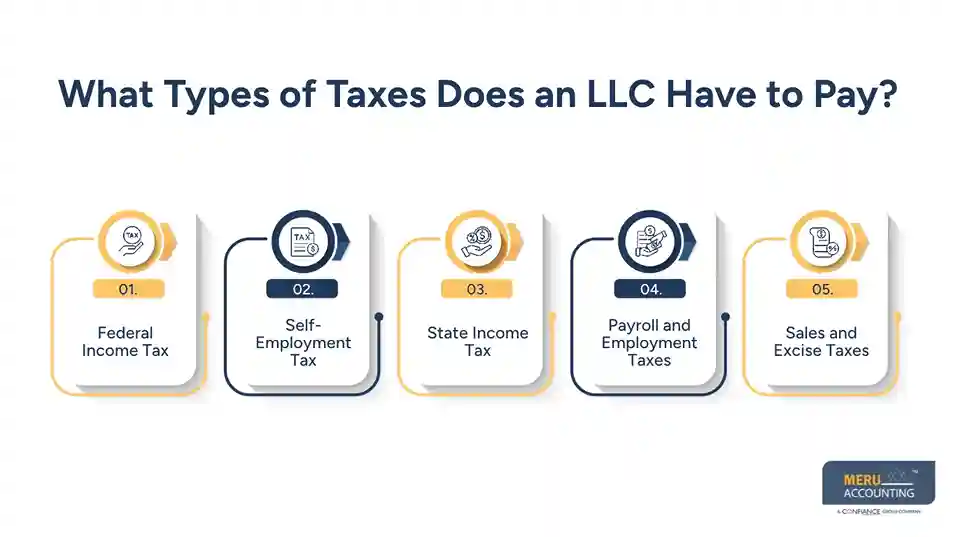
4. Payroll and Employment Taxes
An LLC with staff must follow federal and state payroll tax rules. These may include Social Security, Medicare, federal unemployment tax, and income tax withholding.
An LLC taxed as an S corporation must also run payroll for owners who work in the business and pay them reasonable wages.
5. Sales and Excise Taxes
An LLC that sells taxable goods or services may need to collect and pay sales tax. The rules vary by state and local area.
Some businesses may also owe excise taxes on certain goods, services, or business activities. These taxes depend on what the company sells or does.
How Much Does an LLC Pay in Taxes on Different Profit Levels?
The amount an LLC pays in tax depends on its tax setup and the owner’s full tax details. The table below shows why profit alone cannot give an exact tax bill.
Annual LLC net profit | What affects the tax bill? |
$50,000 | Owner’s tax bracket, self-employment tax, and state tax |
$100,000 | Filing status, other income, tax breaks, and business tax setup |
$200,000 | Tax bracket, Social Security wage limit, Medicare tax, and tax election |
For example, a single-member LLC with $50,000 in net profit may owe federal income tax and self-employment tax. A multi-member LLC with the same profit may pass each owner’s share through to their personal tax return.
An S corporation may split owner pay between wages and business profit, while a C corporation pays tax at the business level. These setups can lead to very different tax bills.
When estimating how much tax an LLC pays, use the right tax year, net profit, owner details, and state rules. Do not apply one flat rate to every LLC.
How Do LLC Tax Rates Differ by State?
State tax rules can change the total cost of running an LLC. Some states tax business income through the owner’s personal return. Others charge a yearly LLC fee, franchise tax, or gross receipts tax.
For example:
- California: LLCs may owe an annual $800 tax. Some LLCs must also pay an extra fee based on total income earned in California.
- Texas: The state has no personal income tax, but some LLCs may need to file a franchise tax report.
- Florida: The state has no personal income tax, but an LLC taxed as a corporation may owe state corporate income tax.
- New York: LLCs may have to meet state filing and publication rules. Some also face fees based on their income and tax status.
These rules can change, so check the state tax agency before you file. Also, forming an LLC in one state does not mean you can ignore tax rules in another state where you do business.
What Factors Affect Your LLC Tax Rate?
Several factors can change how much tax an LLC and its owners owe.
- Business structure: A single-member LLC, partnership, S corporation, and C corporation follow different tax rules.
- Net profit: Tax is often based on net income after valid business costs, not total sales.
- Owner’s tax bracket: Pass-through income may add to the owner’s other taxable income.
- Business deductions: Valid costs can lower taxable income and reduce the tax bill.
- State and local rules: The LLC may owe income tax, franchise tax, annual fees, or local business taxes.
- Owner pay: Salary, draws, and distributions may have different tax effects based on the LLC’s tax status.
These factors should be reviewed together before choosing a tax setup. A lower business tax rate does not always mean a lower total tax bill for the owner.
How Can an LLC Reduce Its Taxable Income Legally?
An LLC can lower its tax bill by using valid tax deductions and planning ahead. The goal is to report all eligible costs and follow IRS rules.
Here are some ways to do this:
- Track business costs: Keep records of rent, supplies, software, travel, and other valid business costs.
- Claim eligible deductions: Deduct ordinary and necessary costs that qualify under IRS rules.
- Review asset write-offs: Check if the business can claim depreciation or other allowed write-offs for tools, machines, and office assets.
- Use the right tax setup: Compare the tax cost of a default LLC setup with an S corporation or C corporation election.
- Make estimated tax payments: Owners who expect to owe tax may need to pay during the year to avoid a penalty.
- Keep clean records: Save bills, bank records, payroll data, and tax forms to support each claim.
A tax pro can review these options and help the owner avoid claims that do not meet IRS rules.
Tax Services for LLCs by Meru Accounting
Choosing how your LLC is taxed is only part of the job. You also need accurate books, the right tax forms, proper owner compensation records, and a clear view of your taxable profit. For example, an LLC considering S corporation status needs more than a tax return. It needs proper payroll records, reasonable salary calculations, and a review of whether the election makes financial sense.
Meru Accounting helps LLC owners manage these tax and accounting needs through services such as:
- LLC Tax Preparation: Preparation of business and owner tax returns based on the LLC’s tax classification.
- Federal and State Tax Filing: Support with required tax returns, forms, and filing deadlines.
- LLC Tax Planning: Review of business profits, deductions, and tax elections to help manage tax costs.
- S Corporation Tax Support: Assistance with tax filings, owner compensation records, and payroll tax requirements.
- Partnership Tax Preparation: Support with Form 1065, Schedule K-1, and partner income reporting.
- Bookkeeping and Tax Record Cleanup: Review of income, expenses, and account records before tax filing.
- Payroll Tax Services: Payroll processing, tax calculations, and related filing support.
Our accounting team looks beyond the numbers on a tax return. We review how business income is recorded, whether expenses are properly classified, and whether the financial records support the tax filing. This helps LLC owners make better tax decisions and keep their business records ready for each filing season.
Our Expert Insight
A tax issue we often see with LLCs is the incorrect treatment of owner payments. Many owners assume that every payment they take from the business is a deductible expense. That’s not how it works. For example, an owner’s draw from a single-member LLC is generally not a business expense and does not reduce taxable profit. The same rule does not apply in the same way to wages paid by an LLC taxed as an S corporation.
This distinction matters when reviewing the books and preparing tax returns. Owner draws, distributions, wages, and guaranteed payments must be recorded under the correct categories. Mixing them up can lead to incorrect expense claims, payroll errors, and inaccurate tax filings. Proper classification throughout the year makes a real difference when tax time comes.
Key Takeaways
- There is no single federal LLC tax rate. It depends on the business’s tax status.
- A single-member LLC is usually taxed through its owner’s personal return.
- A multi-member LLC is usually taxed as a partnership.
- An LLC may elect S corporation or C corporation tax status if it meets the rules.
- LLC owners may owe federal income tax, self-employment tax, payroll tax, and state or local taxes.
- Valid business deductions can lower taxable income.
- A tax pro can help compare tax options and plan for the year.
FAQs
A single-member LLC is usually taxed as a disregarded entity, while a multi-member LLC is generally taxed as a partnership. Both can elect corporate tax treatment if eligible.
There is no fixed amount. The tax bill depends on the LLC’s tax status, the owner’s income, deductions, and state tax rules.
Not always. A default LLC passes profits to its owners, while a C corporation pays a 21% federal corporate tax. The total tax cost depends on how profits are distributed and taxed.
Yes. Owners of pass-through LLCs may owe tax on their share of profits even if the business keeps the money in its bank account.
It may reduce certain employment taxes for eligible businesses. However, payroll costs, reasonable salary rules, and filing fees should be considered before making the election.
optional anymore
on running the business