A strong real estate deal can still turn into a reporting headache when investor funds, property income, expenses, and profit shares don’t line up. Fund managers need to know where the money went, what each property earned, and how much each investor is entitled to receive. That’s why choosing the right real estate fund accounting software matters as much as tracking the performance of the assets themselves.
The right system can make it easier to track investor capital, record fund activity, calculate distributions, and prepare financial reports. It also gives fund managers a clearer view of how each investment contributes to the fund’s overall performance. With accurate records and the right accounting support, firms can spend less time fixing reports and more time making sound investment decisions.
What You Will Learn From This Blog
- What real estate fund accounting software does and how it differs from property accounting.
- Why clear and timely investor reports matter to fund managers.
- How software helps track investor capital, fund returns, and cash flow.
- Which key features to look for when choosing a fund accounting system.
- How outsourced real estate fund accounting can support daily fund tasks.
What Is Real Estate Fund Accounting Software?
Real estate fund accounting software is a tool built to track the money and records of real estate investment funds. It helps firms record income, costs, investor capital, fund assets, and returns. It can also link fund-level data with records for each property or legal entity.
Property accounting and fund accounting serve different needs. Property accounting tracks the income and costs of a single asset or site. Fund accounting looks at the full pool of money raised from investors and used across one or more assets.
For example, a fund may own five rental sites through separate legal entities. Each site has its own rent, repairs, taxes, and debt costs. The fund also has investor capital, fees, cash reserves, and profit splits to track. A fund accounting system helps bring these records into one view while keeping each entity’s books clear.
This setup helps fund managers see how each asset adds to the fund’s total results. It also helps them prepare reports that show both fund-level and investor-level data.
Why Accurate Investor Reporting Matters in Real Estate Fund Management
Investors need clear reports to see how their money is used and how a fund is doing. These reports help them review income, costs, asset value, cash flow, and returns. They also help fund managers answer investor questions with facts.
Good reporting can help firms:
- Build investor trust: Clear reports show how funds are used and how results change over time.
- Track capital: Records show how much each investor has paid in and how much has been paid back.
- Review fund results: Reports help compare income, costs, and returns against the fund plan.
- Meet reporting duties: Fund managers can keep records that support agreed report dates and other duties.
- Spot issues early: Timely data can flag cash gaps, cost rises, or weak asset results.
A report should not only show a final return figure. It should also explain the data behind that figure. For example, if a fund’s cash flow falls, the report should help show whether rent fell, costs rose, or debt payments changed.
optional anymore
on running the business
How Real Estate Fund Accounting Software Simplifies Investor Reporting
A well-set-up system can cut the time spent on reports and make the data easier to review. Here are some key ways it helps.
1. Automates Investor Statements
Fund managers often need to prepare reports for many investors. Each investor may have a different share of the fund and a unique capital balance.
Software can pull data from investor accounts and use set rules to build statements. Teams can then review the data before they send the reports. This cuts the need to build each statement from scratch.
2. Tracks Capital Calls and Contributions
A capital call asks investors to pay part of the money they agreed to invest. Fund managers need to track the amount due, the date due, and the amount paid by each investor.
The right system can record calls, track payments, and show unpaid balances. It can also help match cash received with the right investor account. This makes it easier to spot late or missing payments.
3. Records Distributions and Investor Allocations
When a fund pays out cash, each investor’s share must be worked out based on the fund terms. These terms may include return hurdles, fees, and profit splits.
Some systems can support waterfall calculations and track how cash is split. Teams must still check that the rules match the fund’s legal terms. A wrong setup can lead to wrong investor payouts.
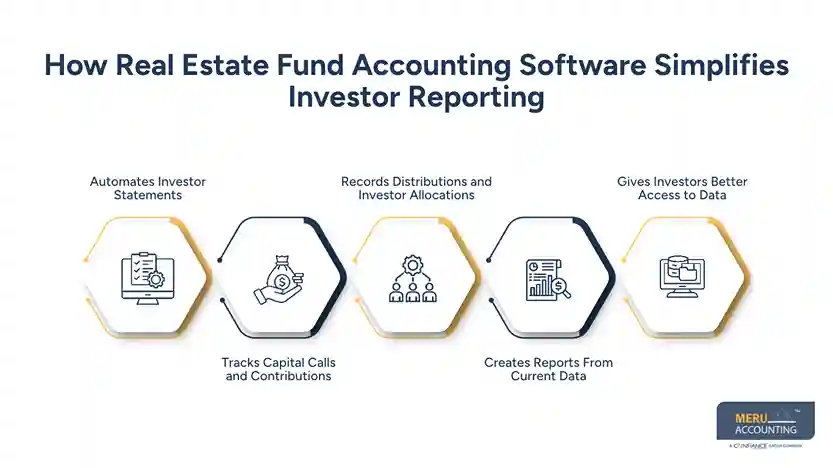
4. Creates Reports From Current Data
Manual reports may rely on data from many files and systems. This can lead to old figures or missed entries.
Fund accounting tools can pull data from the general ledger, bank records, and investor accounts. This helps teams build reports from a shared set of records. Reports may include income, costs, cash flow, capital balances, and fund results.
5. Gives Investors Better Access to Data
Some systems offer investor portals where users can view statements, notices, and fund updates. This can cut the need for teams to send files one by one.
Access rules matter. Each investor should only see the data they are allowed to view. Fund managers should also review portal data and security settings on a regular basis.
Key Features to Look for in Real Estate Fund Accounting Software
Not all tools offer the same set of features. Fund managers should choose a system based on their fund size, legal setup, and report needs.
- Fund and property-level tracking: The system should track each asset and the full fund in a clear way.
- Investor account records: It should track each investor’s capital, payments, and share of fund results.
- Capital call and payout tracking: Teams should be able to record calls, due dates, cash received, and payouts.
- Waterfall support: The tool should help work out cash splits based on fund terms.
- General ledger: It should keep a clear record of income, costs, assets, and debt.
- Multi-entity support: Firms with many funds or legal entities need clear books for each one.
- Bank and system links: Links to banks and other tools can cut manual data entry.
- Report tools: Look for reports that can be set up to meet the needs of investors and fund teams.
- User access and audit trails: The system should track who can view or change data and keep a record of key actions.
Before you choose a tool, test it with real fund data. Check how it handles investor splits, fund fees, bank links, and month-end reports. A demo based on your own workflow can show gaps that a sales demo may not reveal.
How Real Estate Fund Accounting Software Improves Fund Management
Investor reports are only one part of fund work. Fund managers also need to track cash, review costs, and make sound choices about each asset.
Centralizes Financial Data
A fund may hold many assets through separate legal entities. If each entity uses a different file or system, it can be hard to get a full view of the fund.
A shared system can bring these records into one place. Teams can still keep each entity’s books apart while viewing the fund as a whole.
Improves Cash Flow Tracking
Cash flow helps fund managers plan for debt payments, repairs, fees, and new deals. Software can help track cash in and out across each asset and the full fund.
This can help teams spot a cash gap before it becomes a bigger issue. It can also help them plan when to call capital or hold cash in reserve.
Supports Better Budget Reviews
Fund managers can compare actual income and costs with the budget. For example, if repair costs at one site rise above plan, the team can review the cause and assess its effect on fund returns.
Makes Reconciliation Easier
Bank and ledger records must match. Investor accounts and fund records must also agree. Software can help flag items that do not match, so teams can review them before closing the books.
Helps Teams Make Better Decisions
Current and clear data can help fund managers compare asset results, review costs, and plan new deals. It does not make the choice for them, but it gives them a sound base for that choice.
Common Investor Reporting and Fund Accounting Challenges
Even with good tools, fund teams may face issues that affect the quality of their records.
Complex fund setups: A fund may own assets through many legal entities. Teams must track each entity and report the full fund without mixing the records.
Different investor terms: Investors may have different capital shares, fee terms, or payout rights. Teams need to apply the right rules to each account.
Data from many sources: Rent, bank, debt, and property data may sit in separate systems. Missing or late data can delay reports.
Manual errors: Copying data between files can lead to wrong figures, missed entries, or duplicate records.
Late reports: If teams wait until the end of the month or quarter to find errors, reports may take longer to finish.
A good system can reduce these risks, but it still needs clean data, sound rules, and regular review. Fund managers should set clear steps for data entry, account checks, report review, and approval.
Outsourced Real Estate Fund Accounting Services by Meru Accounting
Investor reporting is only as reliable as the financial records behind it. A mismatch between property-level income, fund expenses, investor capital accounts, or distribution records can affect the figures shared with investors. Meru Accounting helps real estate investment firms maintain these records and keep their fund accounting processes on track.
Our outsourced real estate fund accounting services cover key accounting tasks that support accurate fund reporting and day-to-day financial management:
- Fund Bookkeeping and General Ledger Management: Recording fund income, expenses, assets, liabilities, and transactions across multiple entities.
- Investor Capital Account Reconciliation: Tracking investor contributions, withdrawals, allocations, and account balances.
- Capital Call and Distribution Accounting: Recording capital calls, monitoring payments, and maintaining accurate distribution records.
- Fund and Property-Level Reconciliations: Matching bank, ledger, and property records to identify gaps and resolve discrepancies.
- Financial Statement Preparation: Preparing fund-level financial statements and reports that help managers review financial performance.
- Month-End and Year-End Closing: Reviewing account balances, posting adjustments, and keeping financial records ready for reporting.
- Investor Reporting Support: Organizing financial data and preparing reports that give investors a clear view of fund activity.
We understand that fund-level reporting must connect with the activity of each underlying property and investment entity. Our accounting team works with these records to help maintain consistent financial data, support accurate investor reporting, and give fund managers a clearer picture of fund performance.
Our Expert Insight
One area fund managers should pay close attention to is how shared costs are assigned across funds and properties. For example, legal fees, asset management fees, insurance, and fund administration costs may cover more than one investment. Using a simple equal split can distort the true cost and return of each property, especially when assets differ in size, ownership share, or use of services.
We recommend setting clear cost allocation rules based on the fund’s governing documents and the nature of each expense. These rules should be applied consistently and reviewed when the fund adds new properties or changes its ownership structure. This helps fund managers get a more accurate view of each investment’s performance and avoid misleading comparisons when reviewing fund results.
Key Takeaways
- Real estate fund accounting software helps track fund data, investor capital, and asset results.
- Clear investor reports help build trust and show how funds are doing.
- Software can cut manual work in capital calls, payouts, and report prep.
- Fund managers should check that tools support their legal setup and investor terms.
- Regular bank, ledger, and investor account checks help keep records right.
- Outsourced real estate fund accounting can add skilled support as a firm grows.
FAQs
The best software depends on fund size, structure, and reporting needs. Look for investor tracking, multi-entity accounting, capital calls, and waterfall calculations.
It brings financial and investor data together, making it easier to prepare statements, track returns, and report fund performance.
Common reports include investor capital statements, balance sheets, income statements, cash flow reports, and fund performance updates.
Yes. Many systems track investor contributions, payment status, distribution amounts, and profit allocations based on fund terms.
When fund activity grows, reporting becomes time-consuming, or the in-house team needs added accounting expertise, outsourcing can help.
optional anymore
on running the business