
Cash is the lifeblood of any business, regardless of its type. A firm may have good sales, local buyers, and a strong product, but it can still face issues if cash does not flow properly through the firm. Such a flow of money is known as the cash flow cycle.
The cash flow cycle shows how long it takes for a firm to spend money on goods, services, or daily work and then get cash back from buyers. A short cycle often means a stronger cash position, while a long cycle can lead to cash gaps and slow growth.
When owners understand this cycle, they can make better choices, keep cash on hand, and support smooth day-to-day work. It also helps them spot areas where cash stays tied up for too long.
In this blog, we will look at how the cash flow cycle works, why it is important, and how firms can improve it to help drive better business results.
What You Will Learn From This Blog
In this blog, you will learn:
- What a cash flow cycle is and why it matters
- How the cash flow cycle works in daily business tasks
- The main parts of a strong cash flow process
- The role of debtor payment in cash flow control
- Common issues that affect cash movement
- Signs that point to cash flow trouble
- Ways to improve cash flow results
What is a Cash Flow Cycle?
A cash flow cycle is the path through which cash moves in and out of a firm. It starts when a firm spends money on stock, raw goods, labor, or other costs and ends when it gets paid by buyers.
The goal of maintaining the cycle is to turn money spent into cash received as fast as it can. The faster a firm gets its cash back, the more funds it has for growth, daily costs, and future plans.
Each firm has its own cash flow cycle. A shop may finish its cycle in a few days, while a manufacturer of goods may need many weeks or even months before it gets paid.
The length of the cycle often depends on stock levels, the billing process, and how fast buyers pay.
How Does the Cash Flow Cycle Work?
The cash flow cycle follows a simple process, which looks like the following:
Buying Goods and Services
The cycle starts when a firm spends money on stock, raw goods, tools, labor, or other items it needs to run.
Making or Providing Products and Services
Once the required goods and tools are in place, the firm makes products or provides services for buyers.
Sending Bills
After the goods are sent or the work is done, bills are sent to buyers asking for payment.
Waiting for Buyer Payments
Many firms give payment terms such as 30, 45, or 60 days. During this time, the firm waits for cash to come in.
Getting Cash
The cycle ends when buyers pay their bills, and cash goes into the firm’s bank account.
The less time this takes, the better the cash position tends to be. Firms that manage the cash flow cycle well often have more room to grow and handle costs.
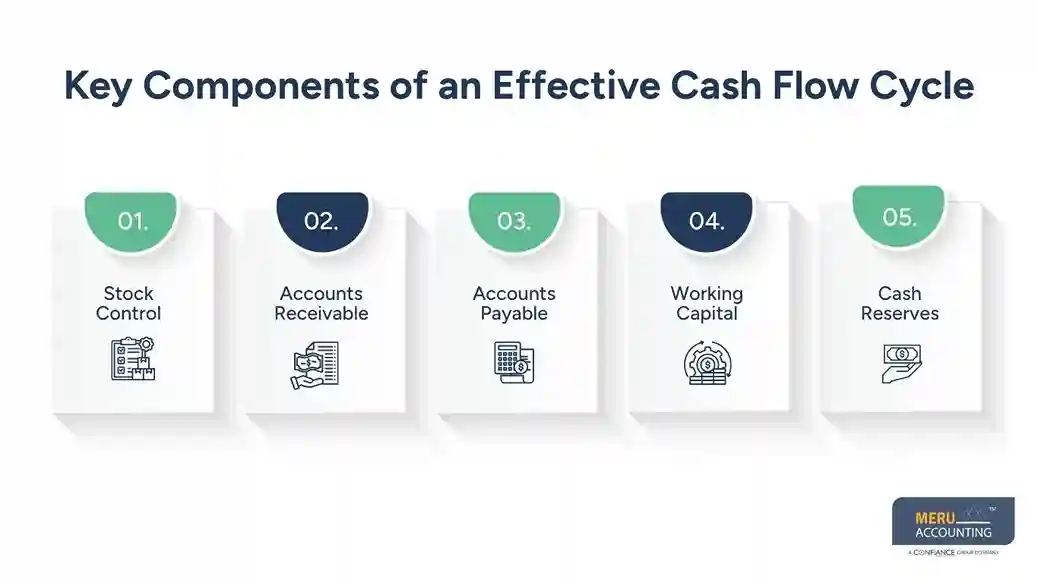
Key Components of an Effective Cash Flow Cycle
Many parts affect how well cash moves through a firm.
Stock Control
Too much stock can lock up cash for long periods. Good stock control helps firms keep the right amount of goods while cutting waste and extra cost.
Accounts Receivable
Accounts receivable are funds that buyers owe to a firm. Strong follow-up and bill tracking help firms get paid faster and keep cash moving.
Accounts Payable
Accounts payable are bills a firm owes to vendors and suppliers. Good payment planning helps save cash while keeping strong ties with vendors.
Working Capital
Working capital is the gap between current assets and current debts. Healthy working capital helps firms pay short-term costs and keep work moving.
Cash Reserves
Cash reserves are funds set aside for hard times or surprise costs. These funds help firms stay strong when sales slow down or costs rise.
When these parts work well together, they help create a stronger cash flow cycle and support long-term growth.
The Role of Debtor Payment in Cash Flow Management
One key part of cash flow control is debtor payment. Debtors are buyers who owe money after they get goods or services on credit. When debtor payment comes in on time, firms can pay staff, vendors, rent, and other costs with less stress.
Late debtor payment can cause major cash flow issues. Even firms that earn good profits can run into trouble if buyer payments come in late.
There are many reasons why debtor payment may be delayed:
- Bills may have wrong details
- Payment terms may not be clear
- Buyer approval steps may take too long
- Buyers may face cash issues
- Follow-up may not happen on time
Firms can improve debtor payment results by:
- Sending bills right away
- Offering more than one way to pay
- Making payment terms clear
- Using payment alerts and reminders
- Following up on past-due bills fast
A strong debtor payment process helps shorten the cash flow cycle and keeps cash moving through the firm.
Common Cash Flow Cycle Challenges Businesses Face
Many firms face issues that slow down the flow of cash and put stress on daily work.
Slow Buyer Payments
Late buyer payments are one of the most common cash flow issues. When buyers take too long to pay, firms may find it hard to cover costs.
Too Much Stock
Holding too much stock can tie up cash that could be used in other parts of the firm.
Seasonal Sales Changes
Some firms see busy and slow times during the year. This can make cash flow harder to manage.
Weak Cash Planning
Without good cash planning, firms may not see cash gaps coming until they become a problem.
Fast Growth
Growth is good, but it can also create a need for more cash. More staff, more stock, and more work often mean higher costs.
High Day-to-Day Costs
When costs rise, cash can leave the firm faster than it comes in, which puts stress on the cash flow cycle.
Finding these issues early gives owners a chance to fix them before they grow.
Warning Signs of Cash Flow Cycle Problems
Firms should watch for signs that may point to cash flow trouble.
- Frequent Cash Gaps: If a firm often runs short of cash, there may be a problem in the cash flow cycle.
- Rising Accounts Receivable: When unpaid buyer bills keep growing, it may mean cash is not coming in fast enough.
- Late Vendor Payments: If a firm often pays vendors late, it may be having cash flow issues.
- Heavy Use of Credit: Using loans or credit lines to cover routine costs may show weak cash flow control.
- Missed Growth Chances: Firms with poor cash flow may not have the funds they need to add staff, buy tools, or expand.
- Low Cash Reserves: A lack of backup cash can make it hard to deal with slow sales or surprise costs.
Tracking these signs can help firms act before cash flow problems become severe.
Fix Your Cash Flow Cycle with Meru Accounting
Keeping track of cash flow takes time, skill, and accurate records. Many owners find it hard to watch cash flow while also running the firm.
Meru Accounting helps firms gain better control of their books and cash flow.
Our team can help by:
- Tracking cash coming in and going out
- Managing accounts receivable and accounts payable
- Watching debtor payment trends
- Preparing clear cash flow reports
- Giving a better view of cash movement
- Helping with cash flow planning
- Finding areas where cash may be tied up
With help from Meru Accounting, firms can improve their cash flow cycle, strengthen cash control, and make better business choices.
Our Expert Perspective
A healthy cash flow cycle is about more than just sales. It is about making sure that cash goes through each part of the business smoothly. Many firms want to grow their sales but never pay attention to their bill collection, stock control, and costs. As a result, they may have more sales but still face shortages in cash.
The firms that do best tend to review cash flow reports often, track buyer payment habits, and keep strong financial controls in place. They know that cash flow control is not a one-time task. It is an ongoing part of running a strong firm.
Key Takeaways
- The cash flow cycle tracks how cash moves into and out of a firm.
- A shorter cycle often leads to a stronger cash position.
- Stock, accounts receivable, accounts payable, and working capital all affect cash flow.
- Debtor payment plays a key role in keeping cash flow healthy.
- Late payments can create cash flow stress.
- Regular reviews help spot cash flow issues early.
- Good cash planning supports long-term growth.
FAQs
A cash flow cycle is the path cash takes from the time a firm spends money on goods, services, or daily work until it gets paid by buyers.
It helps show how well a firm can pay bills, cover costs, support growth, and keep cash on hand.
Timely debtor payment helps cash come into the firm faster. Late payments can slow cash flow and create cash gaps.
Common causes include late buyer payments, too much stock, weak cash planning, rising costs, and poor follow-up on unpaid bills.
Firms can improve their cycle by speeding up collections, improving debtor payment follow-up, managing stock well, reviewing cash reports often, and planning.
optional anymore
on running the business