A trucking business can have plenty of loads on the books and still struggle to turn a profit. A missed fuel receipt, an unpaid freight invoice, or a repair bill posted to the wrong truck can throw off the numbers. That’s why QuickBooks for trucking needs to be set up around the way a trucking company actually runs, not just used to record money coming in and going out.
From a single-truck owner-operator to a growing fleet, the right setup can make it easier to manage freight income, track operating costs, reconcile accounts, and spot problems before they affect cash flow. The key is knowing which QuickBooks features to use, how to organize trucking records, and where additional tools may be needed.
What You Will Learn From This Blog
- Why trucking firms need clear and well-set accounting steps.
- How to set up QuickBooks for a trucking company.
- How to track freight income, fuel, repairs, and other costs.
- How to manage bills, invoices, and unpaid customer balances.
- How to review cost per mile and profit by truck.
- How to use QuickBooks payroll for drivers and staff.
- When to seek help from a QuickBooks bookkeeper.
Why Trucking Companies Need Specialized Accounting Workflows
Trucking firms do not have the same cost setup as most small firms. A large share of their spend is tied to each trip, truck, driver, or load. This means that a basic list of income and costs may not give owners the full view they need.
For example, a truck may bring in high sales but still earn less due to fuel use, road fees, repairs, and driver pay. If all costs are placed in broad expense groups, it can be hard to see which truck or route is making money.
A clear accounting setup can help trucking firms:
- Track costs by truck: See how much each unit costs to run and keep in good shape.
- Review trip profit: Compare load income with fuel, tolls, and other trip costs.
- Manage cash flow: Plan for fuel bills, loan payments, payroll, and slow customer payments.
- Track unpaid invoices: See which shippers or brokers owe money and how late they are.
- Prepare tax records: Keep clean books that make tax prep and year-end review easier.
The right trucking business accounting software should also fit the firm’s size and daily work. QuickBooks can handle core books, but some firms may need fleet, fuel card, or dispatch tools that link with their books.
How to Set Up QuickBooks for a Trucking Business
A good setup is the first step toward clean books. Before you start to log daily sales and costs, set up accounts and records that match your trucking work.
1. Create a Trucking-Specific Chart of Accounts
The chart of accounts is the list of all income, cost, asset, and debt accounts in your books. A trucking firm should use clear names for key items, such as:
- Freight and load income
- Fuel and DEF
- Truck and trailer repairs
- Tires and parts
- Truck insurance
- Permits and licenses
- Tolls and road fees
- Driver wages and benefits
- Truck loan interest
- Lease and rental costs
Keep the list clear and easy to use. Too many small accounts can make reports hard to read. Use subaccounts only when they help you review costs in more detail.
2. Set Up Income and Expense Categories
Set up income groups based on the work you do. For example, you may have separate groups for full truckload, less-than-truckload, and other freight work.
For costs, keep direct trip costs apart from general office costs. Fuel and tolls are tied to road work, while rent, phone bills, and office supplies support the firm as a whole.
This split helps you review gross profit and daily costs with less guesswork.
3. Add Customers, Vendors, Drivers, and Employees
Add shippers, brokers, repair shops, fuel vendors, and other key contacts to QuickBooks. Use clear names and add payment terms where needed.
If you work with owner-operators or other contractors, keep their records apart from those of your staff. This helps with bill tracking and year-end tax forms. Check worker status under IRS rules rather than based only on the name used in a contract.
4. Link Bank Accounts and Credit Cards
Link the bank and card accounts used for business costs. QuickBooks can bring in bank data, which helps cut down on manual entry.
Review each feed and match it to the right bill, invoice, or expense. Do not mark every bank charge as a new cost. A loan payment, for example, may include both loan principal and interest, and these need to be logged in the right way.
optional anymore
on running the business
How to Use QuickBooks for Trucking Income and Expense Tracking
Once your accounts are set up, the next step is to record each sale and cost on time. Good records help you see how much each truck earns and how much it costs to keep it on the road.
1. Record Freight Revenue and Customer Payments
When a load is done, create an invoice for the shipper or freight broker. Add the load amount, service date, payment terms, and any extra charges that apply.
If you use load numbers, add them to the invoice or use a class or project field where your QuickBooks plan allows it. This makes it easier to match each payment to the right load.
When a payment comes in, link it to the open invoice. This keeps your income records right and helps avoid counting the same sale twice.
2. Track Fuel, Tolls, and Maintenance Costs
Fuel is often one of the largest costs for a trucking firm. Record each fuel charge with the date, truck number, vendor, and amount. Do the same for DEF, tolls, truck washes, and road fees.
For repair costs, keep each bill with a clear note about the work done. For example, brake work, oil changes, tire swaps, and engine repairs should be easy to find in your books.
Use bank feeds or fuel card reports to bring in charges, but check them before you add them to the books. This helps catch wrong entries, repeat charges, and costs that may belong to a personal account.
3. Record Insurance, Permits, and Other Costs
Trucking firms also pay for truck insurance, cargo cover, permits, tags, licenses, and safety checks. Record these costs in the right groups.
Some costs may cover a full year or more. For example, an annual policy paid in full may need to be spread over the months it covers. Ask your bookkeeper or tax pro how to treat these costs based on your books and tax rules.
4. Keep Driver and Contractor Payments Clear
Record driver wages, benefits, and contractor bills in the right accounts. Keep pay records, time sheets, and approved expense claims with each pay run.
For owner-operators, keep signed contracts, invoices, and payment records. Do not mix contractor pay with staff wages. The tax rules for each type of worker are not the same.
Managing Trucking Invoices, Bills, and Accounts Receivable
Late payments can put a strain on cash flow, even when a trucking firm has steady work. A load may be done, but the money may not reach the bank for 30, 45, or 60 days.
QuickBooks can help track what you have billed, what you have paid, and what is still due.
Create and Manage Freight Invoices
Create an invoice as soon as the load is ready for billing. Add the shipper’s name, load details, rate, due date, and any agreed extra fees.
Keep proof of delivery, rate sheets, and other load papers with the invoice where your setup allows it. This gives your team a clear record if a broker asks for proof or disputes a charge.
Track Unpaid Customer Balances
Review the Accounts Receivable Aging Report on a set schedule. It groups unpaid invoices by how long they have been due.
Use this report to spot late payments and follow up with brokers or shippers. If a payment is short, check for rate cuts, claims, fees, or missing papers before you close the invoice.
Manage Vendor Bills and Payment Dates
Enter bills from fuel vendors, repair shops, insurers, and other suppliers as they come in. Add due dates and payment terms so you can plan cash needs.
A regular review of open bills helps you avoid late fees and missed payments. It also gives you a better view of the cash you need to keep trucks on the road.
How to Track Trucking Costs and Profitability in QuickBooks
Knowing total sales is not enough to judge how well a trucking firm is doing. You also need to know what each truck costs to run and how much profit it brings in.
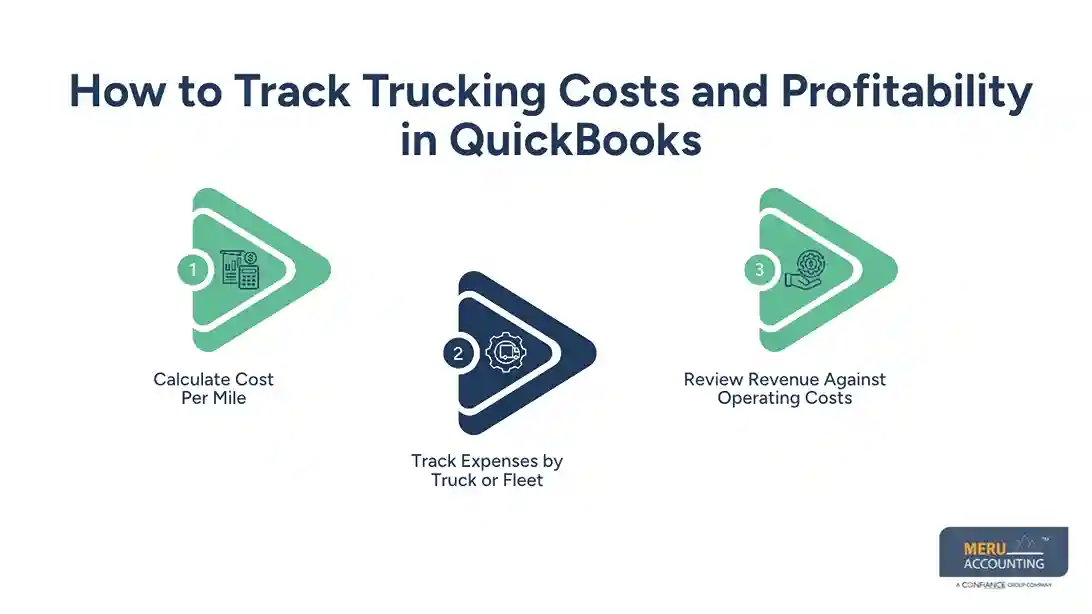
Calculate Cost Per Mile
Cost per mile is a useful way to review truck costs. It shows how much the firm spends for each mile driven.
Use this basic formula:
Cost per mile = Total operating costs ÷ Total miles driven
For example, if a truck has $18,000 in monthly operating costs and runs 10,000 miles, its cost per mile is $1.80.
Example: $18,000 ÷ 10,000 miles = $1.80 per mile.
Include fuel, driver pay, repairs, insurance, tolls, and other costs that apply to the period. Keep fixed costs and trip-based costs clear so you can see what drives the total.
QuickBooks can store and group the cost data, but it may not track all truck miles on its own. You may need to bring in mileage data from a GPS, ELD, or fleet tool.
Track Expenses by Truck or Fleet
Use classes, locations, projects, or another tracking method that fits your QuickBooks plan. Give each truck a clear ID and use it each time you log a cost.
This lets you compare one truck with another. You may find that an older unit has high repair costs or that one truck uses more fuel per mile than the rest of the fleet.
Review Revenue Against Operating Costs
Run Profit and Loss reports each month. Compare freight income with fuel, repairs, wages, insurance, and other costs.
Also review the Balance Sheet and cash flow reports. These show debt, assets, cash on hand, and other items that a profit report may not show.
Look for changes over time. A rise in sales does not always mean a rise in profit. If fuel, repairs, or unpaid bills rise at a faster rate, the firm may face cash strain.
Using QuickBooks Payroll for Trucking Employees and Drivers
Payroll can be complex for trucking firms, as drivers may be paid by the hour, mile, load, or a set rate. Some firms also pay bonuses, per diem, or approved road costs.
QuickBooks Payroll can help firms that use a supported plan to run pay, track tax withholdings, and keep payroll records. The right setup depends on the pay rules, state laws, and worker types that apply to the firm.
Before each pay run:
- Check driver hours, miles, or load records.
- Review bonuses, advances, and approved expense claims.
- Check tax details and benefit deductions.
- Confirm that staff and contractors are listed in the right way.
- Match payroll entries with the bank records.
Keep in mind that payroll features vary by plan and may need add-ons or links to other tools. Also, not all driver pay is treated the same for tax purposes. Work with a payroll pro to set up pay rules and keep the right records.
QuickBooks Trucking Services by Meru Accounting
A trucking company’s books need to tell more than how much freight revenue came in and how much was spent on fuel. They should help owners understand the cost of keeping each truck on the road, identify unpaid loads, and plan for major expenses such as repairs, insurance renewals, and truck payments. Meru Accounting helps trucking businesses build this level of financial visibility through hands-on QuickBooks accounting and bookkeeping support.
Our services are tailored to the accounting needs of trucking operations and include:
- QuickBooks Setup and Customization: Set up trucking-specific accounts, income categories, expense groups, and tracking methods for trucks and loads.
- Freight Revenue and Expense Bookkeeping: Record load income, fuel purchases, tolls, repairs, driver pay, insurance, and other operating costs.
- Truck-Level Cost Tracking: Organize financial records to help compare expenses and operating costs across individual trucks.
- Freight Invoicing and Payment Tracking: Manage customer invoices, broker payments, outstanding balances, and overdue receivables.
- Accounts Payable Management: Record vendor bills, verify expenses, and track payment due dates.
- Bank and Credit Card Reconciliation: Match transactions with supporting records and resolve missing, duplicate, or incorrectly posted entries.
- Payroll and Contractor Payment Support: Maintain payroll records and organize payments to drivers and owner-operators.
- Financial Reporting and Bookkeeping Cleanup: Prepare financial reports, correct past accounting errors, and bring overdue books up to date.
Our team understands that trucking expenses often need to be reviewed against mileage, truck usage, and load activity to make financial reports useful. We focus on keeping these records properly categorized and reconciled so business owners can make better decisions about operating costs, cash flow, and fleet performance.
Whether you need help setting up QuickBooks, managing monthly books, or cleaning up years of incomplete records, Meru Accounting can provide ongoing accounting support that fits your trucking operation.
Our Expert Insight
One area trucking companies should pay close attention to is the way they handle fuel advances, driver advances, and deductions. These payments can easily get mixed in with regular expenses, leading to incorrect driver balances or overstated costs. For example, a fuel advance given to a driver should be tracked against the final settlement rather than recorded again as a new fuel expense when the driver submits receipts.
We also recommend reviewing truck loan payments separately from truck operating costs. The full loan payment isn’t an expense; the principal reduces the outstanding loan balance, while the interest is recorded as an expense. Getting this distinction right helps keep the Profit and Loss Statement accurate and gives owners a clearer view of their actual operating costs.
Key Takeaways
- QuickBooks can help trucking firms manage income, costs, bills, payroll, and financial reports.
- A trucking-specific chart of accounts makes it easier to review fuel, repairs, insurance, and driver pay.
- Record freight income and match each payment to its invoice.
- Track costs by truck to see which units are earning a profit.
- Use cost per mile to review truck and fleet costs.
- Review unpaid invoices and cash flow each month.
- QuickBooks may need GPS, ELD, fuel card, or fleet tools for more detailed tracking.
- Regular bookkeeping helps keep financial records ready for tax prep and business decisions.
FAQs
Yes. QuickBooks works well for trucking bookkeeping, invoicing, expense tracking, payroll, and financial reports. Larger fleets may need extra tools for dispatch and fleet management.
QuickBooks can record fuel purchases and expenses, but it doesn’t prepare IFTA reports on its own. Trucking companies may need a separate IFTA tool to track fuel use and mileage by state.
Yes. Many fuel card providers and trucking management systems offer QuickBooks integrations. These can help sync transactions and reduce manual data entry.
QuickBooks Online offers cloud access and easy collaboration, while Desktop may suit businesses with established desktop-based workflows. The right choice depends on your accounting needs and software integrations.
Yes, but regular transaction entry, account reconciliation, and financial reviews still need to be done. Growing trucking companies may benefit from outsourced bookkeeping support to keep their records accurate.
optional anymore
on running the business