Accounting software for HOA plays an important role in managing homeowner dues, community expenses, reserve funds, and financial reports. Homeowners associations (HOAs) must maintain accurate records of payments, vendor bills, maintenance costs, and future repair expenses. The right system keeps these records organised and gives board members a clear view of available funds.
However, different systems offer different features. Some focus on basic bookkeeping, while others include fund accounting, reserve tracking, automated payments, and financial reporting. Understanding these features allows HOA boards to select software that matches their financial needs. Professional HOA accounting services also add expert review to software-based records.
What You Will Learn From This Blog
- Essential features of HOA accounting systems.
- How fund accounting separates operating and reserve funds.
- Ways to track reserve contributions and expenses.
- Financial reports that HOA boards should review.
- Differences between HOA-specific and general accounting systems.
- How professional accounting services manage financial records.
Understanding Accounting Software for HOAs and Its Role in Community Association Management
Accounting software for HOAs records income, expenses, assets, liabilities, and fund balances. It gives property managers and board members a clear view of financial activity, unpaid dues, and available funds.
HOAs collect regular assessments to pay for shared costs such as security, cleaning, insurance, and repairs. HOA accounting services record these transactions and keep financial data ready for review.
Essential Features to Look for in Accounting Software for HOAs
General Ledger and Chart of Accounts Management
The general ledger in accounting software for HOA management records financial transactions under the correct accounts. A clear chart of accounts separates income, expenses, assets, and liabilities for accurate reporting.
Automated Dues Collection and Assessment Tracking
The accounting software for HOAs should record homeowner dues, payment dates, outstanding balances, and late fees. Automated reminders and payment records reduce manual work.
Accounts Payable and Accounts Receivable Management
Accounts payable tracks vendor bills, while accounts receivable records dues owed by homeowners. These features give managers a clear view of pending payments and collections.
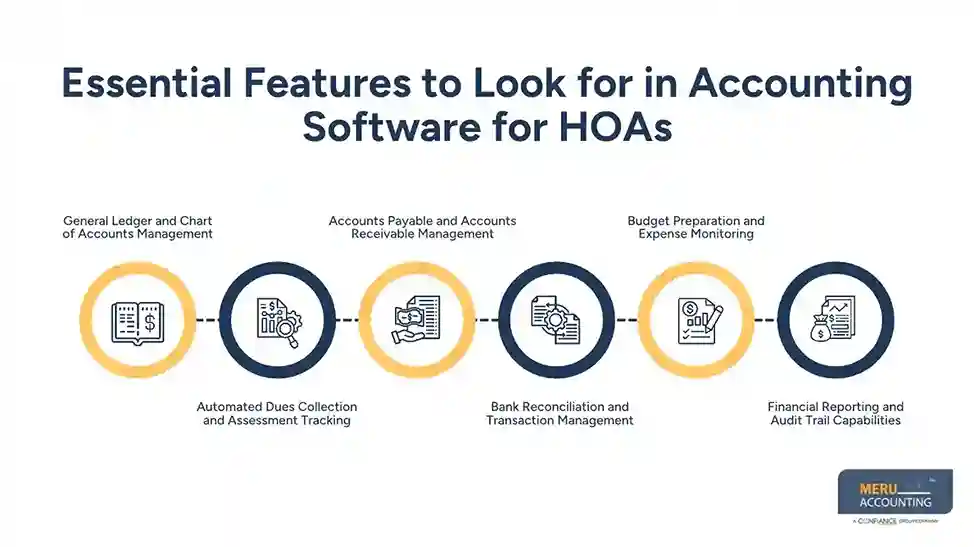
Bank Reconciliation and Transaction Management
Bank reconciliation compares recorded transactions with bank statements. Regular checks identify missing entries, duplicate payments, and incorrect amounts.
Budget Preparation and Expense Monitoring
Budget tools allow boards to plan yearly income and expenses. Comparing actual costs with approved budgets can reveal overspending and future funding needs.
Financial Reporting and Audit Trail Capabilities
Accounting software for HOAs should prepare financial reports and record changes made to transactions. Audit trails show who changed an entry and when, making financial reviews easier.
Fund Accounting Features: Managing HOA Operating and Reserve Funds
Fund accounting is an important feature of accounting software for HOAs because associations manage money for different purposes. It keeps operating and reserve fund records separate and shows how association money is used.
What Is Fund Accounting in HOA Management?
Fund accounting records income, expenses, and balances according to their purpose. It allows boards to review money available for daily costs and future repairs separately.
Operating Funds vs. Reserve Funds
Operating funds pay regular costs such as utilities, insurance, and cleaning. Reserve funds are set aside for major repairs, roof replacement, road work, and other capital expenses.
How Fund Accounting Software Tracks Restricted Funds
Some funds can only be used for approved purposes under association rules or local laws. The system should record these limits and show whether payments follow the stated purpose.
Fund Allocation, Transfers, and Financial Controls
The software should record transfers between funds with dates, amounts, and reasons. Approval rules and transaction logs reduce the risk of unauthorised transfers.
Maintaining Financial Transparency Across HOA Funds
Fund-level reports show how much money was collected, spent, and retained. Clear records also allow boards to explain financial decisions to homeowners.
Reserve Tracking and Reserve Fund Management in HOA Accounting Software
Reserve tracking is an important part of accounting software for HOAs because major repairs can create large expenses. Accurate records show available savings, past payments, and future funding needs.
Understanding HOA Reserve Funds
Reserve funds are savings kept for major repairs and replacement of shared assets. Common examples include roofs, lifts, parking areas, and community buildings.
Tracking Reserve Contributions and Expenditures
HOA accounting services should record every reserve contribution and payment under the correct account. For example, a $20,000 contribution for future roof repairs should appear in reserve records.
Monitoring Reserve Fund Balances
Regular balance checks show whether reserve savings are increasing or decreasing. Boards can compare current balances with expected repair costs to identify funding gaps.
Connecting Reserve Studies with Financial Planning
A reserve study estimates the condition, useful life, and replacement cost of major assets. Boards can use these estimates to plan yearly contributions and future budgets.
Forecasting Major Repairs and Capital Improvements
Forecasting tools list expected repair dates and costs. For example, an HOA can plan savings for parking area repairs expected within five years.
optional anymore
on running the business
Financial Reporting Tools for Homeowners Associations
Financial reports turn transaction records into useful information for board decisions. Accounting software for HOAs should provide reports that show income, expenses, cash flow, and fund balances.
Balance Sheets and Income Statements
A balance sheet shows assets, liabilities, and fund balances on a given date. An income statement records income and expenses over a specific period.
Budget vs. Actual Financial Reports
These reports compare planned costs with actual spending. Boards can review differences and adjust future budgets when expenses exceed approved amounts.
Cash Flow Statements and Fund Balance Reports
Cash flow reports show money received and paid during a period. Accounting software for HOAs also displays fund balances, allowing boards to review the remaining amount in each association fund.
Delinquency and Assessment Collection Reports
These reports list unpaid homeowner dues and overdue balances. Managers can use them to review collection trends and follow the association’s payment policy.
Reserve Fund Reports and Financial Disclosures
Reserve reports show contributions, payments, and available balances. Clear disclosures allow homeowners to understand how money is saved and spent.
Monthly, Quarterly, and Annual Financial Reporting
Monthly reports track routine activity, while quarterly reports show wider spending trends. Annual reports provide a full-year view for budget reviews and financial statements.
Comparing Different Types of Accounting Software for HOA
Different associations have different financial needs. Some require basic bookkeeping, while larger communities may need fund tracking, payment portals, and integrated management tools.
HOA-Specific Accounting Software vs. General Accounting Software
HOA-specific systems often include assessment tracking, owner ledgers, and fund accounting. General accounting tools offer standard ledger and payment features but may need extra setup for HOA tasks.
Cloud-Based vs. Desktop HOA Accounting Systems
Cloud-based accounting software for HOAs allows authorised users to access financial records online. Desktop systems store data locally, so backup and remote access need careful planning.
Standalone Accounting Tools vs. Integrated HOA Management Platforms
Standalone tools focus on financial records, while integrated platforms may combine accounting, payments, maintenance requests, and homeowner communication.
Factors to Consider When Comparing Software Options
Compare fund tracking, reporting, data security, ease of use, and total cost. Also check data export, audit logs, user access, and migration options.
How to Choose the Best Accounting Software for HOA Management
Choosing accounting software for HOA requires more than comparing subscription prices. Boards should check whether the system matches their financial processes and reporting needs.
Evaluate Fund Accounting Capabilities
Check whether the system maintains separate operating and reserve records. HOA accounting services should also record fund transfers and display balances clearly.
Check Reserve Tracking and Budgeting Features
Review tools for reserve contributions, planned repairs, and capital costs. Budget features should compare expected spending with actual expenses.
Review Financial Reporting Options
Check whether the system prepares balance sheets, income statements, cash flow reports, and budget comparisons. Reports should be clear and easy to export.
Assess Automation, Integrations, and Data Security
Review payment links, bank feeds, automated reminders, and software integrations. Check access controls, backups, and data protection measures.
Consider Software Costs, Scalability, and Ease of Use
Compare setup fees, monthly charges, transaction costs, and training expenses. Choose a system that can meet future needs as the association grows.
HOA Accounting Services: Managing Financial Records Beyond Software
Software records transactions, but accurate financial management also requires regular reviews and correct accounting practices. HOA accounting services provide professional oversight of these tasks.
HOA Bookkeeping and General Ledger Maintenance
Bookkeeping records dues, vendor bills, bank entries, and expenses. Regular ledger reviews can identify incorrect codes, missing entries, and duplicate transactions.
Accounts Payable and Accounts Receivable Management
These services cover vendor payments and homeowner dues recorded in accounting software for HOA. Regular reviews keep outstanding bills and collection records up to date.
Bank and Reserve Account Reconciliation
Reconciliation checks whether recorded balances match bank statements. Reserve account reviews confirm that contributions and payments appear under the correct funds.
HOA Budgeting and Financial Reporting
Budget preparation considers past costs, expected income, and planned repairs. Financial reports give board members clear figures for spending decisions.
Reserve Fund Tracking and Financial Review
Reserve reviews cover contributions, expenses, and available balances. Comparing records with reserve plans can reveal funding gaps.
How Professional HOA Accounting Services Complement Accounting Software
Accounting software for HOAs records transactions and prepares reports, while accounting professionals review entries and reconcile accounts. This combination gives boards a sound basis for financial decisions.
Meru Accounting: HOA Accounting and Financial Record Management
Meru Accounting provides accounting, bookkeeping, accounts payable, accounts receivable, payroll, and financial reporting services. These services cover financial record management and reporting tasks for businesses and organisations.
For HOAs using accounting software for HOA, our services can include transaction recording, general ledger maintenance, bank reconciliation, expense classification, and financial report preparation. Our team follows organised accounting processes to maintain clear records and prepare financial information for management review.
Our Expert Perspective
The best system is not always the one with the most features. HOA boards should first review their needs for fund separation, reserve planning, dues collection, and monthly reports. Small associations may need basic accounting tools, while larger communities may require integrated systems.
Software reports are only as accurate as the data entered. Regular reconciliation, correct account coding, payment approvals, and review of unpaid dues remain necessary. Boards should also follow local laws and association rules when managing funds.
Key Takeaways
- Select accounting software for HOAs with accurate ledger and payment records.
- Keep operating and reserve fund records separate.
- Review reserve contributions and future repair costs.
- Use budget reports to monitor spending.
- Check bank reconciliation and audit trail features.
- Compare software costs, security, and reporting tools.
- HOA accounting services add professional bookkeeping and financial review.
FAQs
Accounting software for HOA should include fund accounting, dues collection, reserve tracking, bank reconciliation, budget management, and financial reporting.
HOA accounting software records operating and reserve funds separately, tracks contributions and expenses, and displays the available balance of each fund.
HOA accounting software tracks reserve contributions, repair costs, capital expenses, and fund balances to help boards review savings for future projects.
HOA accounting software should generate balance sheets, income statements, cash flow statements, budget vs. actual reports, delinquency reports, and reserve fund statements.
HOA accounting services complement software through professional bookkeeping, bank reconciliation, fund reviews, budget preparation, and financial report checks.
optional anymore
on running the business