A company can have rising sales, a growing customer base, and a healthy order book, yet still run short of cash. It may be hiring too fast, spending too much on expansion, or setting targets that its current finances can’t support. Financial modeling software helps businesses look beyond today’s numbers and understand where their money, costs, and growth plans may lead.
Rather than relying on a single forecast, finance teams can test different business scenarios, compare possible outcomes, and see how a change in one area affects the rest. This makes it easier to judge whether a new investment makes sense, how much the business can afford to spend, and what needs to change before a plan moves forward.
What You Will Learn From This Blog
- What financial modeling software is and how it works.
- Why businesses use financial models to plan and make key choices.
- The main features to look for when choosing a tool.
- How financial modeling solutions for businesses support different needs.
- How to choose software that fits your goals and budget.
What Is Financial Modeling Software and How Does It Work?
Financial modeling software helps businesses build models of their finances. These models use data such as sales, costs, assets, debt, and cash flow to show how a business may perform over time.
A financial model links key figures to show how a change in one area may affect others. For example, if a company plans to hire five new staff members, the model can show how their pay may affect costs, cash needs, and profit.
Most models use three key financial statements:
- Income Statement: Shows sales, costs, and profit or loss over a set time.
- Balance Sheet: Shows what a business owns, what it owes, and its equity.
- Cash Flow Statement: Tracks cash that comes in and goes out of the business.
Financial modeling software uses these figures to build forecasts and test plans. A finance team can change key inputs, such as sales growth, pay rates, or costs, and see how the results change.
For example, a firm that plans to open a new site can use a model to estimate setup costs, rent, staff pay, sales, and the time it may take to break even. This gives the team a clearer view of the risks before it spends money.
optional anymore
on running the business
Why Businesses Need Financial Modeling Software for Better Financial Decisions
Good financial choices need more than a look at past results. Businesses also need to know what may happen next. Financial modeling software helps teams plan for change and weigh their options with more care.
1. Improve Financial Forecasting and Budgeting
A budget sets out how much a business plans to earn and spend. A forecast shows what may happen based on current data and trends.
Financial modeling software helps teams build both with clear data and set inputs. They can review sales trends, staff costs, rent, and other expenses to make better plans.
If sales fall below the target, a team can update its forecast and see if it needs to cut costs or delay a planned spend. This helps keep budgets in line with real business needs.
2. Gain Better Control Over Cash Flow
A business can show a profit and still face a cash shortfall. This can happen when clients pay late, stock costs rise, or large bills fall due at the same time.
A cash flow model helps teams see when cash may run low. It can also show when the business may have enough cash to hire staff, buy stock, or pay off debt.
With financial modeling software, teams can test how late payments or higher costs may affect cash needs. This gives them time to act before a cash gap puts daily work at risk.
3. Measure Profit and Business Performance
Sales growth does not always mean higher profit. A business may earn more but also face higher costs, lower margins, or poor cost control.
A financial model helps teams look at sales, direct costs, overhead, and profit as a whole. It can show which products, sites, or services bring in the best returns.
For example, a firm may find that one service earns high sales but has high staff costs. It can then review its price, work hours, or delivery process to improve its margin.
4. Make Better Investment and Growth Choices
Growth often calls for large spends. A business may need to hire more staff, buy new tools, open a site, or enter a new market.
Before making such a move, leaders need to know if the likely return is worth the cost. Financial modeling software helps them estimate setup costs, future sales, cash needs, and the time it may take to earn back the spend.
It also lets teams compare more than one plan. This helps them pick a path that fits their cash, goals, and risk level.
5. Spot Financial Risks Early
Every business faces risks, such as lower sales, higher costs, late client payments, or changes in market demand.
A financial model can show how these changes may affect profit and cash flow. Teams can test a range of cases and see where the business may face trouble.
For example, a firm can test what may happen if sales drop by 10% or key costs rise by 8%. This helps leaders plan ways to cut costs, build cash reserves, or change their sales goals.
6. Compare Different Business Scenarios
A plan may look good under one set of facts but fail when market needs change. This is why teams should test more than one outcome before they make a major choice.
Scenario analysis helps teams compare best-case, base-case, and worst-case results. Sensitivity analysis shows how a change in one input, such as sales price or labor cost, may affect the end result.
These tools help leaders see which inputs have the most effect on the business. They can then focus on the areas that need close review.
Key Features to Look for in Financial Modeling Software
Not all tools offer the same features. The right choice will depend on the size of the business, its goals, and the type of models it needs to build. Here are some key features to look for.
1. Financial Forecasting and Budgeting
Look for tools that help build sales, cost, profit, and cash flow forecasts. They should let teams set budgets, update inputs, and compare planned results with actual figures.
2. Scenario and Sensitivity Analysis
These features help teams test how changes in key inputs may affect results. They are useful when planning a new site, setting prices, or reviewing a large spend.
3. Cash Flow Planning
The tool should help track cash in and cash out over time. It should also support short-term cash forecasts so teams can plan for bills, payroll, and other needs.
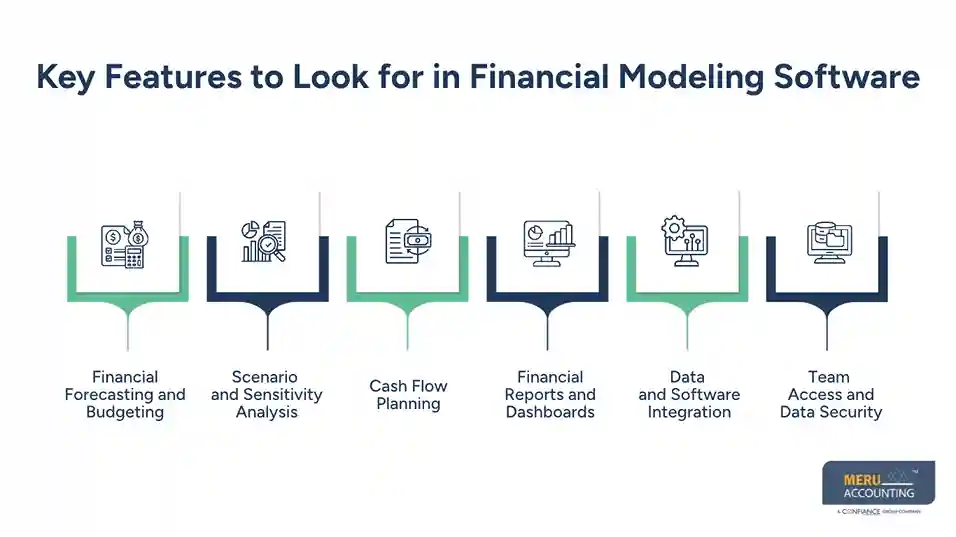
4. Financial Reports and Dashboards
Clear reports help leaders review key figures without going through long sheets. Look for tools that show sales, costs, margins, and cash trends in a clear way.
5. Data and Software Integration
A tool that links with accounting and ERP systems can cut the need for manual data entry. It can also help keep models in line with the latest books and reports.
6. Team Access and Data Security
Finance work often needs input from more than one person. Look for user access controls, review steps, and safe ways to share data. These tools help teams work with fewer errors and better control.
How Financial Modeling Solutions for Businesses Support Different Financial Needs
Each business has its own goals, risks, and financial needs. A startup may need to track cash burn, while a large firm may need to plan costs across many sites. Financial modeling solutions for businesses can be set up to meet these needs.
1. Startups and Growing Businesses
Startups often have little past data to use for forecasts. They need to make plans based on sales goals, funding, staff costs, and cash needs.
A financial model can help them set a budget, track cash burn, and estimate how long their funds may last. It can also help them plan when to hire or seek more funds.
2. Established Companies
Larger firms may need to plan across teams, sites, and product lines. Their finance teams can use models to review sales, costs, and profit by area.
This helps leaders spot weak areas, set new goals, and plan where to use funds.
3. Businesses Planning New Investments
A firm that plans to buy new tools, open a site, or launch a product needs to weigh the cost against the likely return.
Financial models can help estimate the spend, future cash flow, and time needed to earn a return. Teams can also compare the plan with other ways to use the same funds.
4. Businesses With Changing Cash Needs
Some firms face large swings in cash needs due to stock buys, client terms, or seasonal sales. A cash flow model can help them plan for busy and slow months.
It can also show when they may need more funds or when they can make a large payment.
How to Choose the Right Financial Modeling Software for Your Business
Choosing the right tool takes more than a look at price or features. The software should fit how your team works and what you need it to do.
Consider these points before you make a choice:
- Know Your Needs: List the tasks you need help with, such as budgeting, cash flow plans, or long-term forecasts.
- Check Ease of Use: Choose a tool your team can learn and use with ease. A complex tool may slow work if it does not fit your needs.
- Review Core Features: Check for the tools you need, such as scenario analysis, reports, and cash flow plans.
- Check Data Links: See if the software can link with your current accounting or ERP system.
- Review Security: Check user roles, data access, backup, and other safety controls.
- Compare Costs: Look at setup fees, user fees, and the cost of extra features.
- Think About Growth: Pick a tool that can support more data, users, and reports as the business grows.
Before you buy, test the software with a real task. For example, ask your team to build a cash flow forecast or test a new hire plan. This will help you see if the tool fits your work.
Financial Modeling Solutions for Businesses by Meru Accounting
A financial model should do more than put future numbers on a spreadsheet. It should help business leaders answer specific questions: Can we afford to expand? How much cash will we need next quarter? Will a new product line generate enough profit to justify the investment? Meru Accounting helps businesses turn financial data into useful models that support these decisions.
Our team provides financial modeling solutions for businesses with different planning and reporting needs. We focus on building models around actual business operations, financial goals, and expected changes rather than relying on broad assumptions.
Our financial modeling services include:
- Financial Forecasting and Budgeting: Developing revenue, expense, and profit forecasts to support business plans and spending decisions.
- Cash Flow Modeling: Projecting cash inflows, outflows, working capital needs, and future funding gaps.
- Scenario and Sensitivity Analysis: Testing how changes in sales, operating costs, pricing, or other key inputs may affect financial results.
- Profitability and Cost Analysis: Reviewing margins, operating expenses, and business performance to identify areas that need attention.
- Investment and Growth Modeling: Assessing the financial impact of business expansion, new projects, and major investments.
- Financial Model Review and Reporting: Reviewing assumptions, checking calculations, and presenting financial results in a clear, useful format.
From building a forecast for the next quarter to assessing the financial impact of a long-term growth plan, Meru Accounting helps businesses develop models they can use to make informed decisions
Our Expert Insight
A common issue in financial modeling is the use of overly complex models that are hard to maintain. Adding more formulas, tabs, and assumptions doesn’t always lead to better results. In fact, a model with too many moving parts can make it harder for decision-makers to spot errors or understand what drives the final numbers.
Our approach is to keep financial models practical, well-structured, and easy to review. Each calculation should have a clear purpose, and key assumptions should be easy to trace back to their source. This is especially important when models are used for investment reviews, management reports, or major spending decisions.
At Meru Accounting, we believe a good financial model should make financial information easier to act on, not harder to understand.
Key Takeaways
- Financial modeling software helps businesses plan, forecast, and test key choices.
- It can improve budgets, cash flow plans, and profit reviews.
- Scenario analysis helps teams see how changes may affect future results.
- The right tool should fit the firm’s size, needs, data, and budget.
- Financial models need clean data and regular updates to stay useful.
- Expert support can help teams build models that match their goals.
FAQs
The best software depends on your business needs, budget, and planning goals. Look for features such as financial forecasting, budgeting, scenario analysis, and reporting.
Costs vary by provider, features, and number of users. Basic tools may be affordable, while advanced platforms often charge more for planning and reporting features.
Yes. It helps estimate future cash flows, assess earnings potential, and test growth assumptions to support business valuation.
Most financial models use income statements, balance sheets, cash flow statements, sales figures, operating costs, and future business assumptions.
Excel works well for basic models. Dedicated software may be more useful for complex forecasts, team collaboration, automated updates, and large data sets.
optional anymore
on running the business