Payroll management for property managers plays an important role in keeping financial records accurate and maintaining control over labor costs. Property management companies often employ leasing agents, maintenance workers, cleaners, security staff, site managers, and administrative teams. Each employee may have different pay rates, work hours, overtime rules, and payment terms, which makes payroll records an important part of financial management.
When payroll data is incomplete or recorded incorrectly, it can affect expense reports, property budgets, cash flow records, and tax filings. A well-planned payroll process records employee payments, tax deductions, benefits, and labor costs in the right accounts. It also gives property managers a clear view of the cost of running each property.
This blog explains how payroll management for property managers maintains accurate financial records, meets payroll compliance needs, and improves cost tracking across multiple properties.
What You Will Learn From This Blog
- How payroll management for property managers keeps wage, tax, and labor expense records accurate.
- Why payroll compliance matters for property management companies.
- How payroll outsourcing solutions can reduce errors in payroll processing.
- Common payroll mistakes that affect financial reports and property budgets.
- Best practices for keeping payroll and accounting records in order.
- How professional accounting services can improve payroll record management.
Introduction to Payroll Management for Property Managers
Payroll management for property managers covers the process of calculating employee wages, recording work hours, deducting taxes, and issuing payments. It also includes maintaining payroll reports and matching labor expenses with the right property or department.
Unlike a business with one office and a fixed team, a property management company may have employees working at several sites. For example, maintenance staff may work across different buildings, while leasing agents may be assigned to specific properties. Payroll records must reflect these work arrangements to keep financial reports accurate.
A clear payroll process, supported by payroll outsourcing solutions, gives management a better view of staffing costs, employee payments, and monthly expenses.
How Payroll Management for Property Managers Improves Financial Record Accuracy
Accurate payroll records give property managers a reliable view of employee costs and business expenses. The following practices make payroll management for property managers more effective and reduce errors in financial reporting.
Maintaining Accurate Employee Wage and Salary Records
Property managers must keep correct records of employee names, pay rates, salary terms, payment dates, and job roles. These details form the base of payroll calculations and must match approved employment terms.
Payroll management for property managers keeps wage records updated when an employee receives a raise, changes roles, or moves to another property. This reduces payment disputes and keeps salary expenses accurate.
Tracking Overtime, Bonuses, Commissions, and Employee Benefits
Property staff may earn overtime pay, leasing commissions, performance bonuses, or other benefits. Each payment must be recorded under the right payroll category rather than added to regular wages without a clear record.
For example, a leasing agent may earn a commission for securing a new tenant. Recording this amount separately gives management a clearer view of regular wages and additional employee costs.
Recording Payroll Taxes and Statutory Deductions
Employee payroll may include federal income tax withholding, Social Security, Medicare, and other applicable deductions. Employers must also record their own payroll tax obligations and deposits.
Payroll management for property managers keeps these amounts separate from net wages. This makes it easier to match payroll reports with tax records and accounting entries.
Reducing Payroll Errors and Duplicate Payments
Incorrect work hours, outdated salary details, and repeated payment entries can lead to payroll errors. These issues may cause excess payments, incorrect expense reports, or employee complaints.
A standard review process checks employee details, approved hours, and payment totals before payroll is released. This reduces the risk of duplicate payments and incorrect wage entries.
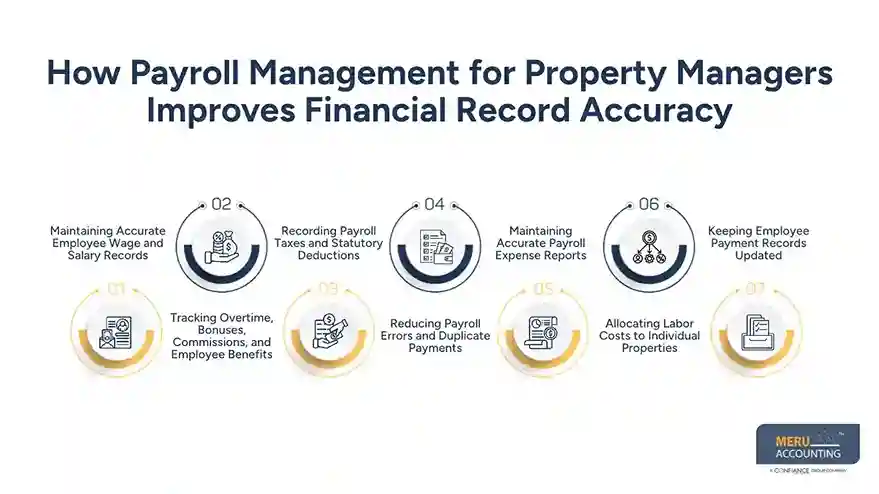
Maintaining Accurate Payroll Expense Reports
Payroll expense reports show how much a property management company spends on employee wages, taxes, benefits, and other labor costs. These reports must match the payroll register and accounting records.
Payroll management for property managers gives management a clear view of monthly labor expenses. It also makes budget reviews more useful by showing where employee costs are rising.
Allocating Labor Costs to Individual Properties
Employees may work at more than one property during a pay period. Their wages should be split based on approved work hours or another consistent allocation method.
For example, if a maintenance worker spends 60% of their time at Property A and 40% at Property B, the related labor expense can be assigned using that work record. This gives each property’s financial report a more accurate cost figure.
Keeping Employee Payment Records Updated
Changes in bank details, employment status, pay rates, or payment methods must be recorded before the next payroll cycle. Old details can lead to failed transfers or payments sent to the wrong account.
Regular record checks keep employee information current and reduce the need for later payroll corrections.
optional anymore
on running the business
Payroll Compliance Requirements for Property Management Companies
Property management companies must follow federal, state, and local payroll rules for employee wages, tax deductions, and reporting. Accurate payroll records maintained through payroll outsourcing solutions reduce compliance risks and keep financial data reliable.
Understanding Federal, State, and Local Payroll Tax Obligations
Property management companies must manage income tax withholding, Social Security, Medicare, and applicable state and local taxes.
Payroll management for property managers keeps tax records accurate and payments properly recorded.
Managing Employee Classification and Wage Compliance
Property managers must classify full-time employees, part-time staff, and independent contractors according to applicable legal rules.
Incorrect classification can lead to tax liabilities, wage claims, and penalties.
Maintaining Payroll Documentation for Audits
Companies must maintain wage records, timesheets, tax deductions, payment details, and payroll reports for financial reviews.
Payroll management for property managers keeps these documents organized and available for audits.
Meeting Payroll Filing and Reporting Deadlines
Employers must submit payroll tax deposits and returns within the deadlines set by relevant tax authorities.
A payroll calendar helps track filing dates, tax payments, and year-end reporting tasks.
Reviewing Changes in Payroll Rules
Property management companies must review changes in federal, state, and local wage and tax requirements.
Updated payroll procedures reduce calculation errors and keep records aligned with current rules.
How Payroll Outsourcing Solutions Simplify Property Management Accounting
Managing payroll across several properties can increase administrative work and recordkeeping demands. Payroll outsourcing solutions transfer selected payroll tasks to outside providers while employers retain oversight.
Benefits of Outsourcing Payroll Processing
Payroll outsourcing solutions cover wage calculations, tax deductions, employee payments, and payroll reports.
This reduces routine administrative work and makes payroll management for property managers easier to review.
Improving Payroll Accuracy Through Professional Oversight
Payroll professionals review employee hours, pay rates, tax deductions, and payment calculations before processing.
Regular checks reduce payroll errors and improve the accuracy of financial records.
Managing Payroll for Multiple Properties and Locations
Property management companies often have employees working across different buildings and locations.
Payroll outsourcing solutions organize employee costs by property, making labor expenses easier to track.
Integrating Payroll Data With Accounting Systems
Payroll data must match general ledger entries, wage expenses, tax liabilities, and benefit costs.
Software integration reduces manual entries and makes monthly account reconciliation easier.
Reducing Administrative Workload and Compliance Risks
Internal payroll processing requires time for checking work hours, calculating wages, and preparing reports.
Payroll management for property managers becomes easier to monitor when routine tasks are outsourced, and records are reviewed regularly.
Common Payroll Management Mistakes Property Managers Should Avoid
Even a well-planned payroll process can face errors when employee data and payment records are not reviewed. The following issues can affect payroll costs and financial reports.
Incorrect Employee Classification
Treating an employee as an independent contractor without checking the legal requirements can create tax and wage issues. Property managers should review actual job duties and working arrangements before deciding worker status.
Inaccurate Overtime and Working-Hour Calculations
Maintenance teams and site staff may work beyond their normal schedules. Missing hours or applying the wrong overtime rate can result in incorrect wage payments and reports.
Delayed Payroll Tax Deposits and Filings
Late tax deposits and missed returns can result in penalties and interest. Property managers should use a payroll calendar and check payment confirmations after each due date.
Poor Payroll Documentation
Missing timesheets, salary approvals, and payment records make it difficult to verify payroll expenses. Payroll management for property managers should include a clear process for saving and reviewing these documents.
Inconsistent Allocation of Labor Costs
Recording all employee wages under one general expense account can hide the actual cost of individual properties. Companies should use approved work hours or another consistent basis to assign labor expenses.
Best Practices for Maintaining Accurate Payroll and Financial Records
A consistent process and suitable payroll outsourcing solutions make payroll management for property managers easier to review and control while reducing errors in financial reports.
Implementing Standardized Payroll Procedures
Companies should set clear steps for collecting work hours, approving overtime, updating pay rates, and releasing payments. The same process should apply across all managed properties.
Reconciling Payroll Reports With Accounting Records
Payroll registers should be compared with bank payments, tax liabilities, and general ledger entries. Any difference must be checked and corrected before monthly financial reports are finalized.
Using Payroll Management and Accounting Software
Suitable software can record employee hours, calculate wages, prepare payroll reports, and transfer expense data into accounting systems. Payroll management for property managers becomes easier to track when both systems use consistent employee and property codes.
Conducting Periodic Payroll Reviews
Monthly or quarterly reviews can identify repeated errors, unusual payments, and differences in labor costs. Management should also check changes in employee details and pay rates before each payroll cycle.
Securing Employee Payroll Information
Payroll files contain private details such as bank accounts, tax information, and salary records. Companies should limit access to authorized staff, use secure systems, and follow proper data retention and disposal rules.
Choose Meru Accounting for Professional Property Management Accounting Services
Accurate payroll records are closely linked to reliable accounting reports. Meru Accounting provides accounting and bookkeeping services for businesses that require organized financial records, payroll expense tracking, accounts payable, accounts receivable, and financial reporting.
For property management companies, our accounting and payroll outsourcing solutions cover the recording and review of labor expenses, payroll-related entries, and financial transactions. For property management companies, our accounting services cover the recording and review of labor expenses, payroll-related entries, and financial transactions. We maintain a clear view of expenses so that management can review property-level costs and prepare financial reports based on recorded transactions.
Payroll management for property managers requires correct wage records, tax entries, and labor cost allocation. Meru Accounting provides services that include:
- Payroll record maintenance: Recording payroll-related expenses and maintaining organized financial data.
- Expense tracking: Classifying employee costs under the right expense accounts.
- Account reconciliation: Comparing accounting entries with available payroll and bank records.
- Financial reporting: Preparing clear reports that show labor costs and other business expenses.
- Multi-property accounting: Recording expenses under the right property or business unit.
Our team focuses on accurate financial records and clear reporting practices. Property management companies can choose accounting services based on their reporting needs and existing payroll processes.
Our Expert Perspective
In property management accounting, payroll should not be treated as a payment task alone. It is also a key part of property-level cost control. A company may pay every employee on time and still have inaccurate financial reports if wages are assigned to the wrong property or tax liabilities are recorded incorrectly.
In our view, payroll management for property managers should include three regular checks: employee payment accuracy, payroll tax record accuracy, and labor cost allocation. These checks give management a better view of actual operating expenses and make month-end reconciliation more reliable.
Key Takeaways
- Payroll management for property managers keeps employee wage and salary records accurate.
- Correct overtime, bonus, benefit, and tax entries improve the quality of financial reports.
- Property-level labor cost allocation gives management a clearer view of operating expenses.
- Payroll compliance requires correct employee classification, tax records, and timely filings.
- Payroll outsourcing solutions can reduce routine work and add professional review to payroll processing.
- Regular reconciliation helps identify errors before they affect financial statements.
- Secure payroll records protect employee information and maintain proper documentation.
FAQs
Payroll management for property managers involves recording employee wages, taxes, benefits, and labor expenses correctly, making property-level financial reports more reliable.
Property management companies should maintain employee details, timesheets, wage records, overtime payments, tax deductions, payroll reports, and payment receipts.
Property managers can track payroll expenses by assigning employee wages, overtime, and benefits to the respective properties based on approved work hours.
Property management companies can outsource payroll processing to reduce manual work, maintain accurate wage records, manage tax calculations, and organize payroll reports.
Property managers should reconcile payroll with bank statements, tax liabilities, and general ledger entries during every payroll cycle and monthly account closing.
optional anymore
on running the business