Individual Income Tax Filing becomes more complex for high-income earners who receive money from salaries, business interests, stocks, bonds, rental properties and other investments. These income sources may have different tax rates, reporting rules and payment dates. A small reporting error can lead to extra tax, interest or penalties.
High-income taxpayers must review their total income, capital gains, deductions and tax payments before submitting Form 1040. They must also consider how investment sales, retirement contributions and charitable gifts affect their taxable income. Understanding how much does it cost to file taxes is another part of planning for Individual Income Tax Filing, particularly when a return includes several investment accounts, rental properties or business income.
A clear tax plan can reduce avoidable costs and prevent filing errors. This blog explains the main tax rules, investment reporting requirements and tax planning steps that high-income individuals should consider for the 2026 tax year.
What You Will Learn From This Blog
- How the IRS applies income tax rules to high-income individuals.
- How dividends, interest and rental income affect Individual Income Tax Filing.
- The difference between short-term and long-term capital gains.
- Which tax planning options may reduce taxable income.
- How much does it cost to file taxes when investment records and income sources are complex?
- Which records are needed to prepare an accurate federal tax return?
Introduction to Individual Income Tax Filing for High-Income Earners
Individual Income Tax Filing requires a complete review of income from all sources, not just annual salary. High-income earners may receive qualified dividends, interest, rental payments, stock profits and distributions from retirement accounts.
Each income source has its own reporting rules. For example, a taxpayer may pay ordinary income tax on interest but a lower rate on eligible long-term capital gains. The final tax amount depends on filing status, taxable income, deductions and other applicable taxes.
Understanding the Tax Obligations of High-Income Earners
How the IRS Defines High-Income Taxpayers
The IRS does not set one fixed income amount that defines every high-income taxpayer. Tax rates, additional taxes and reporting rules depend on income, filing status and the type of earnings received. Individual Income Tax Filing must account for these factors before calculating the final liability.
Federal Income Tax Brackets and Marginal Tax Rates
For 2026, federal income tax rates range from 10% to 37%. A higher tax bracket does not mean that all income is taxed at that rate. Only the portion of taxable income within that bracket faces the higher rate. For example, a single taxpayer enters the 37% bracket when taxable income exceeds $640,600.
Additional Medicare Tax and Net Investment Income Tax
High-income earners may face a 0.9% Additional Medicare Tax on Medicare wages above $200,000 for single filers and $250,000 for married couples filing jointly. The 3.8% Net Investment Income Tax may also apply when modified adjusted gross income exceeds the relevant IRS threshold.
Estimated Tax Payments and Underpayment Penalties
Individuals with income from investments, rental property or self-employment may need to make quarterly estimated payments. In general, taxpayers must consider these payments when they expect to owe at least $1,000 after withholding and credits. High-income taxpayers may need to meet a 110% prior-year tax safe harbour when their prior-year adjusted gross income exceeded $150,000.
Filing Status and Taxable Income Review
Filing status affects tax brackets, deductions and additional tax thresholds. Married taxpayers should review whether filing jointly or separately gives a better result. Individual Income Tax Filing should also include a review of income adjustments and eligible deductions.
Investment Income and Its Impact on Individual Income Tax Filing
Investment income can come from several accounts and assets. Each source needs the correct tax treatment and supporting records.
Tax Treatment of Dividends and Interest Income
Interest from bank deposits, bonds and other investments is generally reported as ordinary income. Qualified dividends may receive lower federal tax rates if the taxpayer meets the required holding period and other rules. Individual Income Tax Filing must distinguish qualified dividends from ordinary dividends.
Taxation of Rental Income and Real Estate Investments
Rental income is generally reported after eligible expenses such as property tax, mortgage interest, repairs and insurance. Depreciation may also reduce taxable rental income, subject to IRS rules. Property sales can create capital gains and depreciation recapture obligations.
Reporting Income From Stocks, Bonds, Mutual Funds and ETFs
Investors may receive Form 1099-DIV, 1099-INT and 1099-B from financial institutions. These forms report dividends, interest and investment sales. Individual Income Tax Filing requires a check of these forms against brokerage statements to identify missing or incorrect entries.
Tax Implications of Retirement and Brokerage Accounts
Traditional retirement account withdrawals are generally taxed as ordinary income, while qualified Roth withdrawals may be tax-free. Brokerage accounts can generate taxable dividends, interest and capital gains. Investors should review account type and transaction details before reporting income.
Understanding How Much Does It Cost to File Taxes
How much does it cost to file taxes depends on the number of income sources, investment transactions, rental properties and tax forms involved. A return with only salary income may be simpler than one with multiple brokerage accounts and property sales. When comparing how much does it cost to file taxes, taxpayers should also consider the level of review and record checking included in the service.
Capital Gains Tax Planning for High-Income Earners
Capital gains arise when an asset is sold for more than its adjusted cost basis. The holding period and asset type affect the tax rate. Accurate Individual Income Tax Filing requires the purchase price, sale price, eligible costs and holding period for each sale.
Short-Term vs. Long-Term Capital Gains Tax Rates
Short-term gains apply when an asset is held for one year or less and are generally taxed at ordinary income rates. Long-term gains apply when an asset is held for more than one year and may qualify for 0%, 15% or 20% federal rates, depending on taxable income and filing status.
Capital Gains Tax on Stocks, Real Estate and Other Assets
Selling shares, investment property or other capital assets may create a taxable gain that must be reported during Individual Income Tax Filing. For example, an investor who buys shares for $20,000 and sells them for $28,000 has an $8,000 gain before eligible adjustments. Real estate sales may also involve depreciation recapture and other tax rules.
Tax-Loss Harvesting and Capital Loss Deductions
Tax-loss harvesting involves selling an investment at a loss to offset capital gains. If total capital losses exceed gains, individuals can generally deduct up to $3,000 of the net loss against ordinary income each year, or $1,500 if married filing separately. The remaining loss may be carried forward, subject to IRS rules. Investors must also review the wash-sale rule.
Understanding the Net Investment Income Tax on Capital Gains
The 3.8% Net Investment Income Tax may apply to capital gains when modified adjusted gross income exceeds the applicable threshold. The tax generally applies to the lesser of net investment income or the amount by which modified adjusted gross income exceeds the threshold. This additional amount should be considered during Individual Income Tax Filing.
Reporting Capital Gains and Losses on Tax Returns
Investors generally report sales of capital assets on Form 8949 and Schedule D, as applicable. Brokerage statements should be checked for cost basis adjustments, missing transactions and holding periods. Correct reporting prevents gains or losses from being counted incorrectly.
optional anymore
on running the business
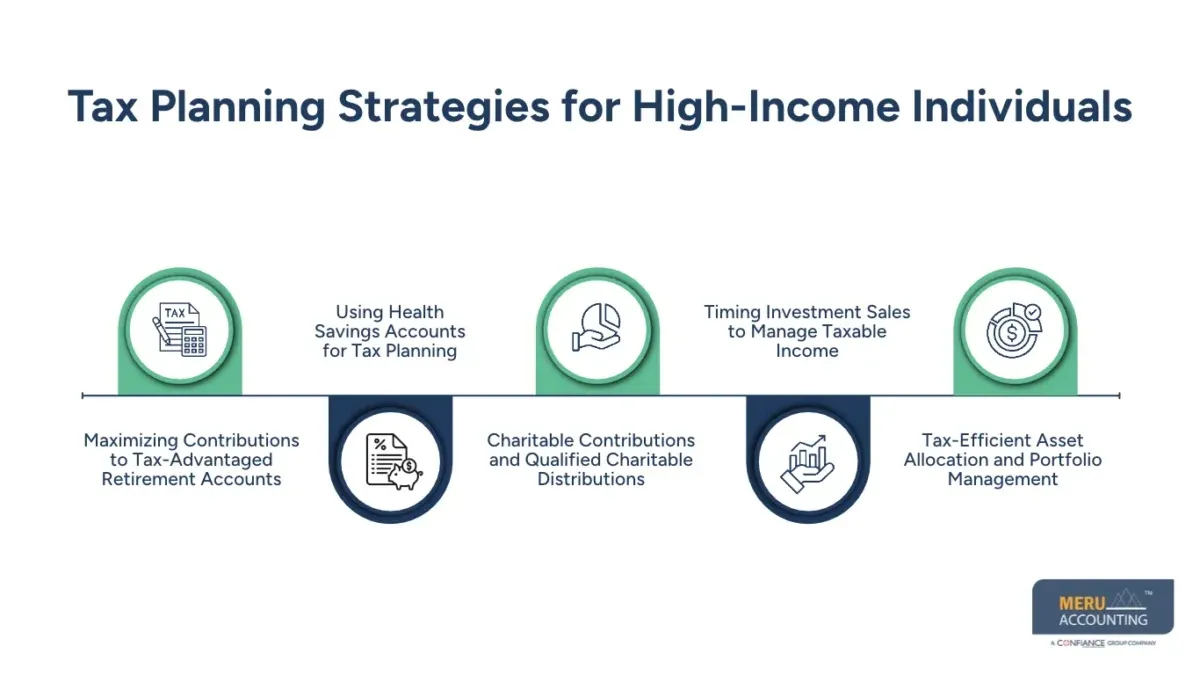
Tax Planning Strategies for High-Income Individuals
Tax planning should take place throughout the year rather than only before the filing deadline. The right steps depend on income, investment goals and eligibility.
Maximizing Contributions to Tax-Advantaged Retirement Accounts
Eligible contributions to traditional 401(k) and IRA accounts may reduce current taxable income, subject to plan rules, income limits and contribution caps. High-income earners should check annual limits and employer plan terms before making contributions as part of their Individual Income Tax Filing and tax planning process.
Using Health Savings Accounts for Tax Planning
Eligible individuals with qualifying high-deductible health plan coverage can contribute to a Health Savings Account. For 2026, the contribution limit is $4,400 for self-only coverage and $8,750 for family coverage, with an extra $1,000 for eligible individuals aged 55 or older. HSA funds can receive favourable tax treatment when used for qualified medical costs.
Charitable Contributions and Qualified Charitable Distributions
Eligible donations to qualified charities may qualify for a deduction when IRS rules are met. Taxpayers should retain receipts and written records. Individuals aged 70½ or older may also consider a qualified charitable distribution from an eligible IRA, subject to annual limits and other conditions.
Timing Investment Sales to Manage Taxable Income
The timing of a sale can affect whether a gain is short-term or long-term. Investors may review their expected income before selling assets or receiving large distributions. Individual Income Tax Filing should reflect the actual transaction date and not an assumed tax benefit.
Tax-Efficient Asset Allocation and Portfolio Management
Holding investments in suitable taxable and tax-advantaged accounts can affect the timing and amount of taxable income. Investors may consider the tax treatment of bonds, dividend-paying shares and growth assets when reviewing their portfolio. Decisions should also reflect risk, liquidity and long-term financial goals.
Common Tax Filing Mistakes High-Income Earners Should Avoid
Even taxpayers with professional investment advice can make errors when records are incomplete or tax forms are not reviewed.
Incorrect Reporting of Investment Income
Missing a dividend statement or reporting a sale without the correct cost basis can lead to an incorrect return. Individual Income Tax Filing should include a review of all Forms 1099 and brokerage records.
Overlooking Foreign Investment and Additional Income Reporting
Foreign bank accounts, overseas investments and foreign income may create additional reporting duties. Some taxpayers may need to file forms such as FBAR or Form 8938, depending on the asset and applicable thresholds. These requirements are separate from ordinary income tax reporting.
Miscalculating Estimated Tax Payments
Taxpayers who receive large bonuses, dividends or capital gains may have insufficient withholding when preparing their Individual Income Tax Filing. They should review their estimated payments during the year to avoid possible penalties and interest.
Missing Eligible Deductions and Tax Credits
Some taxpayers overlook eligible retirement contributions, charitable gifts, business expenses or other deductions. They should check the applicable eligibility rules instead of assuming that every expense qualifies.
Inadequate Documentation of Capital Gains and Losses
Missing purchase records, sale confirmations and cost basis details can cause errors in gain calculations during Individual Income Tax Filing. Investors should retain transaction records and review any adjustments before submitting their returns.
Why Choose Meru Accounting for Tax and Accounting Services?
Meru Accounting provides accounting, bookkeeping, payroll and tax-related services to businesses across the United States. With experience in financial record management and accounting operations, Meru Accounting delivers services that address the financial reporting and accounting needs of businesses across different industries.
For high-income individuals, investors and business owners, accurate financial information is an important part of Individual Income Tax Filing. Investment income, capital gains, rental earnings and other financial transactions require proper accounting records and careful attention to applicable tax rules.
Our accounting and financial reporting services give businesses access to organised financial information throughout the year. Whether taxpayers are comparing how much does it cost to file taxes or reviewing their accounting requirements, the scope of services, nature of transactions and complexity of financial records remain important factors in making an informed decision.
At Meru Accounting, we focus on accurate financial records and reliable reporting through our accounting services, giving businesses a clear view of their financial information and accounting requirements.
Our Expert Perspective
High-income tax returns need more than a review of salary and withholding. Investment sales, dividend income, rental earnings and retirement distributions can change the final tax amount. We recommend reviewing income and estimated payments during the year instead of waiting until filing season.
Taxpayers should also keep clear records of every major investment sale and charitable gift. Individual Income Tax Filing becomes easier to review when each income source has the right supporting document. A qualified tax professional should review complex transactions, foreign assets and large capital gains before the return is submitted.
Key Takeaways
- High-income earners may have several income sources with different tax rules.
- Federal tax rates considered during Individual Income Tax Filing depend on taxable income and filing status.
- Short-term gains generally face ordinary income tax rates, while eligible long-term gains may receive lower rates.
- The Net Investment Income Tax and Additional Medicare Tax may apply above set income thresholds.
- Retirement contributions, HSA deposits and eligible charitable gifts may offer tax benefits.
- Accurate brokerage, property and income records are essential for correct tax reporting.
- How much does it cost to file taxes depends on return complexity and the level of professional service required.
- Reviewing estimated payments throughout the year is an important part of Individual Income Tax Filing and can reduce the risk of underpayment penalties.
FAQs
High-income earners must report salary, business income, dividends, interest, rental income and capital gains on their federal tax returns filed with the IRS.
High-income earners may pay 15% or 20% on eligible long-term capital gains, while short-term gains are generally taxed at ordinary income tax rates.
How much does it cost to file taxes depends on the number of investment accounts, capital gain transactions, rental properties and the complexity of the tax return.
High-income earners can consider eligible retirement contributions, HSA deposits, charitable donations, tax-loss harvesting and careful timing of investment sales to manage taxable income.
Taxpayers need Forms 1099-DIV, 1099-INT and 1099-B, brokerage statements, property income records, expense receipts and previous tax returns.
optional anymore
on running the business